
Fully compliant with EU Eurocodes and tested under extreme hydrostatic pressure. Designed for rapid integration into Greek civil transit developments.
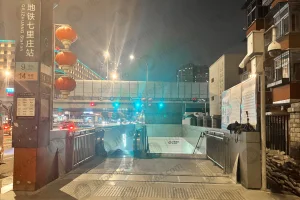
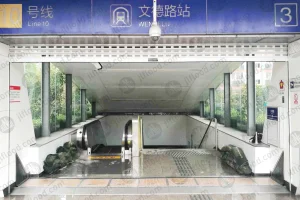
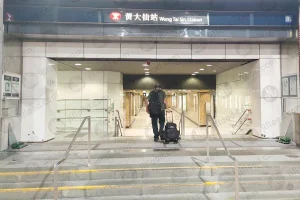
The Greek urban landscape—most notably the dense metropolitan belts of Attica (Athens) and Central Macedonia (Thessaloniki)—faces escalating hydrometeorological risks. Mediterranean tropical-like cyclones, locally designated as Medicanes (such as Storm Daniel and Storm Elias), have recalibrated hydraulic design parameters across southern Europe.
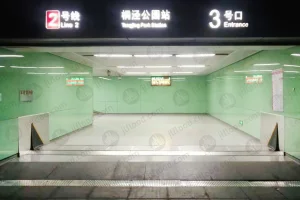
Greece’s extensive rail infrastructure, including the operational Athens Metro (Lines 1, 2, 3), the under-construction Line 4 (U-Line), and the newly operational Thessaloniki Metro, features subterranean portals, concourses, and ventilation shafts that sit directly in alluvial runoff paths.
Over 85% of catastrophic metro flooding incidents occur simultaneously with regional power grid failures. Traditional motorized or electrically actuated flood barriers fail exactly when needed most. Hydrodynamic self-rising technology eliminates electrical dependency entirely.
To supply municipal projects and Tier-1 contractors (e.g., Ellaktor, Avax, Intrakat) in Greece, flood barrier systems must fulfill stringent European structural and material certifications:
Unlike manual aluminum stop logs that require human dispatch or electrical gates prone to blackout failure, Junli's hydrodynamic barrier leverages pure fluid dynamics.
When surface water reaches the preset trigger level at the station entrance threshold, water flows into the embedded bottom basin. Archimedes' principle engages instantly—the internal buoyant panel floats upwards without sensor actuation or motorized intervention.
As water depth rises against the barrier face, hydrostatic vector forces push the panel firmly against the vertical frame seals. The higher the floodwater level, the tighter the seal becomes, creating a leak-free dynamic hydraulic lock.
Once floodwaters recede via municipal drainage systems, water drains out of the foundation basin through an integrated non-return outlet valve. The barrier panel smoothly settles back into its stainless steel bed, restoring full pedestrian access.
B2B direct factory pricing structure for civil engineering firms, municipal transit authorities, and specialized MEP distributors importing to Piraeus or Thessaloniki ports.
| Barrier Model Category | Standard Height (m) | Material Specification | Estimated Wholesale Price (USD/Meter) | Primary Application Scenario |
|---|---|---|---|---|
| Embedded Hydrodynamic Barrier | 0.6m – 1.2m | SUS304 / 6063-T6 Aluminum Alloy | $850 – $1,450 / m | Metro Station Entrance, Underground Garage Ramps |
| Surface-Mounted Automatic Gate | 0.5m – 1.0m | Reinforced Structural Steel + EPDM Seal | $650 – $1,100 / m | Historic Metro Retrofits, Pedestrian Doorways |
| Hydrodynamic Flip-Up Barrier | 0.8m – 1.5m | Marine Grade SUS316 / Anodized Aluminum | $950 – $1,800 / m | High-Volume Concourse Portals, Transit Hub Plazas |
| Substation & Trench Flood Gate | 0.4m – 0.8m | Heavy Duty Stainless Steel Frame | $500 – $900 / m | Electrical Substations, Ventilation Shaft Doors |
All products are packed in ISPM 15 compliant fumigated wooden crates suitable for long-distance maritime transport. Transit time from Shanghai/Nanjing Port to Piraeus Port or Thessaloniki Port averages 22–28 days via direct liner services. Complete EUR.1 certificates, Bill of Lading, and CE compliance documentation provided with every shipment.
Headquartered in Nanjing, Jiangsu Province, Nanjing Junli Technology Co., Ltd. is a specialized high-tech manufacturer combining structural hydraulic engineering with advanced material science.
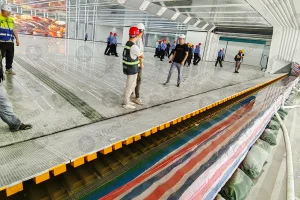
Unlike generic fabricators or regional trading agents, Junli operates a dedicated 20,000m² manufacturing facility outfitted with automated laser cutting arrays, heavy-duty CNC bending equipment, submerged arc welding robots, and an in-house full-scale hydrostatic testing pool.
Tailored engineering configurations designed for diverse urban access portals across Greek infrastructure projects.
Sub-surface stairwell entrances along dense urban corridors like Monastiraki, Syntagma, or Panepistimio. Embedded barriers remain completely flush with pavement, preserving architectural aesthetics until storm surges hit.
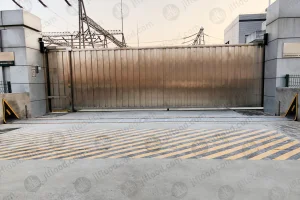
Power substations feeding electric transit lines (such as the Athens Tram and Metro networks) demand zero-water ingress. Perimeter flip-up flood barriers isolate critical transformers and switchgear rooms from surface run-off.
Connecting channels between parking complexes, commercial centers, and subway concourses. Multi-leaf modular arrays allow continuous spans over 15 meters without compromising structural rigidity.
Certified flood control hardware tested across 30+ major transit networks worldwide. Select a model to request technical specifications and custom pricing.
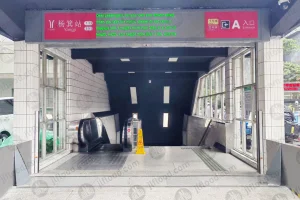
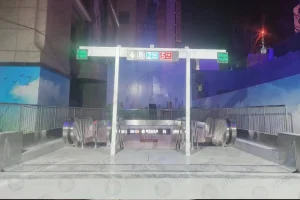
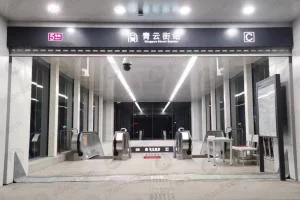
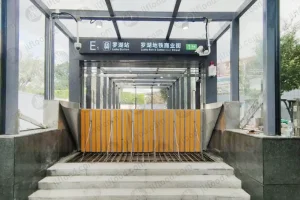
Direct answers to critical procurement, installation, and compliance inquiries regarding metro flood barriers in Greece.
Our hydrodynamic barriers operate on purely mechanical fluid buoyancy principles (Archimedes' Principle). Rising floodwater enters the base frame basin, naturally elevating the internal buoyant panel. No electricity, sensors, hydraulic pumps, or human intervention are required. This ensures 100% operational reliability during severe rainstorms when municipal power grids frequently fail.
Yes. All barrier structures are designed and manufactured according to European Eurocodes (EN 1990, EN 1991, and EN 1090-2 execution class EX3 for structural steelwork). Our dynamic sealing mechanisms undergo rigorous hydrostatic testing certified to IP68 rating. We provide full CE declaration of performance, structural calculation notes, and material traceability certificates for tender submittals.
Our embedded ground frames are engineered with heavy-duty internal structural ribs capable of supporting AASHTO HS20 and EU Load Class D400 / F900 requirements (up to 40-60 ton axle loads). Fire engines, maintenance trucks, and heavy delivery vehicles can safely drive over the recessed barrier panel without causing frame deflection or seal damage.
For installations in marine and coastal microclimates across Greece, we utilize high-grade SUS304 or SUS316 stainless steel frame housings combined with fluorocarbon-coated (PVDF) anodized 6063-T6 aircraft-grade aluminum alloy panels. Internal sealing components use marine-resistant EPDM rubber, providing superior resistance to salt mist, ultraviolet radiation, and chemical runoff.
Installation requires a shallow concrete recess pit at the threshold opening along with a dedicated gravity drainage line (DN100 minimum) connected to the storm drain system. Junli provides full embedded template drawings, rebar layout notes, and step-by-step civil engineering guidelines to assist local contractors during foundation pouring.
Request a complete B2B wholesale quotation, CAD drawings, and technical specification sheet tailored to your Greek municipal or civil engineering project.


