
Direct wholesale factory allocations for Kuwait electrical substations, switching yards, and transformer enclosures.
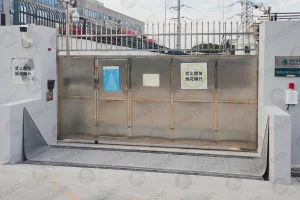
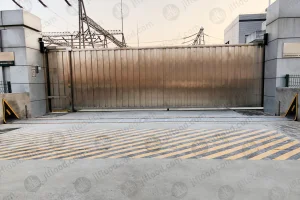
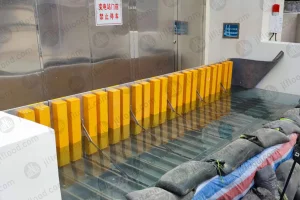
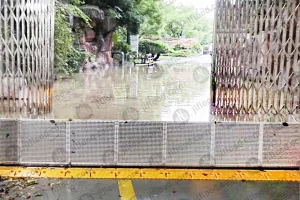
Kuwait's electrical infrastructure, overseen by the Ministry of Electricity & Water & Renewable Energy (MEW), operates within one of the world's most extreme microclimates. While arid desert conditions dominate the majority of the year, winter seasonal transitions bring severe atmospheric instabilities known locally as "Sarayat" storms. These events unleash intense flash floods, depositing torrential rainfall over short durations onto impermeable desert soils and dense urban concrete surfaces.
High-voltage primary distribution substations (ranging from 11kV, 33kV, up to 300kV/400kV transmission hubs) situated in low-lying topographies such as Al Jahra, Sabah Al-Ahmad, Fahaheel, and Shuaiba Industrial Area face catastrophic operational risks during surface run-off surges. Water ingress into transformer basements, switchgear rooms, and cable trenches leads to explosive short-circuiting, dielectric oil breakdown, and long-term structural grid blackouts costing millions of Kuwaiti Dinars (KWD) in asset damage and economic downtime.
Traditional flood response mechanisms like sandbags or manual aluminum stop-logs frequently fail due to rapid flash-flood onset times (under 15 minutes) and human delay. Electrical active gates consistently stall because primary power grid failure during violent thunderstorms renders motorized actuators completely inoperative.
How passive water buoyancy and hydrostatic balance provide infallible flood barrier deployment without human intervention.
Built into a recessed ground foundation channel flush with the roadway. Incoming floodwater enters the retention chamber, instantly creating upward hydrodynamic buoyancy that pivots the high-strength barrier panel upward.
As water depth increases, head pressure ($P = \rho g h$) exerts force against the barrier face, compressing heavy-duty triple-lip EPDM seals tightly against the embedded steel side frames for 100% water-tight integrity.
Eliminates electronic actuators, PLCs, level switches, or battery backups that fail during extreme grid disturbances. The physical laws of fluid dynamics guarantee deployment even during complete electrical blackouts.
| Technology Parameter | Junli Hydrodynamic Barrier | Electric Motorized Flood Gate | Manual Aluminum Stop-Logs | Sandbag Barriers |
|---|---|---|---|---|
| Deployment Trigger | Automatic (Water Buoyancy) | Automatic / Sensor Driven | Manual Labor Required | Manual Construction |
| Power Dependency | 0% (Pure Passive Mechanics) | 100% (Grid + Backup Generator) | 0% | 0% |
| Response Velocity | < 30 Seconds to Full Elevation | 2 to 5 Minutes | 2 to 4 Hours | 6+ Hours |
| Kuwait Sand/Dust Resistance | Integrated Sand Scraper Seals | Gears Vulnerable to Grit Jamming | Channel Clogging Issues | N/A |
| Vehicular Drive-Over Capacity | AASHTO HS20 / 40 Ton Trucks | Limited Frame Load Limits | Cannot Be Driven Over | Cannot Be Driven Over |
| Lifecycle Maintenance Cost | Ultra-Low (Annual Visual Check) | High (Motors, PLCs, Wiring) | Moderate (Storage & Handling) | Single-Use / Waste |
Delivering high-precision engineered structural flood gates directly from Nanjing industrial facilities to Shuwaikh and Shuaiba Ports.
Nanjing Junli Technology Co., Ltd. operates state-of-the-art manufacturing facilities equipped with multi-axis CNC laser cutting tools, automated robotic welding cells, and dedicated high-pressure hydrostatic testing pools. All substation barriers are crafted using marine-grade 6063-T6 anodized aluminum alloys combined with 304 or 316L stainless steel embedded frames.
Our metallurgical processes incorporate anti-galvanic isolation systems, ensuring zero electrolytic reaction between steel embedding and aluminum panels when subjected to saline groundwater infiltration in coastal Kuwait installation zones.
For Tier-1 EPC contractors (such as Hyundai E&C, Petrofac, Larsen & Toubro, and local Kuwaiti civil firms bidding on MEW infrastructure contracts), purchasing direct from China manufacturing facilities unlocks substantial budgetary savings without sacrificing technical compliance.
A turnkey methodology ensuring seamless integration with existing Kuwait civil structures and grid utility standards.
Evaluation of historical rainwater accumulation depth (50-year storm flood levels), road kerb elevations, soil salinity, and vehicle load profile (heavy maintenance crane entry requirements).
Contractors excavate a dedicated shallow channel across the gate opening. Sub-base drainage connections (DN100/DN150 pipes) are linked to stormwater pumps or gravity discharge outlets.
304/316 Stainless steel base frame anchors are set to precise level tolerance (±1mm). High-strength concrete (C35/40 grade) is poured and cured around the frame structure.
Precision-engineered modular aluminum panels are mounted onto stainless steel pivot shafts. High-elasticity EPDM perimeter gaskets are installed and tested for mechanical clearance.
Simulated water-fill testing performed on site to verify 0.1s passive buoyancy elevation, tight gasket sealing, and immediate flush reset upon water drainage.
Annual inspection protocol involving routine removal of windblown desert sand from the recessed channel and checking perimeter seal elasticity.
Clear responses to technical queries from Kuwait consultants, MEP engineers, and utility procurement managers.
Our hydrodynamic barriers feature specially designed dual-scraping sand guard seals and sloped bottom collection channels. When windblown silica sand accumulates, normal vehicle drive-over pushes surface dust across the top plate without allowing entry into the mechanical pivot assembly. Additionally, the bottom channel incorporates clean-out access points for easy vacuum extraction during periodic facility maintenance.
Yes. The barrier panel in its resting position sits 100% flush with the concrete roadway. Constructed from heavy-duty aviation aluminum profiles supported by internal structural honeycomb ribbing, standard units carry a 40-ton axle load rating (AASHTO HS20 / EU Load Class D400), ensuring heavy utility trucks, mobile generators, and transformer transport vehicles cross without damaging the barrier mechanism.
For high-salinity marine or brackish environments, we utilize 316L stainless steel for all embedded frames, mounting brackets, and pivot hardware. The aluminum barrier panel undergoes hard-anodizing treatment followed by a fluorocarbon (PVDF) powder coating, rendering it completely impervious to atmospheric sea-salt aerosol and corrosive groundwater.
Standard manufacturing lead time is 15 to 25 days depending on total linear meter quantity and custom clear width configurations. Direct ocean freight shipments dispatch from Shanghai or Ningbo ports directly to Kuwait (Shuwaikh Port or Shuaiba Port) with a transit window of approximately 18 to 22 days. Express air freight is available for urgent seal replacement components.
Absolutely. We provide full tender documentation packages, including structural finite element analysis (FEA) reports, 2D AutoCAD embedment drawings, 3D Revit BIM models, material mill test certificates (EN 10204 3.1), hydro-static seal test verification videos, and English installation operation & maintenance (IOM) manuals.
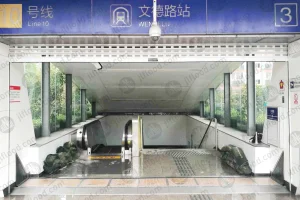
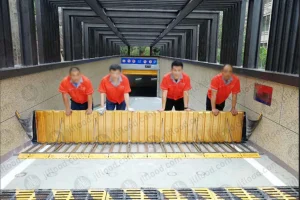
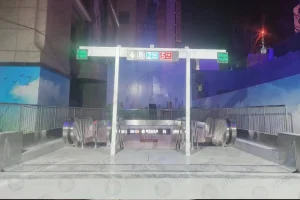
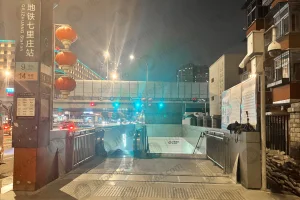
Explore our specialized range of hydrodynamic, automatic, and modular flood gates for substations, metros, and commercial complexes.
Get direct factory pricing, engineering submittals, and custom layout proposals tailored to your Kuwait project requirements.
Send Inquiry Now

