
Explore engineered flood defence systems designed for underground transit, high-voltage electrical substations, commercial parking structures, and municipal utility channels.
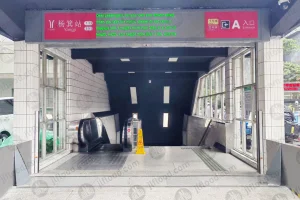
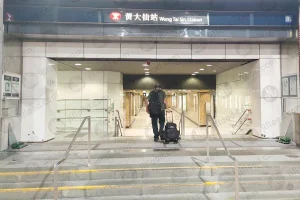
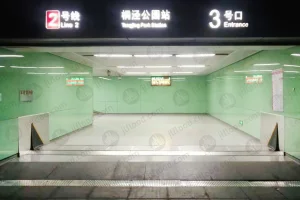
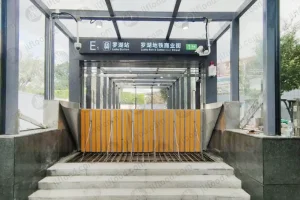
As global climate volatility intensifies, severe pluvial flooding and urban waterlogging have emerged as existential threats to commercial real estate, critical energy grids, underground transportation systems, and industrial logistics facilities worldwide.
Modern municipal engineering standards increasingly mandate high-performance, non-corrosive flood abatement solutions capable of withstanding extreme hydrostatic pressure without relying on grid power. Among all material choices, marine-grade structural aluminum extrusions (6063-T6 and 6061-T6) have dominated global procurement preferences over heavy structural steel or temporary sandbagging.
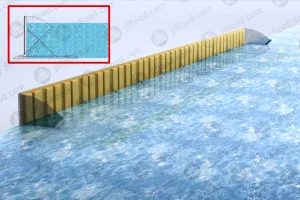
Traditional motorized or pneumatic flood gates fail during catastrophic storms when electrical sub-stations flood or power grids collapse. Hydrodynamic automatic aluminum barriers activate entirely by hydraulic buoyancy, ensuring 100% protection reliability during severe blackout scenarios.
Demountable aluminum stop-log barriers weigh up to 65% less than structural steel equivalents. A two-person crew can erect a 3-meter-wide by 1.5-meter-high multi-panel defense system in under 10 minutes without heavy machinery, dramatically reducing labor costs and emergency response latency.
Anodized aluminum profiles treated with architectural powder coatings achieve neutral salt spray (NSS) test performance exceeding 3,000 hours. This structural integrity guarantees zero degradation across coastal, saline, or chemical-exposed industrial site applications.
Navigating global procurement requires total clarity on Ex-Works (EXW), FOB, and CIF unit economics. The benchmark pricing table below highlights export market rates for China-manufactured structural aluminum flood barriers across standard engineering configurations.
| Barrier Architecture Type | Primary Material & Specs | Retaining Height (mm) | Estimated Price Range (USD / Meter) | Deployment Mechanism | Ideal Application Scenario |
|---|---|---|---|---|---|
| Modular Stop-Log Demountable Barrier | Aluminum Alloy 6063-T6 (Anodized 15µm) | 400mm – 1200mm | $180 – $340 / m | Manual Assembly into Embedded Posts | Commercial Doors, Underground Parking Entrances |
| Hydrodynamic Automatic Self-Rising Gate | 6061-T6 Frame + Stainless Steel 304/316 Basin | 600mm – 1500mm | $550 – $980 / m | Passive Hydraulic Buoyancy (Zero Power) | Subway Stations, Metro Depots, Logistics Hubs |
| Embedded Hydrodynamic Metro Barrier | Heavy-Duty Extruded Al-Alloy + EPDM Seals | 800mm – 2000mm | $750 – $1,250 / m | Sub-surface Recessed Passive Lift | Rail Transit Underground Interchanges |
| Flip-Up Hydraulic Automatic Gate | Structural Aluminum + Electro-Hydraulic Assist | 500mm – 1000mm | $420 – $780 / m | Sensory / Manual Hydraulic Dual-Trigger | Industrial Park Driveways, Chemical Storage Gates |
| Lightweight Pedestrian Doorway Guard | Aluminum Stop-Log (Single Span < 2.5m) | 300mm – 800mm | $120 – $220 / m | Manual Slide-in Slot Lock | Residential Basements, Office Building Doors |
When requesting quotes for custom flood mitigation projects, structural engineers and procurement officers should evaluate four critical factors influencing unit cost:
Engineering structural reliability requires strict adherence to international material standards and fluid dynamics formulas. Junli Technology utilizes advanced FEA (Finite Element Analysis) simulation to optimize profile geometry against severe hydrostatic and hydrodynamic surge heads.
Aluminum extrusions are chosen based on tensile strength, yield stress, and modulus of elasticity:
| Mechanical Property | Alloy 6063-T6 | Alloy 6061-T6 |
|---|---|---|
| Ultimate Tensile Strength | 245 MPa | 310 MPa |
| Yield Tensile Strength | 214 MPa | 276 MPa |
| Elongation at Break | 8 - 10% | 12 - 17% |
| Surface Anodizing Quality | Superior Mirror Smooth | Standard Industrial |
*Note: Standard stop-log panels employ 6063-T6 for seamless multi-hollow chamber extrusion, whereas high-impact hydrodynamic bottom chassis components utilize structural 6061-T6 plate.
The self-rising automatic flood gate operates via passive hydrostatic equilibrium. As floodwater flows into the recessed bottom chamber, Archimedes' buoyancy force ($F_b$) acts directly upon the hollow sealed panel:
Where ρ is water density, g is gravitational acceleration, H is design flood height, and W is span width. As water rises, $F_b$ overcomes the panel's mechanical mass, elevating the barrier panel. Simultaneously, hydrostatic pressure forces the continuous EPDM bottom and side seals against the stainless steel jambs, achieving a self-tightening hermetic seal.
Different commercial and civil infrastructures present unique architectural constraints, traffic loads, and hydraulic risks. Below are standardized solutions developed for core urban infrastructure segments.
Driveway ramps require heavy-load vehicle drive-over capability. Hydrodynamic embedded barriers sit completely flush with the road surface, rated for AASHTO HS-20 / EN 124 D400 truck loadings (40-ton static axle rating) without obstructing daily vehicle ingress.
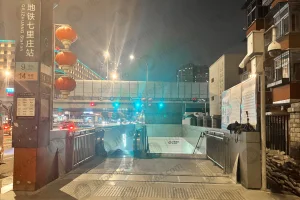
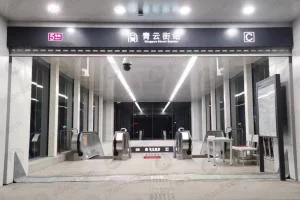
Subway pedestrian portals require swift, automated response. Embedded hydrodynamic models trigger within 0.1 seconds of water contact, deploying a 1.2m retaining wall before flash flood waters can cascade down station stairwells.
High-voltage equipment failure causes multi-million-dollar outages. Modular aluminum stop-log barriers and automatic flip-up doors isolate transformer yards, cable trenches, and control rooms from water ingress during coastal storm surges.
Global EPC contractors and municipal engineers must ensure imported flood control hardware complies with stringent local building codes, structural deflection limits, and safety standards.
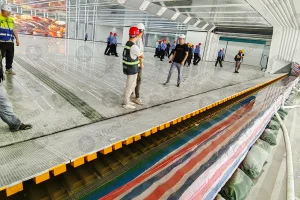
Junli Technology subjects 100% of manufactured flood gates to full-scale water retention testing prior to factory dispatch:
Our engineering documentation packages support global tender submissions under the following regulatory frameworks:
Review additional specialized flood barrier models engineered for substation perimeters, metro interconnect channels, and power-free automatic operation.
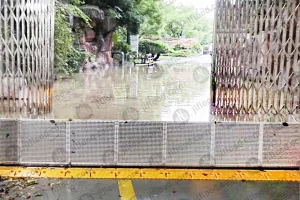
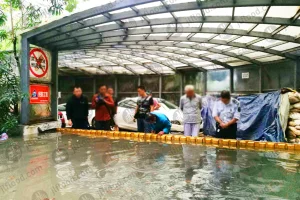
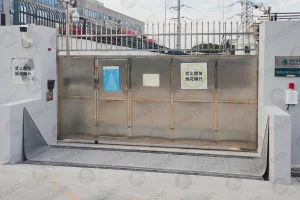
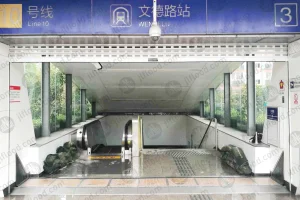
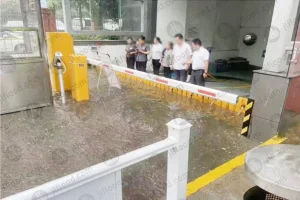
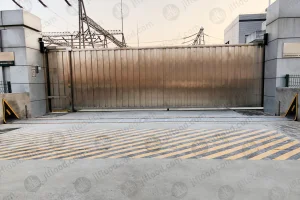
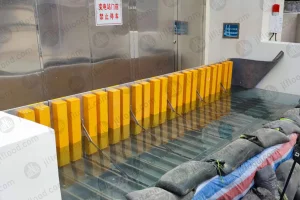
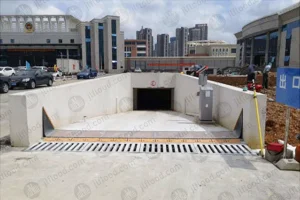
In-depth answers to common questions raised by procurement managers, structural consultants, civil contractors, and facility managers.
Hydrodynamic automatic barriers are engineered using pure hydrostatic equilibrium and buoyancy principles. The aluminum gate panel rests flush inside a pre-embedded stainless steel foundation box embedded in the floor entrance. When flash floods cause surface water to spill into the foundation trench, water fills the internal buoyancy chambers, generating an upward buoyant force ($F_b$). As the water level rises, the panel automatically pivots upward, locking mechanically into place to form an impervious retaining wall. No sensors, motor drives, pneumatic pumps, or backup generators are required.
Manual aluminum stop-log barriers typically range from $180 to $340 per linear meter EXW, making them highly economical for facilities with dedicated 24/7 maintenance teams who can manually deploy stop logs prior to forecasted storms. Automatic hydrodynamic barriers cost between $550 and $1,250 per linear meter EXW depending on vehicle load ratings and clear span width. However, automatic systems eliminate ongoing labor deployment overhead and prevent catastrophic human error during unpredicted flash floods.
Yes. Junli embedded hydrodynamic automatic barrier chassis and top cover plates are manufactured using heavy-gauge structural steel or high-tensile 6061-T6 aluminum reinforced with internal stiffening ribs. Standard models are rated for AASHTO HS-20 and EN 124 D400 loading standard, supporting static axle weights up to 40 metric tons. Vehicles can drive smoothly over the flush top cover during normal daily operations without damaging the internal seal or mechanism.
All Junli flood barriers utilize military-grade, non-recycled EPDM (Ethylene Propylene Diene Monomer) vulcanized rubber seals. EPDM exhibits exceptional resistance to ozone degradation, harsh UV radiation, thermal cycling (-40°C to +120°C), and chemical runoff. Side wall seals feature specialized multi-lip tension profiles that compress dynamically under water pressure to ensure zero-leak performance over a 25-year service lifecycle.
For each project quote, Junli Technology provides a complete BIM/CAD engineering drawing package in English. This includes AutoCad DWG profiles, 3D STEP models, civil foundation rebar embedment detail drawings, static load calculations, FEA deflection simulation reports, material mill test certificates (MTC complying with EN 10204 3.1), and step-by-step Installation & Maintenance Manuals.


