Explore top-tier hydrodynamic and embedded self-closing flood barrier configurations manufactured for home driveways, metro channels, substations, and underground industrial facilities.
As climate instability escalates globally, catastrophic cloudbursts, severe urban waterlogging, and flash flooding present existential threats to critical infrastructure, industrial plants, commercial assets, and modern residential homes. In response, civil defense engineering has undergone a fundamental paradigm shift away from manual sandbagging and electric-motor-driven barriers toward unpowered hydrodynamic automatic flood barrier systems.
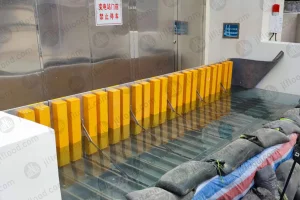
Manufactured with industrial precision in China, hydrodynamic self-closing flood gates operate entirely on fluid dynamics—specifically water buoyancy and hydrostatic head pressure. By embedding flush into foundation surfaces across driveway openings, garage entrances, underground subway portals, and factory gates, these automatic barriers eliminate human intervention risks and electrical grid dependency during severe storms.
The international flood defense equipment market is transitioning rapidly due to stringent urban resilience mandates, escalating corporate Environmental, Social, and Governance (ESG) standards, and skyrocketing flood insurance premiums.
Homeowners demand seamless, aesthetically integrated flood barriers that sit invisible in luxury driveways, rising automatically without manual labor when flash floods hit residential properties.
Manufacturing facilities require heavy-duty truck-rated (AASHTO HS-20 / EN124 D400) load-bearing flood barriers capable of protecting loading docks and hazardous material stores from water ingress.
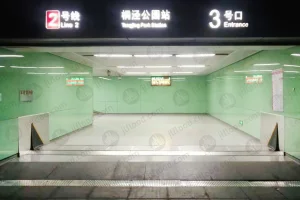
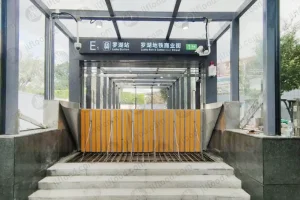
High-density subway systems like those in Guangzhou, Dalian, and Suzhou mandate zero-power automatic flood barriers across station entrances and underground pedestrian connection channels.
Electrical grid operators specify non-conductive, corrosion-resistant self-closing flood gates around transformer vaults to prevent cataclysmic short circuits and municipal power blackouts.
Understanding why unpowered hydrodynamic flood barriers outperform manual stop logs and electric powered gates requires a technical analysis of structural physics, fluid mechanics, and fail-safe vulnerability profiles.
The embedded hydrodynamic automatic flood barrier consists of a stationary underground recess chamber, a stainless-steel pivoting panel, and dual side wall sealing compression units. When surface runoff exceeds the kerb drainage capacity:
| Performance Feature | Hydrodynamic Automatic (Junli) | Electric Motorized Barriers | Manual Aluminum Stop Logs |
|---|---|---|---|
| Power Dependency | 0% (100% Unpowered) | Requires AC grid / Battery Backup | 100% Manual Labor Required |
| Deployment Speed | Immediate (< 30 seconds) | 1 to 3 minutes | 30 to 120 minutes |
| Storm Blackout Reliability | 100% Fail-Safe Operating | High Failure Risk during outages | Dependent on personnel availability |
| Vehicle Drive-Over Rating | Heavy-Duty Truck Rated (Up to 40T) | Varies (Medium Load) | None (Must be removed) |
| Maintenance Overhead | Minimal (Annual Debris Flush) | High (Motors, Sensors, Wiring) | Medium (Storage & Gasket checks) |
When requesting manufacturer quotes for flood barrier systems for residential estates, commercial facilities, or infrastructure tenders, international EPC contractors and procurement managers must evaluate several technical criteria to ensure structural compliance and total cost of ownership (TCO) optimization.
Ensure frames are manufactured from SS304 or Marine-Grade SS316L stainless steel, paired with 6063-T6 aircraft-grade extruded aluminum alloy panels for corrosion protection in coastal environments.
Custom standard retaining heights range from 0.5m to 2.0m. Single clear spans can reach up to 6 meters, with modular interconnected multi-leaf arrays accommodating spans over 30 meters.
Ensure the factory provides complete CAD civil embedding templates, structural rebar placement guidance, and concrete pouring specs for seamless trench integration.
Require third-party or factory-certified hydrodynamic testing reports demonstrating zero leakage rates under dynamic hydro-head pressures prior to export shipment.
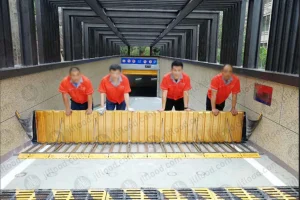
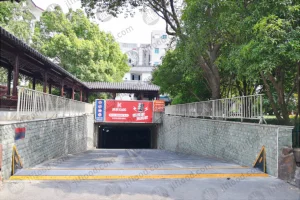
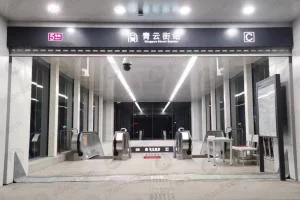
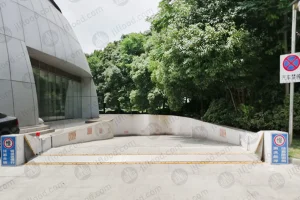
Modern architectural master planning requires modular flood defense engineering that adapts to diverse structural thresholds. Below are four key deployment scenarios engineered by China’s leading flood defense manufacturers:
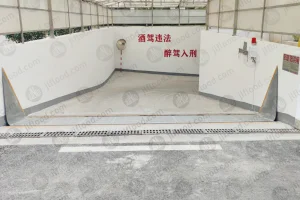
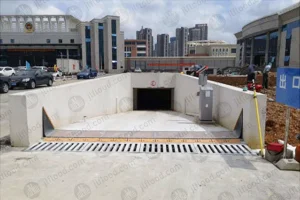
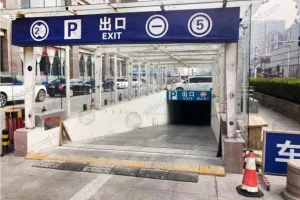
Installed at the apex or foot of parking garage ramps. Keeps vehicle access completely clear during everyday operations, rising automatically when torrential rains fill street gutters.
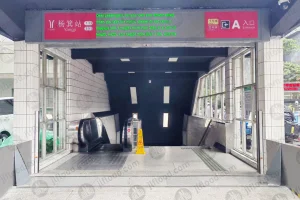
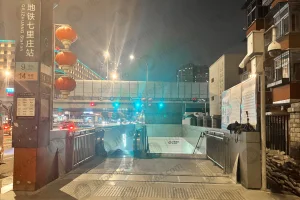
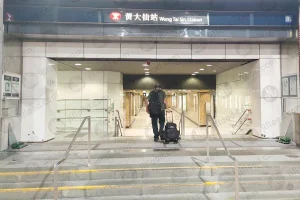
Heavy-foot-traffic portals require flush-surface barrier frames that prevent tripping hazards while offering instantaneous deployment against catastrophic river surges or flash rainstorms.
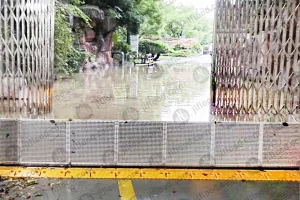
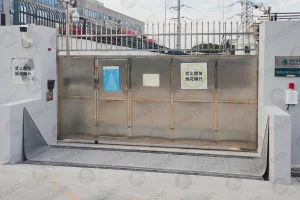
Custom wide-span automatic gates engineered to withstand continuous heavy forklift and freight truck drive-over impact while offering robust protection for inventory rooms.
Specialized compact self-closing barriers designed to seal off electrical cable channels and equipment doors, maintaining power grid operational integrity during typhoons.
Exporting automatic flood barriers across Europe, the Americas, the Middle East, and Southeast Asia demands strict adherence to international building standards and regional civil engineering codes.
While the core lifting mechanism of hydrodynamic barriers remains 100% unpowered and passive for maximum safety, modern intelligent building management systems (BMS) are increasingly integrating digital telemetry and IoT sensor arrays.
Sub-surface water level sensors send instant encrypted alerts to facility management dashboards and smartphone apps the moment water enters the foundation chamber.
Integrated optical cameras utilize AI vision software to visually confirm barrier angle posture, seal engagement, and structural status in real time.
Interconnected flood barriers upload deployment status into smart city urban resilience control centers, providing disaster response teams with live flood map data.
Detailed engineering and procurement answers regarding China automatic flood barrier installations for homes, industrial sites, and infrastructure projects.
Browse additional self-closing flood protection systems engineered for metro stations, substations, underground infrastructure, and industrial perimeter defense.