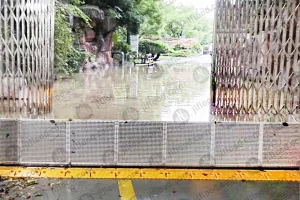
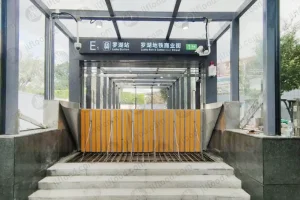
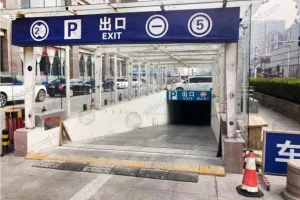
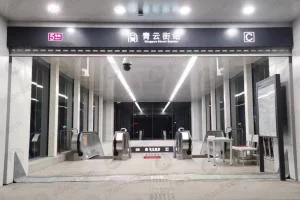
Explore our field-proven automatic self-closing flood gates engineered for subway stations, electrical substations, and commercial parking garages.

Analyzing key operational parameters, disaster mitigation economics, and zero-power hydrodynamic protection standardizations in modern civil infrastructure.
In an era marked by escalating climate volatility, severe cloudbursts, and urban flash floods, traditional manual flood defense mechanisms (such as sandbags and drop-in stop logs) are proving dangerously inadequate. Modern urban engineering demands uncompromising passive protection systems that respond instantaneously to water ingress without human intervention, electrical power grid dependency, or sensor network reliance.
This technical white paper establishes a comprehensive benchmark for evaluating, procuring, and integrating China Automatic Flood Control Barriers. By leveraging advanced hydrodynamic principles, Chinese manufacturing ecosystems have disrupted the global infrastructure protection market—delivering tier-one engineering performance at a total cost of ownership (TCO) 35% to 55% lower than traditional Western European and North American alternatives.
Understanding the engineering parameters, metallurgical choices, and structural specifications that dictate budget allocations for industrial flood gates.
When requesting quotes for automated self-rising flood barriers, procurement directors and consulting engineers must look beyond basic linear meter rates. Pricing is calculated based on specific structural load demands, corrosion environment classifications, and civil engineering integration depth.
| Barrier Category | Structural Material | Load Rating (EN124) | Standard Height Range | Estimated Cost (USD / Linear Meter) | Primary Target Applications |
|---|---|---|---|---|---|
| Hydrodynamic Self-Closing (Light) | Aircraft Grade Aluminum 6063-T6 | Class B125 / C250 (12.5t - 25t) | 300mm – 600mm | $450 – $750 | Pedestrian entrances, commercial doorways, metro air shafts |
| Hydrodynamic Heavy Driveway Gate | Reinforced Stainless Steel SUS304 / 316 | Class D400 (40 Tonne Axle) | 600mm – 1200mm | $800 – $1,350 | Underground parking ramps, industrial logistics hubs, depot gates |
| Substation Perimeter Barrier | SUS304 Frame + Composite Panel | Class C250 / D400 | 500mm – 1000mm | $650 – $1,100 | Power distribution facilities, data centers, high-voltage transformer rooms |
| Embedded Flip-Up Power-Free Barrier | Marine Grade SUS316L + EPDM Seals | Class E600 / F900 (Heavy Duty) | 800mm – 2000mm | $1,200 – $2,200 | Port facilities, coastal rail connections, hazardous material bunding |
Opting for 316L Stainless Steel over 304 increases baseline raw material cost by 20-30%, but provides crucial longevity in coastal, high-salinity marine environments.
Pre-embedded frame assemblies reduce site installation hours by up to 60%. Custom structural engineering depth influences initial manufacturing molds and tooling fees.
Pure mechanical buoyancy levers eliminate electrical motors, control panels, and battery back-up costs—slashing maintenance budgets over the system's 25-year lifespan.
A deep dive into passive Archimedean buoyancy dynamics, structural hydrostatic leverage, and multi-stage seal engineering.
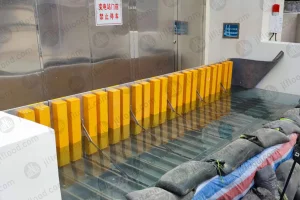
The core mechanism of an automatic self-closing flood barrier relies entirely on fluid dynamics and Archimedes’ principle. The panel rests horizontally flush inside a recessed stainless steel foundation pit, serving as a heavy-duty driving surface during dry periods. When surface runoff exceeds urban drainage capacity and approaches the barrier inlet channel:
Dynamic sealing integrity under hydrostatic pressure is achieved through a 3-tier vulcanized EPDM profile layout:
Once floodwaters recede and the external water level drops below the protection threshold, built-in drainage weep holes slowly evacuate water from the foundation basin. Gravity smoothly returns the door panel to its horizontal resting position flush with the road, restoring uninterrupted vehicular transit.
From raw material integration to robotic precision laser welding—how Chinese manufacturing hubs optimized cost efficiency and structural quality.
China produces over 55% of the world's primary aluminum and stainless steel. Direct industrial access in regions like Jiangsu and Zhejiang eliminates international raw material markup costs.
State-of-the-art fiber laser cutting and 6-axis robotic welding cells deliver structural tolerances down to ±0.5mm, ensuring perfect site alignment and zero gasket gaps.
Leading Chinese manufacturers maintain dedicated full-scale hydrostatic testing pools capable of simulating 2-meter water head pressure and rapid flash-flood velocity flows prior to shipping.
Bridge the gap between international engineering codes and OEM production with localized technical documentation, site templates, and certification readiness.
Export-ready automatic flood barriers manufactured in China adhere to international benchmarks including CE Marking (EN 1090-1 structural steel/aluminum), ISO 9001 Quality Management Systems, and hydrostatic testing protocols aligned with FM Approvals Class 2510 flood mitigation standards. Detailed material mill certificates (MTC 3.1) accompany every shipment.
To support global EPC contractors, engineering teams provide complete BIM/CAD embedding drawings, 3D structural simulation models, custom drainage pit calculations, and bilingual installation manuals. Remote video-guided installation supervision and on-site engineering dispatch are available for major municipal contracts.
Where hydrodynamic self-closing flood gates provide mission-critical risk mitigation across commercial, utility, and transit sectors.
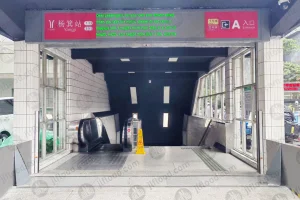
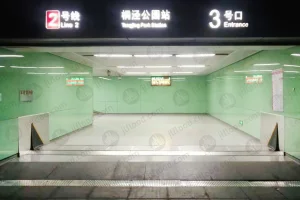
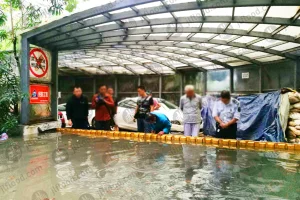
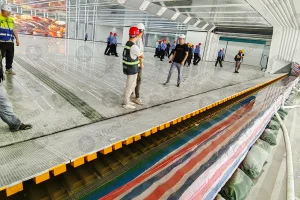
Protects underground rail networks from surface water ingress. Flush recessed frames allow continuous high-density pedestrian flow without creating tripping hazards.
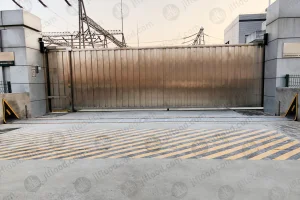
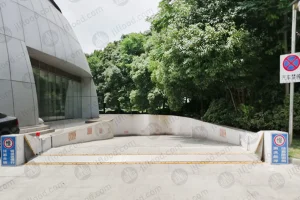
Prevents catastrophic electrical short circuits during severe urban flooding. Zero-power activation ensures total reliability even during grid blackouts.
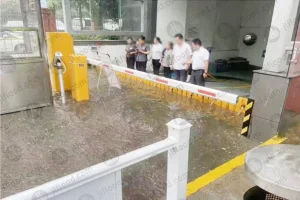
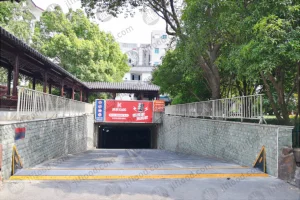
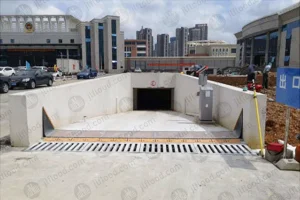
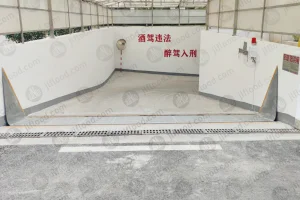
Heavy-duty driveway models capable of supporting 40-tonne vehicle traffic (D400 rating) daily, popping up automatically during heavy downpours to safeguard parked assets.
How smart sensor telematics, ultra-lightweight composite materials, and sponge city engineering are transforming flood defenses.
While mechanical movement remains 100% power-free and buoyant, modern installations are increasingly equipped with low-power NB-IoT/LoRaWAN sensors. These transmit real-time deployment status alerts, water level metrics, and maintenance warning telemetry directly to central smart-city operational dashboards without compromising passive mechanical security.
Next-generation automatic flood gates leverage advanced carbon-composite and graphene-reinforced aluminum honeycomb cores. This engineering breakthrough decreases total panel deadweight by 35% while increasing structural flexural strength, allowing even faster activation speeds during flash flood surges.
Expert answers to standard inquiries from structural engineers, municipal buyers, and general contractors.
The barrier panel is installed inside a recessed foundation pit flush with the road level. When floodwater enters the pit, Archimedean buoyancy forces lift the hydrophobic panel. As water levels rise, hydrostatic pressure exerts leverage against the base hinge, pressing the door firmly against frame seals and locking it into position. Zero power, batteries, sensors, or manual triggers are required.
Depending on structural specification, embedded models are built to EN 124 standards, ranging from Class B125 (12.5 tonnes for light vehicles) up to Class D400 and E600 (40 to 60 tonnes axle loads), making them fully suitable for heavy fire trucks, logistics semi-trailers, and bus driveways.
Maintenance is minimal. Routine procedures involve semi-annual inspection of the foundation pit to clear accumulated leaves or silt via the cleanout access ports, and inspecting the EPDM seals for physical damage. Seals are rated for 10-15 years of exposure and are easily replaced in modular sections.
Yes. Shallow-embedment models require a trench depth of only 150mm to 300mm, allowing seamless retrofitting into existing concrete garage ramps or entrance thresholds without disturbing underlying deep utilities.
Barriers are wrapped in protective anti-scratch vapor phase inhibitor (VPI) film, secured with structural corner guards, and enclosed in ISPM 15 compliant fumigated wooden crates or steel frame skids designed for direct crane or forklift handling.
Review additional factory-direct quotes and specifications for metro station gates, garage flip-up barriers, and power-free self-closing protection units.