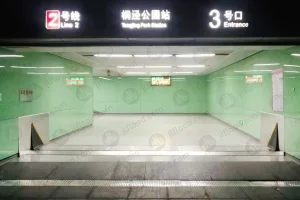
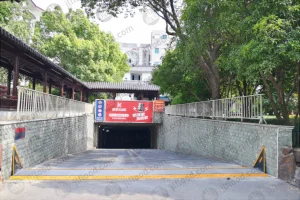
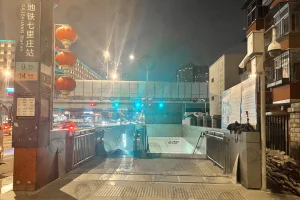
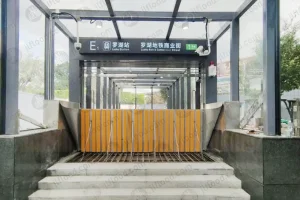
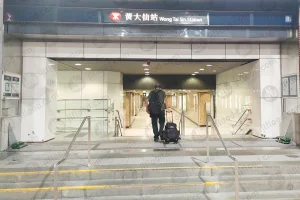
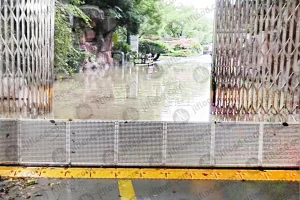
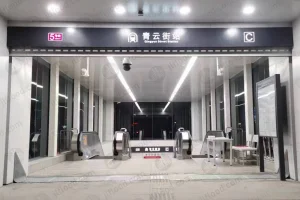
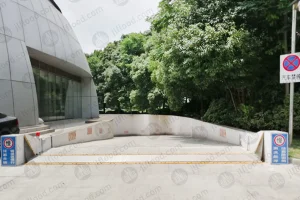
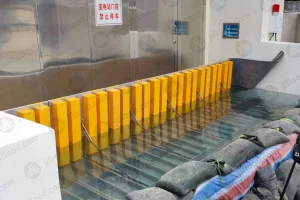
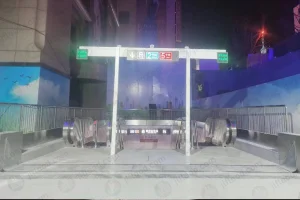
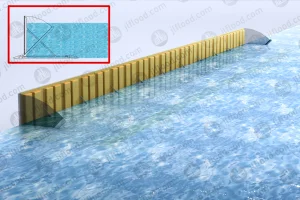
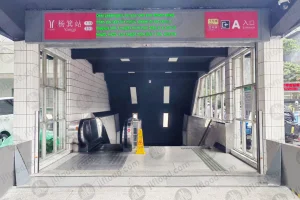
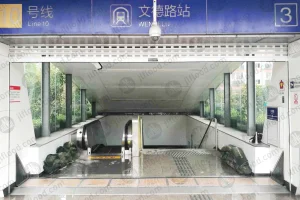
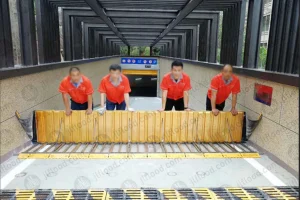
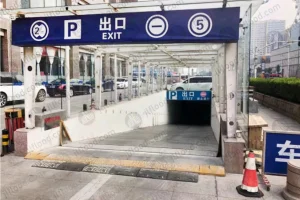
Standardized modular hydrodynamic and automated flood door configurations certified for high-volume pedestrian access portals, interchange passages, and ventilation intake shafts.
Metro network flooding represents one of the most destructive climate vulnerabilities in modern urban engineering. Discover how automated hydrodynamic defense barriers manufactured in China achieve absolute passive containment without external electrical dependency.
Operating entirely on buoyancy and Archimedes hydrostatic pressure principles, panels deploy automatically the millisecond storm surges enter the foundation retention trough. Zero power cords, hydraulic fluid leak risks, or motor stall vulnerabilities.
Engineered utilizing high-tensile 6061-T6 aluminum alloys and reinforced stainless steel sub-frames, capable of resisting vehicle roll-over loads of up to 40 tonnes during recessed states and hydrodynamic surge wave impacts when erected.
Industrial vulcanized EPDM compression seals form impenetrable boundaries against both static standing heads and dynamic stormwater debris, delivering near-zero leakage tolerances that satisfy international flood protection guidelines.
China leads the world in high-speed rail transit expansion and mega-city civil defense infrastructure. Discover why global engineering contractors and civil authorities source metro automatic flood gates directly from Chinese original equipment manufacturers.
From raw 6061/6063-T6 aluminum extrusion casting to multi-axis CNC milling, plasma welding, and robotic vulcanized EPDM seal bonding, Chinese factories integrate the entire manufacturing cycle under one roof, decreasing production schedules by 45% compared to Western counterparts.
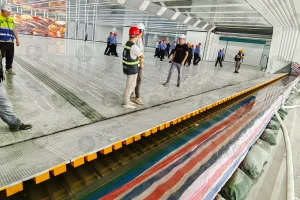
Tier-1 Chinese producers possess full-scale hydraulic pool test beds. Every engineered metro barrier is subjected to real hydraulic submersion, hydrodynamic buoyancy tests, static deflection measurements, and seal compression validation prior to packing and overseas shipping.
Subway station mouths, passenger concourses, and egress ramps present unique architectural angles. Chinese engineering centers produce exact CAD/BIM civil drawings, tailor embedment frames to local curb levels, and accommodate unique multi-leaf wide spans up to 30+ meters.
Direct sourcing delivers capital expenditure reductions of 30% to 55% without sacrificing steel thicknesses, bearing ratings, or surface corrosion passivation treatments (fluorocarbon coatings and marine-grade anodization).
Quotation benchmarks depend directly upon the structural installation archetype, clear retaining span, required water retention height, and custom auxiliary sensors (such as SCADA integration, audible-visual sirens, and manual maintenance override pedals).
| Model / Mechanical Class | Typical Installation Scenario | Retaining Height | Actuation Philosophy | Est. FOB China Price (Per Meter) | Standard Lead Time |
|---|---|---|---|---|---|
| Embedded Hydrodynamic Barrier (HM4D) | Subway Portal, Rail Hub Stairwells | 600mm – 1200mm | Passive Water Buoyancy (Zero Power) | $450 – $850 / m | 15 – 20 Days |
| Surface-Mounted Flip-Up Barrier | Existing Metro Exits (No Trough Pit) | 400mm – 900mm | Pre-tensioned Gas Spring + Buoyancy | $380 – $680 / m | 12 – 18 Days |
| Heavy-Duty Vehicle/Concourse Gate | Metro Logistic Gate, Depot Ramps | 800mm – 2000mm | Hydrodynamic + Mechanical Locking | $650 – $1,250 / m | 20 – 25 Days |
| Intelligent Dual-Drive Power Door | Underground Multi-modal Terminals | 1000mm – 1800mm | Electric Motor + Hydraulic Redundancy | $900 – $1,600 / m | 25 – 30 Days |
| Lightweight Pedestrian Self-Closing Gate | Auxiliary Air Shafts, Escape Passages | 500mm – 1000mm | Pure Float Counterweight Mechanism | $320 – $580 / m | 10 – 15 Days |
*Note: The figures outlined above represent typical factory quotes for export packaging in reinforced plywood crating. Final customized proposals vary based on raw material market index (aluminum/stainless steel), custom paint specifications, and embedded civil bracket requirements.
Urbanization, combined with extreme climate precipitation anomalies (50-year and 100-year cloudburst events), is driving massive technical evolution across the subterranean perimeter security and water mitigation industry.
Contemporary metro operators demand that passive mechanical barriers report their deployment status back to the centralized Station Operation Control (OCC). Smart micro-switches, inductive telemetry sensors, and waterproof terminal boxes now transmit real-time gate angle and water-level alert data straight to municipal emergency networks.
Historical urban flood disasters have demonstrated that electrical distribution networks almost always fail concurrently with severe storm ingress. The industry is discarding complex sensor-driven electric pumps in favor of unpowered hydrodynamic doors that operate unconditionally during blackout conditions.
Subway thresholds cannot tolerate vertical trip hazards or steep thresholds that impede mobility-impaired passengers, strollers, or high-density transit pedestrian traffic. Current-generation flush embedded plates lay totally level with surrounding tile finishes, raising only when submerged.
Subway networks act as subterranean funnels if exterior barriers fail. Effective transit flood protection requires strategically customized solutions based on clear opening geometry, floor load, and evacuation protocol.
Recessed smoothly into exterior entrance plazas, these gates tolerate intense foot traffic daily. Once urban street run-off cascades onto the top step, the chamber floods, raising the barrier panel before water spills down the escalators.
Subterranean commercial corridors link metro terminals directly to private retail malls. Autonomous bi-directional barrier leaves isolate the railway tunnels if adjacent non-transit structures suffer pipe bursts or roof leakage.
Grade-level air intakes represent quiet vulnerabilities. Self-closing vertical flip barriers remain dormant inside structural grates, rotating into place when flash flood levels rise across surrounding sidewalks.
Rolling stock maintenance facilities feature immense span widths and vehicle passages. Heavy-duty modular units endure heavy axle rail repair equipment while remaining poised to block flood surges.
Specifying automatic flood mitigation products for transit authorities in Southeast Asia, Europe, the Middle East, and Latin America requires strict engineering compliance, third-party inspection, and rigorous project management.
Factory engineers supply comprehensive tender-ready documentation, including finite element analysis (FEA) deflection calculations under hydrodynamic loading, raw material mill test certificates, and English-language CAD shop drawings for local consultant sign-off.
Clients or third-party agencies (SGS, TÜV, Bureau Veritas) conduct live witnessed water immersion testing in the factory's hydraulic pools. Deployment duration, seal leakage rates per linear meter, and manual recovery functions are thoroughly recorded.
Each unit ships with precision steel rebar templates, frame anchoring bolts, drainage interface specifications, and detailed step-by-step video installation manuals. On-site engineering supervision is dispatched for high-volume metro contracts.
Addressing crucial hydraulic design, civil preparation, pricing variables, and lifespan inquiries submitted by consulting engineers and public transit procurement officers.
Explore our expanded export portfolio of heavy-duty, embedded, and surface-type automatic water retaining gates engineered for metro stations, electrical power substations, and critical basements.