
Explore our engineered line of automatic self-rising flood defence gates, validated through real-world flood retention events and rigorous hydraulic pool testing.
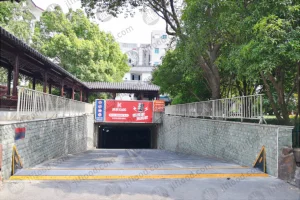
Wholesale Flip-up flood barrier for garages Manufacturer, Factory
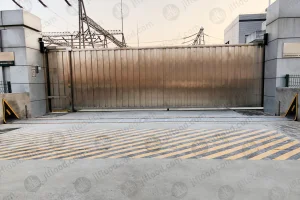
China Automatic Flood Barrier at Substation Gate Factory, Pricelist
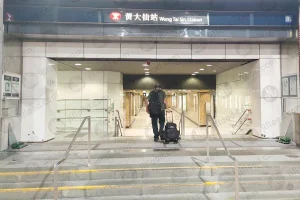
Wholesale Flip-Up Automatic Flood Barrier Manufacturer, Manufacturers
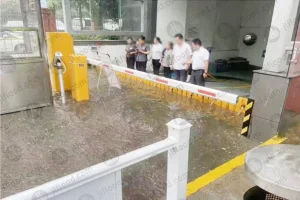
Wholesale Flood barrier, Flood defence automaticlly Manufacturer, Pricelist
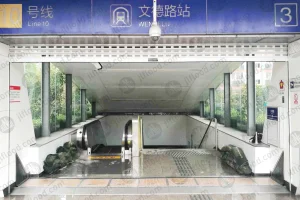
China Surface type Automatic flood barrier for Metro Suppliers, Pricelist
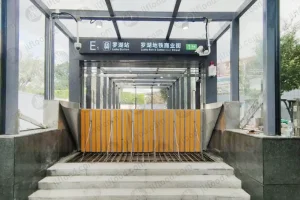
Wholesale Flood Barrier at Metro Stations Manufacturer, Quotes
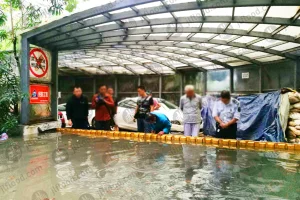
Wholesale Modular hydrodynamic automatic flood gate Supplier, Factories
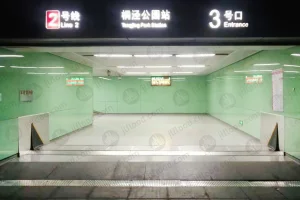
Wholesale Flood Barrier at Metro Connection Channel Manufacturer, Factories
Why municipal authorities, civil defense consultants, and global asset managers are transitioning from powered electromechanical barriers to passive, fluid-buoyancy automatic flood gates.
In the contemporary era of extreme climate variability, severe precipitation events and localized cloudbursts routinely exceed municipal stormwater capacity. The critical failure mode during major flash floods is almost universally tied to power grid collapse, transformer station inundation, or human delay in deploying manual stop-logs. When urban infrastructure relies on electromechanical flood gates, sensor networks, or human-operated pumps, single-point electrical and operational failures result in catastrophic subterranean asset damage.
As a leading China Automatic Flood Gate Without Electricity Supplier & Factory, Nanjing Junli Technology Co., Ltd. has redesigned urban hydrodynamic protection from first principles. Passive unpowered automatic flood barriers operate strictly on fundamental hydraulic physics—leveraging water buoyancy and hydrostatic pressure gradients to deploy automatically without sensors, AC/DC power supply, pneumatic accumulators, or manual labor intervention.
How buoyancy vectors, structural leverage, and marine-grade elastomer compression deliver zero-power water sealing.
During dry weather conditions, the high-strength aluminum/stainless door panel rests flush inside a embedded ground foundation basin. Heavy vehicular traffic (up to D400 / 40-ton axle loads) drives seamlessly across the surface frame without structural distortion.
As floodwaters breach the perimeter kerb and enter the intake grid, water fills the recessed chamber base. The internal engineered hollow buoyancy tank experiences immediate upward thrust ($F_{buoyancy} = \rho \cdot V \cdot g$), lifting the barrier door off its rest pads.
As water levels rise against the outer face, hydrostatic pressure pushes the barrier leaf firmly against side wall jambs and dual-lip EPDM seals. Higher water levels increase sealing forces exponentially, guaranteeing absolute zero leakage.
| Vector Metric | Legacy Manual Stop-Logs | Powered Electric/Hydraulic Gates | Junli Powerless Hydrodynamic Barrier |
|---|---|---|---|
| Power Dependence | Manual Effort Required | 100% Dependent on Grid / Generator | 0% (100% Passive Hydraulic Buoyancy) |
| Response Time | 30 – 120 Minutes (Requires Staff) | 1 – 5 Minutes (If Sensors Work) | Instantaneous (< 0.5 sec upon water ingress) |
| Blackout Risk | High (Human logistics blockage) | Critical (Motor & Controller Submergence) | Immune (Pure mechanical & fluid laws) |
| Annual Maintenance | Moderate (Storage & Seal check) | High (Pumps, motors, wiring, PLCs) | Ultra-Low (Periodic sediment flush) |
| Lifespan Expectancy | 5 - 10 Years | 8 - 12 Years | 30 - 50 Years (6063-T6 / SUS304 Matrix) |
Precision-engineered automatic flood barrier implementations engineered to protect strategic municipal and private assets.
Subway station concourses, pedestrian portals, and underground connection tunnels represent high-consequence flood pathways. Junli metro-grade self-rising flood gates (e.g., Hm4d and Hm4e series) fit seamlessly inside entrance thresholds, activating automatically to seal out up to 2.0 meters of head pressure, ensuring passengers and million-dollar traction equipment remain fully isolated.
Power distribution nodes, cable trenches, and transformer rooms must maintain continuous operational uptime during severe weather. Our unpowered automatic substation gates seal utility perimeter walls and doorways without relying on auxiliary power circuits—eliminating the risk of electrical short-circuits or cascading regional grid blackouts during municipal inundations.
Basement car parks in high-density shopping malls, hospital complexes, and residential towers are highly vulnerable to rapid surface runoff. Our surface-mounted and embedded ramp flood barriers withstand heavy vehicle traffic daily, deploying automatically when rainwater overwhelms drainage channels to preserve structure integrity and parked vehicles.
Underground pedestrian street crossings, airport landside basements, and civil defense bunkers require robust, maintenance-free flood barriers compliant with national structural safety standard frameworks. Junli barriers deliver certified hydraulic barrier performance without continuous operational overhead.
Direct factory production from Nanjing, Jiangsu—leveraging automated laser machining, robotic welding, and full-scale hydraulic pool testing.
As an established industrial OEM/ODM manufacturer headquartered in Nanjing, Jiangsu Province, Junli Technology operates a state-of-the-art production facility dedicated exclusively to flood defense hardware. Our Industry 4.0 manufacturing ecosystem integrates fiber laser cutting, automated robotic MIG/TIG welding, CNC profiling, and automated surface anodizing/powder-coating lines.
Every batch of automatic flood gates undergoes rigorous hydrostatic testing in our full-scale hydraulic testing pit. We verify exact buoyancy response thresholds, seal deflection rates under maximum design head pressure, and post-flood reset mechanics before issuing factory clearance certificates.
We utilize structural-grade T6-tempered 6063 architectural aluminum alloys combined with 304/316 stainless steel internal structural skeletons. This composite material selection yields exceptional strength-to-weight ratios, resisting saline corrosion, industrial pollutants, and freeze-thaw cycles.
Our integrated localized supply chain within the Yangtze River Delta engineering hub allows rapid custom extrusion, custom span fabrication (from 1.5-meter single leaves to multi-span arrays exceeding 30 meters), and expedited export shipping to global sea ports.
Key engineering evaluation metrics for EPC contractors, architectural consultants, and international project directors.
Embedded Type (Hm4e Series): Rebuilt or new construction projects where the foundation basin is cast directly into the concrete slab during civil works. Delivers a 100% flat drive-over surface.
Surface-Mounted Type (Hm4d Series): Retrofit installations on existing ramps or doorways. Installed directly onto existing concrete aprons with minimal civil excavation work.
Design specifications must calculate maximum anticipated flood heights (50-year or 100-year storm metrics). Junli barrier leaves are engineered to limit mid-span deflection to under $L/500$ at full structural load, maintaining elastomeric seal compression without mechanical deformation.
Driveways and underground parking ramps require flood barrier surface panels to withstand heavy vehicle movements. Junli heavy-duty models are reinforced to carry up to 40-ton vehicle wheel loads, fully tested for resistance against impact forces and tire shear stresses.
By removing electrical drives, backup battery banks, water sensors, and motorized gearboxes, Junli unpowered hydrodynamic barriers reduce 20-year lifecycle maintenance costs by over 80% compared to electromechanical alternatives.
Full engineering documentation, structural calculations, and site integration models tailored for overseas consultancy standards.
We provide detailed 3D BIM models (Revit, STEP, IFC) and 2D AutoCAD civil interface drawings to allow seamless integration into global infrastructure tender specifications.
Junli manufacturing systems operate under ISO 9001:2015 Quality Management, ISO 14001 Environmental Management, and CE structural directives, ensuring strict regulatory compliance across Europe, the Middle East, Asia-Pacific, and the Americas.
Every unit is securely packaged in reinforced export wooden crates, accompanied by comprehensive English installation manuals, embedded anchor templates, maintenance schedules, and video commissioning support.
Detailed technical answers to common questions regarding automatic unpowered flood gates.
The flood barrier panel sits flush inside a recessed foundation chamber installed across an entrance. When flash flood waters approach, water enters the foundation basin via intake grilles. As the water fills the basin, an engineered internal air buoyancy chamber generates powerful upward hydrodynamic thrust. This natural physical force lifts the barrier panel automatically. As the water level rises further, the hydrostatic pressure forces the panel firmly against vertical jamb seals, locking it tightly into position. Zero electricity, motors, or human interventions are required.
Junli hydrodynamic barriers feature integrated sedimentation traps and stainless steel protective filter screens that prevent large debris from entering the primary flotation basin. Furthermore, the bottom chamber is designed with self-clearing water passages. Normal periodic inspection involves removing the top surface access plates and flushing out residual silt using a standard hose—a maintenance process that takes less than 30 minutes per quarter.
Yes. Junli manufactures several load-rated series. Our heavy-duty models are structurally reinforced with internal aviation-grade aluminum rib matrices and high-tensile stainless steel load beams. They are load-tested to withstand up to 40-ton axle weights (D400 rating), making them suitable for fire engines, heavy logistics trucks, and high-frequency garage entrance traffic.
As external floodwaters recede, water naturally drains out of the foundation chamber through engineered low-level check valves or site drainage channels. As the water level inside the chamber drops, the buoyancy force diminishes, and gravity smoothly lowers the barrier panel back into its flush resting position inside the ground basin, restoring normal vehicular access.
Standard retention heights range from 0.5 meters to 2.0 meters per barrier leaf. Single continuous span lengths can reach up to 6.0 meters. For wide driveways, subway portals, or multi-lane building perimeters exceeding 20 meters, modular barrier leaves are connected using removable intermediate support columns or integrated multi-leaf hinge arrays.
Junli Technology is a direct original manufacturer based in Nanjing with proprietary R&D labs, full-scale hydraulic testing pools, and automated aluminum fabrication plants. Trading companies lack in-house engineering capabilities, hydrostatic testing equipment, and direct quality oversight. Purchasing directly from our factory guarantees strict engineering design standards, OEM customization, direct factory pricing, and long-term spare parts availability.
Select from our specialized line of station-grade, substation-grade, and self-closing barrier configurations.
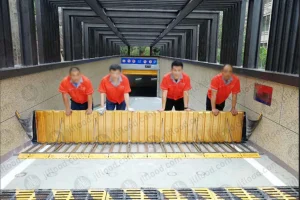
China Heavy duty automatic flood gate Hm4d-0006C Factory, Pricelist
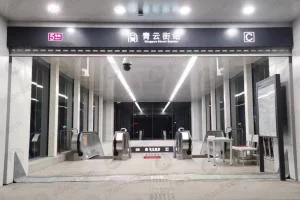
Wholesale Flood Gate at Metro Stations Manufacturer, Suppliers
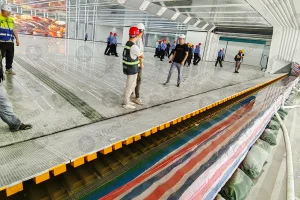
China Self opening & Closing Flood Gate Manufacturers, Suppliers
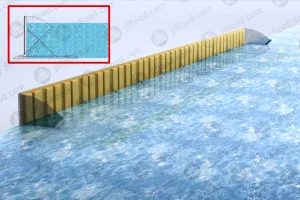
Wholesale Automatic flood barrier, Surface installation metro type: Hm4d-0006E Supplier, Quotes
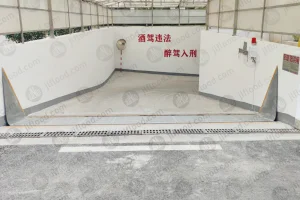
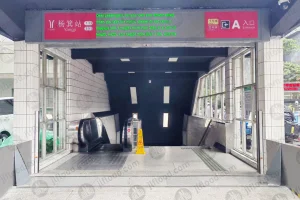
Wholesale Flood Barrier at Guangzhou Metro Yangji Station Suppliers, Factory

China Flood Barrier at Dalian Metro Stations Manufacturers, Quotes
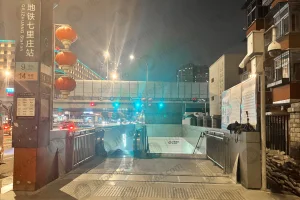
Wholesale Embedded type Automatic flood barrier for Metro Manufacturer, Suppliers


