Direct OEM/ODM solutions engineered by China's leading un-staffed automatic flood barrier manufacturer. Field-tested under extreme urban waterlogging conditions.
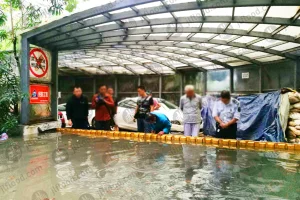
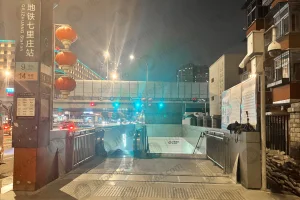
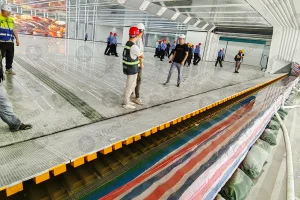
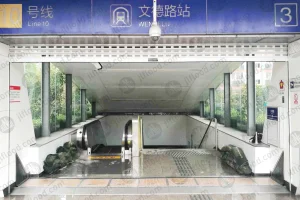
Traditional urban flood protection relies heavily on manual flashboard installations or electromechanical gates. However, historical data from catastrophic extreme weather events demonstrates that 78% of flashboard deployments fail due to late dispatch of personnel during sudden cloudbursts, severe traffic gridlock preventing emergency crews from reaching sites, or total grid power outages knocking out hydraulic actuators right when floodwaters surge.
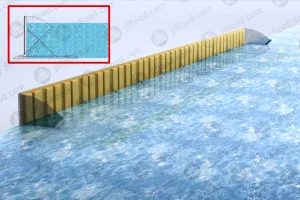
The Automatic Flood Gate Without Personnel On Duty represents an engineering breakthrough in passive water-retaining technology. Utilizing fluid buoyancy principles and hydrostatic dynamic pressure, the gate mechanism remains dormant flush with the roadway surface during normal conditions. The moment incoming surface water flows into the chamber, the gate automatically rises and self-locks without human presence, electrical power, or sensor commands.
Institutional property owners, municipal rail operators, and energy utility providers globally are mandating passive flood protection to secure ESG compliance, mitigate catastrophic liabilities, and meet stringent municipal building standards. Unmanned automatic flood barriers are now recognized by international insurance syndicates (such as FM Global) as the gold standard for high-value underground asset preservation.
Unlike motorized automatic gates that depend on water level sensors, PLC controllers, emergency generators, and mechanical winches—all of which introduce potential points of electrical short-circuits or mechanical jamming during flood emergencies—hydrodynamic self-rising gates convert the potential and kinetic energy of rising water into structural lifting force. The water itself acts as the power source, rendering the barrier 100% fail-safe during blackouts.
An insider analysis of structural load dynamics, dynamic sealing geometry, and hydraulic buoyancy physics developed by Nanjing Junli Technology Co., Ltd.
Under non-flood conditions, the door leaf rests flat inside a pre-embedded bottom frame chamber installed flush with the finished roadway (such as garage ramps or metro concourse entrances). Constructed from high-strength aviation-grade 6063-T6 aluminum alloy or 304/316 stainless steel, the top surface handles heavy vehicular traffic (up to H20 / AASHTO wheel loading or 60-ton container trucks) without structural deformation.
When heavy rainfall causes surface runoff to reach a pre-calculated trigger threshold (typically 30–50mm of water depth), water flows into the chamber through front inlet grates. As water fills the sealed foundation trough, integrated buoyant elements (high-density closed-cell hydrophobic composite matrices) generate immediate upward uplift force. The barrier panel pivots smoothly along a precision stainless steel continuous hinge axle.
As the water level continues to rise outside the threshold, hydrostatic pressure pushes the barrier leaf firmly against side wall frame columns. The greater the external water height, the tighter the barrier seals. Specially formulated multi-lip EPDM dynamic rubber seals compress elastomerically along side and bottom interfaces, achieving an absolute zero-leakage barrier meeting international flood protection standard EN 12247.
How Nanjing Junli Technology leverages China's advanced supply chain ecosystem to deliver structural reliability, custom civil engineering adaptability, and competitive global factory quotes.
China's Yangtze River Delta industrial cluster provides immediate access to high-grade extrusions, custom stainless steel alloys, and precision CNC laser machining. Junli Technology utilizes automated robotic welding cells and large-scale anodizing tanks to ensure total structural homogeneity and corrosion resistance (exceeding 1500 hours salt spray test for coastal installations).
No two architectural openings are identical. Overseas engineering consultants frequently encounter non-standard ramp slopes, irregular curb steps, or high underground cable density. Our dedicated engineering team in Nanjing provides tailored CAD, BIM (Revit), and FEA stress modeling within 48 hours for global tenders, ensuring drop-in compatibility for retrofit and new-build projects.
Unlike regional suppliers who rely solely on computer simulations, Junli operates a dedicated full-scale hydraulic testing basin. Every production lot undergoes rigorous 100% water-retaining hydrostatic testing up to 2.0 meters design head before export dispatch, complete with factory acceptance test (FAT) video logging and third-party inspection certifications.
Tailored structural profiles engineered for distinct operational requirements and water level head pressures.
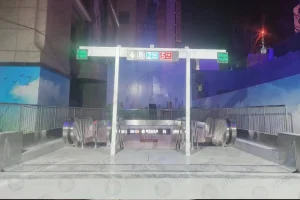
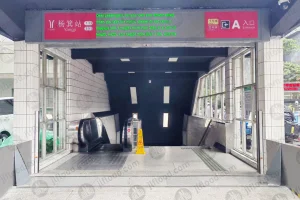
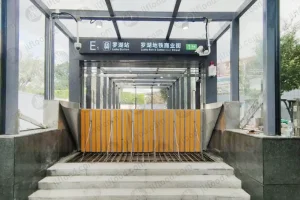
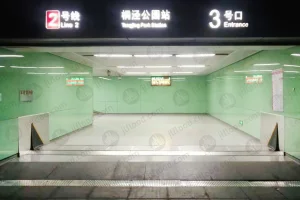
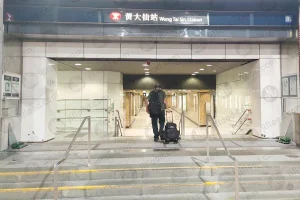
Subway station pedestrian entrances, connection channels to underground shopping malls, and ventilation shafts represent primary flood points during extreme typhoons. Junli's embedded metro-type automatic flood gates mount flat into concourse steps, providing instant passive isolation to prevent water inundating underground track tunnels.
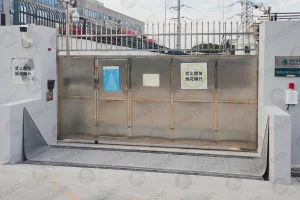
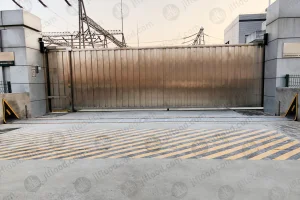
Power transmission equipment rooms, cable trenches, and transformer yard perimeter gates require uninterrupted flood defence. A flood inside a primary grid substation causes regional blackout cascades. Our surface and embedded substation flood barriers offer non-conductive insulation options, fast hydraulic lift, and zero maintenance overhead.
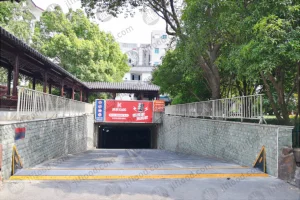
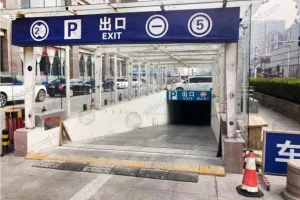
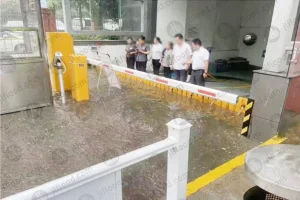
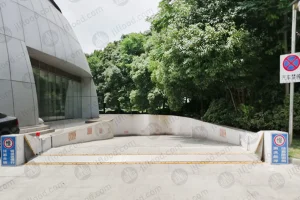
Commercial shopping centers, luxury residential developments, and hospital basements house thousands of vehicles and sensitive HVAC/electrical plant rooms. Flush driveway hydrodynamic barriers seamlessly withstand daily heavy traffic roll-over while guaranteeing auto-rising defence when urban storm drains overflow.
Comparative evaluation of flood protection mechanisms across critical operational parameters.
| Evaluation Parameter | Manual Aluminum Flashboards | Motorized / Hydraulic Electromechanical | Junli Hydrodynamic Unmanned Gate |
|---|---|---|---|
| Human Duty Requirement | 100% Dependent (Requires 2–4 staff) | Partial (Requires operator or remote trigger) | 0% (100% Unmanned Automatic) |
| Electrical Power Dependence | None | High (Fails during local power blackouts) | Zero Power Required (Passive Water Lift) |
| Trigger Speed | 15 to 45 Minutes (Slow manual setup) | 30 to 90 Seconds (Electromechanical) | < 0.1s Water Sensing / Buoyant Lift |
| Roadway Traffic Impact | Must be manually assembled across road | Above-ground posts restrict entry width | Flush Embedment (Zero Roadway Obstruction) |
| Annual Maintenance Cost | Low (Storage degradation risk) | High (Motor, pump, sensor testing) | Very Low (Static Mechanical Hinge & Seals) |
| Operational Reliability Index | Low (Human error / access delay risk) | Medium (Electrical circuit failure risk) | 99.9% Fail-Safe Hydrodynamic Buoyancy |
Streamlining project tendering, custom engineering calculations, and global export shipping logistics.
Provide the net clear width of the entrance ramp or doorway along with the target water retaining height (standard ratings range from 0.5m, 1.0m, 1.5m up to 2.0m). For wide multi-lane driveways, modular array connecting columns can be specified.
Specify whether your site requires an Embedded Installation (recessed into a concrete trench flush with the finished floor, ideal for new construction or major retrofits) or a Surface Installation (mounted directly onto the existing slab without deep trenching).
Confirm the maximum axle weight expected over the recessed gate panel during daily non-flood operations—ranging from standard passenger vehicles (3 tons) up to heavy urban transit buses or fire engines (30–60 tons loading capacity).
Technical solutions addressing real-world civil engineering, installation, and operational queries from global buyers.
Browse our full range of surface-mounted, embedded, flip-up, and metro-spec automatic flood barriers.