
Engineered for zero-power, instantaneous hydraulic deployment. Built to protect metro networks, substations, and critical underground commercial infrastructure.
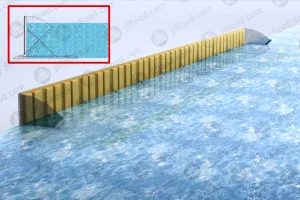
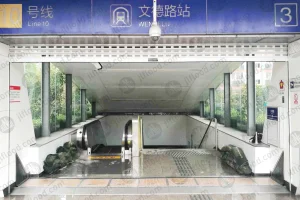
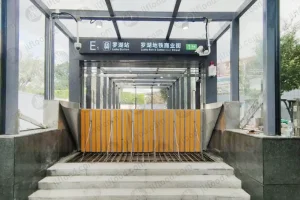
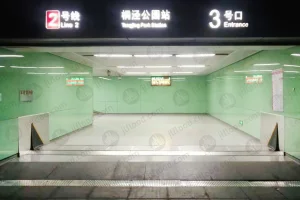
Rapid climate shifts, compounding urbanization, and heightened precipitation anomalies have exacerbated the frequency of extreme pluvial urban flooding globally. Municipal infrastructure—specifically underground rail transit, utility interconnections, sub-grade parking structures, and electrical transmission substations—faces catastrophic structural risk during flash floods. Traditional flood defence paradigms rely on manual interventions (such as sandbags, modular aluminum stop-logs, or manual sluice gates) or electromechanical active systems (motor-driven barriers, electric pumps, automated sensors).
However, real-world flood disasters continuously expose systemic vulnerabilities in traditional approaches:
Manual sandbags and stop-logs demand extensive warning times, physical labor, and logistical staging. Typhoon scenarios frequently coincide with severe manpower shortages, rapid water ingress, and nocturnal surges, rendering manual deployment dangerously slow or impossible.
Active electric flood barriers depend on sensors, actuators, uninterrupted power supplies (UPS), and grid connectivity. Severe atmospheric events invariably precipitate power outages, controller short-circuits, or signal transmission failures—disabling active gates precisely when max-load protection is required.
Fixed vertical gates obstruct pedestrian pathways, reduce clear-driveway passage for high-capacity transit vehicles, and conflict with architectural streetscapes. Modern civil urban planning demands completely invisible protection profiles during dry operating periods.
The Hydrodynamic Paradigm Shift: As a leading China automatic hydrodynamic flood barrier manufacturer and specialized engineering factory, Junli Technology pioneers passive water-buoyancy architecture. By converting the kinetic and hydrostatic force of encroaching floodwaters into mechanical lifting power, hydrodynamic barriers require zero electricity, zero human intervention, and zero external sensor activation.
The core operating principle of Junli’s hydrodynamic automatic flood barrier relies on buoyancy hydrodynamics, hydrostatic torque equilibrium, and gravity-assisted reset mechanics. Below is the technical breakdown of how our factory engineers achieve uncompromised reliability without electrical inputs.
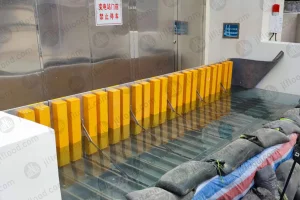
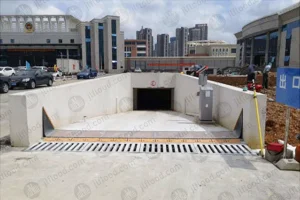
The system is installed flush within a surface foundation trench at the threshold of the facility. During dry periods, vehicles and pedestrians move across the durable top plate. When floodwaters reach the intake threshold, water enters the bottom intake basin via hydrodynamic inlet grates, filling the inner basin cavity.
As the basin fills, high-density closed-cell hydrophobic composite material within the door panel generates instant Archimedean buoyancy ($F_{buoyant} > W_{panel}$). The panel pivots smoothly upward along stainless-steel hinge shafts (Grade 316L), rising proportionally with rising water levels until reaching its maximum 90-degree retaining lock posture.
Unlike traditional barriers where water pressure compromises seals, Junli’s architecture utilizes floodwater hydrostatic pressure to force double-lipped EPDM elastomer seals firmly against the frame. Higher floodwater levels intensify the sealing force, preventing micro-leakage entirely (retaining up to 2.0m water column heads).
Evaluation of Flood Mitigation Technologies for Critical Infrastructure Projects:
| Parameter / Feature | Junli Automatic Hydrodynamic Barrier | Motorized Electric Gate | Manual Modular Stop-Logs |
|---|---|---|---|
| Power Requirement | Zero (100% Water Driven) | High (Requires Mains / Backup UPS) | Zero (Human Powered) |
| Deployment Speed | Instantaneous (< 30 Seconds) | 1 - 3 Minutes (If Power Intact) | 30 - 120 Minutes (Labor Dependent) |
| Human Intervention | 0 Man-Hours (Fully Autonomous) | Requires System Monitor / Operator | Requires 2-4 Trained Crew Members |
| Blackout Reliability | 100% Operational Immunity | High Failure Risk (Battery Depletion) | 100% (Manual Process) |
| Traffic Load Profile | Up to 60-Ton Drive-Over Load | Variable (Surface Tracks Obstruct) | N/A (Temporary Barrier Only) |
| Service Lifespan | 25+ Years (Stainless Steel / EPDM) | 8 - 12 Years (Motor Wear / Sensor Failure) | 10 - 15 Years (Rubber Degrades) |
From Asia-Pacific coastal mega-cities to North American floodplains and European river basins, industrial operators and municipal engineering departments prioritize zero-failure flood mitigation solutions. Junli Technology supplies tailored OEM/ODM hydrodynamic barrier systems tailored to distinct sector challenges.
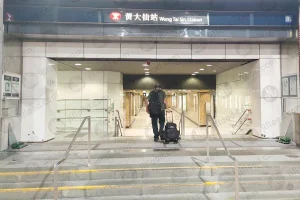
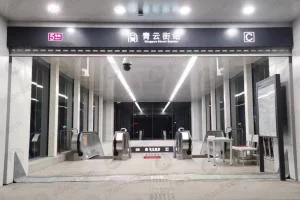
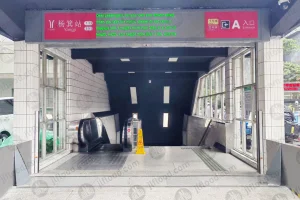
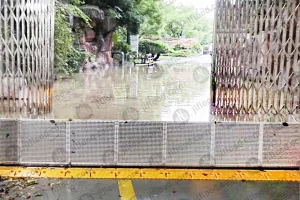
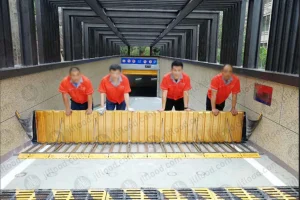
Subway entrance portals, pedestrian passages, and ventilation shaft connections represent high-risk flood entry vectors. Junli’s Metro-Type barriers (e.g., HM4D-0006 Series) sit flush with concourse floors, instantly protecting subway networks from catastrophic flooding during flash cloudbursts.
High-voltage transformer substations and underground distribution vaults require 100% water isolation to avoid electrical arc faults and regional grid blackouts. Our substation perimeter flood gates ensure structural protection around vital electrical assets without requiring grid connection.
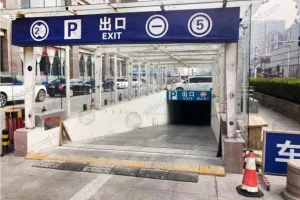
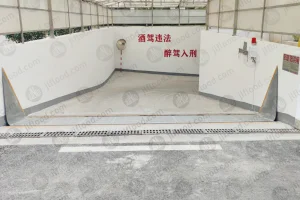
Basement parking entrances at shopping malls, high-rise residential towers, and logistics facilities experience extreme surface runoff. Surface-mounted and embedded hydrodynamic barriers allow continuous heavy vehicle traffic during daily operation while offering automated 24/7 protection.
Chemical processing plants and hazardous materials warehouses utilize hydrodynamic barriers for secondary containment—preventing toxic chemical spills or firefighting wastewater runoffs from escaping facility boundaries during heavy rain events.
As an authoritative Chinese high-tech enterprise, Nanjing Junli Technology Co., Ltd. operates state-of-the-art manufacturing facilities, full-scale hydraulic testing pools, and precision metal fabrication shops. We adhere to rigorous global engineering standards to streamline technical approval for EPC contractors, architectural design institutes, and municipal authorities worldwide.
Our barrier systems are engineered and tested in accordance with international structural and fluid containment specifications, including FM 2510 (American National Standard for Flood Abatement Equipment), BS EN 12209, and regional civil defence codes. Weldments undergo 100% non-destructive testing (NDT).
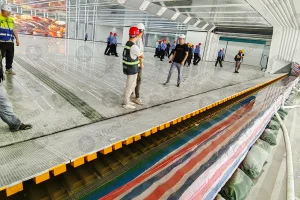
Every design model undergoes rigorous hydrostatic and dynamic load testing in our factory test basin. We verify door opening response times, water tightness under varying hydro-heads, structural deflection metrics, and silt clearance dynamics prior to project dispatch.
We provide full structural CAD shop drawings, BIM (Building Information Modeling) objects, embedded concrete box template designs, and custom clear-span dimensioning (ranging from 1.5-meter single doors to multi-leaf modular spans exceeding 30 meters).
Junli Technology continuously advances flood mitigation engineering. Our R&D department in Nanjing focuses on smart passive telemetry, advanced material science, and self-maintaining hydraulic systems.
Integration of piezoceramic micro-generators within the pivot hinge mechanism. When floodwater lifts the gate panel, kinetic movement generates micro-power to broadcast encrypted LoRaWAN / NB-IoT activation signals to municipal flood command centers—maintaining zero external grid reliance.
Advanced computational fluid dynamics (CFD) modeling has yielded next-gen internal chamber designs. Silt, leaves, and urban debris are automatically flushed through self-cleaning hydro-channels during water entry, eliminating maintenance blockages in high-sediment environments.
Transitioning from traditional structural stainless steel to high-modulus carbon-fiber composite matrix structures. This reduces deadweight by 45% while doubling tensile strength, allowing single-span unpowered barriers to reach 10+ meters without intermediate support pillars.
Explore customized modular barriers engineered for subway connection channels, power substations, and surface-mounted vehicle ramps.

Technical clarity for civil engineers, procurement heads, consulting firms, and municipal infrastructure planners.
The barrier operates strictly on natural hydro-physical forces. The panel rests flat inside a recessed foundation tray flush with ground level during dry periods. When surface floodwater flows into the intake basin, the panel's internal hydrophobic buoyant core generates positive Archimedes hydrostatic uplift. As water level increases, the water itself drives the panel upward along stainless steel pivot hinges until it locks into its vertical water-retaining orientation. Hydrostatic pressure forces the double-lipped EPDM seals against the side frame, creating a watertight barrier completely independent of grid power or human labor.
Yes. Junli’s Heavy-Duty (HD) series is specifically engineered for high load-bearing locations including fire engine lanes, commercial garage ramps, and logistics centers. Standard units support 30-ton axle loads, while reinforced heavy-duty models (such as HM4D-0006C) support up to 60-ton axle loads compliant with international highway loading standards (such as AASHTO HS-20 / Eurocode 1). The top cover plate is constructed from structural steel with non-slip diamond treads.
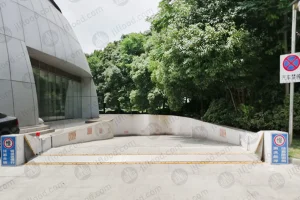
For Embedded Installations, a recessed concrete trench is cast into the threshold along with bottom drainage pipe connections to clear residual rainwater. Junli supplies custom steel embedded frames and rebar anchor templates to concrete contractors. For Surface-Mounted Installations (ideal for existing structures or retrofits where floor cutting is restricted), the low-profile ramp unit is anchored directly to leveled reinforced concrete pads using chemical anchor bolts, requiring minimal civil intervention.
The foundation basin incorporates an anti-debris intake mesh screen that prevents coarse stones and large debris from entering the bottom chamber. Furthermore, the internal basin profile is engineered with a sloped self-clearing hydraulic channel. Small silt particles remain suspended and drain out naturally through the low-level gravity drainage port once floodwaters recede. Routine periodic maintenance involves flushing the trench with a water hose twice annually.
Standard single-leaf retaining heights range from 0.5 meters to 2.0 meters. Clear spans for single unsegmented units range up to 6.0 meters. For wider driveways, metro station portals, or street crossings (e.g. 10m to 50m+), Junli provides modular multi-leaf arrays connected via removable or automatic synchronization mullions to create an unbroken flood wall.
For installation in cold regions (such as Northern Europe, North America, or Northern China), Junli offers an optional low-voltage self-regulating electric heating cable embedded inside the foundation trench basin. Operating on minimal power, this anti-icing element prevents standing water inside the trench from freezing, ensuring 100% mechanical buoyancy readiness down to -40°C.
Junli Technology is ISO9001, ISO14001, and ISO45001 certified. Every production order is supplied with Material Test Reports (MTR) for stainless steel (SS304/SS316), EPDM seal tension test certificates, structural FEA calculation reports, and factory hydraulic test videos. All hydrodynamic automatic flood barriers are backed by a standard 5-Year Factory Warranty, with an engineered design service life exceeding 25 years.


