
Precision-engineered self-closing and self-opening flood barrier systems direct from China manufacturing facilities.
Understanding the Shift from Reactive Sandbag Defences to Passive Hydrodynamic Buoyancy Technologies in Global Civil Engineering
Rapid global urbanization coupled with catastrophic climate-induced flash flood events (cloudbursts, typhoon surge, atmospheric rivers) has severely exposed structural weaknesses in subterranean civil assets. Underground metro networks, multi-level parking basements, electrical utility substations, and pedestrian underpasses act as natural catchment basins during surface water logging.
Traditional flood control mechanisms—such as manual aluminum stoplogs, inflatable bladders, sandbag dikes, and motorized flood gates—exhibit a critical systemic flaw: they depend entirely on human intervention or continuous electrical supply. In 82% of urban flooding disasters, local electrical grids experience high-voltage tripping or blackouts before water levels reach peak intensity, rendering electro-mechanical barriers completely non-functional.
Engineered by leading Chinese flood defense OEMs like Nanjing Junli Technology Co., Ltd., the modern standard relies on passive hydrodynamic flotation architecture. Water-activated flood barriers utilize the hydrostatic head pressure and physical buoyancy of incoming floodwaters to actuate, lift, and lock structural barrier leaves into place.
How Fluid Dynamics and Archimedes’ Buoyancy Principle Drive Zero-Power Flood Protection
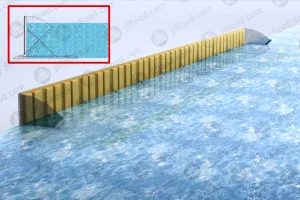
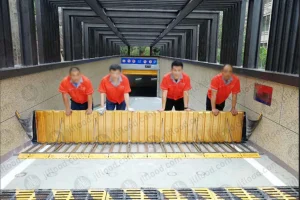
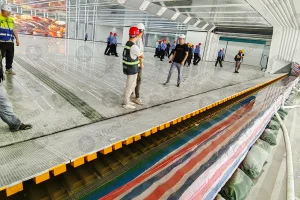
In standard dry conditions, the barrier leaf rests horizontally inside a structural ground pit embedded in concrete. The top cover plate aligns perfectly flush with finished road levels, supporting daily traffic rolling loads (up to AASHTO HS-20 / EN 124 D400 heavy vehicle standards).
As surface runoff spills over the stainless-steel threshold, water enters the foundation tray through optimized intake grates. Fluid fills the basin, establishing an upward buoyancy force ($F_b = \rho \cdot V \cdot g$) beneath the high-density hollow core panel.
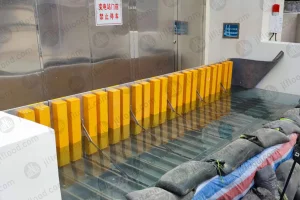
The panel rotates upward around its heavy-duty hinge axle. As the basin fills completely, hydrostatic pressure forces the barrier leaf to a vertical 90° retaining orientation, compressing specialized multi-lip EPDM dynamic seals against side boundary jambs.
Flush with road surface. Heavy vehicle support.
Runoff fills bottom chamber automatically.
Buoyancy panel pivots upward smoothly.
Hydrostatic head forces seal compression.
Recedes back flush as flood waters drain.
| Parameter / Parameter Specification | Embedded Metro Type (Hm4d-0006E) | Heavy-Duty Substation Gate (Hm4d-0006C) | Surface Garage Ramp Flip-Up |
|---|---|---|---|
| Standard Retaining Heights ($H$) | 500mm, 600mm, 900mm, 1200mm | 600mm, 1000mm, 1500mm, 2000mm | 300mm, 500mm, 600mm |
| Structural Leaf Material | Aluminium Alloy 6063-T6 / SUS304 | Structural Carbon Steel / Stainless 316 | Marine-Grade T6 Aluminium Extrusion |
| Vehicle Load Capacity | EN 124 D400 (40 Ton Axle Load) | Heavy Machinery / Fire Truck (60 Ton) | Passenger Vehicles (15 Ton Axle) |
| Dynamic Sealing System | Tri-Lip EPDM Vulcanized Rubber Matrix | Co-extruded Neoprene Hydro-Inflatable Seal | EPDM Bottom & Wall Compression Gasket |
| Leakage Rate Performance | < 0.1 L/hr per meter of seal (FM 2510 Compliant) | Zero Measurable Leakage at Max Head | < 0.2 L/hr per meter |
| Corrosion Resistance Treatment | Fluorocarbon (PVDF) Anodized Coating | Hot-Dip Galvanized + Epoxy Powder Coat | Hard-Coat Anodized Surface (25µm) |
Essential Evaluation Framework for EPC Contractors, Structural Engineers, and Municipal Tender Boards
Chinese OEM manufacturing centers, particularly high-tech nodes like Nanjing Junli Technology Co., Ltd., provide major strategic cost and technical advantages for global tenders:
Tailored Architectural Integration for Critical Infrastructure Assets Worldwide
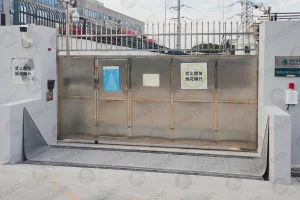
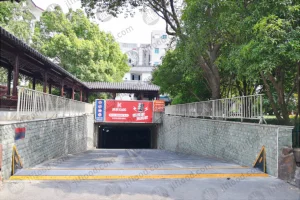
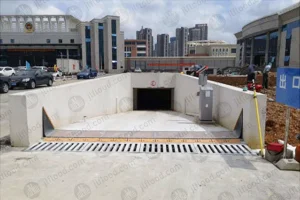
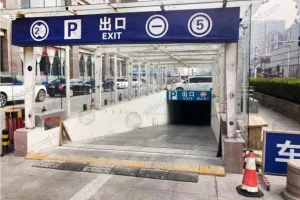
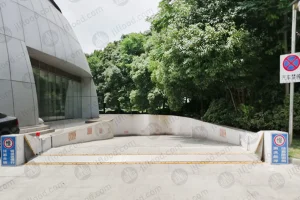
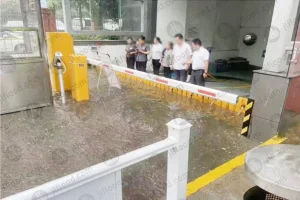
Challenge: Steep vehicular ramps lead directly into underground garages. Conventional flood boards require security guards to assemble them during severe storms—frequently resulting in missed response windows and catastrophic car park submergence.
Solution: Flush-mounted hydrodynamic garage ramp barriers trigger automatically when surface runoff reaches 50mm depth. Designed to withstand continuous daily traffic of passenger vehicles and heavy delivery trucks.
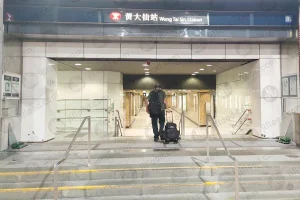
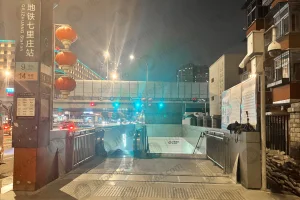
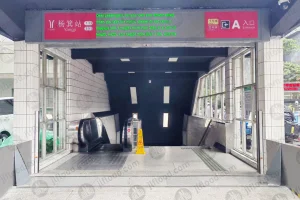
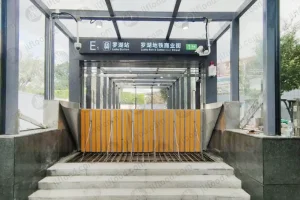
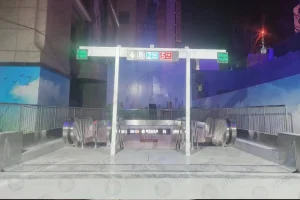
Challenge: Subway station portals, passenger entrances, and ventilation shafts represent major urban flood pathways. Inundation can paralyze multi-billion-dollar transit networks for months.
Solution: Heavy-duty embedded systems (e.g., Guangzhou Metro & Dalian Metro deployments). Panels rise rapidly to secure clear opening widths up to 10+ meters with secondary manual locking pins for extreme surge events.
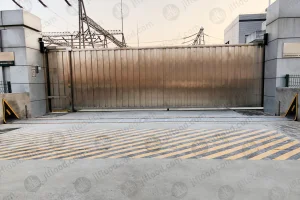
Challenge: High-voltage transformers, switchgear rooms, and cable trenches suffer irreversible short-circuit destruction if submerged, causing multi-district blackout events.
Solution: Perimeter protection gate barriers (e.g., Hm4d-0006C series). Engineered with zero-leakage gaskets to safeguard live electrical assets under continuous static water heads up to 2.0m.
Next-Generation Innovations in Intelligent Flood Mitigation Systems
While the mechanical actuation remains 100% passive and power-free, modern intelligent barriers are increasingly integrated with low-power NB-IoT and LoRaWAN sensors. Real-time telemetry sends immediate status alerts to municipal SCADA systems when the barrier panel begins rising, enabling city emergency teams to map urban flood points live.
R&D efforts led by Nanjing Junli Technology Co., Ltd. are driving the transition toward carbon-fiber and graphene-reinforced composite leaves. These next-gen panels reduce structural self-weight by 40% while doubling yield strength—enabling faster flotation activation speeds in sudden cloudburst environments.
Ensuring Seamless Technical Alignment with International Building Codes and Export Standards
Nanjing Junli Technology provides full BIM object libraries (Revit 3D models, AutoCAD civil details, IFC specs) allowing international architectural consultants to seamlessly drop automatic barriers into master building designs.
Every factory shipment includes custom rebar layout drawings, foundation pit depth templates, concrete slump guidelines (C35/40 waterproof concrete recommended), and drain connection schematics.
Panels and embedded frames are securely packed in ISPM-15 certified export wooden crates with anti-corrosion VCI wrapping, ensuring safe ocean transit to Europe, North America, Southeast Asia, and the Middle East.
Expert Answers to Structural, Hydraulic, and Operational Inquiries
The system operates entirely on fluid hydrodynamics and Archimedes’ buoyancy principle. The barrier panel sits flush inside a recessed ground frame. When flood runoff arrives, water flows into the chamber through bottom inlet slots. As water fills the basin, it exerts upward buoyant pressure underneath the hollow alloy panel, pivoting it up. As the flood level rises, hydrostatic head pressure compresses the dynamic EPDM seals against the frame, forming a watertight barrier without motors, sensors, or power supplies.
In standard dry conditions, the top plate rests on internal structural support pillars rated for heavy axle loads. Standard commercial units support EN 124 D400 and AASHTO HS-20 load requirements (up to 40-ton vehicle weights), allowing fire trucks, buses, and heavy freight vehicles to pass smoothly over garage ramps or facility gates without damaging the internal mechanism.
The foundation frame is designed with angled bottom channels leading to a dedicated low-point drainage outlet connected to the site’s storm drain. During normal rain, water flushes minor debris out automatically. For routine maintenance, top cover plates can be unbolted in minutes to allow visual inspection and vacuum sediment cleaning once or twice a year.
For sub-zero climates, Junli offers optional low-voltage self-regulating electric heating cables integrated inside the bottom basin and drainage line. This prevents standing water from freezing inside the frame during winter snowmelts, maintaining 100% flotation capability year-round.
Standard model dimensions (e.g., Hm4d-0006E, Hm4d-0006C) typically feature a factory manufacturing lead time of 15–20 days. Custom wide-span engineering projects require approximately 25–30 days including Factory Acceptance Water Testing (FAT). Ocean shipment options cover major global ports across Asia, Europe, the Americas, and the Middle East.
Explore our factory-direct product catalog listings, engineered for subway entrances, electrical gates, and metro connection channels.
Need custom CAD drawings, site structural calculations, or OEM quotation packages for upcoming infrastructure tenders? Contact Nanjing Junli Technology Co., Ltd. direct manufacturing team today.


