Engineered for high-reliability passive flood protection across metros, power utilities, and commercial structures.
Rapid climate change, cloudburst storms, and intensifying urban surface runoff have fundamentally altered the risk parameters for subterranean infrastructure. Traditional flood defense mechanisms—ranging from manual sandbag deployments to motor-driven electromechanical sluice gates—have proven consistently vulnerable to human delay, operational failure, and urban power grid collapse during severe weather events. Modern urban infrastructure demands a continuous, self-acting, zero-power flood protection framework.
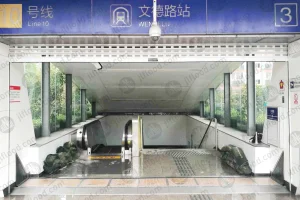
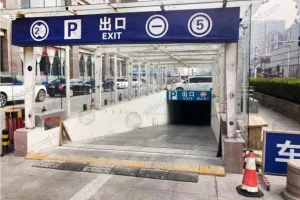
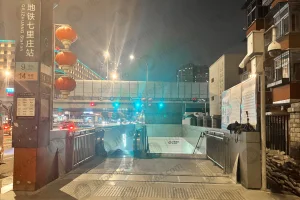
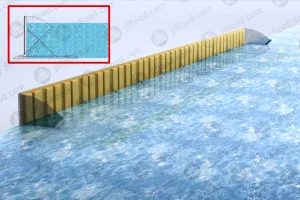
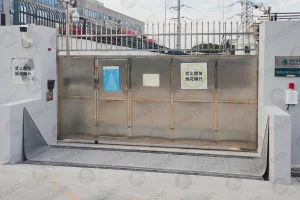
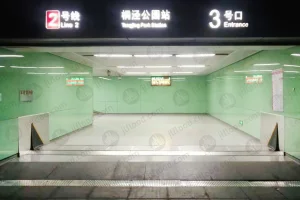
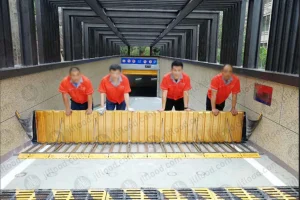
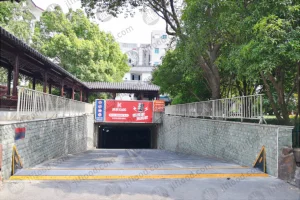
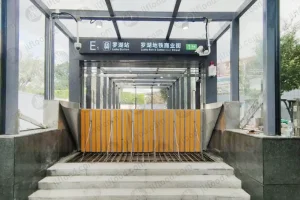
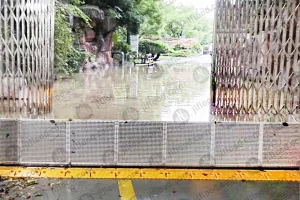
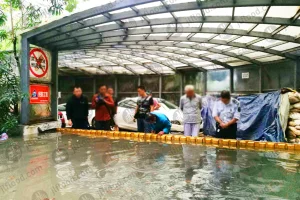
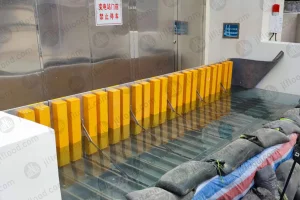
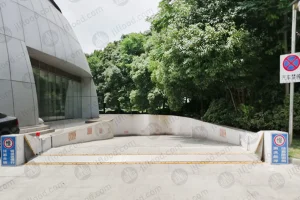
As leading China Automatic Flood Barrier Manufacturers & Factories, specialized facilities engineered the Hydrodynamic Automatic Flood Barrier (Self-Closing Flood Gate). Operating on fundamental principles of fluid mechanics and hydrostatic buoyancy, these barriers require zero electrical energy, zero digital sensor triggers, and zero emergency personnel intervention. Mounted flush within driveway entrances, underground metro portals, transformer substations, and civil defence passages, the barrier panel remains totally subterranean under dry conditions, preserving seamless vehicular and pedestrian access. Upon the onset of surface water inundation, water automatically enters the bottom retention chamber, generating an instantaneous upward buoyant movement that raises and locks the heavy-duty water-retaining panel into place.
The structural integrity of an automatic flood barrier relies on precision engineering, metallurgical resilience, and hydro-sealing elastomeric science. Below is a comprehensive breakdown of the structural components utilized in premier Chinese manufacturing facilities:
The primary water-retaining panel is extruded from high-strength 6063-T6 aluminum alloy or fabricated from heavy-gauge Stainless Steel (SUS304/SUS316L). This provides extreme structural rigidity capable of withstanding hydrodynamic impact, debris impact (according to ASTM standards), and heavy wheel loading (up to H20/HS20 transit vehicle loads).
Sealing failure is the single greatest point of defeat in flood protection. Chinese factories utilize multi-chambered EPDM (Ethylene Propylene Diene Monomer) rubber gaskets treated with fluorocarbon anti-aging coatings. As water pressure increases against the elevated panel, the hydrostatic pressure forces the main sealing lip tighter against the wall frame, achieving near-zero leakage (<0.15 L/h per meter of seal length).
The system is installed within a hot-dip galvanized or stainless steel embedded chamber. Designed with internal slope gradients and integrated sediment flushing ports, the chamber prevents leaf litter, silt, and gravel accumulation from obstructing the buoyancy lever mechanism.
The mechanical operation of a passive hydrodynamic barrier unfolds in four distinct phases:
Global procurement teams selecting automatic flood barrier suppliers evaluate not only unit pricing, but also manufacturing precision, structural engineering scalability, metallurgical quality assurance, and project delivery timelines. China—specifically industrial engineering clusters located in Nanjing, Jiangsu, and the broader Yangtze River Delta—has established a world-leading ecosystem for intelligent flood control hardware manufacturing.
Chinese factories sit at the nexus of raw material refining, precision aluminum extrusion, laser cutting, automated robotic welding, and specialized polymer formulation. Access to high-grade alloy mills and custom mold-tooling facilities reduces product development cycles from months to weeks.
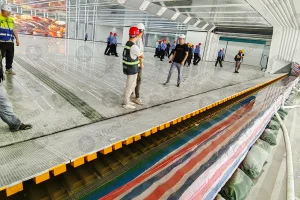
Premier manufacturers operate dedicated indoor water-retaining test pools. Before international dispatch, every custom-engineered barrier array undergoes real-water hydrostatic head testing, structural deflection analysis under load, and seal leakage verification with third-party witnessing available.
From narrow 1.5-meter equipment room doors to expansive 30-meter wide subway portal entry structures, Chinese manufacturers offer modular engineering flexibility. CAD/BIM modeling assistance, structural finite element analysis (FEA), and localized civil drawing integration are standard deliverables.
By bypassing multi-tiered international distributors and sourcing directly from certified Chinese manufacturers, commercial developers, municipal contractors, and utility operators reduce capital expenditure (CAPEX) by 35% to 50% while receiving higher-specification material grades (e.g., standardizing on SUS316 stainless steel fasteners and anodized 6063-T6 aluminum profiles instead of coated mild steel).
Overseas architectural engineers, municipal procurement specialists, and insurance underwriters require rigorous compliance verification prior to approving flood barrier equipment submittals. Chinese automatic flood gates are engineered to meet and exceed global civil engineering standards:
| Standard / Certification | Focus Area | Engineering Benchmark | Compliance Status in China Top Factories |
|---|---|---|---|
| FM 2510 | Flood Abatement Equipment Performance | Hydrostatic head testing, hydrodynamic impact, and allowable leakage rate limits. | Design compliant; verified via factory hydro-pool testing. |
| BS EN 12242 / BS 851188 | Building Flood Protection Systems | Testing of temporary and permanent flood resistance barriers for perimeter protection. | Fully compliant seal leakage rate (<0.10 L/h/m). |
| ISO 9001:2015 & ISO 14001 | Quality & Environmental Management | Standardized manufacturing processes, material traceability, and QC protocols. | Certified across top-tier manufacturing plants. |
| ASTM E2126 / CE Marking | Structural & Safety Compliance | Load-bearing capabilities under dynamic water action and heavy vehicular wheel loads. | H20 / HS20 vehicle loading capacity verified by FEA reports. |
To assist risk managers and consulting engineers in specifying the optimal system, the technical matrix below contrasts Passive Hydrodynamic Automatic Barriers with legacy manual aluminum stop-logs and motor-driven hydraulic gates:
| Performance Vector | Passive Hydrodynamic Automatic Barrier | Motorized Hydraulic Flood Gate | Manual Aluminum Demountable Stop-Logs |
|---|---|---|---|
| Energy & Power Dependency | Zero Power Required (Pure water buoyancy) | Requires grid power + UPS emergency battery back-up | Manual labor (Zero power, but human dependent) |
| Activation Time | Immediate (<10 seconds) upon water ingress | 30 to 120 seconds (Delayed by sensor signal processing) | 1 to 3 hours (Requires manual dispatch & assembly) |
| Human Reliability Risk | Zero Human Risk (100% Unattended automatic) | Low (Requires human control room triggering or PLC) | High Risk (Personnel may be absent or blocked by traffic) |
| Maintenance Requirements | Bi-annual sump cleanout & seal visual check | High (Hydraulic fluid line maintenance, motors, sensors) | Low (Storage rack inspection & gasket condition monitoring) |
| Pavement Aesthetics | Flush recessed finish; zero visual clutter when dry | Flush recessed or side column housing required | Requires fixed side posts or visible floor sockets |
| Operational Lifespan | 25+ Years (Heavy stainless steel & marine aluminum) | 10 to 15 Years (Electronics and hydraulic seals degrade) | 15 to 20 Years (Gaskets subject to wear during storage) |
Specific physical installations impose unique civil engineering, traffic load, and hydrologic constraints. Chinese original equipment manufacturers provide targeted customizations for key industry sectors:
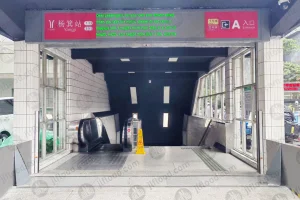
Critical Challenge: Water entering metro portals rapidly inundates tunnels, causing catastrophic loss of life and electrical infrastructure destruction.
Customization: Surface-mounted or extra-shallow embedded frames designed to fit existing station entrance steps without disturbing underlying urban utilities. Integrated with warning sirens and remote telemetry sensors to inform transit control centers of panel elevation.
Critical Challenge: Inundation of high-voltage switchgear rooms, transformer vaults, and cable trenches leads to regional power blackouts.
Customization: Non-conductive structural coatings, anti-magnetic stainless steel components, and compact flip-up automatic barriers designed for narrow doorway access and cable trench conduits.
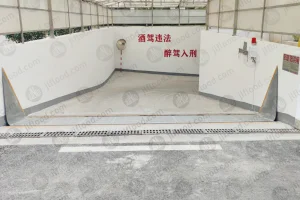
Critical Challenge: Steep ramp angles accelerate surface runoff ingress into parking basements packed with high-value vehicles.
Customization: Heavy-duty drive-over top plates rated for continuous 40-ton vehicle traffic. Non-slip tread patterns, serrated drainage grates, and low-profile foundation boxes suitable for post-tensioned concrete slab retrofits.
Critical Challenge: Toxic chemical runoff or floodwaters entering hazardous storage rooms require total secondary containment.
Customization: Chemical-resistant Viton or specialized EPDM seals, 316L stainless steel structural frames, and explosion-proof telemetry limit switches.
As smart city frameworks (Smart Infrastructure & IoT Integration) mature globally, automatic flood barriers are evolving from isolated mechanical assets into intelligent connected nodes within municipal stormwater management networks. Key developments emerging from leading Chinese R&D centers include:
Expert guidance directly from chief engineering directors and factory specialists.
The system operates on pure physical fluid dynamics—specifically Archimedes' principle of buoyancy and hydrostatic pressure. As surface floodwater enters the recessed bottom chamber, the water itself acts as the mechanical force lifting the buoyant panel. No electricity, batteries, hydraulic pumps, or human controllers are required. It operates with 100% autonomy during severe blackouts.
Factory-engineered barriers feature a dual-line defense. First, stainless steel top entry grates filter out large debris, trash, and leaves. Second, the internal foundation chamber incorporates self-clearing sloped drainage channels. Minor silt accumulation is flushed out during routine maintenance via integrated cleanout ports or gravity drain lines.
Standard commercial models support continuous vehicle pass-through loaded to 20–40 tons (H20/HS20 vehicle ratings). For heavy industrial sites, port terminals, or airport fire-station driveways, custom panels constructed with internal structural beam ribbing can be specified for axle loads up to 60 tons (AASHTO HL-93 heavy vehicle specs).
The client's civil contractor excavates a shallow trench matching the foundation box dimensions, pours a leveled reinforced concrete base slab, and provides a drainage pipe connection (typically DN100 or DN150) leading to the building's main storm drain or sump pit. The factory supplies full embedding templates, rebar anchor specs, and step-by-step pouring manuals.
For sub-zero cold climates (e.g., Northern Europe, Canada, Northern China), barriers can be optioned with integrated thermostatically-controlled 24V electric heating cables embedded along the side seals and bottom chamber frame. This prevents ice formation and snow accumulation from freezing the panel to the frame structure.
The main structural aluminum/stainless steel components have a design service life exceeding 25–30 years. The elastomeric EPDM seals require basic visual inspection and silicone lubrication twice annually. Under normal environmental exposure, EPDM seal replacement is recommended every 8 to 10 years and can be executed quickly on site without removing the primary frame.
Explore our full range of certified automatic flood gates and specialized water-retaining solutions.
Submit your entrance dimensions, clear opening width, required retaining height, and traffic load requirements. Our structural engineering team provides complete technical submittals within 24 hours.
Contact Engineering Team