
Field-proven autonomous water-retaining solutions tested for urban subways, electrical substations, and underground commercial complexes.

Evaluating macro-climatic threats, financial risk exposure, and engineering shifts from manual flood walls to zero-power hydrodynamic flood gates.
Global surface water run-off has surged by 38% in metropolitan areas. Underground transportation systems, basement parking structures, and sub-surface energy grids represent high-risk exposure zones during short-duration, high-intensity cloudbursts.
Traditional flood stop logs require manual labor, which often fails during sudden off-hour storms or traffic gridlocks. Electromechanical flood barriers face structural vulnerability during city-wide electrical power blackouts—the precise moment flooding peaks.
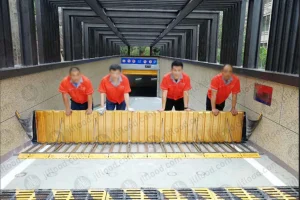
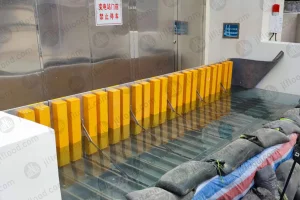
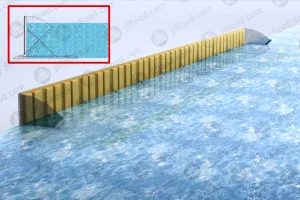
China's leading engineering standard utilizes the natural buoyancy of water to trigger gate deployment. As water flows into the bottom retention trough, hydrostatic forces lift the wall panel automatically without electricity, sensors, or manual labor.
Exploring the precise mechanical physics, finite element analysis (FEA), and advanced material selection behind high-reliability automatic flood barriers.
As a premier China Automatic Flood Door Manufacturer, engineering compliance requires rigorous stress-testing against debris collision, hydrodynamic drag, and chemical corrosion in marine environments.
| Component Component | Material Specification | Operational Benefit |
|---|---|---|
| Main Wall Panel | 6063-T6 High-Strength Aluminum Alloy / 304 Stainless Steel | High strength-to-weight ratio, structural rigidity against impact loads. |
| Bottom Foundation Box | Hot-Dip Galvanized Steel Q235B / 316 Stainless Steel | Extreme load-bearing capability up to 40-ton axle loads; rustproof. |
| Hydrodynamic Seals | Co-extruded EPDM + Fluorocarbon Rubber Elastomer | Resistant to UV, ozone, chemical pollutants, and temperature swings (-40°C to +120°C). |
| Side Jamb Assemblies | Precision-Machined Modular Columns with Dual Rubber Lips | Ensures zero-leakage side boundaries under high hydrostatic head pressure. |
* Note: Custom material specs (such as full 316L stainless steel for coastal seawater applications) are tailored during project design phase.
Customized automatic flood gate solutions deployed across mission-critical sectors worldwide.
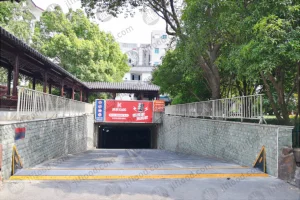
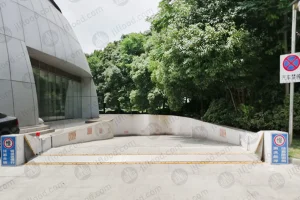
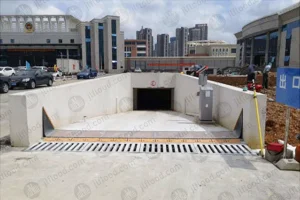
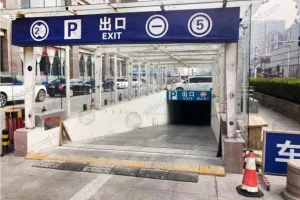
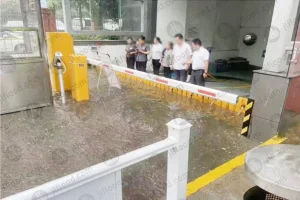
Flush ramp installations prevent floodwaters from invading commercial centers, residential basements, and multi-tier parking complexes without obstructing daily vehicular throughput.
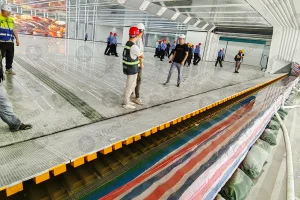
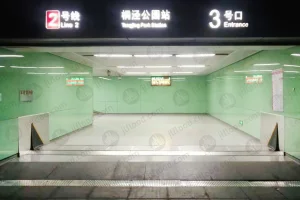
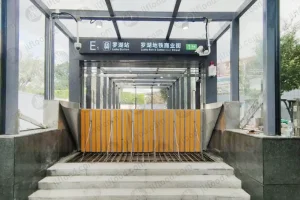
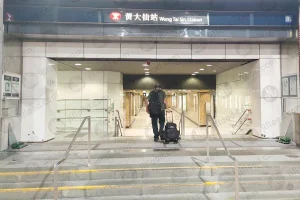
Protecting underground passenger concourses, pedestrian connection tunnels, and emergency ventilation shafts against sudden cloudburst floods in densely populated megacities.
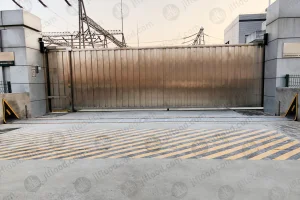
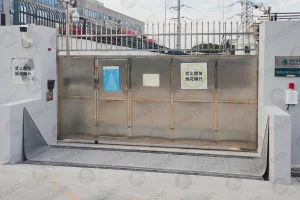
Unmanned substation perimeter gates require 100% passive security. Our flood doors prevent catastrophic short-circuit blackouts by isolating high-voltage switchgear rooms.
Contains hazardous chemical spills inside industrial zones while blocking storm surges from entering environmental wastewater treatment hubs and cleanrooms.
Securing hospitals, government archives, military bunkers, and municipal water plants with certified, high-impact flood-resilient physical barriers.
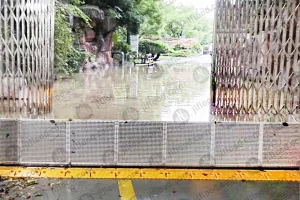
Deployable wide-span barrier arrays engineered to withstand continuous hydrostatic head pressure and dynamic storm-wave impacts along low-lying riverbanks.
Providing end-to-end B2B services from structural civil drawings to overseas site commissioning guidance and international certification.
We supply full 3D BIM models, DWG civil layout drawings, and trench embedment details for easy integration into architectural consultant specifications.
Every single flood barrier order undergoes 100% full-scale hydraulic pool testing prior to shipment. Leakage performance and deflection are verified on video.
Heavy-duty export-standard wooden crates, anti-corrosion vacuum wrapping, pre-assembled structural units, and global logistics handling (FOB, CIF, DDP).
Engineered to align with global standards including standard hydrostatic head tests, structural integrity criteria, and seal performance protocols.
Browse our extended product lineup of modular self-closing flood gates, metro connection channels, and specialized surface-mounted flood protection doors.
Clear, direct answers regarding installation methods, operational safety, service life, and maintenance schedules.
Our hydrodynamic automatic flood doors operate entirely on physical hydraulic principles. When floodwater reaches the ground threshold, water flows through intake grates into a bottom embedding frame. The buoyancy of the internal high-density floating core lifts the wall panel. As the water level rises, hydrostatic head pressure automatically tilts and presses the door against side frame gaskets, creating a tight seal without pumps, sensors, or human intervention.
Embedded installation requires excavating a shallow ground trench so the barrier foundation sits flush with the road level. Vehicles drive smoothly over it without notice. Surface-mounted barriers are anchored directly onto an existing concrete apron with slight incline ramps, making them ideal for retrofit projects or sites where floor trenching is restricted by sub-surface utilities.
Yes. Our heavy-duty models (such as the HM4D series) are constructed with structural structural steel and aviation-grade aluminum alloys. They are load-rated for axle weights up to 40-50 metric tons, easily accommodating heavy freight vehicles, fire engines, and public transit buses in continuous daily operations.
The foundation frame is equipped with stainless steel debris filtering grates that block leaves and gravel. Small silt particles washed into the chamber drain out naturally through bottom municipal drainage connections. Periodic routine inspections (typically once every 6-12 months) involve lifting the top cover to sweep out sediment buildup using standard water jets.
Standard unit retaining heights range from 0.5 meters to 2.0 meters. Clear widths are modular: single door leaves cover up to 6.0 meters, while wide driveways or metro plazas use multi-leaf interlocking barrier arrays spanning up to 30+ meters wide with removable or self-deploying center support posts.
The structural aluminum panel and stainless steel foundation box have a designed engineering service life exceeding 25 years. The heavy-duty EPDM rubber gaskets are treated against UV degradation and atmospheric ozone, maintaining elasticity for 10-15 years. Gaskets can be easily unbolted and replaced during routine maintenance.
Pioneering the evolution from standalone passive flood barriers to IoT-connected urban flood defense networks.
Integrating wireless NB-IoT and LoRaWAN position sensors into passive hydrodynamic flood doors allows building management systems (BMS) to receive real-time mobile notifications the second a gate deploys.
Connecting metro station flood barriers to centralized subway control centers via dual-redundant digital signals, ensuring train dispatchers have 100% visibility over tunnel entry safety status.
Utilizing 100% recyclable structural aluminum alloys and eco-certified vulcanized rubber compounds to meet European Union carbon border adjustment mechanism (CBAM) standards.


