Field-tested hydrodynamic flood baffle solutions designed for urban mass transit networks, power substations, and commercial underground spaces.
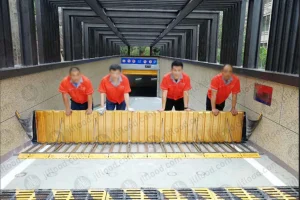
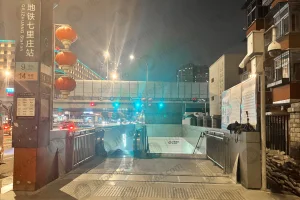
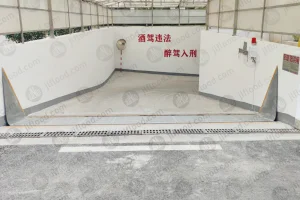
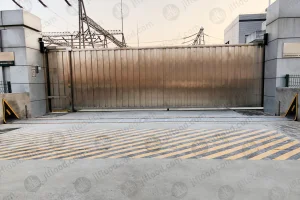
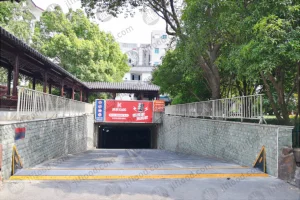
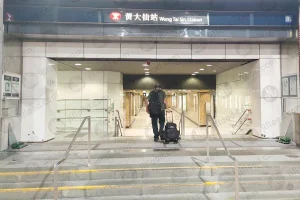
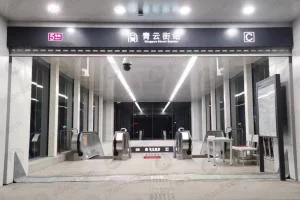
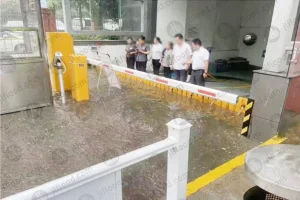
Analyzing the paradigm shift from manual flood barrier deployment to self-rising, zero-power hydraulic flood baffles in modern urban rail transit infrastructure.
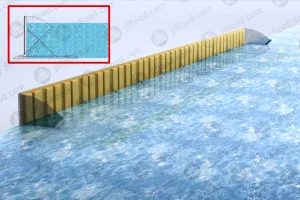
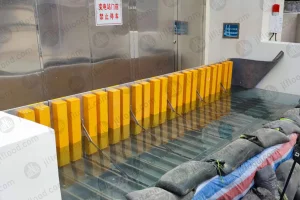
Unlike electromechanical flood gates that fail during grid blackouts or sensor glitches, China-manufactured embedded flood baffles utilize pure fluid physics. Incoming floodwater enters the recessed bottom frame, generating natural hydrostatic uplift that automatically elevates the door leaf without human intervention.
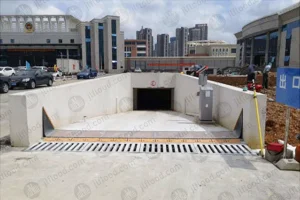
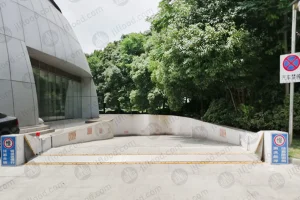
Engineered to sit completely level with finished ground surfaces, the embedded trench structure supports heavy pedestrian foot traffic and emergency service vehicles. The top cover plate features high-traction anti-slip textures, matching strict transit architecture aesthetics.
Utilizing high-density EPDM (Ethylene Propylene Diene Monomer) synthesized rubber seals, the system achieves near-zero leakage (<0.15 L/h per meter of seam) under continuous hydraulic pressure heads exceeding 1.5 meters.
In classical urban hydrology, flood events are caused by intense cloudbursts that simultaneously overload municipal stormwater networks and cause power grid outages. Embedded automatic flood barriers bypass electronic failure pathways entirely. Manufactured by certified Chinese factories with precision CNC laser cutting and automated welding processes, these systems represent the state-of-the-art in passive resilience for rail transit operators globally.
As extreme weather phenomena escalate in frequency, subterranean rail networks in megacities represent high-risk asset corridors requiring institutional flood defense upgrades.
Modern metropolitan mass transit systems operate dozens of meters below surface grade. Station entrances, ventilation grates, and connection channels act as natural sinks during pluvial flooding. Historically, cities relied on manual sandbags or demountable aluminum flood boards. However, human deployment protocols fail when sudden flash floods inundate station portals in less than 15 minutes.
This vulnerability has created rapid worldwide procurement shifts toward automated, embedded hydrodynamic flood baffles that remain completely dormant until water activation occurs.
A single metro flooding incident can cause catastrophic financial losses exceeding $100 Million USD, driven by damaged signaling systems, flooded rolling stock, traction power station destruction, and months of commuter downtime. Industrial-grade embedded flood barriers manufactured in China deliver a high return on investment (ROI) by offering permanent, maintenance-friendly security for 25+ years.
| Flood Defense Technology | Activation Mechanism | Power Dependency | Deployment Time | Structural Load Rating | Life Expectancy |
|---|---|---|---|---|---|
| Embedded Hydrodynamic Baffles (Junli / China) | Automatic Water Buoyancy | 0% (Pure Passive) | Instant (< 5 seconds) | Heavy Load (60t Truck Passable) | 25+ Years |
| Electromechanical Vertical Lift Gates | Motor Drives & Sensors | 100% (Requires Backup Generators) | 30 - 120 Seconds | Medium to High | 10 - 15 Years |
| Manual Slot-In Aluminum Logs | Human Labor Required | 0% | 15 - 45 Minutes (Slow) | Low to Medium | 5 - 10 Years |
| Inflatable Hydro-Dams | Air / Water Pumps | 100% (Pumping Stations) | 10 - 20 Minutes | Very Low (Puncture Risk) | 3 - 5 Years |
The industry is rapidly abandoning complex electric sensors in favor of fault-tolerant mechanical buoyancy physics for safety-critical civil defense applications.
Sensors can fail due to mud accumulation, electrical short-circuiting during torrential rain, or cyber-attacks on urban smart grid networks. Passive buoyancy baffles utilize the exact kinetic energy of the incoming floodwater to push the panel up, eliminating electrical failure points.
Modern Chinese metro barrier factories employ standardized modular segments (typically 1m to 3m panels connected via high-tensile internal hinges). This modularity allows contractors to span wide entrance portals of 20+ meters without sacrificing structural integrity.
While deployment is 100% mechanical, advanced systems incorporate passive IoT micro-switches and wireless telemetry that alert transit control centers (OCC) instantly when a gate has automatically engaged during an storm event.
Specific spatial and engineering parameters for integrating embedded flood baffles into metro station architectures.
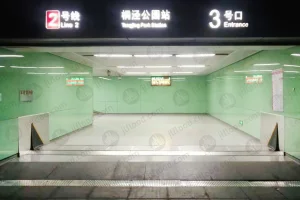
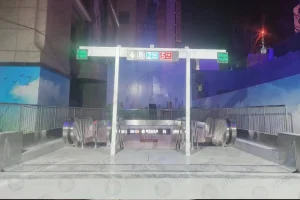
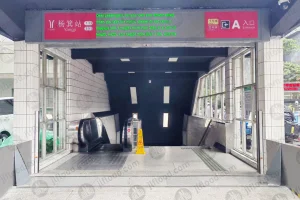
Installed flush at the top step or ground level entry plaza of subway exits. Prevents surface runoff from cascading down passenger escalators into main station concourses.
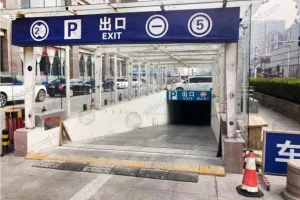
Guards connection channels linking metro stations to adjacent underground shopping centers, preventing cross-building water intrusion during urban waterlogging events.
Shields high-voltage equipment gates and cable trench openings. Power substations require absolute zero-water entry to prevent grid blackouts.
Custom vertical and flip-up embedded baffles configured for emergency egress doors and sidewalk air intake grates.
Comprehensive breakdown of metallurgical, mechanical, and structural testing standards executed by Chinese manufacturing hubs.
The core baffle panels are extruded using high-strength 6063-T6 aluminum alloy. This provides an exceptional strength-to-weight ratio, allowing maximum buoyancy responsiveness while supporting heavy static and dynamic loads. The surface undergoes anodization and fluorocarbon coating, giving superior resistance to chemical de-icers, salt spray, and urban corrosion.
The ground-embedded embedded frame is fabricated from heavy-duty 304 or 316-grade stainless steel with continuous seam welds. Reinforced stiffener ribs prevent concrete deformation during civil pour-in processes, guaranteeing millimeter-accurate panel tolerances for decades of operation.
Prior to factory dispatch, all Chinese embedded metro flood barrier designs undergo rigorous FEA structural simulation modeling. This guarantees structural deflection limits under maximum hydrostatic head water pressure (< 1/500 of span length). Full-scale physical prototype testing is conducted in hydrostatic water tanks to certify sealing performance under dynamic wave impacts.
A standardized 5-phase civil engineering protocol for specifying, embedding, and commissioning flood barrier arrays in new and retrofit transit projects.
Excavation of the ground entrance trench according to precise engineering drawings. Installation of underlying drainage pipes linked to the station sump pit to handle baseline rainwater run-off.
Placement of the embedded frame with high-precision leveling bolts. Anchor bolts secure the frame directly into structural reinforced concrete slabs.
High-strength non-shrink grout is poured around the frame perimeter, creating a seamless, monolithic structural bond capable of supporting heavy vehicle crossings.
Modular aluminum baffle panels and stainless torsion spring balancing units are installed. Mechanical tension is calibrated to guarantee smooth hydro-buoyant rising speeds.
On-site water enclosure testing validates zero leakage, automatic buoyancy trigger thresholds, and smooth mechanical reset functionality prior to public station opening.
Simple preventive maintenance schedule involving debris removal from the bottom trench and inspection of EPDM rubber seals once per year.
In-depth responses regarding specifications, maintenance, structural load ratings, and international procurement for embedded metro flood baffles.
Explore our full range of embedded, self-closing, and surface-installed automatic flood gate models.