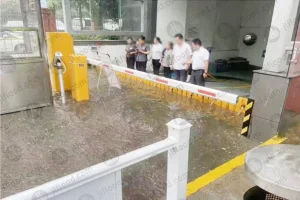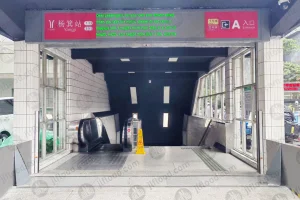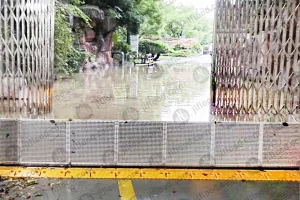
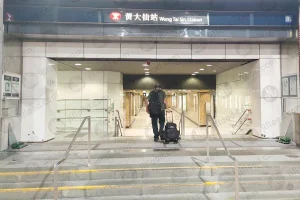
As global climate volatility escalates, municipal storm events, coastal surges, and microburst rainfalls are triggering unprecedented flash floods across major metropolitan hubs worldwide. Traditional flood mitigation strategies—such as manual sandbag positioning, motorized barrier deployment, and static stop-log assembly—are increasingly failing modern urban asset protection benchmarks due to labor dependency, power grid failures during severe storms, and prohibitive operational response latency.
In response to these systemic vulnerabilities, top-tier engineering specifiers and global infrastructure authorities are mandating the adoption of Flip-Up Automatic Flood Barriers Without Electricity. Engineered on fundamental hydrodynamic principles, these unpowered self-rising systems harness the buoyancy force and hydrostatic pressure of incoming floodwaters to automatically deploy wall-level water retention barriers without human intervention, electrical wiring, or sensor signals.
China's manufacturing ecosystem—led by state-level high-tech pioneers such as Nanjing Junli Technology Co., Ltd.—has emerged as the premier global supplier hub for precision hydrodynamic flood barriers. By integrating heavy-duty structural steel fabrication, high-precision hydraulic counterbalancing, and proprietary aerospace EPDM sealing materials, Chinese suppliers deliver civil-grade flood defense mechanisms that meet rigorous international engineering codes while maintaining unmatched cost-to-performance metrics.
The primary operational flaw of conventional electrical or pneumatic flood barrier gates is their vulnerability to power loss. Typhoon landfalls and extreme storm events routinely destroy localized sub-stations or trip electrical breakers precisely when flood gates must close. A unpowered flip-up barrier relies entirely on physics.
When flash floods spill over the curb line, water enters the recessed bottom foundation basin via high-flow intake grates. The subterranean chamber fills rapidly, establishing an initial water column beneath the sealed barrier panel.
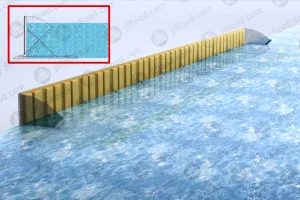
As the water level in the chamber rises, the Archimedes buoyancy force acting on the hollow composite panel—combined with precision-tuned mechanical counterweights—overcomes gravity, smoothly pivoting the panel upwards around its stainless hinge axis.
Once rotated to its design angle (typically 75° to 90°), the head of water behind the barrier panel exerts lateral hydrostatic pressure, driving high-grade EPDM continuous profile seals firmly against side frame channels to achieve absolute zero-leakage isolation.
Civil engineers and risk managers must evaluate long-term reliability, total cost of ownership (TCO), and human factor risks when specifying flood defense assets.
| Evaluation Parameter | Hydrodynamic Flip-Up Barrier | Motorized Electric Gate | Manual Aluminum Stop-Logs | Traditional Sandbag Stacking |
|---|---|---|---|---|
| Power Dependence | 0% (Pure Hydraulics) | 100% (Grid or Generator) | 0% (Manual Installation) | 0% (Manual Installation) |
| Human Response Delay | Zero (Fully Autonomous) | Low to Medium (Button/Sensor) | High (2 to 5 Hours Labor) | Extremely High (> 6 Hours) |
| Operational Reliability | Fail-Safe Mechanical | Vulnerable to Electrical Shorts | Subject to Human Absence | High Failure & Seepage Rate |
| Surface Traffic Impact | Flush Drive-Over (Heavy Duty) | Requires Side Track Frames | Removable Post Mounting | Blocks Passage Permanently |
| 20-Year TCO Cost | Lowest (Zero Energy & Minimal Maintenance) | High (Motor/Battery Servicing) | Medium (Storage & Logistics) | Extremely High per Event |
Different urban infrastructure entrances present distinct structural loading, traffic, and water head requirements. Chinese manufacturers custom-engineer flip-up automatic flood barriers tailored for specific high-risk application zones:
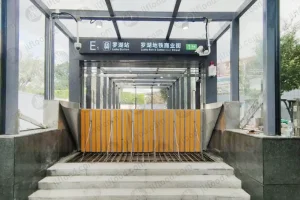
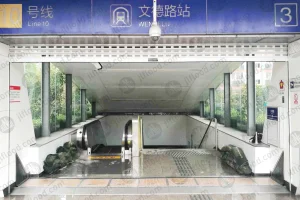
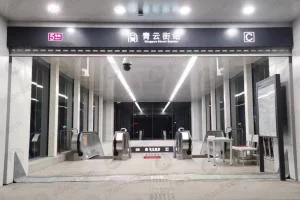
Subway entrances and ventilation shafts represent primary water entry vectors during urban flash floods. Hydrodynamic surface-mounted or embedded barriers installed at metro portals maintain flat surface transit during operational hours. Upon flash flooding, they automatically pivot upward to create a water barrier up to 1.5 meters high, protecting underground rail assets and passenger tunnels without reliance on station control rooms.
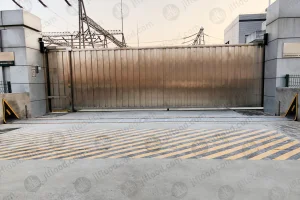
Electrical sub-stations and transformer enclosures require strict perimeter flood protection. Water intrusion into cable trenches causes catastrophic power outages across entire urban districts. Heavy-duty flip-up flood barriers fitted at substation perimeter gates isolate critical electrical gear. Stainless steel structural framing ensures resistance to stray currents and environmental weathering over decades.
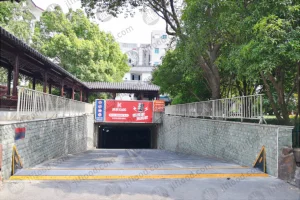
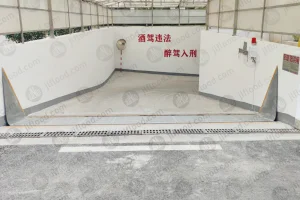
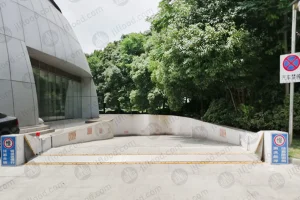
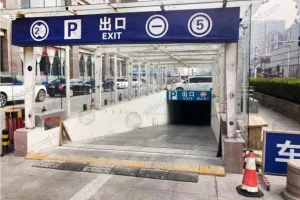
Basement parking ramps are natural funnels for surface stormwater runoff. Flush-mounted ramp barriers withstand daily vehicular loading (up to 40-ton axle loads for fire trucks and logistics vehicles) without deformation. In severe downpours, incoming runoff fills the intake trench, lifting the barrier panel to safeguard multi-story underground garages and subterranean commercial real estate.
Chemical plants, pharmaceutical facilities, and manufacturing complexes require spill containment and flood isolation. Custom multi-span unpowered modular flood gates allow wide driveway protection across spans exceeding 20 meters, preventing dangerous environmental runoff while securing high-value inventory.
The Chinese flood protection manufacturing sector is rapidly evolving beyond basic mechanical engineering toward smart civil infrastructure integration. Below is the multi-stage technology development roadmap for next-generation unpowered flood barriers:
Transitioning from standard stainless steel to carbon-fiber reinforced polymer (CFRP) composite panels and marine-grade duplex stainless steel (SUS316L). This reduces panel weight by 40% while doubling structural load capacity, enabling faster activation response and superior resilience against coastal salt-fog corrosion.
Incorporating self-powered piezoelectric sensors and energy-harvesting RF telemetry into mechanical flip-up barriers. While deployment remains 100% mechanical and unpowered, the barrier autonomously broadcasts deployment status signals and water height telemetry to municipal Smart City SCADA networks upon physical activation.
Deployment of embedded optical fiber strain sensors within EPDM seal gaskets to monitor seal degradation, silt accumulation in the foundation chamber, and structural micro-deflections in real time, guaranteeing 100% operational readiness prior to extreme weather events.
When evaluating Chinese suppliers and OEM factories for flip-up automatic flood barriers without electricity, engineering procurement teams should verify compliance against four mandatory operational criteria:
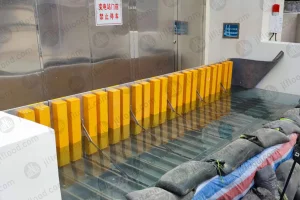
Ensure the manufacturer possesses an in-house full-scale hydraulic testing pool capable of validating gate response speeds, deflection tolerances under maximum water head, and seal leakage metrics before factory dispatch.
For driveway and garage installations, confirm that the recessed frame and top cover plates are certified to load class ratings such as AASHTO HS-20 or EN 124 D400 (40-ton vehicle impact loads).
Verify that the bottom foundation chamber incorporates sloped sediment flushing channels or accessible leaf-guard grates to prevent urban mud and debris from blocking mechanical rotation.
Leading factories like Nanjing Junli Technology supply comprehensive BIM models, CAD concrete embedded frame templates, and localized civil interface guidance to ensure seamless integration with local contractors.
The system operates on pure hydrodynamic fluid mechanics and Archimedes' principle of buoyancy. The gate panel is installed flush within a subterranean foundation chamber at the entry threshold. When surface runoff or floodwater reaches the threshold, it flows into the intake chamber. As the water level inside the chamber rises, it creates natural hydrostatic buoyancy beneath the hollow panel while dynamic counterweights balance its mass. The rising water mechanically rotates the gate upward into its deployed position, pressing structural EPDM seals firmly against side frames to block water ingress—requiring zero motors, wiring, sensors, or human activation.
Yes. Industrial unpowered flip-up flood barriers are specifically engineered to withstand heavy surface vehicular traffic. Embedded models feature structural steel or aluminum structural ribs and reinforced top plates certified to handle axle loads up to 40 tons (conforming to AASHTO HS-20 and heavy industrial vehicular standards). When inactive, the barrier panel rests fully flush with the surrounding road surface, allowing smooth passage for cars, buses, and heavy logistics vehicles without noise or vibration.
Professional flood gate manufacturers design the foundation basin with self-flushing hydrodynamic profiles and integrated debris filtration grates. Standard maintenance protocols simply involve periodic inspection and clearing of the basin via removable stainless top access covers. Furthermore, the counterweight buoyancy ratio is over-engineered with a safety margin (typically 1.3x to 1.5x lifting force reserve) to ensure the barrier successfully rises even in viscous, sediment-laden floodwaters.
Standard modular production covers retaining protection heights ranging from 0.5 meters to 2.0 meters. Clear spans can range from single-leaf doorway modules (1.0m to 6.0m wide) to multi-leaf modular arrays spanning over 20 to 50 meters across wide industrial driveways, utilizing intermediate removable or retractable support mullions with integrated bottom seals.
Export units undergo 100% factory hydrostatic pool verification to document seal tightness, deployment velocity, and structural deflection under maximum head load. Certified units are wrapped in protective VCI anti-corrosion film, packed into reinforced ISPM-15 compliant sea-freight wooden crates, and supplied with comprehensive installation manuals, CAD concrete embedding templates, and spare EPDM seal maintenance kits.