
Explore our factory-direct, hydro-engineered automatic flood barrier systems tailored for commercial doorways, metro entrances, and critical power utilities.
In an era defined by intensifying global climate volatility, urban centers across North America, Europe, Asia-Pacific, and the Middle East face unprecedented precipitation anomalies. Extreme cloudburst events—often dumping over 100mm of rainfall per hour—routinely overwhelm municipal stormwater infrastructure. When localized flash flooding occurs, the primary entry points for catastrophic water ingress into commercial buildings, industrial complexes, and public transport networks are ground-level doorways, subterranean parking ramps, and utility access hatches.
Historically, facility directors and civil engineers relied on manual flood mitigation tools, such as removable aluminum stop-logs, inflatable bladders, or traditional sandbags. However, post-disaster forensic audits reveal a glaring vulnerability in manual systems: human latency and logistical failure during emergency windows. Flash floods frequently strike outside operational hours, during midnight thunderstorms, or amidst traffic gridlocks when maintenance staff cannot reach the site. Furthermore, motorized electric flood gates suffer from single-point electrical failure; severe floods are almost invariably accompanied by grid power blackouts and transformer tripping, rendering electric actuators useless without expensive, failure-prone backup generators.
Key Engineering Takeaway: Modern flood mitigation architecture requires Passive Hydrodynamic Automation. A true zero-power flood barrier utilizes the physical properties of water itself—specifically fluid buoyancy and hydrostatic pressure head—to autonomously deploy without human intervention, electrical wiring, microcontrollers, or external energy sources.
As a leading China Flood Barrier For Doors Supplier & Factory, Nanjing Junli Technology Co., Ltd. has spearheaded the paradigm shift from reactive manual barriers to fully autonomous, hydrodynamic self-rising flood gates. By embedding structural mechanics into architectural foundation design, modern door flood barriers act as an invisible, always-ready defensive shield flush with the finished floor level.
Unmatched material quality, advanced metallurgical extrusion capability, and rigorous precision engineering make Chinese flood control factories the global benchmark for architectural safety products.
Chinese factories utilize high-strength 6063-T6 and 6005-T6 anodized aluminum extrusion profiles. These structural alloys offer exceptional strength-to-weight ratios, ensuring panels resist bending deformation under multi-ton hydrostatic heads while remaining light enough for fluid buoyancy lifting.
Precision rubber vulcanization plants in China produce custom-compounded EPDM and fluorosilicone seals. These gaskets maintain high elasticity, resistance to UV degradation, chemical ozone resistance, and operational flexibility across temperature ranges from -40°C to +90°C.
By coupling 3D Finite Element Analysis (FEA) modeling with multi-axis CNC milling centers, Chinese manufacturers achieve sub-millimeter tolerances on embedded frame channels, hinge pivot mechanisms, and lock-out latch assemblies, guaranteeing zero binding during emergency deployment.
Leading Chinese suppliers maintain dedicated 100% full-scale hydraulic testing pools. Every custom door barrier design is subjected to static hydrostatic pressure tests, dynamic water impact tests, and wave action simulations prior to export certification.
Vertical integration across raw metal refining, component fabrication, and packaging enables Chinese factories to offer premium hydrodynamic flood gates at 30% to 50% lower total capital expenditure than European or American counterparts without compromising quality.
Tailored manufacturing lines allow modular sizing from narrow 800mm pedestrian doors up to 20-meter wide multi-span driveway entrances, complete with export-ready wooden crate packaging and international BIM/CAD integration.
Different entry points demand specific engineering configurations. Below are five core operational environments where Junli flood barriers provide mission-critical protection.
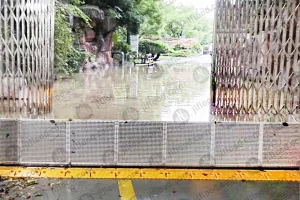
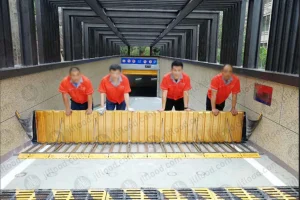
High-end commercial real estate requires flood defense solutions that maintain architectural aesthetics. Embedded hydrodynamic door barriers sit completely flush with granite, tile, or concrete entryways. Under normal conditions, foot traffic and delivery carts pass over smoothly. When floodwaters reach the threshold, the hidden panel rises automatically within seconds, blocking water from penetrating grand lobbies and elevator shafts.
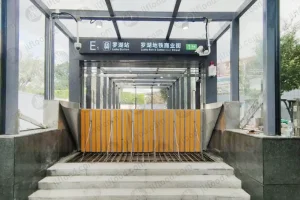
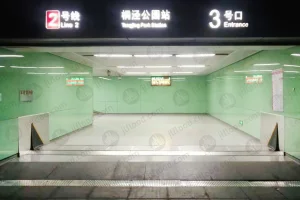
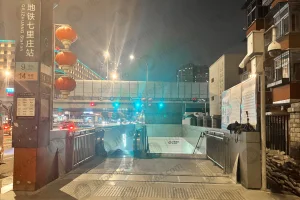
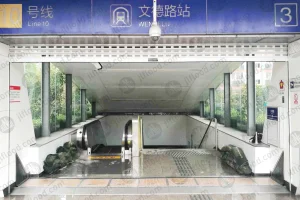
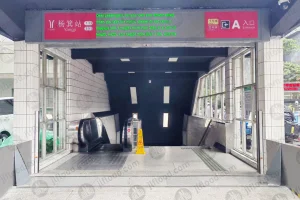
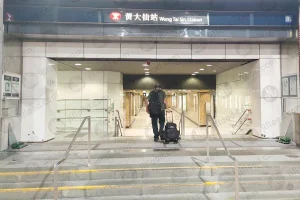
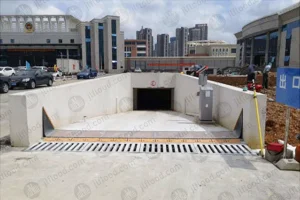
Subway stations represent high-risk urban flood funnels. A single breached entrance can inundate miles of underground rail tunnels, electrical signals, and subterranean platforms. Heavy-duty metro flood barriers are built to withstand high dynamic wave impacts and foot-traffic loads up to 20 tons (DIN 1072 loading standard). Installed at station portals and connection channels in Guangzhou, Beijing, Dalian, and Hong Kong, these systems represent the gold standard in public transit resilience.
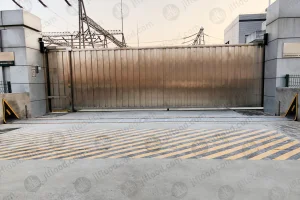
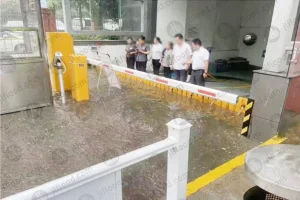
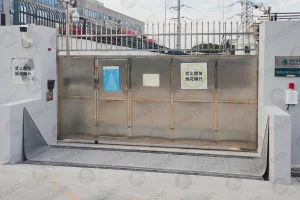
Electric utilities cannot afford flood inundation; water contact with live transformers causes explosive short circuits, blackout grid failures, and multi-million-dollar equipment destruction. Substation door flood barriers are engineered with non-conductive, fire-retardant structural elements and anti-corrosive coatings, ensuring continuous automatic defense without requiring active grid power or remote signal activation.
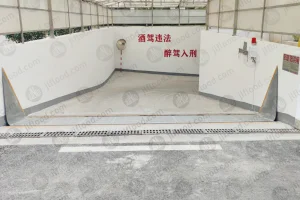
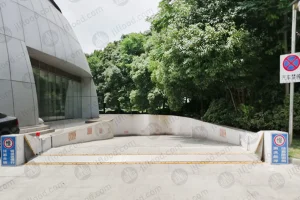
Parking structures are vulnerable to severe storm run-off. Driving rain channeling down steep access ramps can flood lower basement levels, destroying hundreds of vehicles and critical building HVAC systems. Ramped baseline flood gates feature reinforced structural ribs capable of supporting continuous heavy vehicle drive-over while maintaining ultra-fast buoyancy rise when water pools at the ramp base.
Understanding how water pressure drives zero-power flood door deployment without sensors or motorized actuators.
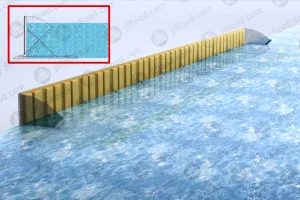
The core operating mechanism of a hydrodynamic door flood barrier relies on Archimedes' Principle and hydrostatic head equilibrium. The barrier assembly consists of three primary engineering modules: the Embedded Foundation Frame, the Buoyant Door Panel, and the Hydro-Mechanical Latching Unit.
Hydrodynamic Trigger Sequence:
1. Water Ingress: Surface runoff breaches the outer threshold channel and flows into the recessed bottom basin.
2. Buoyancy Activation: As the basin fills, engineered air-chambers inside the hollow aluminum panel generate vertical uplift buoyancy force ($F_b = \rho \cdot V \cdot g$).
3. Self-Rising & Rotation: The panel pivots smoothly on stainless steel (SUS316) sealed bearing hinges, moving from a horizontal resting position ($0^\circ$) toward a vertical retaining angle ($60^\circ - 90^\circ$).
4. Hydrostatic Locking: Rising water behind the panel increases horizontal pressure ($P = \rho \cdot g \cdot h$), compressing the peripheral EPDM gaskets firmly against the stainless side frame walls to achieve a watertight seal.
| Model Series | Standard Retaining Height | Clear Span Width | Drive-Over Load Capacity | Seal Material & Lifetime | Primary Application |
|---|---|---|---|---|---|
| HM4E-006C (Embedded) | 500mm – 1200mm | Up to 6000mm (Single panel) | 20 Tons (DIN 1072) | Dual EPDM Profile / 15+ Yrs | Subway entrances, Commercial doorways |
| HM4D-0006E (Surface) | 400mm – 1000mm | Up to 5000mm | 5 Tons (Light vehicles) | Fluorosilicone Gasket / 15+ Yrs | Retrofit building doors, Utility rooms |
| Flip-Up Automatic Gate | 600mm – 1500mm | Custom modular array | Pedestrian / Light Cart | EPDM Hydraulic Lip Seal / 20 Yrs | Substation doorways, Hospital basements |
| Heavy-Duty Ramp Gate | 800mm – 2000mm | Up to 10,000mm | 40 Tons (Heavy Truck Loading) | Reinforced EPDM + Neoprene / 20 Yrs | Underground garage ramps, Logistics hubs |
How engineering procurement teams, general contractors, and architects can specify Chinese flood barrier systems in tender documentation.
When procuring flood barriers from China for international infrastructure or commercial construction projects, EPC (Engineering, Procurement, and Construction) teams must ensure rigorous quality control and compliance verification. Below is the standard procurement workflow recommended by Junli Technology for seamless project execution:
Provide clear opening dimensions, curb levels, expected design flood head (water depth), traffic load requirements, and finished floor material specifications to our engineering office.
Our factory engineers issue custom 2D/3D BIM civil interface drawings, detailing pit excavation depths, rebar tie-in locations, and concrete pouring tolerances for client approval.
Prior to shipment, the custom door flood barriers undergo full-scale hydrostatic testing in our factory pool. Video recording or third-party inspection (SGS/TÜV) reports are issued with order documentation.
Compliance & Quality Certifications: Junli technology products operate under ISO9001:2015 Quality Management Systems and ISO14001 Environmental Management. Structural components conform to GB/T 6892 marine aluminum standards and European CE directive safety benchmarks.
In-depth technical answers to critical engineering and purchasing questions regarding door flood barriers from China.
Review additional field-tested automatic flood protection systems available for wholesale procurement and OEM engineering orders.

Access relevant technical documentation, case studies, testing guidelines, and direct contact portals.


