
Select from our enterprise-grade automatic self-closing flood gates and embedded protection barriers engineered specifically for underground rail stations, subway portals, and high-density civil infrastructure.
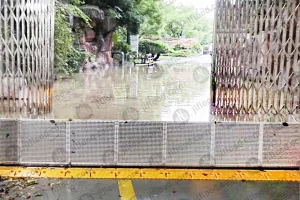
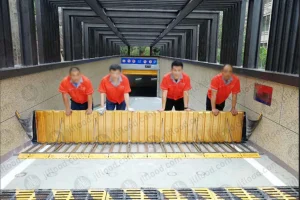
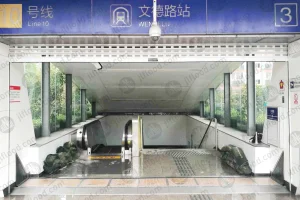
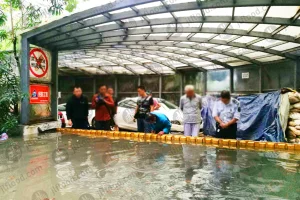
Modern subterranean urban rail transit networks represent exceptionally high-value assets extremely vulnerable to catastrophic surface water ingress. During extreme meteorologic events—such as cloudburst typhoons and flash floods—metro station entrances, pedestrian connect channels, and ventilation shafts become primary drainage pathways for stormwater. A failure to deploy flood defences within minutes can cause millions of dollars in traction motor damage, signal system short-circuiting, and irreversible structural flooding.
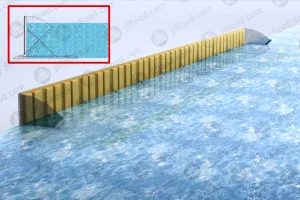
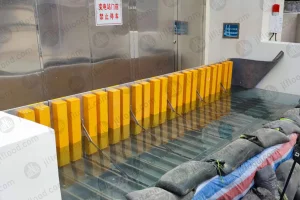
Traditional motorized or hydraulic flood gates rely on electrical grid power, municipal sensors, PLC controllers, and human activation. During severe storms, power grid failure is highly probable. Hydrodynamic automatic flood barriers designed by Nanjing Junli Technology leverage pure water buoyancy physics: as floodwater approaches the barrier's ground-recessed frame, water enters the bottom basin, automatically raising the retaining panel to block incoming flood streams.
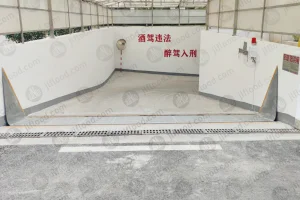
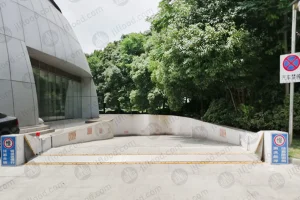
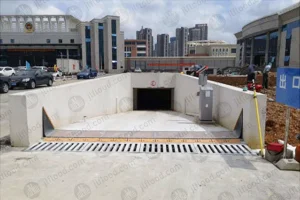
When dry, the flood barrier panel sits perfectly flush with the civil walkway or pedestrian plaza level, allowing heavy pedestrian traffic and municipal service vehicles to pass smoothly overhead without step-over hazards. The structural top cover is engineered to withstand vehicle axle loads up to 40 tons (AASHTO HS-20 / Eurocode load class D400), ensuring long-term durability in heavy urban traffic zones.
As urban transit infrastructure faces unprecedented climate change risks, standard aluminum barriers are insufficient. Junli Technology’s structural design team integrates finite element analysis (FEA), advanced metallurgy, and elastomeric polymer engineering into every subway flood barrier module.
The primary barrier panel utilizes high-strength, multi-hollow extruded 6063-T6 aluminum alloy profile. Surface anodization treatment (film thickness ≥ 15μm) delivers superior resistance to urban atmospheric corrosion, salt spray, and de-icing chemicals, ensuring a 30-year design lifespan with zero structural degradation.
Water-tight performance hinges on seal compression dynamic range. Our barriers feature continuous EPDM (Ethylene Propylene Diene Monomer) vulcanized rubber gaskets on all bottom, side, and panel-to-panel interfaces. Under hydrostatic head pressure, the seal compresses elastically, reducing leakage rate to < 0.05 L/hr per meter of seal.
While mechanical deployment operates 100% unpowered, optional IoT smart sensor packages stream real-time barrier angle status, basin water depth levels, ambient temperature, and security tampering alerts back to the metro operational control center (OCC) via NB-IoT/4G/5G protocols.
| Performance Parameter | Embedded Hydrodynamic Model (Hm4e-006C) | Surface Metro Model (Hm4d-0006E) | Heavy-Duty Flip-Up Model |
|---|---|---|---|
| Retaining Height Options | 500mm – 1200mm (Customizable) | 600mm – 1500mm | 800mm – 2000mm |
| Activation Principle | Hydrodynamic Automatic Buoyancy | Automatic Hydrodynamic Rising | Buoyancy / Assisted Hydraulic Self-Closing |
| Structural Frame Material | 304 / 316 Stainless Steel Enclosure | High-Grade Structural Carbon Steel / SS304 | Reinforced Structural Stainless Steel |
| Panel Construction | 6063-T6 Aerospace Aluminum Profile | Anodized Anisotropic Hollow Aluminum | Composite Stainless Steel Honeycomb |
| Surface Load Capacity | 40 Tons (AASHTO HS-20 / D400 Class) | 30 Tons (C250 Class Walkway/Driveway) | Pedestrian / Emergency Light Vehicle |
| Sealing Gasket Compound | High-Resilience EPDM Elastomer | Dual-Layer EPDM Silicone Hybrid | Triple-Lip EPDM Profile |
| Operating Temperature | -40°C to +80°C | -35°C to +75°C | -45°C to +85°C |
| Leakage Rate Standard | ≤ 0.05 L/h per meter (Exceeds GB 50108) | ≤ 0.08 L/h per meter | Zero visible droplet migration at design head |
Modern transit-oriented developments (TOD) and metro networks present complex spatial layouts. Junli Technology provides tailored end-to-end engineered solutions for five critical urban risk nodes.
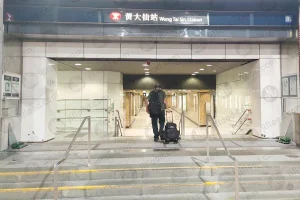
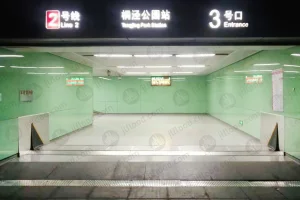
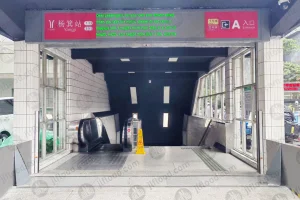
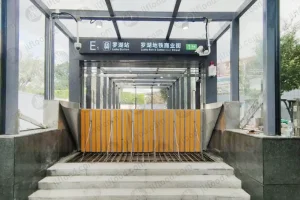
Station portals at ground level are prime targets for flash flood water rushing off paved city streets. Standard embedded floor-recessed hydrodynamic barriers install directly at the entrance boundary line, popping up automatically before flood waters crest the upper step riser.
Multi-modal transfer hubs linking subways directly to commercial shopping centers or underground garages require wide-span flood defense. Junli's modular connection channel barriers span widths over 20 meters with intermediate structural columns, blocking cascading urban floodwaters.
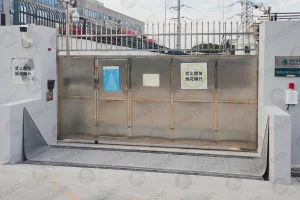
Traction power substations supply critical electricity to electric trains. Water ingress causes explosive short circuits and complete network shutdown. Substation perimeter gate flood doors protect vital electrical equipment rooms from high-pressure water inundation.
Low-lying surface air grates can swallow massive volumes of surface runoff. Embedded self-closing flap gates act as horizontal flood seals, closing automatically under fluid pressure to seal vertical shafts without restricting standard ventilation airflows.
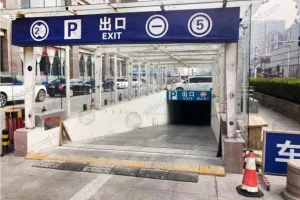
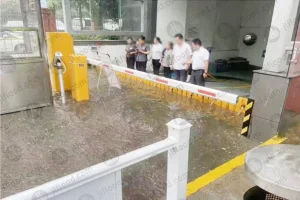
Transit maintenance yards and multi-level underground parking ramps experience constant vehicle passage. Heavy-duty surface-mounted and embedded flood barriers protect sloped entry driveways while enduring constant heavy bus and service-truck axle impact loads.
Based in Qinhuai District, Nanjing, Jiangsu Province, Nanjing Junli Technology Co., Ltd. operates a state-of-the-art 35,000 m² digital manufacturing facility equipped with full precision metalworking capabilities.
By controlling the complete vertical value chain—from aluminum billet extrusion die development to automatic robotic welding, EPDM vulcanization, and full-scale hydrostatic testing—Junli delivers 30% to 45% total procurement cost savings compared to European or US brands, without sacrificing material quality or engineering rigor.
Equipped with 12,000W fiber laser cutting stations and automated robotic continuous-seam arc welders. Frame tolerances are held within ±0.5mm, ensuring frictionless mechanical lifting of panels inside recessed foundation channels.
Every customized order undergoes 100% pre-shipment testing in our dedicated 50-meter long hydraulic pool. We measure exact panel rising speed, dynamic buoyance balance, and seal deflection under 1.5x design water head.
Proximity to Shanghai and Ningbo deep-water ports enables fast containerized shipping. Heavy-duty steel-reinforced export crate packaging protects barrier panels and pre-assembled embedded stainless steel frames during transoceanic shipping.
Subway projects require stringent certification and engineering documentation to pass municipal engineering reviews. Junli Technology provides full compliance packages tailored to regional building codes.
Our manufacturing processes and product lines strictly adhere to ISO 9001 (Quality Management), ISO 14001 (Environmental Management), and ISO 45001 (Occupational Health & Safety). European exports conform to EN 1090-2 Execution Class 2 (EXC2) structural steel execution standards with CE marking options.
Barrier structures are calculated using Eurocode 1 (EN 1991-1-6 actions on structures during execution) and US FEMA P-936 (Floodproofing Non-Residential Structures) guidelines. Engineering dynamic impact calculations account for floating debris striking the retaining wall at fluid velocities up to 2.5 m/s.
Our international engineering service team provides native AutoCAD (.DWG) and BIM Revit (.RFT/.RVT) model integration for consultants. Custom civil interface drawings specify exact concrete rebar clearance, embedded frame anchor bolts, and floor drainage conduit drop points.
Follow this 4-step engineering procurement workflow to request accurate quotes, technical submittals, and custom shop drawings for subway and civil flood defense tenders.
Browse additional modular hydrodynamic flood barrier configurations designed for metro connection channels, electrical substations, and heavy-duty infrastructure assets.
Detailed technical answers to common queries regarding flood gate mechanics, civil integration, maintenance protocols, and ordering options for procurement engineers.


