Factory-direct quotes, engineering schematics, and customized specification support for industrial, transit, and commercial applications.
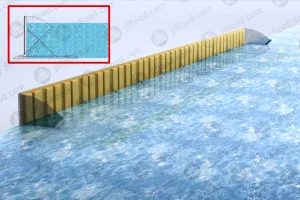
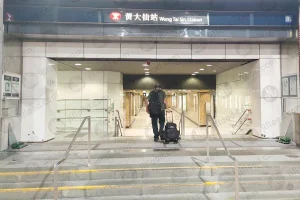
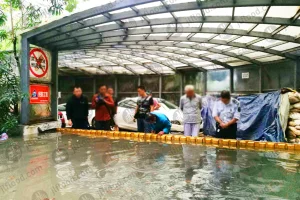
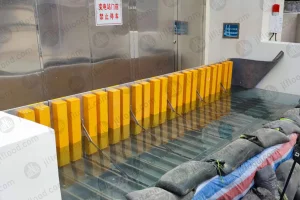
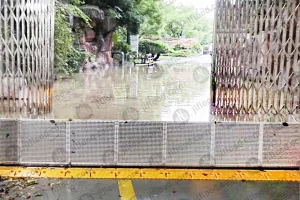
When flash surface water reaches critical threshold height, it flows into the stainless steel bottom chamber through specialized intake grates, naturally displacing air.
The engineered hollow door leaf—crafted from high-strength marine 6063-T6 aluminum alloys—gains upwards hydraulic lift as the internal basin fills, automatically rotating upward.
As the water level escalates, hydrostatic pressure forces the panel firmly against continuous EPDM rubber gaskets, forming an airtight, leak-free compression barrier.
| Structural Component | Material Specification | Engineering Function |
|---|---|---|
| Door Leaf Frame | Aluminum Alloy 6063-T6 / 6061-T6 | Provides high strength-to-weight ratio, structural rigidity against impact loads, and corrosion resistance. |
| Foundation Trench Basin | Stainless Steel SUS304 / SUS316 | Encases the hydrodynamic chamber, houses embedded anchors, and withstands heavy vehicular axle loads (up to 40 Tons). |
| Primary Sealing Element | EPDM Continuous Compression Gasket | Ensures water tightness with near-zero leakage (<0.15 L/h per meter) under maximum design head pressure. |
| Side Wall Wall-Pillars | Reinforced Structural Carbon Steel / SUS304 | Anchors the lateral guide tracks, houses side seals, and transfers hydrostatic thrust into civil concrete walls. |
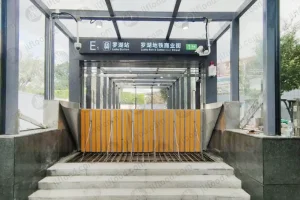
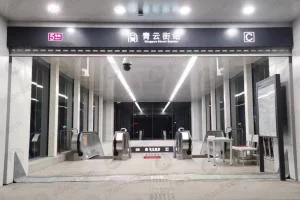
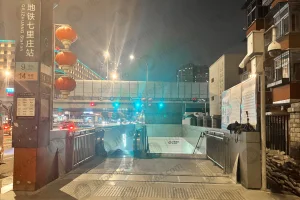
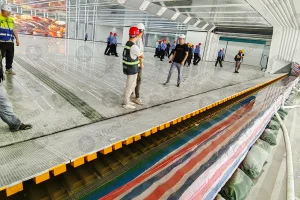
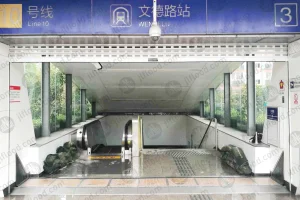
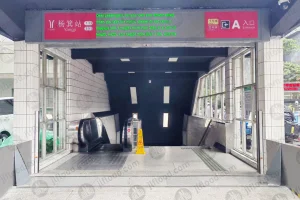
Installed at station pedestrian portals, ventilation shafts, and connection channels (e.g., Guangzhou Metro, Dalian Metro, Suzhou Metro). Protects subterranean passenger zones against severe urban waterlogging.
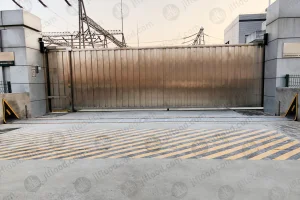
Deployed at state-grid transformer station perimeter gates and cable trench doors. Ensures absolute power grid continuity during storm surges by eliminating water ingress into high-voltage switchgear rooms.
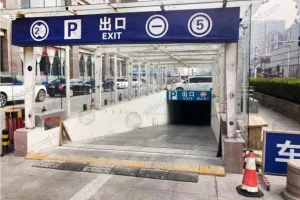
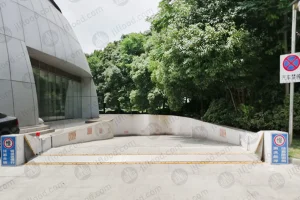
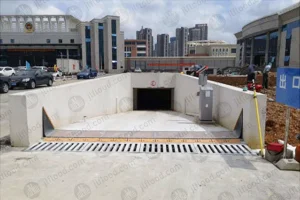
Embedded directly into the apron ramps of commercial malls, hospital basements, and residential complexes. Withstands continuous vehicle traffic daily while standing ready to auto-rise during flash floods.
While the deployment mechanism remains 100% mechanical and power-free, integrated low-power IoT sensors notify facility managers via cloud software, SMS, or SCADA protocols the moment a panel begins rising. This alerts security personnel to close secondary fire doors or reroute incoming traffic.
Next-generation embedded foundation chambers incorporate self-flushing angled silt channels and debris filtration screens. This prevents urban sediment, leaves, and street litter from jamming the panel hinge mechanism during flash flood drawdowns.
A: Unlike electric gates, hydrodynamic flood doors require zero electricity, sensors, or human operation. Water flowing into the embedded trench generates natural buoyant force, raising the panel automatically. It remains 100% operational during regional grid blackouts.
A: Yes. Standard commercial models support axle loads up to 20 Tons, while reinforced industrial models accommodate 40-Ton to 60-Ton container trucks, fire engines, and heavy industrial transport vehicles.
A: Maintenance is minimal. We recommend quarterly visual inspections, clearout of accumulated leaves/debris from the intake drainage trench, and biannual lubricated inspection of EPDM perimeter compression gaskets.
A: Quotes are calculated based on clear opening width, design water height, structural alloy selection, surface finishing, packaging specifications, and port of delivery (FOB/CIF). Custom BIM/CAD drawings are supplied with formal quotes.
Explore specialized sub-station gates, metro-type barriers, and power-free flood protection assemblies.