
Engineered for high-load vehicle ramps, metro connection shafts, utility substations, and commercial basements. Real water-testing certified.
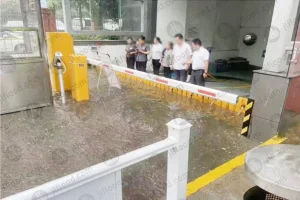
In an era marked by accelerating climate volatility, extreme rainfall events—historically categorized as "once-in-a-century" occurrences—are now happening with alarming frequency across global metropolitan regions. Urban waterlogging presents a severe structural threat to subterranean municipal assets, electrical distribution networks, underground transport hubs, and high-density commercial real estate. As modern civil infrastructure expands underground, traditional flood mitigation mechanisms such as manual sandbag deployment and modular aluminum stop-logs are proving structurally inadequate, labor-intensive, and prone to catastrophic human error during sudden flood surges.
As a premier China flood gate barrier manufacturer & supplier, Nanjing Junli Technology Co., Ltd. leads the engineering evolution toward Passive Hydrodynamic Automatic Protection Systems. Modern urban defense architecture requires self-activating, energy-independent barrier technologies that physically deploy without human intervention, external sensors, or electrical power—eliminating single-point operational failures during extreme storm events.
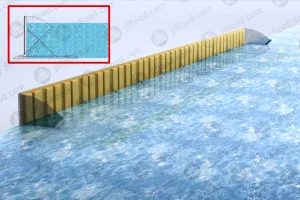
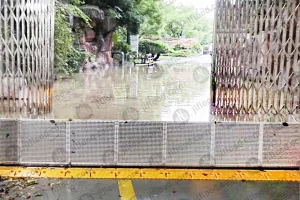
Traditional electric or hydraulic flood barriers rely heavily on grid power, water level sensors, and mechanical actuators. During major urban inundations, power grids frequently fail first. Hydrodynamic self-rising barriers utilize fluid dynamic buoyancy principles: rising water enters the subterranean retention frame, generating natural hydraulic uplift that raises and locks the structural barrier panel automatically.
Global procurement teams, municipal authorities, EPC contractors, and structural engineering consultants face stringent criteria when selecting flood protection barriers for critical infrastructure projects. Procurement specifications are no longer driven solely by initial capital expenditure (CAPEX); total cost of ownership (TCO), material durability, and international structural compliance dominate vendor evaluation matrices.
Barriers installed across vehicular ramps must support dynamic heavy-vehicle passage (EN 124 Class D400/E600 load standards) while maintaining flush alignment with asphalt surfaces during dry weather.
Complete operational independence from grid power, backup generators, micro-switches, or PLC controllers. The physical laws of hydrostatics ensure 100% fail-safe deployment during blackouts.
Industrial-grade vulcanized EPDM rubber profiles engineered for UV resistance, ozone resistance, and chemical stability, maintaining dynamic leak tight performance (<0.05 L/min/m seal perimeter).
China's industrial ecosystem has transformed flood barrier manufacturing from localized steel fabrication into precision hydraulic engineering. Operating out of Nanjing's high-tech manufacturing hub, Junli Technology leverages China's advanced Industry 4.0 supply chain to deliver world-class flood control solutions with unmatched scalability and quality control.
| Technical Parameter | Hydrodynamic Self-Rising Gate | Traditional Sandbags / Stop-Logs | Motorized Electric Gate |
|---|---|---|---|
| Deployment Trigger | Automatic Water Buoyancy | Manual Labor Required | Sensor / Manual Switch |
| Power Supply Need | 0 Watts (Power-Free) | N/A | Required (High Risk in Blackout) |
| Response Time | < 1 Second Reaction | 1 - 4 Hours Assembly | 30 - 120 Seconds Motor Drive |
| Subterranean Aesthetics | 100% Flush Embedded Frame | Bulky / Requires Storage Space | Protruding Pillars / Tracks |
| Maintenance Cycle | Annual Debris Inspection | Single-use / High Maintenance | Monthly Electrical & Motor Audits |
Our automatic flood barrier systems are customized to interface with diverse civil entrance geometries and structural concrete frames.
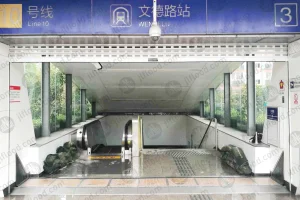
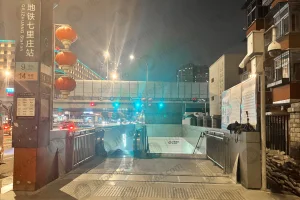
Subway entrance portals, connection channels & ventilation shafts
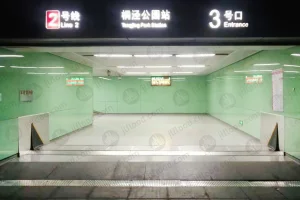
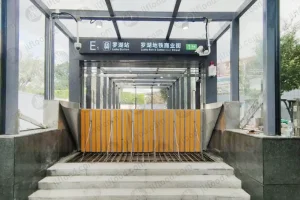
Subway entrances represent vulnerable funnel points during urban inundations. Junli surface-mounted and embedded hydrodynamic barriers seal underground passages seamlessly. Successfully deployed across rail transit systems in Guangzhou, Beijing, Shenzhen, Hong Kong, and Suzhou.
Grid perimeter gates, transformer vaults & cable trench rooms
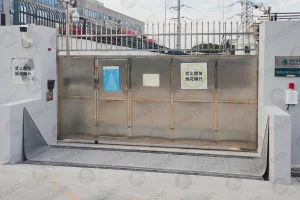
Water ingress into high-voltage electrical facilities causes wide-area power blackouts and millions in equipment destruction. Our power-free substation gates isolate transformer rooms and cable trenches, locking automatically when surface water arrives.
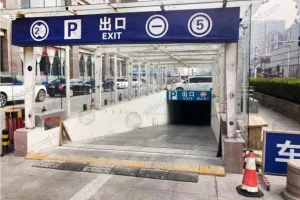
Shopping malls, hospital ramps, residential basement garages
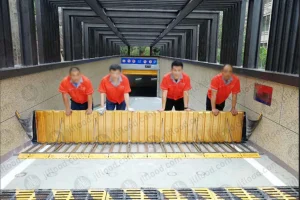
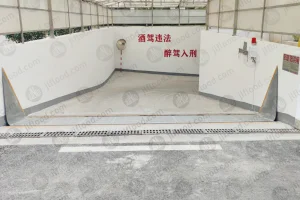
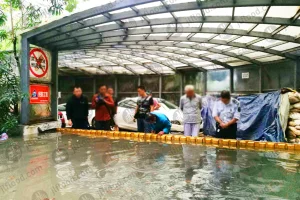
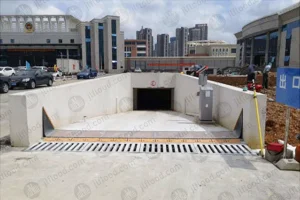
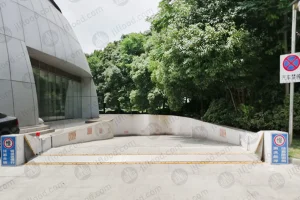
Heavy traffic ramps require barriers that sit fully flush, allowing seamless vehicle passage without noise or vibration. When flash floods hit, the rising water automatically elevates the panel, preventing total submersion of underground parking spaces.
Hazmat containment zones, coastal plants & underground crossings
Beyond natural floods, chemical manufacturing facilities require automated secondary containment barriers to catch toxic liquid spills and firewater runoff, satisfying strict environmental regulatory compliance.
Browse specific engineering models, embedded configurations, and specialized hydro-gate pricelists for global export.
In-depth answers regarding structural specification, installation civil works, maintenance protocols, and international shipping.
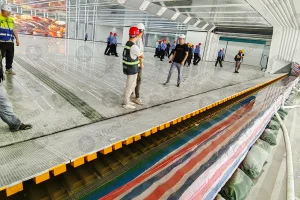
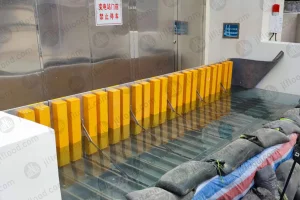
The barrier panel is installed flush within a recessed subterranean concrete foundation tray. When surface floodwater reaches the entrance, water naturally flows into the retention chamber through intake grates. The accumulating liquid creates hydro-buoyancy according to Archimedes' principle, lifting the floating door panel automatically. As the water level continues to rise, hydrostatic pressure firmly seals the door panel against the structural end frame, creating a watertight wall without needing motors, power supplies, sensors, or human labor.
Standard hydrodynamic gate modules cover water retaining heights from 0.5 meters up to 2.0 meters per single leaf. For clear span openings, single continuous modules support up to 6.0 meters, while modular multi-leaf coupling configurations can span unlimited driveway widths (over 30+ meters wide) utilizing removable center support posts or interlocking modular panel seals.
For embedded type barriers, civil contractors must construct a reinforced concrete trough (C30/C35 grade) matching Junli's civil structural drawings. The trough requires a dedicated drainage connection (DN100 or DN150 pipe connected to a sump pit or gravity storm drain) to discharge minor rain wash. Surface-mounted retrofit models, by contrast, require only a flat, level concrete slab for chemical anchor bolt fastening, eliminating major excavation work.
Yes. Every structural design undergoes finite element analysis (FEA) to verify structural deflection under maximum hydro-head loads. Furthermore, custom orders undergo factory acceptance hydro-testing in our dedicated test pool. We measure lifting response time, structural deflection (< L/500 ratio), and joint leakage rate. Video verification and third-party inspection certificates (SGS/TÜV) can be issued prior to shipment.
Because the mechanism contains no electrical actuators or complex gearboxes, maintenance requirements are minimal. We recommend semi-annual visual inspections to clear leaf debris, silt, or gravel from the bottom chamber frame. The EPDM rubber seals should be inspected annually and lubricated with silicone grease. Seal kits are modular and can be replaced on-site without removing the structural barrier frame.
Yes, we provide full OEM/ODM engineering services for global EPC contractors, architectural firms, and municipal distributors. We provide complete CAD/BIM drawing sets, English installation manuals, step-by-step video tutorials, and remote engineering assistance. For large infrastructure projects (such as rail transit systems), field engineers can be dispatched internationally for installation supervision and commissioning.


