Hydrodynamic, self-closing, and automated flood gates designed for metro transit, power grids, and subterranean real estate.
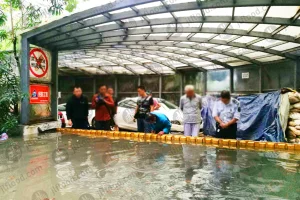
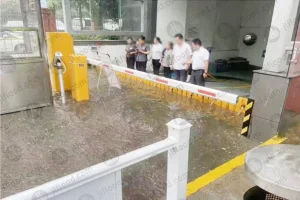
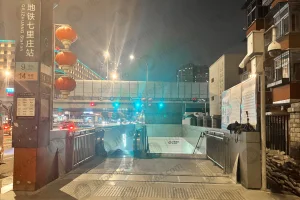
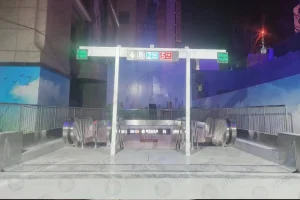
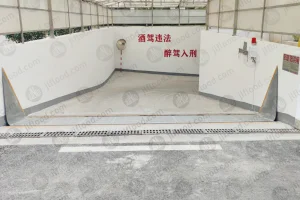
In an era defined by intensifying hydrological volatility, catastrophic urban flooding has emerged as one of the most critical structural threats facing municipal infrastructure worldwide. Driven by global climate change, rapid urban densification, and overburdened storm drainage networks, precipitation events that previously occurred once in a century are now manifesting with seasonal frequency. Municipalities, civil defense agencies, engineering procurement construction (EPC) contractors, and commercial real estate developers face unprecedented operational liability when subterranean structures—such as subway networks, electrical distribution substations, and underground vehicular parking complexes—are breached by flash floodwaters.
Historically, civil defense strategies relied heavily upon active, manual interventions: deployment of sandbags, temporary modular aluminum stop-logs, electrically driven motor-gates, and sensor-actuated pneumatic barriers. However, forensic analysis of major urban inundation events across East Asia, North America, and Western Europe reveals a fatal flaw in active systems: the systemic dependency on external power, human intervention, and signal telemetry during extreme weather emergencies.
China has emerged as the global epicentre for the advanced research, development, and mass precision manufacturing of Hydrodynamic Automatic Flood Control Systems. Integrating advanced metallurgical engineering, elastomeric chemical formulations, fluid mechanics, and structural dynamics, top-tier Chinese manufacturers—led by specialized firms such as Nanjing Junli Technology Co., Ltd.—have pioneered zero-electricity self-rising barrier systems. These solutions redefine flood defence from a reactive emergency protocol into an autonomous, structural property of the building envelope itself.
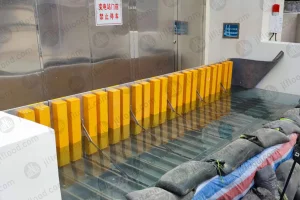
The core architectural principle of China's leading automatic flood barrier systems rests upon pure fluid dynamics—specifically, the exploitation of hydrostatic pressure differential and Archimedes' principle of buoyancy. Unlike motorized or hydraulic systems requiring electrical signals, actuators, or human labor, a hydrodynamic self-closing barrier utilizes the incoming floodwater itself as the sole kinetic driving mechanism.
A modular hydrodynamic flood gate system is installed fully embedded into a pre-cast concrete foundation channel flush with the finished road surface. During normal dry conditions, vehicles and pedestrians pass freely over the recessed structural top plate without obstruction. The operational cycle unfolds across four precise hydraulic phases:
Rising surface runoff overflows the street gutter and breaches the flush inlet grate, filling the stainless-steel embedded foundation basin.
Water entering the basin displaces air inside the hollow, sealed composite door panel. Buoyant forces ($F_b = \rho \cdot V \cdot g$) overcome gravity, causing the gate leaf to swing upward around its primary pivot axis.
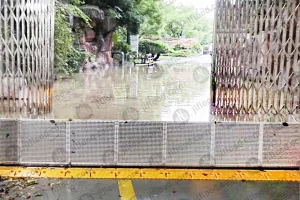
As the external water level rises against the deployed vertical panel, horizontal hydrostatic force presses the high-density EPDM seal against the rigid frame, creating an absolute water seal.
For ramp entrances of commercial underground parking garages and heavy industrial sites, barrier top-covers must sustain extreme dynamic wheel loads during non-flood periods. Advanced Chinese factories utilize Finite Element Analysis (FEA) to engineer internal structural rib networks crafted from aircraft-grade T6063-T6 aluminum alloys or SUS304/316 stainless steel structural beams.
Standard heavy-duty specifications (such as the China Heavy Duty Automatic Flood Gate Hm4d-0006C) are rated to withstand AASHTO HS-20 and Eurocode EN 1991 load vectors, guaranteeing structural deflection under 60-ton heavy transit vehicle drive-overs remains well within $L/500$ limits. Furthermore, under max hydraulic retaining head conditions (up to 2000mm water depth), structural yield safety factors exceed $SF = 2.5$.
The integrity of any flood mitigation barrier relies entirely upon its seal performance. Leading Chinese factories utilize dual-durometer Ethylene Propylene Diene Monomer (EPDM) synthetic rubber profiles with vulcanized corner joints. These seals possess outstanding resistance to ozone degradation, ultraviolet radiation, severe temperature fluctuations (-40°C to +90°C), and chemical exposure from urban automotive run-off.
Under hydrostatic test pool verification (referencing international standard BS EN 12288 and FM 2510), Junli's embedded automatic flood barriers demonstrate zero structural leakage across static head pressures up to 2.0 meters, maintaining measured seepage well below 0.05 L/m·h—far exceeding global municipal civil engineering tolerances.
Located in the heart of China’s high-technology industrial corridor in Qinhuai District, Nanjing, Jiangsu Province, Nanjing Junli Technology Co., Ltd. stands as a premier specialized enterprise dedicated to structural flood defence, civil air defence intelligence, and resilient infrastructure engineering. Operating direct specialized production lines, Junli integrates R&D, tooling, heavy precision welding, automated surface anodizing, and full-scale hydraulic testing under a single rigorous ISO 9001, ISO 14001, and ISO 45001 operational framework.
Every single flood barrier engineering design undergoes continuous hydrostatic simulation within Junli's dedicated in-house water testing pool prior to mass fabrication dispatch.
Automated TIG/MIG multi-pass robotic welding systems ensure flawless hermetic structural joints along structural aluminum chassis and stainless steel embedded frames.
Shipments are accompanied by physical mill test certificates (MTC), coating thickness audits (minimum 25μm fluorocarbon/anodization), and localized civil structural load compliance documentation.
This dedicated manufacturing architecture empowers Junli to support extensive OEM/ODM manufacturing partnerships for global civil contractors, government procurement bodies, and regional distributors across North America, Europe, the Middle East, and Southeast Asia.
Generic temporary barriers fail when applied to complex commercial and transit interfaces. Junli flood protection barriers are tailored to the precise structural geometries, hydraulic head pressures, and operational mandates of four critical urban sectors:
Metropolitan subway networks are highly susceptible to severe inundation during extreme storm events. Water entering a single station portal can travel miles through subterranean tunnels, destroying multi-billion-dollar traction power systems, rolling stock, and communication signaling lines.
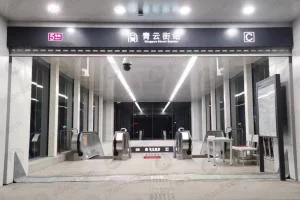
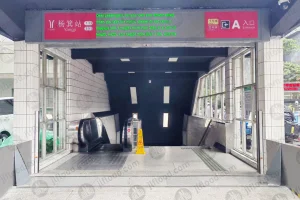
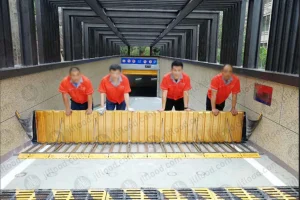
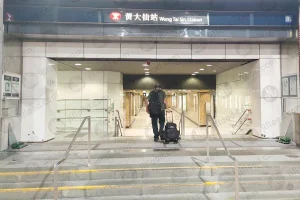
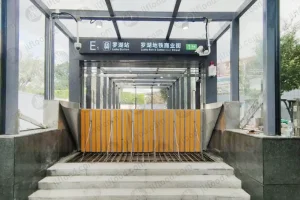
Junli’s Embedded Type Automatic Flood Barriers for Metro are installed across major rail transit systems including Guangzhou Metro (e.g., Yangji Station), Dalian Metro lines, Beijing Subway, Suzhou Rail Transit, and Hong Kong MTR connection channels. During extreme weather events such as Typhoon Bebinca and Typhoon In-fa, Junli hydrodynamic barriers automatically raised at station portals without human intervention, maintaining absolute operational integrity across underground transit networks.
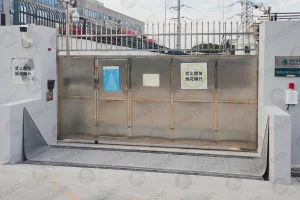
Electrical power substations represent the single point of failure in urban utility resilience. Inundation of cable trenches, transformer rooms, or switchgear chambers causes catastrophic explosions, permanent asset destruction, and multi-day municipal blackouts. Junli’s specialized Substation Gate Flood Barriers feature non-conductive composite housing options, ultra-fast response buoyancy modules, and compact perimeter designs that seal critical equipment doorways without restricting daily maintenance access.
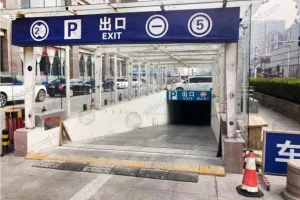
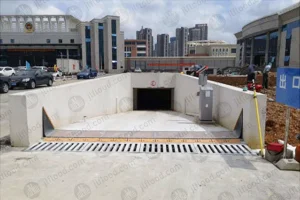
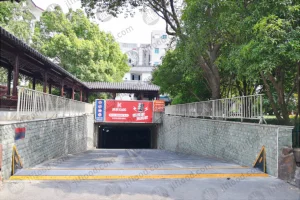
Ramp openings to underground parking facilities act as massive collection funnels during urban flash floods. Junli’s Flip-Up Garage Flood Barriers are engineered to install flush into steep incline driveways. They allow continuous high-volume passage of personal vehicles, SUVs, and delivery trucks without altering vehicle clearance angles, automatically rising to block water before it reaches basement levels.
From airport landside luggage tunnels and concourse passages (such as Guangzhou Baiyun International Airport) to underground pedestrian street crossings in Jinan and hospital basement emergency centers in Suzhou, Junli modular barrier arrays provide permanent, maintenance-free structural security against surface water intrusion.
Integrating hydrodynamic flood protection systems into modern structural engineering blueprints requires meticulous interface planning between the civil concrete subcontractor and the barrier manufacturer. Junli provides full engineering design packages for international consultants, architectural engineering teams, and tender bidders.
For embedded hydrodynamic automatic flood gates (e.g., HM4E and HM4D series), the building structural slab must accommodate a recessed trench dimension equal to the barrier chassis height plus an additional structural bedding allowance (typically 300mm to 450mm total trench depth depending on span and retaining height). Critical civil requirements include:
Junli flood gates are manufactured to satisfy and exceed premier international civil protection standards:
Compliance guidelines for physical flood abatement equipment, validating hydrodynamic seal tight performance under static head loads.
Structural calculation parameters for actions on structures, including static water pressure, wave impact dynamic forces, and vehicle axle loads.
Standard specification for flood mitigation surfaces and perimeter barrier deployment testing protocol.
While the mechanical core of Junli’s automatic flood barriers remains purely hydrodynamic and unpowered for 100% fail-safe physical reliability, the integration of smart digital monitoring represents the next horizon in urban flood management. Junli’s R&D division is driving two major technological breakthroughs:
Future-ready Junli systems can be outfitted with ultra-low-power LoRaWAN, NB-IoT, or 5G telemetry sensor pods. Operating on 10-year internal lithium batteries independent of grid power, these sensors broadcast real-time operational status updates directly to municipal Smart City SCADA command platforms. Facilities managers receive instant push alerts confirming gate deployment angle, water height accumulation within the foundation pit, and seal compression status during an emergency event.
To accommodate ultra-wide spans (>30 meters) without requiring central structural support mullions, Junli is developing advanced carbon-fiber reinforced polymer (CFRP) structural gate blades. These next-generation composite structures reduce deadweight by 55% compared to standard aluminum profiles, enabling even faster fluid buoyancy response times ($<0.05\text{s}$) while delivering exceptional flexural strength against debris impact during storm surges.
Comprehensive engineering and procurement answers for specifiers, consultants, and municipal buyers.
The system operates on pure physical mechanics (Archimedes' principle of buoyancy and hydrostatic pressure). The barrier panel is housed inside a recessed foundation chamber. As incoming surface floodwater enters the chamber, natural buoyant forces lift the panel into a vertical retaining position. No electrical power, sensors, motors, pneumatic pumps, or manual human activation are required. It operates automatically even during total grid blackouts.
Standard heavy-duty models (such as the Hm4d-0006C series) feature internal structural reinforcement frames designed to support heavy transit vehicle loads up to 60 tons (AASHTO HS-20 / Eurocode load specifications). Heavy fire trucks, commercial delivery vehicles, and buses can drive over the flush-mounted top plate continuously without causing deformation or mechanical damage to the underlying buoyancy mechanisms.
The foundation chamber is engineered with a sloped sediment collection trough and integrated stainless steel filter grates that prevent large debris from entering the primary flotation chamber. Small particulate silt is carried out naturally through the bottom gravity drainage channel when water recedes. Furthermore, routine annual inspection involves simply lifting the removable top cover plate and flushing the basin with a standard water hose.
Junli manufactures single modular units up to 6 meters in width and retaining heights ranging from 0.5 meters to 2.0 meters. For extra-wide commercial entrances, metro portals, or riverfront plazas exceeding 20 meters, multiple modular units are linked together using removable intermediate structural mullions or modular syncing hinges to create seamless, continuous protection barriers of unlimited width.
Junli provides comprehensive international engineering support, including 3D BIM/CAD CAD drawings, civil concrete recess templates, structural load calculation reports, material mill certificates, and step-by-step English installation and maintenance manuals. For major infrastructure projects, remote video commissioning assistance or direct field engineer dispatch can be coordinated through our global service division.
Explore specialized automatic flood barriers, self-closing doors, and substation perimeter defence configurations.