
Direct from leading certified Chinese manufacturing facilities. Field-tested, water-activated solutions built for logistics entrances, metro portals, and vehicle access zones.
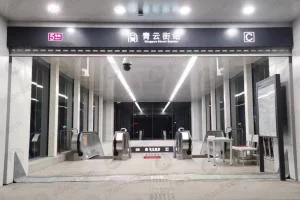
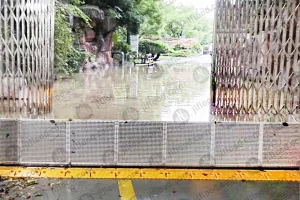
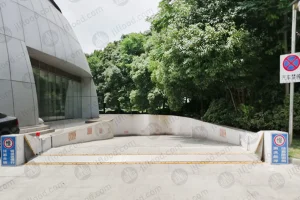
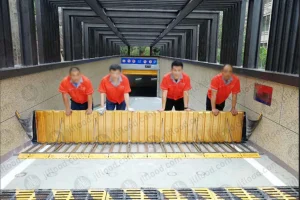
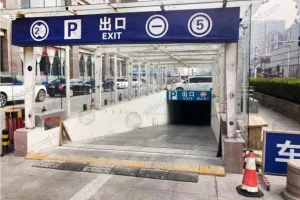
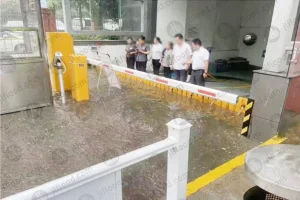
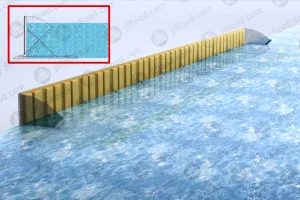
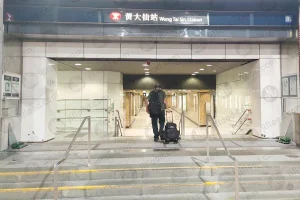
Evaluating load ratings, hydrostatic buoyancy mechanisms, and civil engineering resilience across high-traffic manufacturing portals.
In the contemporary landscape of global climate risk mitigation, industrial facilities, manufacturing complexes, logistics hubs, and underground transit nodes face unprecedented flash flood challenges. The critical junction where logistics transport meets flood security is the vehicle-passing entrance. Traditional flood barriers—such as manual stoplogs, sandbags, or electrically powered vertical drop gates—exhibit critical failure modes during severe inundation events. Power outages, operational delays, human error, and structural deflection under heavy axle loads frequently result in catastrophic losses for manufacturing plants.
Engineered and manufactured within specialized flood control production clusters in China, modern hydrodynamic automatic flood gates for vehicles passing represent a paradigm shift in civil protection technology. Operating on pure physics—utilizing hydrostatic pressure and fluid buoyancy—these embedded barrier systems require zero electrical power, zero human intervention, and zero sensor triggers to deploy during flash floods, while maintaining seamless, flush-to-grade vehicular access during normal operational hours.
The core innovation behind leading Chinese factory-manufactured hydrodynamic vehicle barriers lies in their passive mechanical balance. The system consists of three main assemblies: a flush-mounted ground frame embedded within the concrete roadway slab, a buoyant structural barrier panel pivoted on stainless-steel hinges, and a self-cleaning hydro-chamber equipped with automatic water inlet channels and silt drainage ports.
When flash flood surface runoff reaches the factory entrance, water naturally flows into the embedded chamber through high-flow intake grates. As the chamber fills, Archimedes' principle triggers the internal buoyant panel to swing upward automatically. As the water level rises, the hydrostatic pressure forces the panel tightly against specialized synthetic EPDM gaskets, creating a continuous compression seal capable of withstanding dynamic wave action and static water heads up to 2,000 mm without requiring electrical actuators or backup battery systems.
During extreme weather events, severe storms frequently knock out industrial electrical grids. Hydrodynamic barriers operate on pure fluid mechanics, ensuring 100% operational reliability even during complete facility blackout scenarios.
Manufactured using high-tensile structural steel (Q355B/SUS304) or extruded aviation aluminum alloys, these barriers support high-frequency passage of 40-foot container trucks, forklifts, and heavy industrial plant equipment.
Once floodwaters recede, water inside the containment chamber drains out through passive non-return valves into the municipal stormwater network, allowing the heavy panel to return smoothly to its flush position.
Key parameters required by EPC contractors, municipal engineers, and factory plant operations directors when evaluating Chinese manufacturing partners.
Procuring industrial-grade vehicle flood gates requires rigorous evaluation of structural load performance, material chemistry, sealing longevity, and civil foundation compatibility. Below is the standard matrix utilized by global engineering consultants to specify automatic flood barriers for high-density logistics facilities.
| Performance Parameter | Standard Factory Specification | Heavy Logistics / Port Specification | Verification Test Protocol |
|---|---|---|---|
| Vehicle Axle Rating | 20 – 40 Tons (AASHTO H-20 / HS-20) | 60 – 120 Tons (Heavy Container Rig) | Finite Element Deflection Analysis (FEA) + Hydraulic Jack Load Test |
| Primary Structure Material | Extruded Aluminum Alloy (6063-T6) | Stainless Steel (SUS304 / SUS316) / Q355B Structural Steel | Spectrometric Alloy Verification & Tensile Strength Testing |
| Water Retaining Height | 600 mm – 1,200 mm | 1,200 mm – 2,000 mm (Modular Leaf Array) | Full-Scale Water Basin Leakage Test (Zero Head Loss) |
| Sealing Gasket Life | EPDM Vulcanized Rubber (15+ Years) | Fluororubber / EPDM Compound (20+ Years) | Accelerated Ozone Aging & Cyclic Fatigue Test (50,000 cycles) |
| Activation Threshold | Water level ≥ 50 mm above ground road level | Water level ≥ 30 mm above ground road level | Hydrodynamic Reaction Simulation (Lifting Time < 90 seconds) |
| Corrosion Protection | Hot-Dip Galvanizing + Fluorocarbon Coating | Marine Grade Epoxy Coatings / Passivated Stainless Steel | Salt Spray Chamber Test (ASTM B117 ≥ 1,500 Hours) |
Installing an embedded vehicle-passing flood gate in a manufacturing facility requires seamless integration between the civil concrete structure and the factory-supplied embedded steel frame. Chinese manufacturing suppliers provide customized engineering drawings detailing rebar tying configurations, drainage pipe connections, and trench excavation dimensions.
The civil installation process follows strict protocols:
How Chinese factories are pioneering IoT telemetry, dynamic sensors, and hybrid materials to redefine industrial waterlogging defense.
Next-generation flood barriers from China feature optical angle sensors, level transmitters, and LoRaWAN/NB-IoT modules. Plant safety officers receive real-time mobile alerts and telemetry feed updates on barrier deployment status during severe typhoons.
Barrier surface panels are treated with anti-corrosion, self-cleaning nano-composite ceramic coatings. These materials prevent oil stains, road debris adhesion, and chemical spill corrosion common in chemical plant logistics corridors.
For high-risk critical infrastructure (such as nuclear power plant accesses and semiconductor cleanroom factories), hybrid designs combine passive buoyancy with secondary manual pneumatic override switches for pre-emptive deployment ahead of forecasted storms.
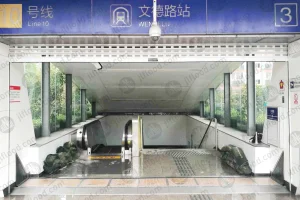
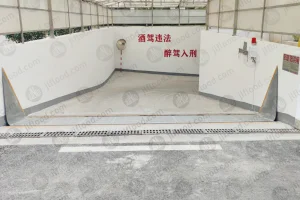
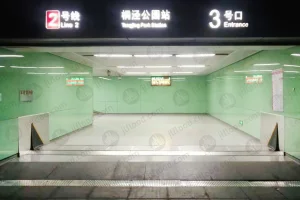
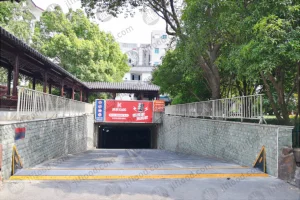
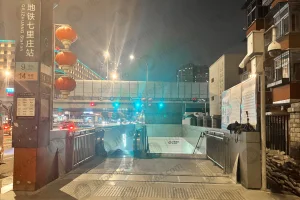
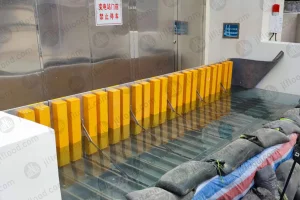
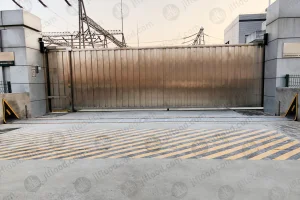
Explore Metro connection channels, substation gate systems, and wide-span vehicle ramp defense units engineered for high performance.

Addressing engineering, procurement, and field reliability queries from international buyers and civil engineering contractors.
During normal non-flood conditions, the barrier panel rests completely flat inside a heavy-duty structural steel frame embedded within the roadway. The surface plate is reinforced with longitudinal structural I-beams and load-bearing ribs designed to transfer axle loads (up to 60-120 Tons) directly down to the underlying concrete foundation slab, isolating internal hinges and seals from mechanical vehicle stress.
Chinese manufacturers equip industrial-grade gates with multi-stage sedimentation management. Water intake slots are fitted with angled stainless steel trash screens. Additionally, the internal chamber features a self-clearing sloping floor directing fine sediment toward cleanout ports connected to external drainage networks, requiring minimal routine vacuum maintenance.
Yes. Manufacturers offer both shallow-embedment units (requiring 200–350 mm excavation depth) and surface-mounted ramped gates (such as the HM4D-0006E series). Surface-mounted types require zero trench excavation and anchor directly onto existing reinforced concrete slabs using heavy-duty chemical anchor bolts.
Leading Chinese exporters engineer flood gates in accordance with international structural and floodproofing standards, including ISO 9001 quality management, CE EN 1090 structural steel execution standards, AASHTO vehicle loading specifications, and FM Approvals Class 2510 (Flood Abatement Equipment) leakage test guidelines.
Standard export packages include full CAD/BIM civil interface drawings, structural deflection calculations, material mill test certificates (MTCs), step-by-step English installation manuals, factory hydrostatic test video proof, and remote video technical supervision during concrete embedment pouring.


