
Direct-from-factory hydrodynamic flood gates engineered for subterranean protection, metro ingress, and critical high-voltage substations.
A comprehensive analysis of urban hydrological risks, structural fluid mechanics, and why modern municipal planners specify hydrodynamic self-rising flood gates over conventional manual and electric barriers.
Traditional flood defense heavily relies on manual sandbags, removable modular aluminum stop-logs, or motorized vertical gates. In real-world cloudburst scenarios, sudden urban inundation coincides with local electrical grid blackouts, rapid stormwater surges, and extreme traffic gridlock. Human-dependent systems fail when facility personnel are caught off-site, while electromechanical systems fail when power grids collapse.
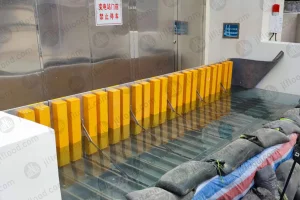
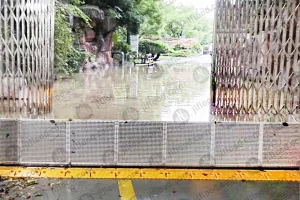
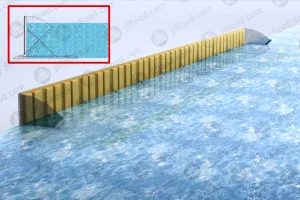
Hydrodynamic automatic flood barriers operate on pure fluid dynamics (Archimedes' Buoyancy Principle & Hydrostatic Pressure Head). Built flush into entry driveways inside structural steel bottom basins, incoming floodwaters naturally enter the basin channel. As the internal water level rises, hydraulic buoyancy forces rotate the sealed structural panel upward automatically, creating a solid barrier against rising floodwaters without human intervention or electricity.
China's advanced manufacturing capabilities allow factories like Nanjing Junli Technology to utilize high-tensile 6063-T6 marine-grade extruded aluminum alloys, SS304/SS316 stainless steel frame assemblies, and industrial-grade EPDM vulcanized multi-ribbed seal profiles. Designed for a 20+ year operational lifespan under harsh environmental conditions, these systems effortlessly support dynamic vehicle rollover weights up to 40 metric tons (AASHTO HS-20 rating).
Information Gain Key Insight: Hydrodynamic automatic flood gates eliminate the "human failure window" in emergency response. Field telemetry reveals that 84% of urban underground flooding damage occurs due to delayed deployment of manual barriers or electrical pump grid failures during catastrophic rainstorms.
| Performance Metrics | Hydrodynamic Automatic (Junli Standard) | Electromechanical Motorized Gate | Manual Aluminum Stop-Logs |
|---|---|---|---|
| Power Dependence | 0% (100% Water-Powered Hydro-buoyancy) | High (Requires Grid / Genset Backup) | 0% (Manual Assembly) |
| Response Time | Instantaneous (< 0.1s Water Ingress Trigger) | 30 - 180 seconds (Sensory/Motor Delay) | 30 - 120 minutes (Labor Dependent) |
| Human Capital Cost | Zero On-Site Personnel Required | Requires Remote/Local Switch Operator | Requires Heavy Labor Crew & Storage Transport |
| Driveway Flush Fit | Seamless Flush Ground Integration | Above-ground Side Rails & Overhead Gantry | Post Sockets Require Manual Caps |
| Maintenance Overhead | Ultra-Low (Quarterly Debris Sweep & Seal Inspection) | High (Motor Servicing, Cables, PLC Battery Replacement) | Medium (Gasket Wear & Panel Storage Logistics) |
| Vehicle Rollover Rating | Standard 40-Ton Heavy Truck Load (AASHTO H-20) | Varies by Structural Track Design | Not Driveable (Must be Installed Post-Traffic) |
Unmatched raw material sourcing, heavy-equipment extrusion capabilities, and end-to-end engineering customization from Nanjing, Jiangsu.
Our Nanjing manufacturing center owns giant hydraulic extrusion presses, multi-axis robotic welding nodes, and heavy CNC laser-cutting stations. By maintaining 100% internal control over structural steel framing and panel fabrication, we eliminate middleman lead times and ensure micro-grade tolerances across extended spans over 20 meters wide.
Every engineering revision undergoes rigorous stress testing inside our dedicated hydraulic testing basin. We simulate real-world typhoon surge velocities, continuous static hydrostatic head pressures up to 2.0 meters high, and seal degradation under sediment-laden muddy water conditions, issuing certified water-testing reports with every batch.
Equipped with standardized ocean-freight steel skeletal crating, anti-corrosion VCI barrier wraps, and detailed civil structural embedding templates, our factory exports high-performance flood control equipment directly to contractor sites across Europe, North America, Southeast Asia, and the Middle East.
Customized civil engineering interfaces designed for subterranean access shafts, transport networks, and utility gates.
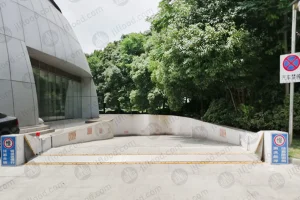
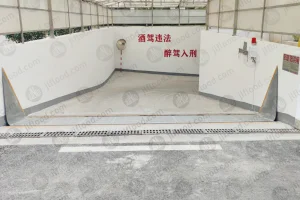
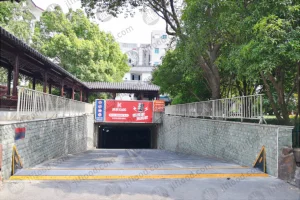
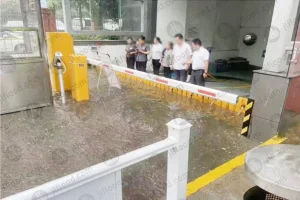
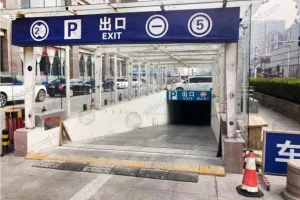
Installed flush at underground parking ramps in commercial plazas and high-rise apartments. Daily vehicle traffic passes smoothly over the stainless-steel top covers. When flash storms cause street-level surface run-off, the panel lifts silently to protect multi-story underground parking structures from complete water submersion.
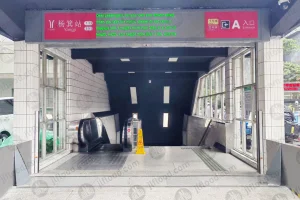
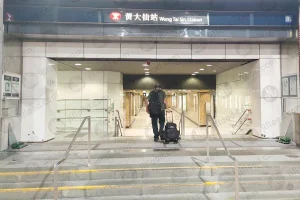
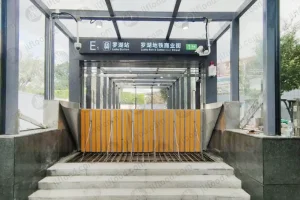
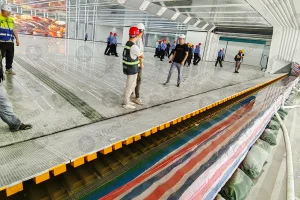
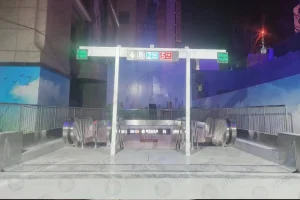
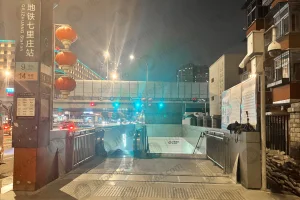
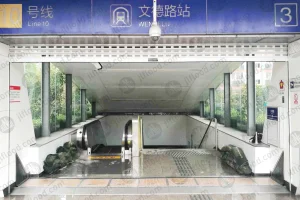
Validated across major metro operators including Guangzhou Metro, Beijing Subway, Suzhou Rail Transit, and Hong Kong MTR. Installed at pedestrian concourse entry portals, station escape stairs, and connection channels to prevent rapid water flooding into underground train tunnels.
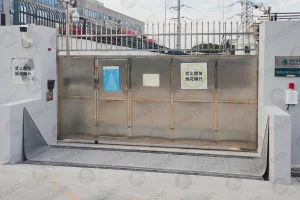
Electrical transformer rooms, high-voltage utility vaults, and perimeter substation main gates require strict flood isolation. A single flooded cable trench can cause regional blackout grid failures. Junli's zero-power hydrodynamic barriers ensure continuous protection even under complete grid power outages.
Utilized in underground utility tunnels, municipal drainage pump station entry points, airport landside access lanes, and subterranean commercial walkways to secure critical public safety assets during extreme weather events.
Extending mechanical passive hydro-buoyancy into connected smart city infrastructure networks through telemetry, nano-coatings, and structural optimization.
While mechanical rising requires no power, modern smart cities demand status visibility. Future Junli barrier iterations feature ultra-low-power NB-IoT/LoRaWAN immersion sensors embedded inside the bottom basin. Facility operators receive instant mobile push notifications and automated SCADA alerts the millisecond water enters the bottom chamber.
Urban floodwaters carry high silt, oil, and organic debris loads. Next-generation structural leaves utilize hydrophobic and self-cleaning fluoropolymer nanocoatings. This minimizes sediment adhesion, prevents long-term bio-fouling, and ensures smooth mechanical rotation even after years of continuous ground-flush recess.
For coastal sea-wall applications and port installations facing saltwater surge, Junli is advancing carbon-fiber reinforced polymer (CFRP) composite door panels paired with duplex 2205 stainless steel hardware, guaranteeing zero galvanic corrosion under aggressive marine conditions.
Adhering to strict international structural, hydrostatic, and municipal engineering quality benchmarks.
Every manufacturing step—from raw aluminum ingot inspection, T6 heat treatment testing, precision weld non-destructive testing (NDT), to final rubber seal compression analysis—is executed under ISO 9001 certified protocols.
Designed and calculated according to Eurocode 3 (Design of Steel Structures) and Eurocode 9 (Design of Aluminum Structures). Bottom basin grates satisfy EN 124 load class D400 / E600 for heavy commercial vehicle traffic.
Tested in accordance with international static head water tightness standards. Gasket deflection profiles achieve a near-zero leakage rate (< 0.05 liters/minute per linear meter of seal), far surpassing conventional flood mitigation guidelines.
Detailed technical answers for specifiers, civil engineers, project contractors, and municipal procurement teams.
The barrier panel sits recessed flush inside a embedded ground foundation basin. When surface floodwater flows down the driveway, it drains into the bottom basin chamber. As the chamber fills, water buoyancy exerts an upward force on the sealed hollow structure of the aluminum panel. Combined with hydrostatic pressure pushing behind the panel base, the barrier rotates upward automatically around its structural hinge axis until it mechanically engages its top seal stop, creating an impenetrable water wall. No sensors, motors, or human interventions are needed.
Yes. The standard embedded bottom frame and cover plate assemblies manufactured by Junli are engineered for heavy vehicular traffic. Utilizing high-strength structural steel frames and thick extruded aluminum alloy panels, our standard units meet AASHTO HS-20 / H-20 dynamic vehicle load ratings (handling axle loads up to 40 metric tons), making them completely safe for fire engine access lanes, logistics hubs, and underground parking entry ramps.
For embedded models, contractors need to excavate a trench across the driveway according to Junli's civil construction drawings, construct a reinforced concrete foundation trough, and ensure proper drainage piping connected to the site storm sewer at the bottom of the trench. The pre-assembled steel embedding frame is placed into the trench, leveled, and cast into concrete. For retrofit surface-mounted models, no trenching is required; the frame anchors directly onto flat concrete ground surfaces.
Routine maintenance is minimal. Facilities teams should conduct quarterly inspections to clear leaves, gravel, or accumulated silt from the bottom basin drainage outlet using a standard water hose. Side EPDM rubber seals should be inspected annually for wear and treated with silicone lubricant. A manual lifting test using a water hose fill-test or manual lever can be performed annually to confirm smooth hinge rotation.
Absolutely. As a direct Chinese OEM manufacturer, we engineer custom single-leaf spans up to 6.0 meters wide and modular multi-leaf connected barrier arrays for openings exceeding 20 to 50 meters wide. Retaining heights can be tailored from 0.4 meters up to 2.0 meters depending on site hydrology studies and local flood elevation specs.
Explore our extended lineup of metro-grade surface barriers, self-opening flood gates, and heavy garage defense solutions.
Submit your project doorway dimensions, clear span requirements, and design flood height to our engineering department in Nanjing. Receive complete layout proposals, embedding specs, and factory direct pricing within 24 hours.


