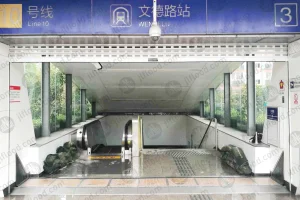
Engineered for urban subways, high-voltage substations, and subterranean commercial complexes. High-buoyancy, zero-electricity automatic flood barriers from premier Chinese manufacturing facilities.
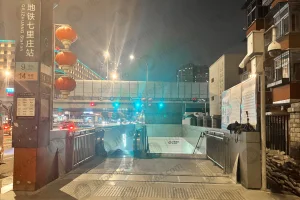
In an era defined by intensifying hydrological volatility, extreme precipitation events, and rapid urban surface seal expansion, subterranean critical infrastructure faces catastrophic vulnerability. According to recent global municipal risk assessments, flash flooding accounts for over 65% of sudden urban infrastructure damage, with commercial underground parking facilities, rail transit stations, and utility substations suffering the brunt of capital destruction. When extreme weather strikes, conventional power grids often suffer immediate collapse, rendering electrically powered flood gates, motorized rolling shutters, and manual pump networks completely inert.
The global shift toward passive hydrodynamic flood protection systems represents a paradigm leap in urban resiliency engineering. Hydrodynamic automatic flood barriers operate entirely on the physical principles of hydrostatics and buoyancy. They eliminate human dependency, electrical grid vulnerability, and delay factors, rising automatically as floodwaters enter the retention chamber. International engineering consultants, municipal planning boards, and EPC contractors increasingly mandate passive, zero-energy flood barriers certified to withstand sustained hydrostatic pressure, debris impacts, and continuous vehicle traffic loading.
A rigorous examination of why buoyancy-driven counterweighted flood barrier systems outperform traditional motorized or manual demountable barriers during catastrophic inundation events.
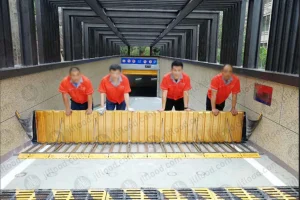
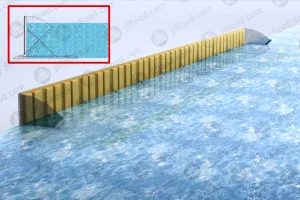
The core operating mechanism relies on precision-calculated volumetric displacement. As surface runoff fills the embedded bottom trough, water enters the internal chamber via intake grates. The engineered hollow-chamber aluminum panel achieves positive buoyancy, pivoting upward along a continuous 304/316 stainless steel torque axle without requiring external sensor activation or operator intervention.
Rather than resisting water pressure through mechanical strain, the barrier leverages hydrostatic head pressure to amplify its perimeter seal. Water height against the deployed panel forces high-grade EPDM triple-lip gaskets tightly against structural end-mullions, achieving an near-zero leakage rate that far exceeds standard municipal seepage allowances.
When resting in the flush-ground position, top surface plates are engineered to endure heavy transportation loads (up to AASHTO H-20 / HS-20 standards, or 40+ ton vehicle axle weights). Extruded 6063-T6 structural aluminum alloy profiles with internal cross-rib matrix reinforcing prevent surface rutting or frame deflection during daily transit cycles.
Selecting the optimal structural profile depends on civil foundation constraints, trench recess depth, retrofitting feasibility, and localized hydraulic flow dynamics. Below is an engineering comparison matrix for project specifiers:
| Engineering Attribute | Embedded Hydrodynamic Type (HM4E) | Surface-Mounted Hydrodynamic Type (HM4D) | Manual Flip-Up / Modular Barriers |
|---|---|---|---|
| Power Requirement | 0 kW (Passive Hydrodynamic) | 0 kW (Passive Hydrodynamic) | 0 kW (Manual Deployment) |
| Deployment Trigger Time | Automatic (< 30 seconds) | Automatic (< 45 seconds) | Manual (15–30 minutes) |
| Civil Works Impact | Requires recessed concrete trench | Minimal surface anchoring (Retrofit friendly) | Surface posts & threshold channel |
| Standard Retaining Heights | 500mm – 2000mm | 400mm – 1200mm | 300mm – 1500mm |
| Load Capacity (Flush State) | 40 Ton Truck Axle (AASHTO HS-20) | 15–20 Ton Medium Vehicle | N/A (Obstructs Driveway) |
| Primary Applications | Metro Entrances, Underground Ramp Gates | Existing Buildings, Substation Doors | Utility Trench, Pedestrian Doors |
Why Tier-1 global civil engineering contractors and municipal utility buyers source industrial flood defense systems from specialized Chinese manufacturing hubs like Nanjing Junli Technology.
Chinese OEM manufacturing clusters utilize giant 10,000-ton hydraulic extrusion presses capable of producing single-piece seamless structural aluminum profiles up to 6 meters wide. Eliminating welded mid-seams dramatically increases panel stiffness, prevents localized stress fractures under hydro-dynamic wave action, and extends operational lifespan to over 25 years.
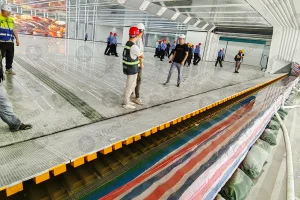
Leading Chinese suppliers maintain in-house full-scale hydrostatic testing pools. Prior to dispatch, custom-fabricated barrier assemblies undergo rigorous wet-commissioning verification: measuring rising buoyancy response curves, zero-point alignment, deflection under maximum design head pressure, and gasket seal integrity under full immersion conditions.
With fully integrated domestic supply chains for marine-grade 304/316 stainless steel, EPDM elastomer compounds, and precision CNC milling, Chinese manufacturers achieve a 30% to 50% cost-efficiency advantage over Western European legacy brands, while slashing engineering design-to-shipment lead times by up to half.
Detailed analysis of localized deployment requirements across critical municipal and industrial infrastructure sectors.
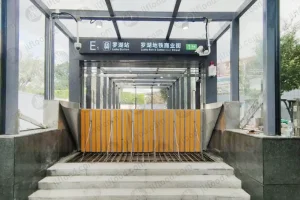
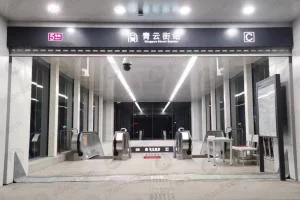
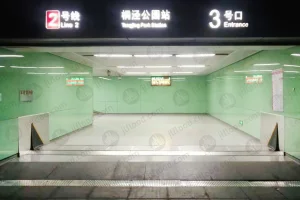
Subway system entrances represent severe flood migration pathways. A single breach at a surface portal can inundate tens of kilometers of underground tunnels, disabling traction power networks and causing multi-billion-dollar losses. Specialized Metro Type Automatic Flood Barriers (e.g., Hm4d-0006E / Hm4e Series) are designed for seamless integration into station entrance thresholds. During dry conditions, the top plate lies flush with pedestrian paving, maintaining ADA compliance and architectural aesthetics. When flash flooding occurs, incoming surface runoff immediately activates the buoyancy panel, establishing an impenetrable barrier before water can spill down stairwells or escalator shafts.
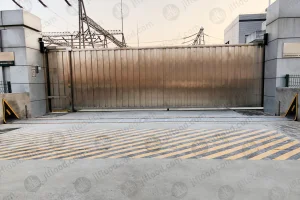
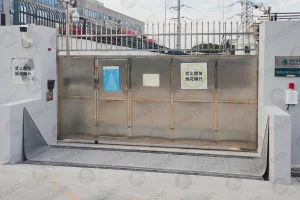
Electrical substations and power distribution vaults require unyielding flood protection. Water intrusion into transformer pits or switchgear rooms results in catastrophic arc flashes, regional grid blackouts, and weeks of utility downtime. Substation Gate Automatic Flood Barriers feature enhanced electrical isolation seals, non-conductive boundary options, and ultra-fast rising kinetics. They protect perimeter access gates and cable trench portals against swift-moving surface water flows.
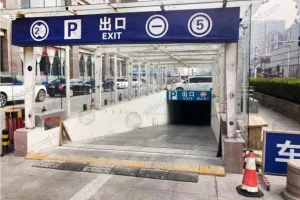
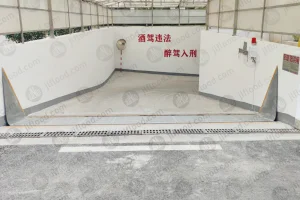
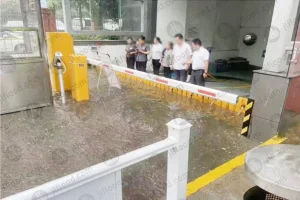
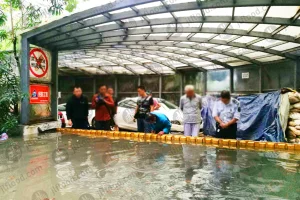
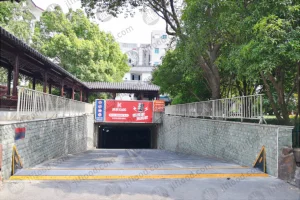
Subterranean car parks are prime gathering points for urban storm runoff. Traditional sandbags or manual panel barriers fail when storms strike outside operating hours or when staff cannot reach the site in time. Embedded self-closing flood gates installed across garage entry ramps provide 24/7 autonomous protection. The system tolerates heavy daily vehicle traffic, while its integrated debris-flushing channels ensure smooth mechanical rotation during storm activation.
Complex underground civil structures connecting commercial shopping malls, transit hubs, and underground street crossings require wide-span modular flood gates. Modular hydrodynamic arrays can be linked continuously across opening widths exceeding 20 meters, utilizing interlocking intermediate mullions and automated hydraulic sync locks to ensure uniform defense across expansive portals.
A step-by-step engineering procurement guide for consulting engineers, municipal buyers, and international EPC project managers.
Determine the maximum anticipated design water depth (hydrostatic head), hydrodynamic wave action allowance, potential debris impact forces, and historical local rainfall intensity (e.g., 50-year vs. 100-year storm flood levels).
Assess structural slab depth and rebar spacing for embedded trench models. For retrofit installations where ground trench excavation is restricted, select surface-mounted ramp designs (e.g., HM4D series) with low-profile drive-over ramps.
Specify marine-grade 6063-T6 aluminum anodized panels or 316 stainless steel components for coastal, high-salinity, or chemical industrial environments. Ensure EPDM seals meet ISO 48 / ASTM D2000 durometer and compression set standards.
When issuing tenders for Chinese flood barriers, engineering specifiers should mandate the following FAT submission deliverables prior to shipping authorization:
The evolution of industrial flood control from passive physical barriers to intelligent, interconnected urban resilience assets.
Modern flood barriers are increasingly retrofitted with low-power LoRaWAN or Modbus sensor packages. These monitor chamber water levels, deployment panel angle, and seal pressure, transmitting real-time operational status directly to municipal smart city management dashboards and building automation systems (BAS).
Integrated solar-charged LED signal strips, flashing warning beacons, and localized audible sirens automatically trigger prior to full panel elevation, alerting incoming motorists or pedestrians to clear the entrance ramp before complete deployment.
As urban design shifts toward "Sponge City" concepts, automatic flood gates are integrated into urban stormwater retention basins and overflow channels, dynamically directing excess surface water into subterranean retention vaults.
Explore our full range of heavy-duty automatic flood gates, subway connection channel barriers, garage flip-up systems, and modular civil defense barriers available for worldwide export.
Direct technical answers to common queries raised by international contractors, architects, and municipal procurement personnel.