
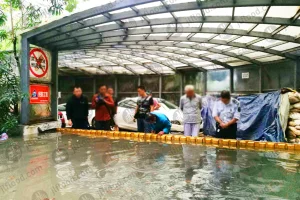
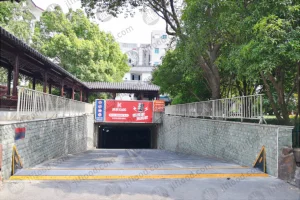
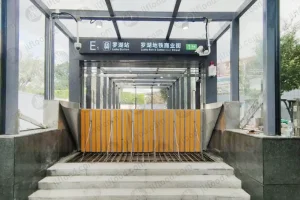
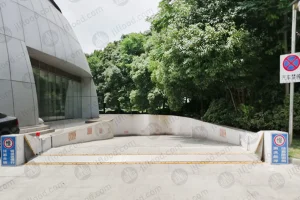
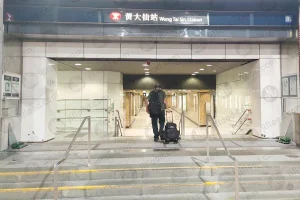
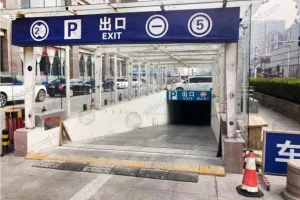
Explore our field-proven hydrodynamic barrier models tailored for immediate deployment across electrical grid perimeters, metro transit hubs, and industrial facilities.
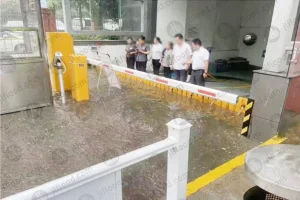
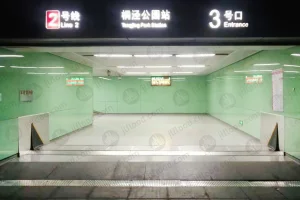
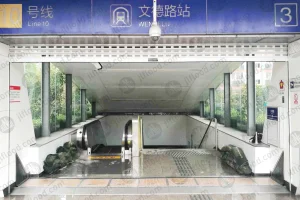
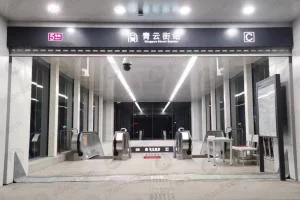
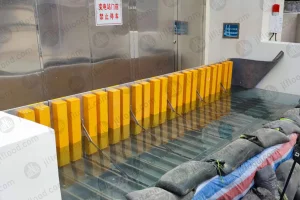
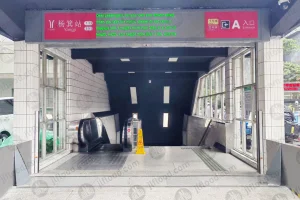
In an era defined by intensifying global climate volatility, urban flash flooding, microburst precipitation, and sea-level surges pose unprecedented existential threats to urban centers and heavy industrial facilities worldwide. Among vulnerable civil assets, electrical distribution substations (ranging from 33kV municipal transformers to 500kV ultra-high-voltage sub-stations) and continuous-manufacturing factories represent single points of catastrophic failure.
When localized waterlogging breaches a power substation, the resulting arc-flashes, short circuits, and transformer oil burnouts inflict damage far exceeding the physical asset cost. A single flood event causing grid failure can trigger collateral industrial blackouts costing millions of dollars per hour, crippling automated assembly lines, data center servers, and municipal water treatment works. Traditional flood defense mechanisms—such as sandbags, manual demountable aluminum louvers, and electrically driven sluice gates—exhibit critical design vulnerabilities:
Extreme storms typically cause regional power grid outages prior to peak floodwater inundation. Electrically powered gates, automated pumps, and sensor-triggered hydraulic barriers fail to actuate precisely when needed most unless backed by complex, costly emergency generator systems.
Manual flood barriers require dedicated, trained emergency crews on site to physically position barrier planks. Flash floods during non-operational nighttime hours or severe traffic gridlocks frequently delay crew deployment, leading to breach.
Permanent concrete flood walls or fixed ramp kerbs restrict daily heavy transport access, emergency vehicle entry, and transformer replacement operations within tightly constrained industrial real estate.
Nanjing Junli Technology has pioneered the engineering of Hydrodynamic Automatic Self-Rising Flood Barriers (Hm Series). Operating entirely without electrical actuators, human intervention, microprocessors, or stored hydraulic fluid pressure, our systems leverage fundamental hydrostatic force and Archimedes' principle of buoyancy.
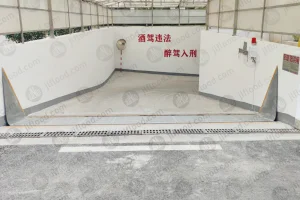
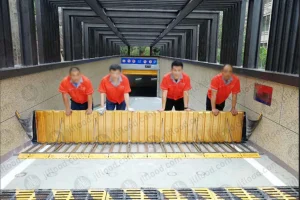
During dry conditions, the high-strength aluminum door panel lies completely flat within a pre-cast embedded foundation frame recessed flush into the roadway surface, supporting daily heavy axle loads up to 60 tons (AASHTO HS-20 / Eurocode Load Class E600).
As storm run-off water overflows the kerb channel and fills the internal foundation trough, engineered bottom intake ports allow fluid entry. The engineered hollow multi-chamber door panel generates immediate buoyancy, rising automatically as water rises.
When the barrier reaches its 45° to 90° deployed position, the pushing force of the exterior retained floodwater locks the structural panel against side frame stops. Vulcanized triple EPDM rubber profile seals compress against the frame, achieving absolute watertightness.
| Component Element | Material Specification | Metallurgical / Physical Property | Performance Purpose |
|---|---|---|---|
| Main Barrier Leaf | 6063-T6 Marine Grade Anodized Aluminum Alloy | Tensile Strength ≥ 205 MPa, Yield Strength ≥ 170 MPa | Extreme flexural strength under hydrodynamic hydro-impact without deflection. |
| Embedded Frame Box | SUS304 / SUS316 Heavy Stainless Steel | High Corrosion Resistance, Pitting Resistance Equivalent (PREN) > 25 | Decades of direct concrete encasement and ground-water immersion endurance. |
| Elastomeric Seals | EPDM Polymer with Fluorocarbon Coating | Hardness Shore A 65±5, Operating Temp -40°C to +120°C | Anti-aging, ozone resistant, long-term memory recovery for zero leak-through. |
| Hinge & Pivot Pins | High-tensile SUS316 Solid Machined Bar stock | Ultimate Shear Strength > 600 MPa | Prevents shear failure during high-velocity debris collision in heavy floods. |
Substation and factory geometries require specialized civil engineering integration. Junli’s modular foldable flood control solutions are tailored for distinct critical perimeter protection points:
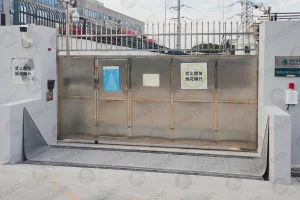
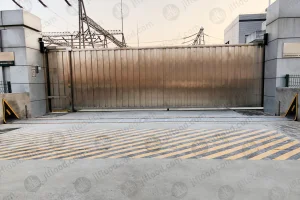
Primary vehicle access gates of 110kV, 220kV, and 500kV substations demand wide clear spans (4m to 12m). Embedded hydrodynamic flood gates sit flush with the roadway asphalt, permitting unimpeded passage of heavy transformer transport flatbeds. Upon water accumulation, multi-leaf synced barrier arrays automatically elevate, shielding the entire compound perimeter.
Control rooms housing GIS (Gas Insulated Switchgear), relay panels, and SCADA automation servers represent high-value core zones. Compact wall-mounted flip-up automatic flood barriers or light surface-mounted self-closing barriers prevent flash water ingress through pedestrian doors, cable trenches, and ventilation shaft plenums.
Modern industrial facilities operate subterranean chemical retention pits, underground logistics tunnels, and basement parking structures. Uncontrolled flooding compromises cleanrooms and hazardous material storage. Junli barriers deliver continuous perimeter protection without interfering with automated guided vehicles (AGVs) or forklift operations.
Nanjing Junli Technology Co., Ltd. operates at the center of China’s advanced Yangtze River Delta precision manufacturing ecosystem. For global procurement officers, engineering consultants, and EPC contractors, sourcing flood barriers directly from our OEM factory cluster provides distinct commercial and technical benefits:
Direct ownership of aluminum extrusion lines, heavy laser cutting equipment, automated robotic welding, and rubber vulcanization units eliminates intermediary markups and guarantees rigorous quality control at every phase.
Our in-house structural engineering team converts client site surveys, CAD civil layout drawings, and specific hydrodynamic load requirements into tailored manufacturing shop drawings within 48 hours.
Unlike trading entities selling unverified fabrications, every Junli design undergoes hydrostatic pool testing in our factory test basin. We record real-water retention, flow-rate seal tightness, and deflection metrics prior to container packing.
Located near major ocean port gateways (Shanghai & Ningbo), Junli delivers modular export packaging, detailed steel crate protection, clear installation templates, and international door-to-port shipping schedules.
Deploying critical flood protection equipment into overseas municipal infrastructure, power grids, or commercial complexes demands strict adherence to international building codes and civil engineering guidelines:
Junli provides comprehensive Finite Element Analysis (FEA) dynamic fluid-structure calculation dossiers. We simulate localized waterhead pressures, wave surge impact forces, and vehicle wheel load distributions to ensure compliance with Eurocode, ASCE 7, or local building regulations.
Our technical design department delivers 3D Revit models, STEP files, and 2D AutoCAD civil detail drawings for seamless integration into architectural design tenders and building management system (BMS) schematics.
To support modern Smart Substation and Industry 4.0 factory architectures, Junli flood barriers can be equipped with passive dry-contact limit switches, magnetic reed sensors, and IoT wireless telemetry modules to notify central operators the exact moment a barrier elevates.
In-depth technical answers addressing common procurement, civil interface, and operational inquiries.
The system utilizes hydrostatic balance mechanics. The aluminum barrier leaf is recessed inside an embedded stainless-steel foundation trough level with the ground. When surface water flows into the trough, engineered buoyant compartments inside the hollow leaf generate upward buoyancy force. As water depth increases, the panel floats upward automatically. Once deployed, the exterior waterhead pressure presses the panel tightly against side frames and EPDM rubber gaskets, achieving complete mechanical self-locking and watertight sealing without external power.
Standard Junli embedded flood barrier systems (Hm4e Series) are engineered with reinforced internal ribbing to withstand heavy vehicular traffic. Standard units are certified for 30-ton to 60-ton axle loads, satisfying international standards such as AASHTO HS-20, Eurocode EN 124 Class D400/E600, making them ideal for heavy fire truck routes, transformer transport flatbeds, and high-frequency factory truck entrances.
For embedded installation, civil contractors must construct a shallow concrete foundation trench with drainage outlets connected to site storm drains or sump pumps. Junli supplies custom embedded steel frame templates, rebar clearance schematics, and concrete pouring guidelines. Surface-mounted models (Hm4s Series) require only a level concrete pad with anchor bolt fixing, eliminating deep trench excavation.
Junli embedded troughs feature integrated sediment collection channels and debris filtering grates. Small dust and silt accumulation does not impede panel buoyancy. Routine maintenance requires only periodic flushing with a water hose or vacuum clearance once or twice per year, backed by accessible top maintenance hatches.
Single barrier panels can span clear widths up to 6.0 meters, with standard retaining heights ranging from 0.5m to 2.0m. For wide substation main entrances exceeding 20 meters, modular intermediate support pillars or interconnected multi-panel arrays are deployed to span unlimited continuous distances.
Select specialized models from our hydrodynamic and self-closing flood gate inventory.
Send us your site opening dimensions, clear width requirements, and design flood elevation. Our engineering department will supply CAD drawings, technical datasheets, and direct factory pricing within 24 hours.


