
Explore our factory-direct hydro-buoyant self-rising flood gates designed for critical urban infrastructure.
How passive hydro-buoyancy technology eliminates human error and electrical failure during extreme cloudburst urban flooding.
Modern climate patterns have increased the frequency of severe cloudburst storms and flash urban inundations. Conventional flood protection measures—such as manual sandbags, demountable aluminum flood boards, and motor-driven vertical barriers—exhibit severe failure vectors. Manual systems rely heavily on early warning leads and physical labor availability during off-peak hours or severe weather conditions. Electrically powered gates are highly vulnerable to grid power outages, pump failures, sensor short-circuits, and control panel submersion, which coincide with catastrophic flooding events.
Engineered by Nanjing Junli Technology Co., Ltd., the hydrodynamic automatic flood barrier utilizes a recessed ground basin embedded flush with the vehicular or pedestrian entrance floor. The system operates on fundamental fluid dynamics: Archimedes' principle and hydrostatic pressure differential.
100% powered by hydrodynamic fluid pressure. No grid connections, backup generators, hydraulic oil pumps, or microcontrollers required.
Heavy-duty 6063-T6 structural aluminum alloy and reinforced stainless-steel substructure built to withstand continuous heavy traffic.
Self-tightening elastomeric side and bottom seals ensuring absolute watertight performance under maximum hydrohead conditions.
Understanding specification metrics, structural material selection, and total cost of ownership (TCO) for building developers and EPC contractors.
When evaluating pricing for China Hydrodynamic Flood Barriers for Buildings, procurement teams must look beyond initial factory FOB quotes. Comprehensive lifecycle cost analysis proves that automatic hydrodynamic systems yield significantly lower TCO compared to motorized or manual alternatives due to zero standby electrical consumption, zero manual readiness labor costs, and minimal annual maintenance overhead.
| System Architecture | Trigger Mechanism | Power Requirement | Human Dependency | Maintenance Overhead | Relative Cost Index |
|---|---|---|---|---|---|
| Junli Hydrodynamic Gate | Water Buoyancy & Hydro-Pressure | Zero (0 kW) | Fully Autonomous | Low (Annual Seal Check) | Optimal Lifecycle ROI |
| Electric Motorized Gate | Water Sensors & Electric Motors | High (Grid + Generator Backup) | Semi-Autonomous (Sensor Dependent) | High (Motor/PLC/Sensors) | High Initial & OpEx Cost |
| Demountable Aluminum Boards | Manual Installation on Alert | Zero | 100% Dependent on Staff | Medium (Storage & Drills) | Low Initial / High Risk |
| Traditional Sandbag Wall | Manual Stacking | Zero | 100% Manual Labor | High Single-Use Replacements | Low Initial / Maximum Risk |
Customized civil integration designs for high-risk subterranean urban assets.
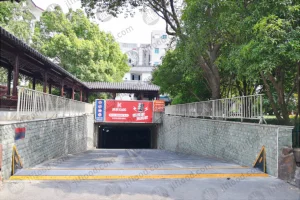
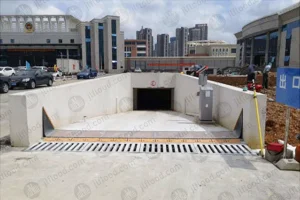
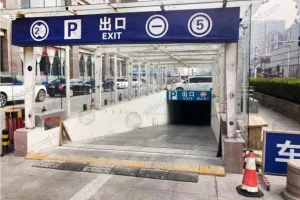
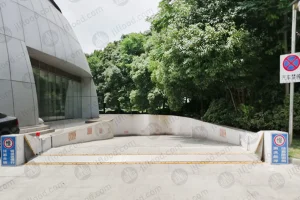
Protects multi-level basement car parks, shopping mall ramps, and residential garages from cataclysmic rainwater funneling. Embeds flush into kerbs, ensuring zero impedance during daily traffic flow.
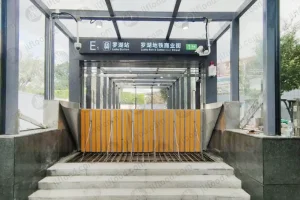
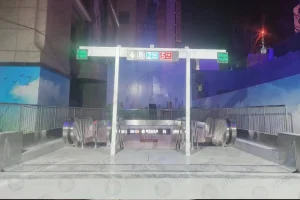
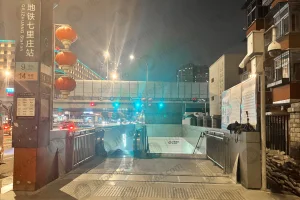
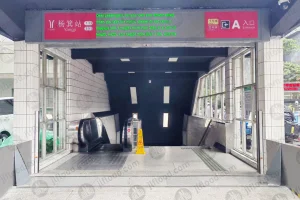
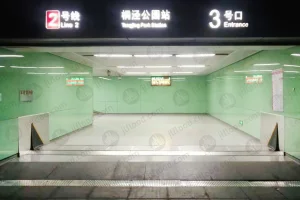
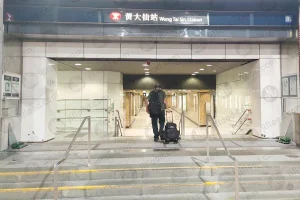
Deployed across subways in Guangzhou, Beijing, Suzhou, and Hong Kong. Guards station portals, pedestrian concourses, connection channels, and ventilation shafts against flood intrusion.
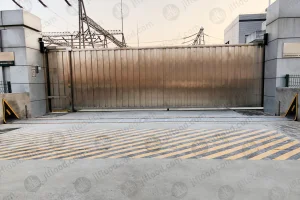
Mission-critical power grid defense. Secures transformer yards, cable trenches, and control room access doorways to prevent regional blackouts caused by submerged electrical gear.
Integrates with municipal emergency planning, underground pedestrian street crossings, hospitals, and civil defense structures subject to strict compliance and acceptance audits.
Rigorous engineering validation from factory test pools to real-world typhoon field deployments.
Unlike trading companies or conventional door manufacturers, Nanjing Junli Technology Co., Ltd. operates an in-house full-scale hydraulic testing pool. Every bespoke batch undergoes hydrostatic stress analysis, seal compression testing, dynamic lifting verification, and maximum allowable leakage rate measurements (verified strictly below international EN standards) before export dispatch.
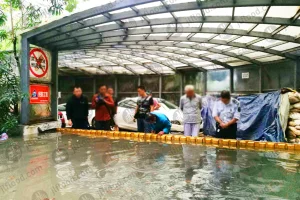
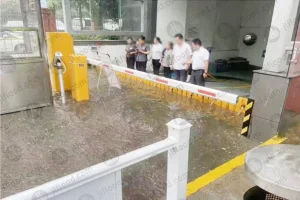
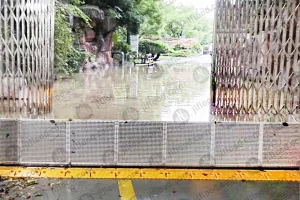
Junli flood gates possess extensive field-proven track records. During major storm systems—including Typhoon Bebinca—installed systems in over 30 Chinese metro systems and commercial complexes successfully activated automatically without power or staff intervention, preventing millions of dollars in subterranean property damage.
While the mechanical water-lifting mechanism remains 100% passive and power-free for absolute reliability, Junli’s engineering team is leading the industry by integrating ultra-low-power NB-IoT/LoRaWAN telemetry sensors into the foundation frames. This hybrid design allows facility engineers to receive real-time mobile app alerts regarding gate trigger status, water depth in the basin, and maintenance alerts without compromising the zero-power core mechanical safety line.
Explore specialized flip-up, self-closing, embedded, and unpowered flood gate units for industrial applications.
Technical, engineering, and B2B ordering clarifications for project managers and specifiers.
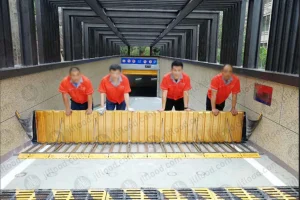
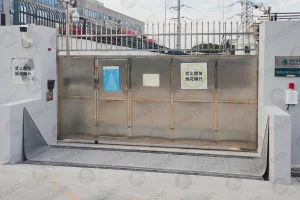
The barrier panel is installed flush within a recessed foundation trough at the entry threshold. When surface floodwaters approach, water enters the foundation chamber through intake grates. The buoyancy chamber under the barrier panel leverages natural hydro-buoyancy and hydrostatic pressure to tilt and elevate the barrier automatically. No electricity, motors, wiring, sensors, or manual staff presence are required, making it 100% reliable during blackout events.
Our standard vehicular garage barriers are rated for heavy axle loads ranging from 15 to 30 tons. For heavy logistics facilities, emergency transit routes, and industrial substations, we supply reinforced structural aluminum alloy and 304/316 stainless steel configurations capable of supporting up to 60-ton drive-over truck traffic without deforming the embedded trough.
We manufacture retaining heights from 0.5m to 2.0m. Single-panel clear spans reach up to 6.0 meters. For wider entrances, such as multi-lane underground garage ramps or transit hubs, multiple modular barrier leaves are linked seamlessly with intermediate watertight sealing posts to protect spans over 20 meters wide.
The top stainless-steel entrance grates feature narrow inlet slots designed to filter out large debris, leaves, and trash. Small silt that enters the trough is easily flushed out during routine bi-annual maintenance. The foundation trough includes integrated clean-out access plates and bottom drainage connections for simple hose washing.
Our flood barrier structural panels and stainless-steel ground frames are engineered for a 20+ year design life under standard urban conditions. High-grade EPDM seal gaskets maintain elastomeric sealing performance for 5–8 years depending on climate conditions and can be economically replaced on-site without removing the embedded ground frame.
Partner directly with China's leading hydrodynamic flood barrier manufacturer. Get customized CAD dimensional layouts, structural calculations, and competitive factory-direct wholesale quotes within 24 hours.


