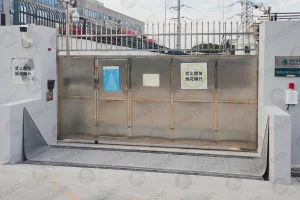
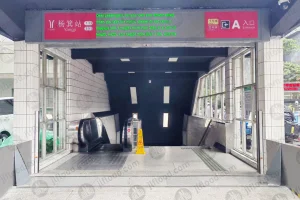
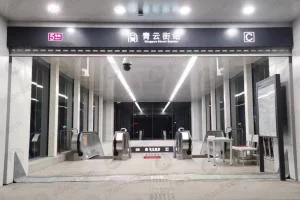
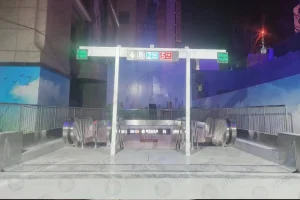
Explore our certified hydrodynamic automatic flood barrier models configured for rapid civil integration, standard procurement specifications, and direct factory pricing.
An in-depth engineering review of modern metro flood defense strategies, structural hydrodynamics, and zero-electricity risk mitigation frameworks.
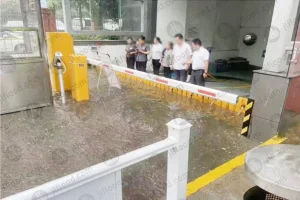
Rapid urbanization combined with global climate anomalies has led to unprecedented micro-burst rainstorms exceeding 100mm/hr design thresholds. Underground transit assets—specifically metro station entrances, escalator vaults, and ventilation shafts—act as natural sinks for surface runoff during cloudbursts, risking catastrophic structural inundation, equipment destruction, and human safety hazards.
Traditional flood barriers relying on electric motors, pneumatic actuators, optical sensors, or human intervention frequently fail during severe storm events. Municipal power grids and localized backup generators are vulnerable to short circuits, lightning strikes, and water ingress. When power cuts occur at the height of a flood event, active motorized gates become operational liabilities.
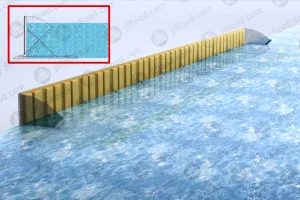
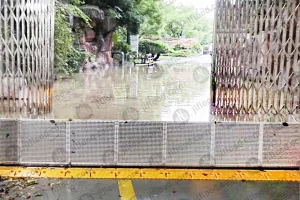
Hydrodynamic automatic flood barriers operate strictly on physical principles: hydrostatic pressure and Archimedes' principle of buoyancy. As surface water enters the embedded foundation trough, the panel naturally floats upward. The rising water level generates the exact kinetic force needed to seal the barrier against structural frame gaskets, creating a fully automatic, self-regulating shield without human or electrical dependence.
Examining the exact mechanical load factors, material science, and water-tight sealing technology pioneered by Nanjing Junli Technology Co., Ltd.
The core panel is constructed from high-strength aviation-grade extruded aluminum alloy (6060-T6) or structural stainless steel (SUS304/SUS316) featuring sealed internal honeycomb air chambers. The ratio between panel density and displaced water volume is engineered to initiate positive vertical rotation when water depth reaches just 30mm - 50mm above floor level.
Water tightness is achieved through continuous vulcanized EPDM (Ethylene Propylene Diene Monomer) rubber profiles. As water depth increases, the hydrostatic pressure forces the panel leaf against the lateral and bottom frame seal seats. Higher water head translates directly into stronger seal compression, yielding a zero-leakage interface verified under hydrostatic head pressures up to 2.0 meters.
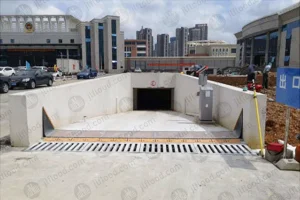
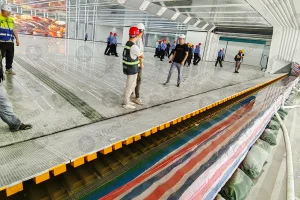
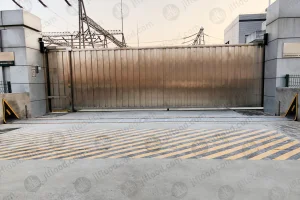
When in the recessed horizontal state, the top cover plate sits flush with the finish floor line. Built with reinforced structural steel sub-framing and anti-skid surface patterns, the embedded chamber supports continuous passage of heavy emergency vehicles, buses, and high-density pedestrian traffic without mechanical deformation or frame settling.
Nanjing Junli Technology Co., Ltd. incorporates FEA (Finite Element Analysis) stress modeling for all hydrodynamic gate designs. Below is the baseline specification framework applicable to metro entrance gates, connection channels, and utility vaults:
Evaluating total cost of ownership (TCO), installation complexity, and long-term risk mitigation against conventional flood protection methodologies.
| Flood Barrier Technology Type | Power & Energy Dependency | Human Reaction Time Needed | Maintenance & Standby Cost | Structural Reliability in Grid Outages | Pricelist Benchmark (Per Span Meter) |
|---|---|---|---|---|---|
| Hydrodynamic Self-Rising Gate (Junli) | 0% (Pure Passive Hydraulic) | 0 Seconds (Instant Automatic) | Very Low (Annual Visual & Flush) | 100% Unaffected by Blackouts | Direct Factory Pricing / Quotation basis |
| Electric Hydraulic / Motorized Flip-Up | 100% High (Requires Motor & Grid) | Sensor Dependent (10 - 60s) | High (Monthly Motor/Pump Service) | Vulnerable (Fails if Backup Dies) | High Capital & High Maintenance |
| Manual Aluminum Stop-Logs | 0% (Manual Labor) | High (1 to 3 Hours Mobilization) | Medium (Storage & Training Drills) | Human Error Risk (Staff Absences) | Low Initial Hardware Cost Only |
| Sandbags & Temporary Inflatable Dams | 0% (Manual Labor) | Extreme (Several Hours) | High Recurrent Replacement Cost | Extremely Low (High Leakage Rate) | Low Initial Cost, Extreme Total Loss Risk |
When evaluating the budget pricelist for metro stations and infrastructure flood barriers, international contractors and municipal transit authorities must consider key technical cost drivers:
Wider entrances requiring multi-leaf linkable configurations involve customized mechanical interlocking mechanisms and modular trench seals.
Surface-mounted retrofits offer lower civil engineering costs for existing station steps, whereas flush-embedded types require concrete trough excavation during initial construction.
Standard pedestrian passage portals utilize lightweight composite covers; vehicular access ramps demand high-tonnage load-bearing structural frames.
Tailored architectural integration guidelines for mass transit networks, utility infrastructure, and commercial subterranean spaces.
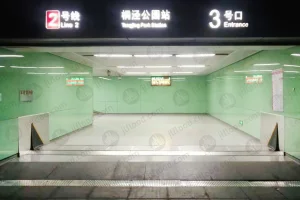
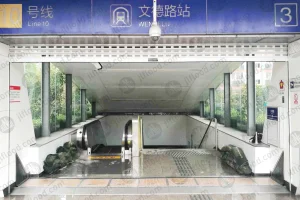
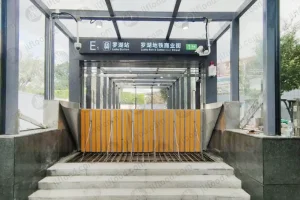
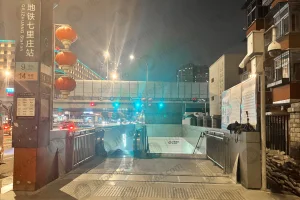
Installed at pedestrian concourse stairways and escalator landings. Recesses flush into floor tiles, providing seamless pedestrian passage during normal operations and rising instantly during flash flooding.
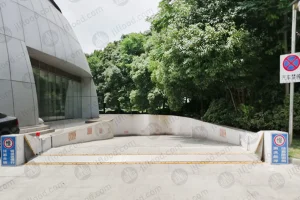
Protects electrical transformer rooms, high-voltage switchgear, and subterranean cable ducting openings. Prevents multi-million-dollar utility damage and prolonged citywide grid blackouts.
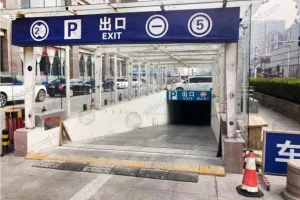
Engineered for high vehicular load ratings. Installed at the top or foot of parking garage entry ramps in commercial centers, residential complexes, and hospital facilities.
Provides critical compartmentation between metro station concourses and adjoining subterranean shopping malls, public passages, or airport rail links.
How Nanjing Junli Technology Co., Ltd. delivers robust technical compliance, structural CAD/BIM modeling, and full project lifecycle support worldwide.
Unlike trading entities, Junli operates an in-house full-scale hydraulic testing laboratory. Every customized hydrodynamic barrier configuration undergoes mandatory water-retaining testing prior to dispatch, measuring structural deflection under max design head and validating seal leakage compliance.
Our manufacturing protocols adhere strictly to ISO9001 Quality Management, ISO14001 Environmental Management, and ISO45001 Occupational Health systems. Products comply with European CE structural safety markers and pass rigorous third-party water-tightness certifications.
We provide international project engineering packages including localized CAD trench details, BIM Revit models, anchor calculation reports, English installation manuals, and spare EPDM seal maintenance kits for global transit authorities and contractors.
Headquartered at No.104, Shi Men Kan, Qinhuai District, Nanjing, Jiangsu Province, China, Nanjing Junli Technology Co., Ltd. is a national high-tech enterprise specializing in civil defense engineering, intelligent bridge systems, and hydrodynamic flood protection. Our patented self-closing and self-opening flood barrier systems have been successfully deployed across 30+ major metro cities—including Guangzhou Metro, Beijing Metro, Suzhou Metro, and Dalian Metro—protecting public safety and urban infrastructure against extreme weather events.
Combining mechanical power-free reliability with modern IoT telemetry and digital twin urban flood warning networks.
While mechanical deployment requires zero power, future Junli hydrodynamic barriers incorporate micro-power solar or energy-harvesting wireless sensors. These sensors transmit real-time panel elevation, trough water level, and seal status to central metro SCADA control rooms via LoRaWAN or NB-IoT networks.
R&D efforts focus on integrating carbon-fiber reinforced polymers (CFRP) and nano-coated aluminum alloys. This reduces total panel weight while increasing structural flexural strength, allowing even faster hydro-buoyant activation at ultra-low water depths (under 20mm).
Integrating hydrodynamic gate deployment status into citywide digital twin platforms. Municipal emergency agencies can visually track active barrier rising status across hundreds of subway entrances during typhoons, enabling predictive water flow management.
Detailed engineering responses regarding installation, operational safety, maintenance protocols, and ordering options.
The barrier panel is installed flush within a recessed foundation chamber in the ground. When surface floodwater flows toward the opening, it collects inside the chamber. The incoming water creates natural buoyant force (Archimedes' principle) that lifts the floating panel. As water levels rise further, hydrostatic pressure presses the panel against the side and bottom frame gaskets, forming a tight physical seal. No sensors, motors, wiring, or human intervention are required.
As the flood recedes and surface water clears, water inside the foundation chamber drains out naturally through an integrated bottom drainage connection or sump pump line. As the chamber empties, gravity smoothly lowers the barrier panel back into its horizontal recessed position flush with the road or floor surface, restoring normal pedestrian or vehicle passage.
No. When fully lowered, the top surface plate is structural grade stainless steel or heavy aluminum designed to match surrounding civil loadings. Units engineered for parking ramps and utility gateways carry axle load ratings from 15 tons up to 90 tons (A15 to F900 ratings), making them completely safe for trucks, buses, and heavy crowds.
For embedded type barriers, civil contractors construct a concrete recess trench based on Junli's dimensional template drawings, including a dedicated drainage pipe outlet. The steel frame is lowered into the trench, leveled, and cast with non-shrink grout. For surface-mounted models on existing steps, anchor bolt fixing and lateral wall sealing plates are used with minimal civil structural modification.
Clients can provide clear entrance width, target retaining height, and site photo/cad drawings to our engineering office (+86-17397957068 or [email protected]). Our design team outputs structural drawings, CAD civil interface profiles, factory direct pricelists, and lead times within 24 hours.
Review additional hydrodynamic gates, surface-mount models, and station connection barriers available for direct B2B supply.