Facebook LinkedIn YouTube
Industrial Flood Defense Whitepaper

China Immediate Flood Protection Manufacturers & Factory

Technical Architecture, Hydrodynamic Autonomous Systems, and Global Infrastructure Risk Mitigation Solutions

Featured Hydrodynamic Systems

Immediate Self-Actuating Flood Protection Catalog

Engineered for instant deployment without reliance on human intervention or electrical power grids.
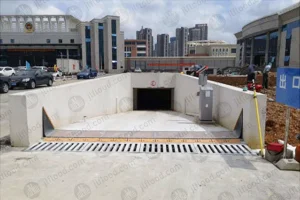
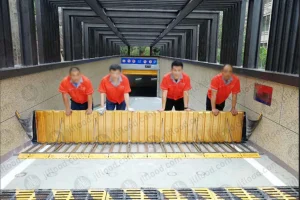
China Self closing flood barrier Factory, Factories

China Self closing flood barrier Factory, Factories

View Product Details
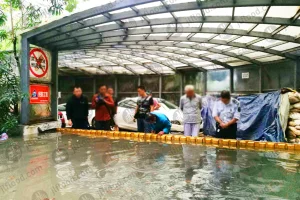
Wholesale Self closing flood barrier Hm4d-0006D Suppliers, Pricelist

Wholesale Self closing flood barrier Hm4d-0006D Suppliers, Pricelist

View Product Details
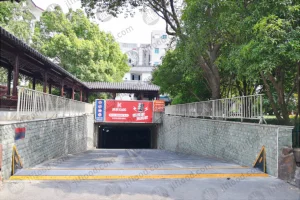
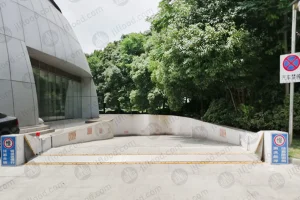
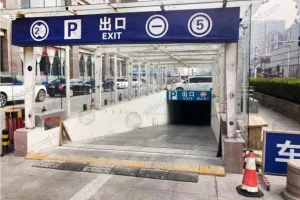
Wholesale Flip-up flood barrier for garages Manufacturer, Factory

Wholesale Flip-up flood barrier for garages Manufacturer, Factory

View Product Details
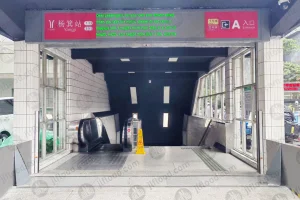
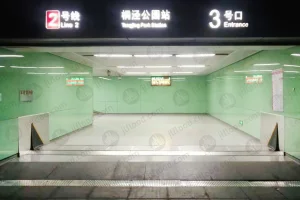
Wholesale Flood Barrier at Guangzhou Metro Yangji Station Suppliers, Factory

Wholesale Flood Barrier at Guangzhou Metro Yangji Station Suppliers, Factory

View Product Details
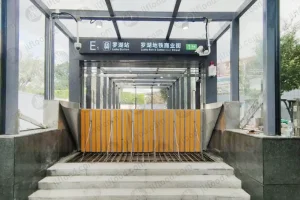
Wholesale Automatic flood barrier, Surface installation metro type: Hm4d-0006E Supplier, Quotes

Wholesale Automatic flood barrier, Surface installation metro type: Hm4d-0006E Supplier, Quotes

View Product Details
China Flood Barrier at Substation Gate Manufacturer, Supplier

China Flood Barrier at Substation Gate Manufacturer, Supplier

View Product Details
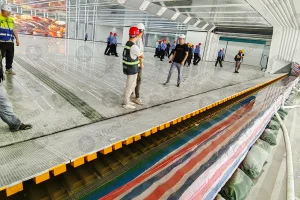
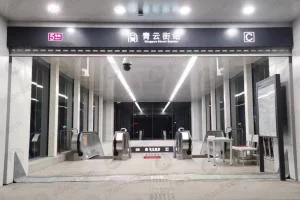
China Flood Barrier at Dalian Metro Stations Manufacturers, Quotes

China Flood Barrier at Dalian Metro Stations Manufacturers, Quotes

View Product Details
China Self opening & Closing Flood Gate Manufacturers, Suppliers

China Self opening & Closing Flood Gate Manufacturers, Suppliers

View Product Details
Performance Metrics

Field-Tested Reliability & Technical Superiority

Quantifiable performance benchmarks engineered across critical infrastructure projects globally.

0.1s
Hydrodynamic Trigger Speed
100%
Power-Free Reliability
20+
Years Operational Lifespan
30+
Global Metro & Utility Networks

1. Global Climate Realities & The Shift to Immediate Autonomous Protection

In an era defined by intensifying global climate volatility, urban environments face unprecedented hydrometeorological challenges. Cloudburst events, atmospheric rivers, and rapid urban flash flooding present severe existential threats to modern underground infrastructure. Traditional flood defense paradigms—historically reliant on manual sandbag deployment, electromechanical flood doors, or human-initiated temporary barriers—have exposed critical single points of failure: operational latency, human error during storm panics, and electrical grid collapses.

When extreme precipitation strikes, municipal grid failures frequently disable automated electric flood barriers precisely when they are needed most. Furthermore, traffic paralysis often prevents emergency response personnel from reaching vulnerable underground portals, such as subway stations, parking structures, and electrical substations. The industrial engineering sector has thus pivoted decisively toward Immediate Hydrodynamic Autonomous Flood Protection.

Core Paradigm Shift: Modern resilient infrastructure demands passive flood mitigation systems that deploy automatically using the physical energy of the floodwaters themselves, eliminating human operational dependencies and power supply vulnerabilities.

As leading China immediate flood protection manufacturers and factories, industrial suppliers like Nanjing Junli Technology Co., Ltd. have engineered next-generation hydrodynamic barriers. Designed to rest completely flush within entry thresholds during normal conditions, these systems instantly transform into high-capacity flood dams upon water intrusion, establishing a unbreachable barrier for municipal, commercial, and industrial facilities.

2. Hydrodynamic Physics & Mechanical Engineering Architecture

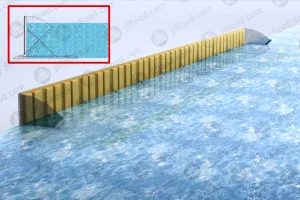
The operational mechanism of immediate hydrodynamic flood barriers is rooted in elementary fluid dynamics and mechanical leverage. The system operates entirely on Archimedes' principle of buoyancy combined with hydrostatic pressure differentials. The entire assembly comprises a flush-mounted ground basin, a high-strength structural barrier panel, specialized side sealing frames, and hydrodynamic intake chambers.

STAGE 01

Water Infiltration

Flash flood waters reach the threshold, flowing directly into the recessed hydrodynamic basin intake grates.

STAGE 02

Buoyancy Lift

Rising water inside the basin generates immediate upward hydrodynamic force, floating the structural panel upward.

STAGE 03

Mechanical Lock

As water levels rise, the panel reaches a 45° to 90° angle, engaging mechanical self-locking support struts.

STAGE 04

Hydrostatic Seal

Exterior water pressure forces the elastomeric EPDM seals tightly against the frame, achieving absolute zero-leakage protection.

Structural Integrity & Material Science

Industrial flood barriers manufactured in top-tier Chinese facilities utilize aerospace-grade aluminum alloys (6063-T6 / 6005A-T6) and high-yield structural stainless steel (SUS304 / SUS316). The internal structural matrices are modeled using Finite Element Analysis (FEA) to withstand extreme dynamic impacts from floating flood debris, wave action, and structural deflection under maximum design heads (up to 2.0 meters of hydrostatic pressure per leaf).

Sealing longevity is maintained through multi-stage EPDM (Ethylene Propylene Diene Monomer) composite gaskets treated with anti-aging, UV-resistant, and chemical-resistant vulcanization processes. This ensures decades of structural integrity under daily heavy vehicle traffic loads (up to HS-20/AASHTO highway load specs, or 60-ton truck axle weights) without structural distortion or seal degradation.

3. Specialized Application Scenarios & Global Deployment

Immediate flood defense requires custom architectural integrations depending on the physical geometry and functional requirements of the vulnerable portal. Standard industrial implementations span five critical sectors:

Metro & Urban Rail Systems

Subway station entrances, pedestrian connecting channels, and ventilation shafts require subterranean defense against cataclysmic ingress. Installed flush with pavement level, automatic barriers prevent floodwaters from inundating active rail lines.

Power Substations & Utilities

Electrical transformer rooms, high-voltage distribution substations, and cable trenches represent ultra-critical infrastructure. A single water breach can cause catastrophic short-circuit grid blackouts affecting entire cities.

Underground Garages & Commercial Ramps

Commercial shopping malls, residential basements, and multi-story underground car parks feature steep vehicular access ramps that act as natural funnels for surface runoff. Immediate driveway flip-up gates seal entry points completely.

4. Localized Compliance, Civil Engineering & Global Support

Deploying specialized flood barriers internationally demands strict compliance with regional structural standards, building codes, and hydraulic validation protocols. Premium OEM/ODM manufacturers in China work alongside global EPC contractors, architectural firms, and municipal engineers to streamline cross-border project delivery.

Civil Structural Interface & Installation Types

Depending on the site conditions—whether a new greenfield build or an operating brownfield retrofit—two main installation methodologies are executed:

  • Embedded Pit Installation (Flush Finish): The foundation steel chamber is cast directly into a pre-excavated trench within the concrete slab. Once finished, the top surface of the gate aligns perfectly flush with adjacent road surfaces, preserving aesthetic architecture and zero vehicle bumps.
  • Surface-Mounted Ramp Installation: Ideal for existing facilities where concrete excavation is restricted due to embedded utilities or shallow post-tensioned slabs. Low-profile modular ramps frame the gate assembly, allowing smooth vehicle passage while providing immediate deployment capabilities.

Quality Standards & Factory Acceptance Testing (FAT)

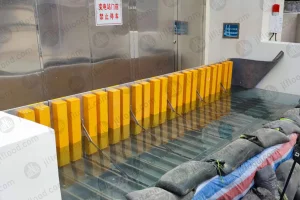
To adhere to international risk-management requirements (such as FM Approvals, ISO 9001, ISO 14001, and EN 1090 structural welding standards), high-end manufacturers conduct mandatory Full-Scale Water-Retaining Witness Tests inside specialized factory testing pools prior to export packaging. Deflection tolerances, seal compression metrics, and rise-time speeds are documented under actual hydrodynamic water heads to ensure 100% compliance upon site arrival.

5. Technology Roadmap: Smart Cities, IoT & Next-Gen Composites

The future of immediate flood protection lies at the intersection of passive mechanical engineering and smart digital monitoring networks. As smart cities evolve, immediate flood gates are transforming into intelligent nodes within wider Urban Drainage & Flood Early Warning Systems (EWS).

Key technological innovations currently being rolled out across advanced production facilities include:

  1. SCADA & IoT Telemetry Integration: While the gate mechanism remains 100% mechanical and power-free, passive low-power IoT micro-sensors inside the chamber transmit real-time deployment status, water level data, and visual video feeds via NB-IoT/LoRaWAN to municipal central command centers.
  2. Advanced Carbon-Fiber & Hybrid Composites: To minimize moving mass and enable instant passive triggering at lower fluid volumes, structural panels are incorporating ultra-lightweight composite cores wrapped in marine-grade corrosion-resistant skins.
  3. Modular Architectural Expansion: Multi-leaf interlocking arrays allowing continuous spans over 50 meters wide without intermediate support posts, enabling full protection for wide industrial logistics parks and airport ground facilities.
Industrial Product Portfolio

Complete Hydrodynamic Gate & Barrier Series

Explore specialized factory-direct configurations for underground metro lines, substations, and industrial complexes.
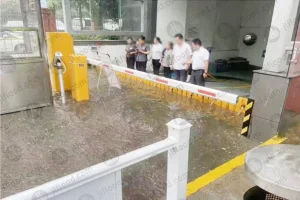
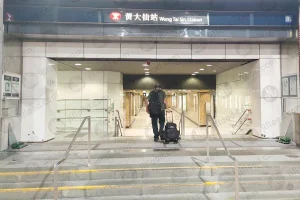
Wholesale Flood barrier, Flood defence automaticlly Manufacturer, Pricelist

Wholesale Flood barrier, Flood defence automaticlly Manufacturer, Pricelist

View Product Details
Wholesale Flip-Up Automatic Flood Barrier Manufacturer, Manufacturers

Wholesale Flip-Up Automatic Flood Barrier Manufacturer, Manufacturers

View Product Details
Wholesale Flood Barrier at Metro Connection Channel Manufacturer, Factories

Wholesale Flood Barrier at Metro Connection Channel Manufacturer, Factories

View Product Details
Wholesale Flood Barrier at Metro Stations Manufacturer, Quotes

Wholesale Flood Barrier at Metro Stations Manufacturer, Quotes

View Product Details
Wholesale Automatic flood barrier, Embedded installation Manufacturer, Suppliers

Wholesale Automatic flood barrier, Embedded installation Manufacturer, Suppliers

View Product Details
China Heavy duty automatic flood gate Hm4d-0006C Factory, Pricelist

China Heavy duty automatic flood gate Hm4d-0006C Factory, Pricelist

View Product Details
Wholesale Modular hydrodynamic automatic flood gate Supplier, Factories

Wholesale Modular hydrodynamic automatic flood gate Supplier, Factories

View Product Details
Wholesale Flood Gate at Metro Stations Manufacturer, Suppliers

Wholesale Flood Gate at Metro Stations Manufacturer, Suppliers

View Product Details
Technical Knowledge Base

Frequently Asked Questions (FAQ)

Detailed technical insights for consulting engineers, municipal planners, and procurement directors.

How does a hydrodynamic automatic flood barrier operate completely without electricity or manual intervention?
The barrier mechanism relies entirely on passive hydro-buoyancy physics. The barrier panel rests flush within a structural ground basin embedded at the entrance threshold. When floodwater reaches the entrance, surface runoff naturally flows into the retention basin through intake grates. As water fills the basin, it creates an immediate upward hydrodynamic buoyancy force that lifts the structural door panel upward. As the water level continues rising, hydrostatic water pressure pushes the door firm against side frame seals, creating a watertight lock. No electrical sensors, motors, back-up generators, or human operators are ever needed.
Can heavy vehicles like buses, fire trucks, and cargo vehicles drive over flush-mounted flood barriers daily?
Yes. Industrial-grade flood barriers designed by top Chinese factories are engineered for heavy vehicular traffic. The top drive-over cover panels and internal support matrices are manufactured using high-strength structural steel or reinforced 6005A-T6 aluminum alloys. Standard models support axle loads up to 30–60 tons (conforming to HS-20/AASHTO highway load benchmarks). Daily vehicle passage causes zero damage or misalignment to the recessed buoyancy system underneath.
What regular maintenance is required to ensure long-term operational readiness?
Because the system is power-free and mechanical, maintenance overhead is exceptionally low. Routine operational procedures typically involve: (1) Periodic inspection and removal of accumulated leaves, silt, or debris inside the bottom basin drainage channels; (2) Annual visual checks of the EPDM elastomeric sealing gaskets for physical damage; and (3) Semi-annual manual buoyancy testing by filling the basin with water using a standard hose to confirm smooth pivoting movement.
What design retaining heights and clear spans can be customized for mega infrastructure projects?
Single-panel standard water retaining heights range from 0.5 meters to 2.0 meters. Clear opening widths for single modular units can span up to 6.0 meters. For wider portals—such as multi-lane logistics parks, wide subterranean garage ramps, or broad metro station entrances—multiple hydrodynamic gate modules are connected in continuous series with removable or fixed central mullions, enabling infinite custom width protection.
How do hydrodynamic flood barriers prevent debris from blocking full deployment during flash floods?
Intake basins are equipped with angled stainless steel debris grates that filter out large floating items, rocks, and urban trash. Additionally, the bottom hinge mechanism is designed with self-clearing hydrodynamic clearance gaps that prevent sediment compaction from jamming the rotation arm. The continuous buoyancy force generated by rising water levels provides steady upward torque sufficient to push past minor surface sediment.
Request a Catalog