
Field-proven automated flood control systems engineered for metro stations, underground garages, power substations, and municipal river basins.
Understanding the paradigm shift from traditional steel sluice gates to flexible, elastomeric inflatable dams and hydrodynamic passive barriers.
In modern hydraulic engineering, the management of urban storm runoff, river basin impoundments, and subterranean infrastructure flooding has evolved beyond rigid static structures. Over the past two decades, China inflatable dams manufacturers and specialized factories have emerged as dominant global leaders in the design, vulcanization, material science, and mechanical deployment of flexible rubber dam bladders, air-inflated crest gates, and zero-electricity hydrodynamic barriers.
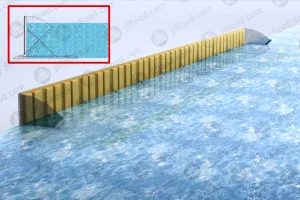
Inflatable dams—constructed from high-tensile multi-ply synthetic fabrics embedded within weather-resistant EPDM or Neoprene elastomers—offer unprecedented structural adaptability. Unlike conventional concrete check dams or motor-driven vertical lift gates, inflatable dam systems can be rapidly inflated using water or pressurized air to impound water, regulate river flows, increase reservoir retention, or block catastrophic storm surge events. When deflated, they lie completely flat against the foundation slab, leaving the natural riverbed unobstructed for flood discharge and sediment transport.
This whitepaper provides an exhaustive technical analysis intended for municipal procurement directors, civil engineering consultants, hydro-infrastructure specifiers, and industrial risk officers. It explores market dynamics, material formulations, compliance certifications, civil foundation integration, and localized project support necessary to evaluate Chinese inflatable dam manufacturers.
Key macro factors accelerating the global adoption of elastomeric water control structures and automated flood gates.
Super-typhoons and unpredictable urban inundations have rendered legacy drainage designs inadequate. Inflatable crest gates allow municipalities to dynamically raise riverbank retention heights during microbursts without causing permanent hydraulic flow bottlenecks.
Grid blackouts during severe storm events are the leading cause of motorized gate failures. Modern procurement directives mandate passive systems—where hydrostatic head and water buoyancy automatically elevate the dam panel or inflate the bladder without electrical input.
Traditional concrete spillways demand massive civil engineering capital. Rubber inflatable dams require low initial capital expenditure, zero standby electricity costs, minimal lubrication maintenance, and simplified foundation anchorage embedded into low-cost concrete pads.
Leading Chinese manufacturers now integrate pneumatic pressure sensors, optical water level detectors, and remote SCADA interfaces into air-inflated dam control units, allowing real-time monitoring of crest height and automatic overpressure relief.
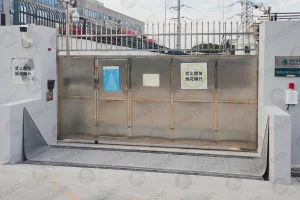
Electrical substations and transit power hubs demand zero water ingress. Hydrodynamic gates designed by specialized Chinese factories form impermeable perimeter seals that safeguard high-voltage equipment against costly flash inundations.
Unlike fixed concrete dams that trap silt and impede aquatic passage, fully deflated rubber dams rest flush against the river bed. This allows natural sediment flushing during flood cycles and minimizes ecological disruption to river ecosystems.
A rigorous evaluation matrix for hydraulic consultants choosing between elastomeric bladders and self-rising mechanical flood gates.
| Performance Parameter | Air-Inflated Rubber Dam | Water-Inflated Rubber Dam | Passive Hydrodynamic Barrier | Conventional Steel Sluice Gate |
|---|---|---|---|---|
| Activation Principle | External Blower / Compressor | Hydraulic Water Pump Station | Buoyancy & Hydrostatic Water Head | Electric Motor / Hydraulic Ram |
| Power Dependence | Low (Power needed for inflation) | Medium (Pumping required) | Zero (100% Power-Free) | High (Requires continuous power) |
| Response Time | 10 – 30 Minutes | 20 – 60 Minutes | Immediate (< 0.1s Trigger) | 5 – 15 Minutes (Manual/Electric) |
| Max Retaining Height | up to 5.0 meters | up to 6.0 meters | 0.5m – 2.0m per module | Unlimited (High civil cost) |
| Clear Span Width | Uninterrupted spans > 100m | Uninterrupted spans > 100m | Modular Array (Unlimited width) | Restricted by pier spacing |
| Debris & Ice Resistance | High (Flexible rubber absorbs impact) | Very High (Heavy water ballast) | High (Stainless steel / reinforced panel) | Medium (Risk of jam or distortion) |
| Maintenance Profile | Membrane inspection every 3 yrs | Water pump & pipe maintenance | Annual seal cleanup & drain flush | Frequent lubrication & motor overhaul |
| Civil Foundation Need | Flat concrete pad with anchor bolts | Flat pad with dual piping channels | Recessed foundation trench flush with road | Heavy concrete piers & overhead frame |
Critical engineering criteria, quality control verification, and factory inspection protocols for international buyers.
Evaluating a supplier for hydraulic containment structures requires rigorous due diligence. Unlike commodity industrial products, an inflatable rubber dam or automated flood gate failure during an extreme weather event leads to catastrophic asset damage and potential loss of life. When sourcing from factories in China, international buyers should strictly evaluate the following technical indicators:
Verify that the factory utilizes high-strength synthetic fibers (such as EP polyester or polyamide canvas) embedded between multi-layer EPDM or NBR rubber sheets. Request third-party tensile strength test reports (GB/T 528 or ASTM D412) proving warp/weft tensile thresholds exceeding 1500 N/mm.
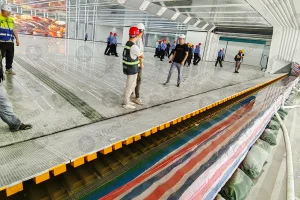
Top-tier manufacturers maintain in-house hydraulic testing pools. Insist on Factory Acceptance Testing (FAT) photos and video records demonstrating full-scale inflation pressure testing, deflection under maximum design water head, and zero-leakage seal performance prior to export packaging.
Inflatable dams are subject to immense uplift and shear forces. Ensure the factory supplies complete engineering drawings for single or double-line anchor plates, wedge-anchor bolts, and embedment frame templates in 304 or 316 grade stainless steel.
From underground rail networks to major municipal river basins, discover how modern water-retaining structures preserve operational continuity.
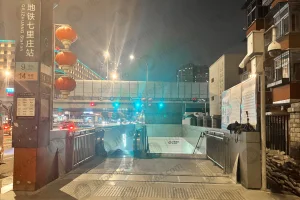
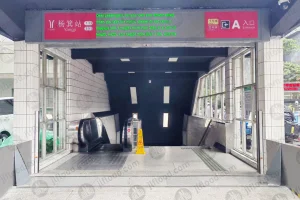
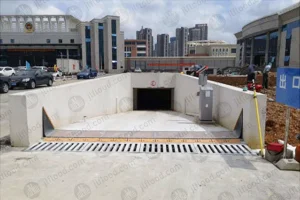
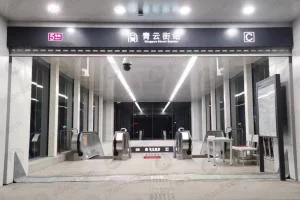
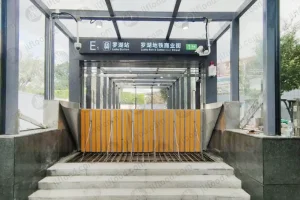
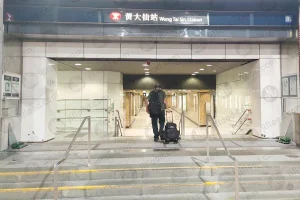
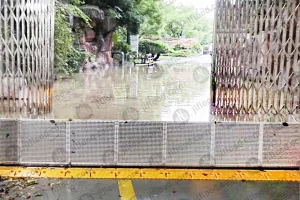
Positioned flush at subway entrances, surface vents, and connecting pedestrian tunnels. During cloudburst events, rising water flows into the chamber beneath the barrier, deploying the gate autonomously to prevent catastrophic flooding of underground tracks.
Protecting high-voltage transformer yards, cable trenches, and control centers. A single submerged transformer can trigger multi-district power outages. Passive hydrodynamic barriers ensure uninterrupted electrical grid operation.
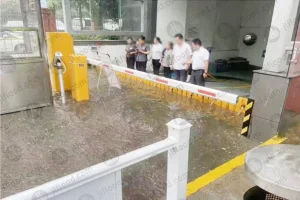
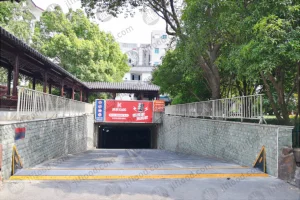
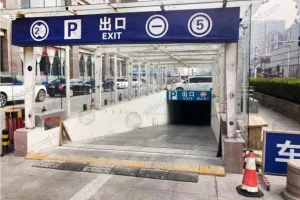
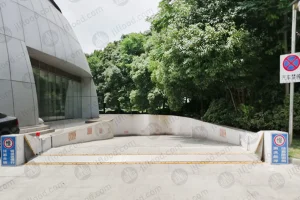
Installed at ramp entryways of shopping plazas, hospital parking structures, and residential towers. Allows standard vehicular traffic over the recessed plate daily while standing ready to elevate instantly when storm surface water arrives.
Headquartered in Qinhuai District, Nanjing, Jiangsu Province, Nanjing Junli Technology Co., Ltd. represents the pinnacle of Chinese high-tech flood mitigation engineering. Integrating R&D, precision manufacturing, and international civil project delivery, Junli operates across four core technical domains: Intelligent Civil Defence, Intelligent Flood Control, Intelligent Bridge Systems, and Energy Security Infrastructure.
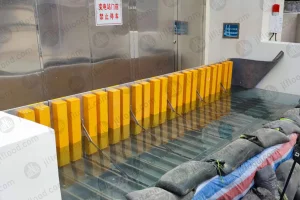
Every barrier design undergoes full-scale hydraulic testing to measure seal leakage rates, deployment time under varying flow velocities, and structural deflection up to 200% of maximum design head.
Junli hydrodynamic barriers automatically protected urban metro stations and subterranean facilities during Typhoon Bebinca and Typhoon Muifa without a single failure or manual intervention requirement.
Global engineering consultants receive fully parametric 3D CAD/BIM models, structural anchor calculations, rebar clearance notes, and civil foundation pouring guides customized to local project standards.
All export products are packed in seaworthy, heavy-duty wooden crates with anti-corrosion barrier wraps, accompanied by English installation manuals, FAT certificates, and 10-year structural seal warranties.
The future of elastomeric crest dams and smart urban flood defenses over the next decade.
As urban density increases and climate anomalies amplify extreme precipitation events, Chinese manufacturers are pushing the boundaries of material science and mechanical automation. Key technical trajectories shaping the next decade include:
Incorporating micro-encapsulated siloxane self-repair agents within rubber layers. Minor surface punctures or abrasion caused by river debris automatically seal upon contact with moisture, drastically extending bladder lifespan.
Off-grid inflatable dam installations in remote river basins now leverage integrated solar thin-film arrays to power continuous hydro-acoustic vibration analysis, predicting structural tension anomalies before membrane wear occurs.
Combining heavy stainless steel top-facing deflector plates with pneumatic rubber bladders behind them. This delivers absolute resistance against river ice impact while maintaining the low cost and flexibility of an inflatable dam structure.
In-depth technical answers addressing common operational, installation, and maintenance inquiries.
Hydrodynamic barriers operate entirely on mechanical pressure differential and fluid buoyancy. The barrier panel rests inside a flush recessed foundation chamber embedded at the entrance. As flood water flows into the chamber, internal float units generate buoyancy while the hydrostatic water head pushes against the panel's lever mechanism—lifting and locking the barrier in the upright position. No electrical sensors, motorized actuators, or human operators are required.
Heavy-duty EPDM rubber dam bladders manufactured by certified Chinese factories have a operational lifespan of 15 to 25 years under continuous UV and water exposure, depending on water salinity and debris levels. Hydrodynamic stainless-steel or aluminum alloy automatic flood barriers have a structural design life exceeding 30 years, with periodic replacement of EPDM edge seals every 7 to 10 years.
Embedded barriers feature heavy-gauge drive-over top plates rated for HS-20 or Eurocode traffic loading (up to 40-ton axle loads). When the barrier is down, the load is directly transferred to the concrete foundation walls beneath the steel frame, ensuring heavy trucks or buses can drive over the unit repeatedly without crushing the internal float or hinge mechanisms.
For embedded models, the contractor must form a shallow trench according to the manufacturer's CAD clearance template, pour a smooth reinforced concrete sub-base, and leave drain connectivity to the municipal storm sewer or sump pit. For retrofit projects where excavation is restricted, surface-mounted flip-up barriers or thin-profile hydrodynamic gates can be anchor-bolted directly onto existing level concrete driveways.
Yes. For regions experiencing sub-zero winter temperatures, factories supply bladders formulated with low-temperature synthetic rubber compounds rated to -40°C. For hydrodynamic gates, internal electrical heat-tracing cables or anti-freeze fluid reservoirs are integrated into the foundation chamber to ensure ice accumulation does not restrict panel movement during early spring thaws.
Explore our complete catalog of commercial flood gates, substation guards, garage entrance protection, and custom power-free barriers.

Consult directly with Nanjing Junli Technology’s senior hydraulic engineers for localized civil designs, FAT witnessing, and comprehensive project proposals.


