Factory-direct hydrostatic and automated self-rising flood gates tested in real-world extreme waterlogging conditions.
As climate-induced extreme precipitation events surge globally, municipal planners, structural engineering consultants, and critical asset managers are forced to re-evaluate traditional flood defense mechanisms. Historically, temporary flood control relied on heavy labor, manual demountable aluminum stoplogs, or emergency sandbagging. However, modern urban flood statistics reveal that over 82% of flash flooding incidents occur concurrently with power grid failures, sudden cloudbursts, or severe labor shortages during off-peak hours.
This whitepaper evaluates the engineering breakthroughs of China's leading inflated and hydrodynamic automatic flood barrier manufacturers. By integrating advanced polymer elastomer chemistry, passive buoyancy dynamics, and Industry 4.0 precision manufacturing, specialized Chinese factories—such as Nanjing Junli Technology Co., Ltd.—have engineered systems that eliminate human dependency, electrical grid vulnerability, and delayed deployment risks.
The evolution of temporary and permanent flood barriers spans several technological generations. Chinese manufacturing hubs have spearheaded structural innovations across two dominant technological tracks: Pneumatic Inflated Elastomeric Tube Barriers and Hydrodynamic Buoyancy Self-Rising Barriers.
Utilizes high-tenacity synthetic fabric matrices (typically 1100–1600 dtex polyester base) coated with TPU (Thermoplastic Polyurethane) or EPDM synthetic rubber. Dual-chamber inflated barriers provide rapid perimeter deployment across uneven terrain, ideal for chemical plant containment and temporary riverbank extension.
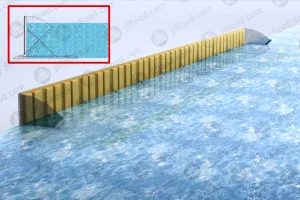
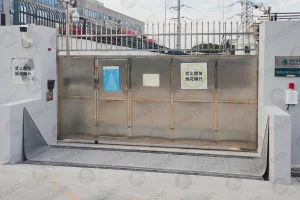
Flush-mounted into entrance foundations. When flash floods flow into the recessed foundation basin, Archimedes' buoyancy principle forces the lightweight aviation-grade aluminum panel to rise automatically. As water levels climb, hydrostatic head locks the panel against EPDM double-lip seals.
Modern Chinese OEM facilities integrate NB-IoT / LoRaWAN wireless sensor pods into barrier frames. Smart modules transmit real-time telemetry—including deployment angle, basin water depth, seal pressure, and vibration diagnostics—directly to municipal SCADA dashboard systems.
| Technical Parameter | Pneumatic Inflated Dam | Hydrodynamic Self-Closing Gate | Demountable Stoplog Barrier |
|---|---|---|---|
| Power Requirement | Auxiliary Air Compressor / Pump | 0 Watts (100% Passive Hydro-Buoyant) | Manual Labor / Heavy Crane |
| Deployment Speed | 15 – 45 Minutes (Air Inflation) | Instantaneous (< 2 Seconds) | 2 – 6 Hours (Assembly required) |
| Vehicular Load Limit | N/A (Pedestrian / Non-traffic) | EN 124 Class D400 (40 Tonnes) | N/A (Blocks traffic permanently) |
| Structural Lifespan | 10 – 15 Years (TPU / EPDM) | 25+ Years (Anodized 6063-T6 Aluminum) | 15 – 20 Years (Rubber degradation) |
| Maintenance Profile | Annual pressure check & UV coating | Quarterly basin clear out & seal lubricate | Storage rack space & manual drills |
Every civil installation presents distinct hydraulic pressures, traffic patterns, and space constraints. Chinese manufacturers offer custom engineered configurations tailored to critical national infrastructure:
Electrical substations contain high-voltage transformers sensitive to water ingress. Substation flood gates require non-conductive insulation barriers, anti-corrosive stainless steel (SS316) frames, and seamless cable trench integration to prevent catastrophic regional power outages.
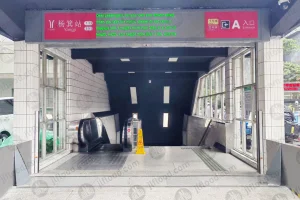
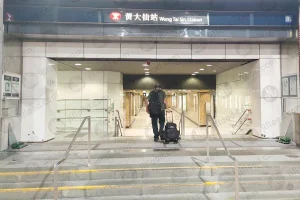
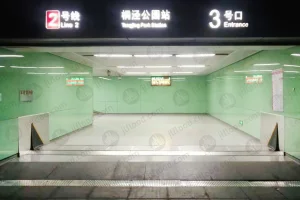
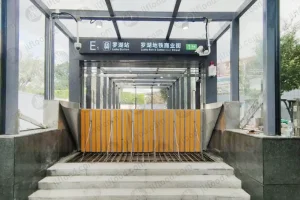
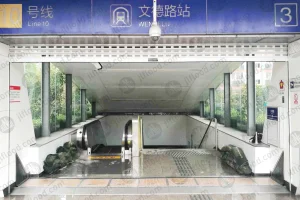
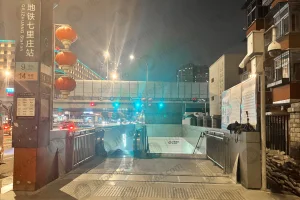
Subway station portals and underground pedestrian connection channels act as natural funnels during torrential cloudbursts. Specialized metro flood barriers feature high clear-span lengths (up to 20m wide array), multi-panel continuous seals, and flush anti-trip floor profiles.
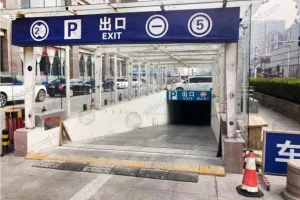
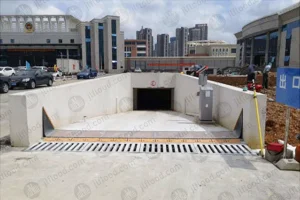
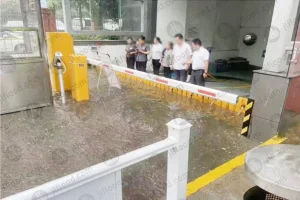
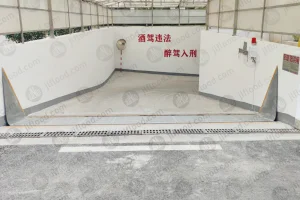
Basement parking entrances require barriers capable of supporting high-frequency vehicle cross-overs without structural fatigue. Surface-mounted or shallow embedded hydrodynamic barriers activate instantly when storm runoff exceeds ramp drainage capacity.
China's flood barrier ecosystem has matured from simple manual fabrication to automated Industry 4.0 production clusters. Headquartered in manufacturing centers such as Nanjing, Jiangsu Province, facilities leverage complete vertical integration—from raw extrusions to full-scale hydraulic pool testing.
Laser cutting of marine-grade 6063-T6 aluminum structural beams achieves tolerances within ±0.2mm. Automated robot-arm welding ensures continuous leak-proof structural joints capable of withstanding dynamic wave impact loads.
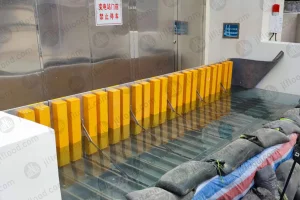
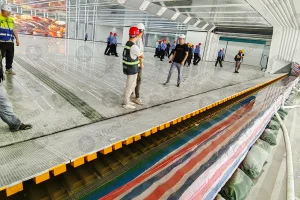
Leading China factories maintain dedicated deep-water hydrostatic test pools. Every barrier batch undergoes rigorous pre-shipment testing for panel lifting speed, rubber seal deflection rate, and zero-leakage hydrostatic retaining performance.
Direct access to China's primary aluminum smelting and polymer vulcanization supply chains allows manufacturers to offer bespoke engineering tailored to international client drawings at 30%–50% lower capital expenditure than Western counterparts.
International engineering procurement teams must evaluate structural integrity, environmental compliance, and long-term operating costs when specifying flood mitigation systems. Use the following technical evaluation matrix during tender review:
Ensure the barrier panel is verified by FEA modeling to withstand maximum hydrostatic head plus dynamic hydrodynamic wave pressure. Request safety factor calculations (minimum 1.5x to 2.0x working pressure).
Rubber seals must be constructed from ozone-resistant EPDM or vulcanized fluoroelastomers. Verify salt spray testing (ISO 9227 minimum 1000 hours) for coastal or high-salinity installation zones.
The supplier must provide 3D BIM models (Revit/STEP) and detailed civil foundation drawings—including rebar clearance layouts, bottom drainage slope specifications, and pre-embedded anchor bolt positions.
Structural reliability cannot be proven on a rendering. Below is real-world field evidence documenting Junli Technology flood barrier performance during major typhoon landfall events and factory hydraulic verification trials.
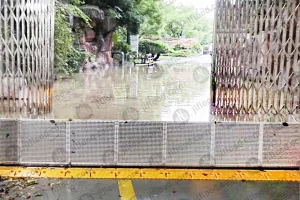
During Typhoon Bebinca, installed Junli hydrodynamic automatic barriers blocked severe storm surges across urban basements in East China with zero operator involvement and complete power grid collapse.
Field-proven protection across underground rail lines in Guangzhou, Suzhou, Beijing, Nanjing, Dalian, and Hong Kong—protecting millions of daily passengers and billions in rolling stock assets.
Perimeter defenses installed for high-voltage power substations across Jiangsu and Anhui provinces, allowing full operational continuity despite surrounding 1.5m floodwaters.
Exporting critical infrastructure products requires end-to-end documentation and global technical assistance. Professional China flood barrier factories support international EPC contractors with comprehensive localized services:
Complete structural drawing sets in English, including foundation excavation templates, concrete anchor embedding specifications, and drainage trench integration layouts.
Fumigated heavy-duty wooden crate packaging with anti-moisture vacuum shrink wrap. Sea-freight optimized panel bundles designed for safe container loading and unloading.
24/7 technical hotline, remote video installation commissioning, annual seal replacement kit supply, and optional field engineer dispatch for major infrastructure contracts.
Detailed answers to critical engineering, installation, and procurement questions.
Explore our extended catalog of specialty flood mitigation gates, surface-mounted barriers, and metro station connection products.