Direct factory quotes, engineering specifications, and precision-manufactured hydrodynamic barriers for immediate global dispatch.
Eliminating human error and grid dependency in critical flood protection infrastructure through unpowered buoyancy engineering.
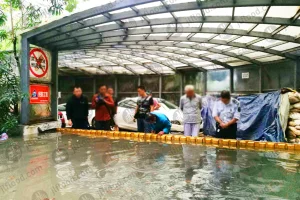
In modern civil engineering, urban waterlogging triggered by microbursts and extreme typhoon events poses an existential risk to sub-surface assets. Traditional flood defense methods—such as manual sandbag placement, slot-in aluminum stop-logs, and electrically driven vertical drop gates—exhibit critical single points of failure. Manual systems rely heavily on early warning leads and human deployment, which frequently fail during night storms or rapid inundation events. Conversely, electromechanical systems remain highly vulnerable to power grid collapse, motor submerged burnout, and sensor failures during heavy lightning and flooding conditions.
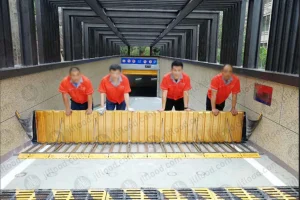
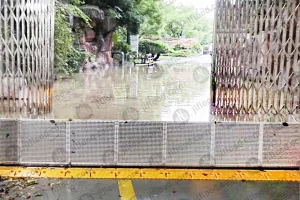
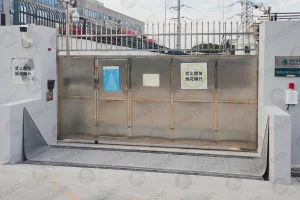
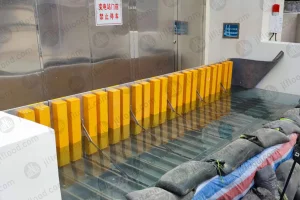
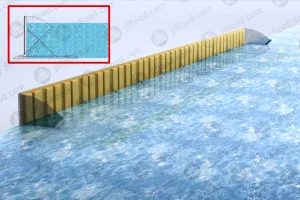
The Mechanical Self-Closing Flood Gate (Hydrodynamic Automatic Flood Barrier) engineered in China represents a fundamental paradigm shift toward passive safety architecture. Operating entirely on Archimedes' Buoyancy Principle and hydrostatic differential pressure, these autonomous systems require zero electricity, zero human intervention, and zero external sensor triggers. When surface runoff exceeds the threshold kerb level, incoming water enters the recessed foundation chamber, creating an instantaneous upward buoyant force that lifts the structural door panel to block water ingress completely.
Technical Insight (Information Gain): Unlike single-chamber buoyancy gates, modern Chinese hydrodynamic barriers utilize a dual-stage kinetic mechanical system. Stage 1 utilizes differential density float chambers to overcome initial static seal friction. Stage 2 leverages the hydrostatic head pressure of the retaining water body to compress multi-lip EPDM seals against the structural stainless-steel side jambs, delivering exponential sealing force as water height rises.
How international municipal standards are mandating zero-energy passive flood barriers for high-consequence infrastructure.
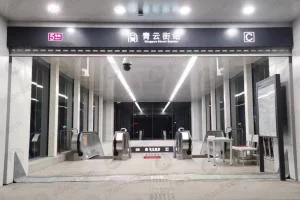
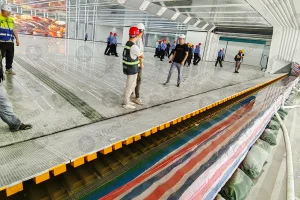
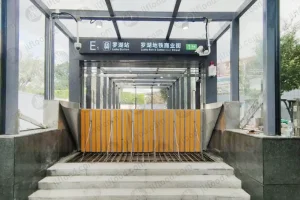
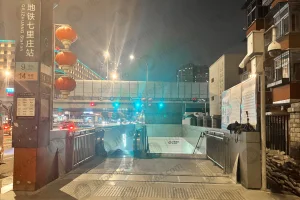
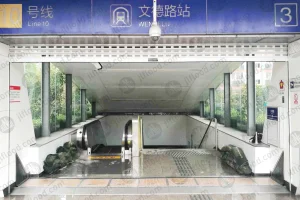
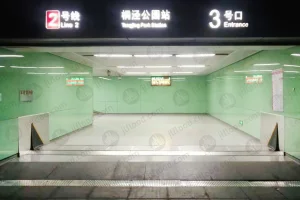
Underground metro stations act as natural urban drainage sinks during catastrophic rainstorms. Flush-embedded self-closing gates automatically seal station portals, connection channels, and emergency ventilation shafts before water cascades down escalators, securing billion-dollar transit networks.
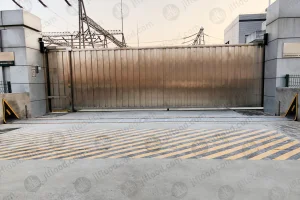
Power grid resilience requires uninterrupted electricity during severe storms. Substation gates retrofitted with automatic unpowered flood barriers prevent transformer vault submergence and explosive short circuits without requiring substation staff to operate perimeter barriers manually.
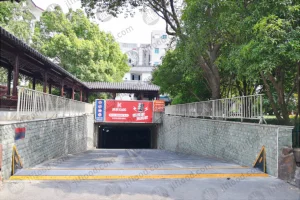
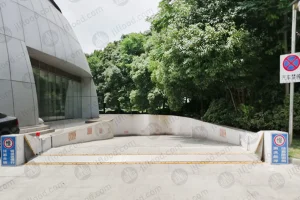
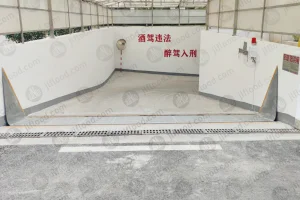
Vehicle access ramps present continuous wide openings. Surface-mounted and embedded hydrodynamic flip-up gates allow daily heavy vehicular drive-over traffic while remaining vigilant to instantly deploy when cloudburst surface run-off reaches ramp thresholds.
A comprehensive budgetary roadmap, engineering material breakdown, and FOB pricing structure for international buyers and EPC contractors.
When procuring mechanical self-closing flood gates from Chinese OEM manufacturers, procurement officers must evaluate initial capital expenditure (CapEx) against the total cost of ownership (TCO). Direct China factory quotes vary depending on structural load ratings (e.g., axle load capacity from 3-ton light vehicles up to 60-ton heavy freight/fire trucks), clear span width, retaining height (typically 500mm to 2000mm per panel), and metallurgy.
| Equipment Model Category | Installation Profile | Primary Material Grade | Standard Retaining Height | Est. Factory Price Range (USD / Meter) | Lead Time (Set) |
|---|---|---|---|---|---|
| Metro Heavy-Duty Hydrodynamic Gate | Embedded Foundation Pit | SUS304 / SUS316 Stainless Steel | 600mm – 1200mm | $1,250 – $2,100 / m | 15 – 20 Days |
| Substation Perimeter Auto Gate | Surface Ramp / Embedded | High-Strength Modular Aluminum + Stainless Frame | 500mm – 1000mm | $850 – $1,450 / m | 10 – 15 Days |
| Commercial Ramp Drive-Over Gate | Surface Installation Type | Anodized Structural Aluminum Alloy T6063 | 400mm – 900mm | $750 – $1,200 / m | 10 – 12 Days |
| Pedestrian Doorway Self-Closing Barrier | Surface Flush Wall Mount | Composite Stainless Frame + Lightweight Panel | 300mm – 600mm | $450 – $800 / m | 7 – 10 Days |
| Custom Hydrodynamic Modular Array | Multi-Leaf Synchronized Pit | Marine Grade SUS316L Stainless Steel | 1000mm – 2000mm | $1,800 – $3,200 / m | 25 – 35 Days |
A granular look at the hydrodynamic force equations, structural FEA modelling, and self-cleaning mechanism.
Every structural panel undergoes high-head hydrostatic stress modeling. Dynamic deflection is strictly limited to < L/500 to guarantee zero seal gap enlargement during maximum inundation events.
A critical engineering failure in early automatic gates was sediment accumulation in the recessed box. Modern Chinese systems feature inclined bottom sedimentation channels and self-clearing flow guides that flush debris during water entry.
Once the buoyancy panel reaches its vertical vertical crest (90-degree deployment), mechanical stainless-steel latch dogs engage under water pressure, creating a rigid structural barrier capable of taking high impact from floating debris.
Aligning Chinese manufacturing precision with global engineering standards and international site civil works.
To ensure seamless international project delivery, leading Chinese manufacturers provide end-to-end engineering documentation, CAD site interface templates, and international accreditation compliance:
Direct technical insights answering key procurement, maintenance, and operational queries from global buyers.
The gatepanel rests flush inside a recessed foundation box installed level with the ground surface. When flash floods or heavy storm water runoff flows over the opening, water drains into the chamber through an inlet grate. The accumulated water generates buoyancy on the hollow stainless-steel or aluminum float panel. As water levels rise, the buoyant force lifts the gate panel upright automatically. Hydrostatic pressure from the retained floodwater then forces the panel against structural EPDM edge seals, creating a watertight barrier without requiring electricity, pumps, or manual deployment.
Industrial-grade flood gates designed for garage ramps and sub-station entrances are built with reinforced structural internal cross-ribbing and high-tensile top cover plates. They are engineered and FEA-tested to sustain standard axle loads ranging from 15 tons (standard commercial traffic) up to 60 tons (heavy freight trucks and emergency fire engines) without structural deformation or frame misalignment.
Modern Chinese hydrodynamic flood gates feature integrated anti-sedimentation designs. The recessed pit includes angled silt channels and bottom drainage ports connected to the building's drainage sump. Smaller particle silt is naturally flushed through the drain ports during normal rainfall. For maintenance, top stainless-steel cover grates are easily removable for routine semi-annual debris inspection and vacuum cleaning.
Standard modular units (500mm–1000mm height) carry a factory production lead time of 10 to 15 calendar days. Customized wide-span metro gate arrays requiring special engineering approvals take approximately 20 to 30 days. FOB shipping from major Chinese ports (Ningbo, Shanghai, Shenzhen, Qingdao) typically reaches Southeast Asian ports in 5-7 days, European ports in 25-32 days, and North American West Coast ports in 14-18 days.
Yes. When excavating a foundation trench is restricted (such as over underground cable vaults or shallow utility lines), surface-mounted automatic flip-up barriers (e.g., Hm4d series) can be directly anchored onto existing level concrete surfaces using high-tensile chemical expansion bolts, featuring low-profile ramp transitions for vehicle drive-over access.
Explore our complete OEM range of flip-up, embedded, and unpowered automatic flood barrier systems.