
As modern urbanization intensifies and extreme weather microbursts become the new normal, underground mass transit networks face unprecedented hydrodynamic flood threats. Here is how advanced Chinese engineering redefines subterranean flood resilience.
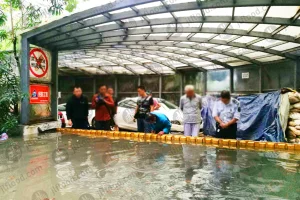
Global climatic shifts have drastically compressed precipitation cycles. Microburst rainfalls exceeding 100mm/hour routinely overwhelm municipal storm sewer systems. Subsurface metro station entrances, pedestrian underpasses, and ventilation shafts act as natural gravity drains for localized surface runoff, threatening operational continuity and human life.
Traditional flood control mechanisms relying on electric motors, pneumatic actuators, or manual emergency dispatch frequently fail during catastrophic events. Extreme flooding is almost universally accompanied by localized grid blackouts, control sensor submersions, or grid disruptions, leaving powered flood barriers inoperable when needed most.
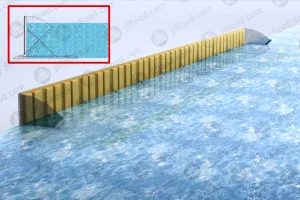
True operational safety mandates zero dependence on human response teams, sensors, or external power. Hydrodynamic self-rising flood gates harness the inherent potential energy and buoyancy of incoming floodwaters to automatically deploy, creating a robust, foolproof water-retaining wall in sub-second timeframes.
Information Gain Insight for Transit Engineers: Hydrodynamic passive barriers designed according to Chinese GB 50157-2013 Metro Design Code integrate seamless civil embedment with zero-clearance threshold profiles. This ensures 100% unimpeded barrier-free transit access during dry operational periods while maintaining instant self-deployment under catastrophic water surges.
Understanding the fluid dynamic mechanics, hydrostatic equilibrium formulas, and structural structural integrity calculations behind China’s leading underground station flood defence suppliers.
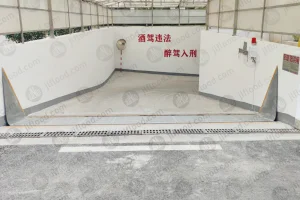
The core innovation of Nanjing Junli’s hydrodynamic underground station flood barrier system relies on the differential pressure and buoyancy principles described by Archimedes' Principle combined with mechanical leverage locking mechanisms. When surface runoff overflows the station threshold or kerb, water enters the recessed ground foundation trench through non-clogging stainless steel drainage grates.
As water accumulates within the precision-engineered stainless steel bottom chamber, high-density closed-cell structural buoyancy modules within the barrier panel generate vertical lift ($F_b$). The panel pivots upwards automatically along stainless steel heavy-duty continuous hinge points.
Underground metro station entrances host intense pedestrian flow and heavy emergency vehicle crossings. Materials must withstand extreme dynamic impact forces ($F_{impact} = m \cdot v^2 / 2d$) and heavy vehicular wheel loads.
| Performance Parameter | Junli Hydrodynamic Passive Barrier | Motorized Electric Flip-Up Gate | Pneumatic Inflatable Barrier | Manual Aluminum Stop-Logs |
|---|---|---|---|---|
| Power Requirement | Zero (100% Water Powered) | Requires AC Power / UPS Backup | Requires Compressed Air System | None (Manual Labor) |
| Deployment Trigger | Automatic (Hydrodynamic) | Electronic Sensor / Manual Push Button | Water Sensor / Solenoid Valve | Human Dispatch Required |
| Response Time | Instantaneous (< 0.1 sec reaction) | 30 to 120 seconds | 60 to 180 seconds | 30 to 120 minutes |
| Blackout Reliability | 100% Operational Immunity | Fails if battery/UPS dies | Fails if compressor unpowered | Depends on personnel arrival |
| Maintenance Overhead | Minimal (Annual Seal Inspection) | High (Motor, Gearbox, Electronics) | High (Air leaks, Pump maintenance) | Medium (Storage space & logistics) |
| Pedestrian Barrier-Free | Yes (100% Flush Ground Level) | Often creates threshold step | Requires wide installation groove | Requires manual installation slot |
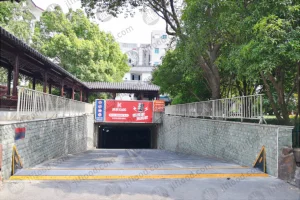
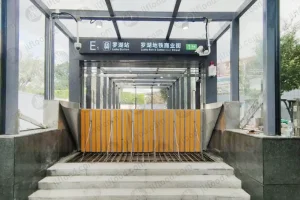
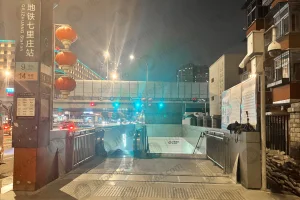
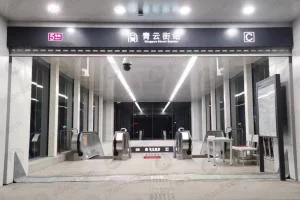
Subsurface transit networks present complex geometries and strict safety compliance mandates. China’s one-stop engineering factory delivers custom configurations designed for every station entrance node.
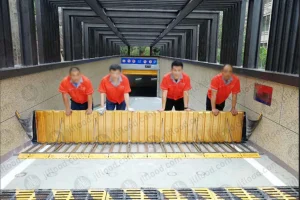
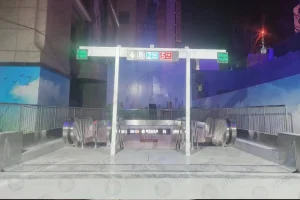
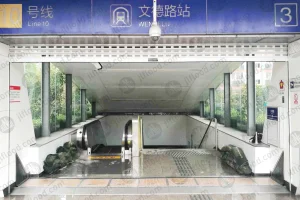
Installed flush at the top step or street level of metro stairways. Models such as the Hm4d-0006E Surface Installation and Hm4e-006C Embedded Installation ensure smooth, trip-free foot traffic while providing instant protection against flash-flood inundation down the escalators.
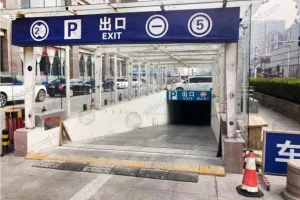
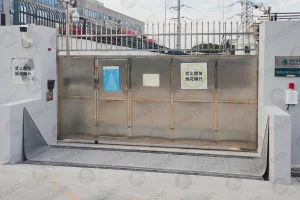
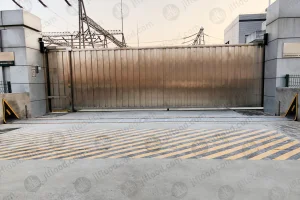
Wide-span entrances to station logistics centers, underground park-and-ride facilities, and service bays require heavy axle load resistance. Modular multi-leaf hydrodynamic gates automatically rise up to 2.0 meters, holding back immense hydrostatic heads without obstructing daily vehicular movement.
Ground-level sidewalk air shafts present severe flood migration risks into lower subway tunnels. High-pressure horizontal and vertical automatic flood gates seal ventilation openings the moment rising waters submerge the protective louvers.
Electrical substations powering metro rail lines require absolute water-tight integrity. Specialized fire-retardant, high-dielectric flood barriers protect high-voltage switchgear rooms, prevent short circuits, and protect multi-million dollar traction assets.
Underground pedestrian tunnels linking subways to adjacent commercial shopping malls require continuous aesthetic harmony. Embedded hydrodynamic gates match surrounding marble, tile, or concrete floor finishes while standing ready to deploy passively.
Dual-purpose transit systems functioning as underground civil defense shelters utilize heavy-duty watertight sealing doors compliant with national security and disaster resilience standards, guaranteeing complete isolation during extreme environmental disasters.
Nanjing Junli Technology Co., Ltd. combines rigorous factory water-retaining testing with comprehensive international engineering compliance to guarantee zero failure rates in mission-critical applications.
Our underground station flood barriers are engineered to meet and exceed global civil engineering standards across Europe, North America, and Asia-Pacific:
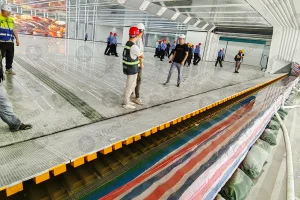
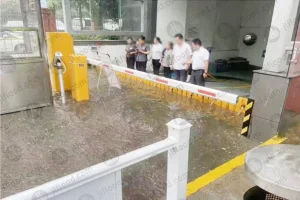
Before any product leaves our Nanjing manufacturing facility, it undergoes rigorous empirical validation inside our dedicated hydrostatic testing pools:
While mechanical operation remains 100% passive and unpowered, Junli’s intelligent telemetry layer bridges physical flood barriers with modern Smart City SCADA transit management networks.
Integrated magnetic angle sensors and micro-switches transmit real-time deployment status (Stored / Rising / Fully Deployed) directly to the central metro command control center via RS485 / Modbus / LoRaWAN protocols.
Pre-trigger ultrasonic level sensors installed inside the foundation trench detect early water pooling, automatically sounding local auditory/visual alarms and alerting station personnel before the main panel reaches full elevation.
Junli supplies complete 3D BIM (Building Information Modeling) Revit families and parametric CAD drawing sets, allowing transit architects to seamlessly integrate flood defense geometry into greenfield metro station designs.
Answers to essential technical, installation, maintenance, and ordering questions from international transit authorities, EPC contractors, and procurement engineering teams.
The system operates purely on Archimedes' principle of buoyancy and hydrostatic fluid pressure. The barrier panel normally rests completely flat inside a shallow ground frame embedded flush at the station entrance. When floodwater overflows the entrance, water enters the bottom chamber through stainless steel inlet grates. The buoyancy generated by high-density internal flotation blocks forces the door panel to automatically float and tilt upwards. As water levels rise further, the hydrostatic pressure of the floodwater pushes the panel firmly against continuous EPDM rubber seals, forming a tight, leak-proof barrier. No motors, sensors, human operators, or electric power are required.
Yes. Junli’s surface and embedded metro flood gates are engineered with high-strength structural ribbing made from T6-6063 aviation-grade aluminum alloy and heavy stainless steel frame housings. Standard models support load ratings certified to AASHTO HS-20 and EN 124 D400 standards, safely handling axle loads up to 40 tons. This allows heavy emergency vehicles, buses, and service trucks to drive over the barrier daily without causing structural deflection or seal damage.
Embedded Installation (Hm4e-006C): Requires a shallow civil trench (typically 150mm - 250mm deep) excavated during station construction or major renovation. The top surface of the barrier sits 100% flush with the finished floor level, making it ideal for high-traffic pedestrian entrances and barrier-free handicap access.
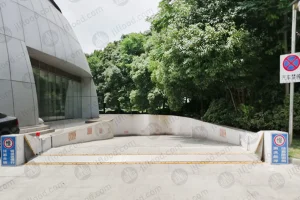
Surface Installation (Hm4d-0006E): Designed for retrofit projects on existing operational stations where excavating a deep trench is impractical. The unit features built-in modular approach ramps on both sides with a ultra-low height profile (only 50mm - 90mm), allowing quick installation directly anchored onto the existing concrete slab with minimal civil disturbance.
Standard hydrodynamic single-panel barrier heights range from 500mm to 2000mm (0.5m to 2.0m). For clear span widths, single-leaf gates handle openings up to 6.0 meters wide. For wider station plazas or multi-lane parking ramps (exceeding 20 meters wide), we supply modular multi-leaf arrays connected by removable or automatic retractable center mullions, maintaining complete hydrostatic integrity across unlimited total opening widths.
The top surface of the foundation trench is protected by a continuous 304 stainless steel narrow-slot debris filter grate that blocks large leaves, trash, and stones. Furthermore, the internal buoyancy chamber features angled self-flushing bottom channels. When floodwaters recede, drainage ports allow water and fine suspended sediments to flow out into station storm drains automatically. Annual routine cleaning simply involves lifting the removable top grate and clearing any accumulated fine dust.
The structural aluminum panel and stainless steel frame are rated for a design lifespan exceeding 30 years due to superior corrosion-resistant alloy selection and anodized/passivated finishes. The main consumable components are the EPDM rubber seals, which possess high UV and ozone resistance, offering an active service life of 10 to 15 years under normal outdoor conditions. Maintenance requires only a 6-month visual seal inspection and a simulated water fill test once per year.
Yes. As a global OEM supplier and turnkey factory, Junli provides comprehensive technical support for international transit clients. This includes custom structural CAD installation drawings, 3D Revit BIM family models, hydrostatic load calculation sheets, English installation manuals, and factory water-test videos. For major international rail transit projects, our global engineering team provides remote commissioning assistance or onsite engineer dispatch.
Partner directly with China's top hydrodynamic flood barrier manufacturer. Send us your station entrance opening dimensions, flood design head, and civil engineering specifications for an immediate solution package.


