Explore our field-verified automatic and hydrodynamic flood mitigation gates engineered for high-density municipal, industrial, and commercial installations.
As global climate patterns induce unprecedented extreme precipitation, conventional flood barriers requiring manual assembly or electrical power suffer critical points of failure during urban storm surges.
Rapid urbanization has paved over natural hydrologic drainage channels. When intense cloudbursts occur, storm sewer discharge reaches capacity in minutes, exposing underground metros, substations, and parking structures to disastrous inundation.
Active flood gates reliant on grid electricity, sensors, and motorized actuators often fail precisely when severe weather trips local power grids, leaving critical assets unprotected during peak hydrostatic pressure events.
By leveraging natural hydrostatics—where incoming floodwaters drive the physical lifting mechanism or polymer expansion—passive barriers operate autonomously with 100% mechanical reliability and zero operational latency.
Evaluating water-activated polymer absorbents alongside embedded hydrodynamic mechanical gates to optimize risk mitigation for civil infrastructure projects.
The term "Quick Dam" water-activated barrier traditionally refers to non-woven fabric sleeves packed with cross-linked Sodium Polyacrylate (SAP). Upon contact with freshwater, these dry polymers undergo osmotic swelling, expanding to 30-50 times their initial weight within 5 to 10 minutes to form a self-contained fluid dam. While ideal for rapid residential containment, perimeter protection at commercial scales demands heavy-duty structural hydrodynamics.
| Performance Criteria | Quick Dam SAP Polymer Bags | Junli Hydrodynamic Automatic Flood Gate | Traditional Sandbag Deployment |
|---|---|---|---|
| Activation Principle | Osmotic SAP swell upon water contact | Buoyancy force + Hydrostatic head pressure | Manual labor stacking |
| Deployment Speed | 5 - 10 Minutes (Self-swelling) | Instantaneous (< 0.5 sec automatic lift) | 2 - 4 Hours (Requires intensive manpower) |
| Retaining Height Capability | 0.15m – 0.6m (Stacked height limit) | 0.5m – 2.0m per module (Scalable array) | 0.3m – 1.0m (Unstable above 1m) |
| Structural Integrity | Flexible containment wall | 6063-T6 Structural Aluminum / Stainless Steel | Prone to erosion and seam leakage |
| External Power / Human Demand | Zero power; requires manual placement | Zero power; 100% Unattended automatic | Zero power; extreme manual labor demand |
| Lifespan & Reusability | Single-event or temporary degradation | 20+ Years Design Life (Permanent Asset) | Single-use (Contaminated disposal required) |
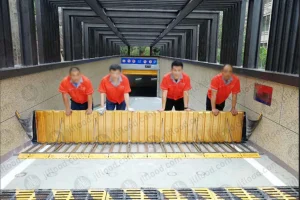
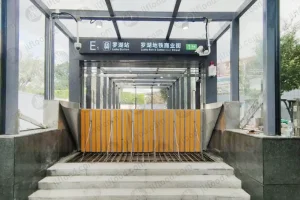
*Note: For municipal transit systems such as metro entrances and power substations, structural hydrodynamic gates manufactured by Nanjing Junli Technology offer permanent, flush-mounted embedded infrastructure that requires no human intervention during localized cloudburst events.
As a premier Chinese manufacturer located in Qinhuai District, Nanjing, we engineer certified water retention systems through integrated structural calculations, precision CNC fabrication, and full-scale hydraulic testing.
Utilizing high-tensile 6063-T6 anodized aluminum alloy profiles paired with SUS304/SUS316 stainless steel frame housings for maximum resistance against heavy vehicular loads and corrosive runoff.
Dual-component EPDM continuous rubber strip technology ensures absolute hydro-tight contact under extreme hydrostatic pressure heads, eliminating dynamic lateral seepage.
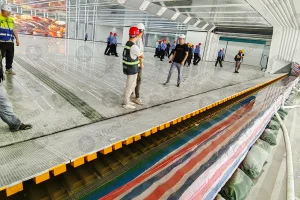
Every batch model is pressure-tested within our specialized internal water pool, recording seal deflection rates and lifting dynamics prior to field delivery.
Custom curb geometry, wide-span door openings, and heavy-duty load ratings (up to 60-ton vehicle drive-over capability) built to exacting consultant drawings.
Where automatic self-rising and water-activated barriers safeguard critical infrastructure assets against catastrophic water damage.
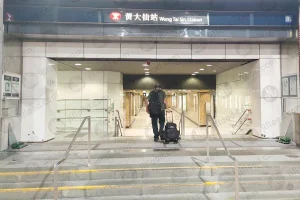
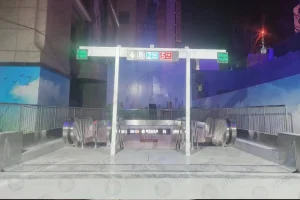
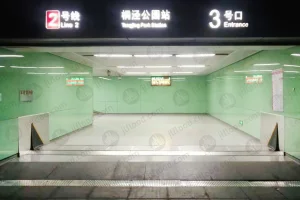
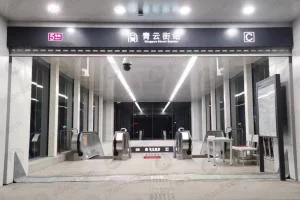
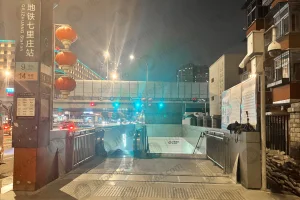
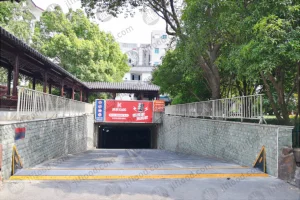
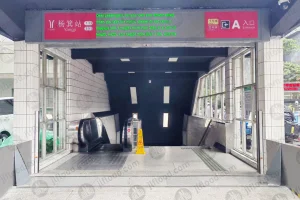
Subway openings and station connection channels represent high-vulnerability points. Installed flush with station floor tiles, our embedded barriers rise automatically as surface water overflows the curb step, protecting subterranean tracks and passengers.
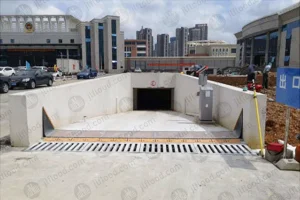
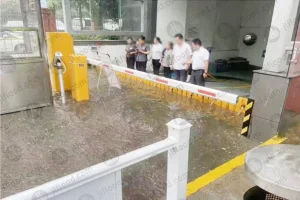
Explore Metro Solutions →Commercial malls, hospitals, and residential parking basements require unobstructed drive-over surfaces during normal dry operations. Upon water ingress, the gate panel swings up, sealing the ramp against incoming flash flooding.
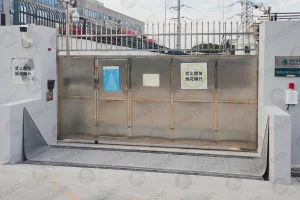
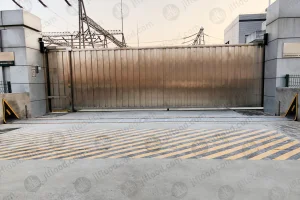
Explore Garage Barrier Range →Electrical utility substations face secondary hazards from water contact with high-voltage transformers. Perimeter gates fitted with hydrodynamic barriers isolate key switchgear rooms from regional storm surges.
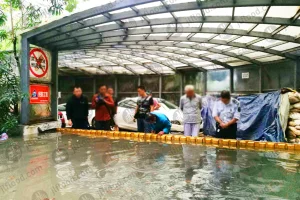
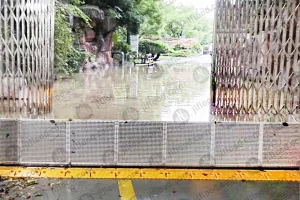
Explore Substation Gates →Field-tested across typhoon landfall events in coastal provinces (Guangzhou, Dalian, Suzhou), Junli barriers have successfully contained floodwaters up to 1.5m depth without manual oversight.
View Real Water Cases →Adhering to strict international flood defence standards while integrating smart IoT telemetry for municipal smart-city grids.
Engineered in accordance with Chinese National Standards for Flood Defense and evaluated against international standards (including FM 2510 and European EN 13564 guidelines for automatic anti-flooding devices).
Full export documentation, CAD detail drawings, embedded frame mounting templates, and international seaworthy packaging delivered worldwide with remote installation guidance.
Developing next-generation hybrid barriers featuring embedded optical sensors and wireless telemetry to relay real-time panel elevation status to emergency control centers.
Addressing essential technical considerations for procurement managers, civil engineers, and installation contractors.
Quick Dam barriers rely on Superabsorbent Polymers (SAP) housed in fabric sacks that swell when exposed to water, making them ideal for light, temporary residential protection. Hydrodynamic automatic flood gates (like Junli's range) are permanent structural barriers built from structural aluminum. They sit flush inside a foundation trench and utilize incoming water buoyancy to automatically lift heavy panel gates during major flash floods without relying on chemical absorption or manual placement.
No. Junli hydrodynamic flood gates operate on 100% passive mechanical principles. As surface runoff flows into the recessed bottom chamber, physical hydrodynamics and buoyancy lift the structural barrier leaf automatically. They require zero electricity, zero motor drives, and zero human intervention—guaranteeing operational readiness during storm-induced power outages.
Yes. Our underground garage and entrance barriers are engineered with high-tensile 6063-T6 aluminum alloy panels and reinforced internal ribbing capable of supporting heavy traffic loads (standard models support up to 30–60 tons axle weight), making them completely seamless for daily vehicular passage.
Every manufactured unit undergoes rigorous pool testing at our Nanjing facility. We test static water head retaining, dynamic buoyancy lift times, seal compression under pressure, and EPDM gasket leakage limits. Order-specific water test inspection reports and video documentation are supplied with each export batch.
For embedded models, a concrete trench matching the housing dimensions with bottom drainage pipes and leveled mounting points is required. Surface-mounted or flip-up models require anchored structural curb walls. We provide full embedded-frame templates, civil engineering rebar drawings, and step-by-step guidance for contractor execution.
Browse our full factory catalog for metro stations, substation perimeters, and commercial building protection.