Direct from China OEM/ODM Manufacturing Facility — Certified Hydrostatic Retaining Systems

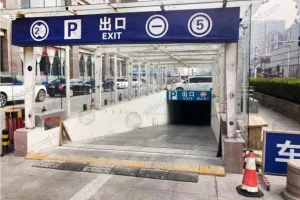
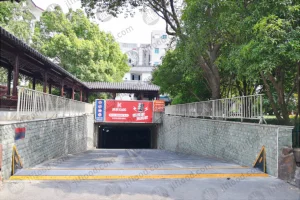
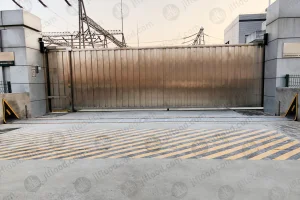
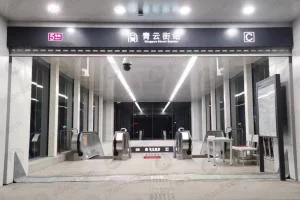
In modern urban civil design, sloping access ramps—found abundantly in subterranean parking structures, metro transit stations, utility substations, and logistics facilities—represent the primary vulnerability point for catastrophic inundation during extreme storm events. Historically, municipal civil engineers and facility managers relied on legacy flood prevention methods: manual sandbags, detachable aluminum stoplogs, or electrically powered mechanical gates. However, extensive field analysis during extreme precipitation events has exposed single-point-of-failure weaknesses in these legacy paradigms.
Manual barriers demand human intervention precisely when localized weather conditions render transportation impossible or dangerous. Electrically driven flood doors, on the other hand, suffer from power grid collapses, sensor short-circuits, or motor failures precisely when lightning strikes and urban waterlogging coincide. To overcome these critical failure modes, global architectural specifications have shifted toward hydrodynamic passive automatic ramp flood control panels—a structural engineering innovation led primarily by specialized Chinese manufacturing centers.
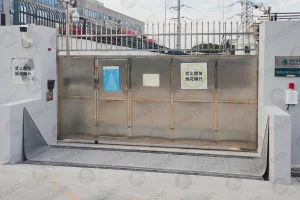
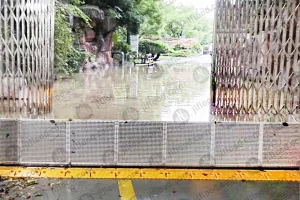
Hydrodynamic ramp barriers operate on basic hydrostatic principles: incoming surface run-off flows into a recessed ground chamber beneath the ramp threshold. As water accumulates, buoyant forces actuate the main structural aluminum panel, lifting it smoothly to create a sealed vertical wall. System operation requires 0% electrical power, 0% sensor triggering, and 0% operator presence.
China has emerged as the global epicenter for advanced hydrodynamic flood protection engineering. Driven by the national "Sponge City" municipal standard and massive urban underground infrastructure investments, Chinese factories have scaled specialized manufacturing capabilities that integrate high-precision aluminum alloy extrusion, specialized elastomeric seal vulcanization, and full-scale hydraulic stress testing facilities.
When sourcing a Ramp Flood Control Panel Factory in China, international procurement groups gain distinct competitive advantages: advanced metallurgical engineering capable of withstanding heavy vehicle traffic (up to HS-20 truck loading), proprietary EPDM triple-seal sealing profiles, robust OEM customization capabilities, and cost efficiency backed by fully integrated regional supply chains in provinces like Jiangsu.
A rigorous side-by-side technical evaluation for structural specifiers, civil engineers, and infrastructure risk auditors.
| Performance Specification | Hydrodynamic Buoyancy Ramp Panel (Junli Standard) | Motorized Electro-Hydraulic Gates | Manual Aluminum Stoplogs |
|---|---|---|---|
| Power Dependence | 0% (Pure Passive Buoyancy) | 100% (Requires Grid / Backup Gen) | 0% (Manual Labor Required) |
| Response Time | Automatic Instantaneous (<30 Seconds) | 1 - 3 Minutes (Sensors Dependent) | 30 - 120 Minutes (Staff Deployment) |
| Vehicle Load Capacity | Heavy-Duty (Axle Load 30T - 60T) | Medium to Heavy (20T - 40T) | Non-Load Bearing (Must be erected) |
| Flush Profile / Aesthetics | Flush-mounted; drive-over casing | Raised Thresholds / Side Pillars | Requires Storage Racks & Posts |
| Sealing Efficacy | Self-tightening Hydrostatic EPDM Seals | Mechanical Compression Gaskets | Manual Slot Gaskets (Prone to leakage) |
| Maintenance Overhead | Annual Silt Flushing & Visual Check | Quarterly Electrical & Motor Audits | Periodic Manual Deployment Drills |
| Operational Reliability | 99.9% (Fail-Safe Mechanical Laws) | 85.0% (Risk of Sensor/Power Fail) | 60.0% (Human Error Risk) |
Constructed from high-tensile 6063-T6 aluminum alloys featuring multi-cavity internal ribs. Engineered specifically to handle repeated heavy vehicular passage without fatigue or deflection.
Utilizes dynamic water pressure differentials. As external flood levels surge, the vertical water column exerts proportionally higher clamping force against the EPDM wall seals.
Integrated self-draining ground troughs feature stainless steel leaf guards and silt retention channels, preventing debris accumulation from hindering panel floatation.
Selecting an OEM supplier for structural flood control involves evaluating manufacturing maturity, quality assurance protocols, and structural engineering capabilities. Leading Chinese manufacturers—exemplified by enterprise facilities in Nanjing—have established comprehensive industrial advantages that make them the preferred partners for global EPC contractors, architectural firms, and municipal authorities.
Unlike regional assemblers in Western markets who source individual components from fragmented suppliers, Chinese factories operate fully integrated manufacturing ecosystems. From raw billet alloy formulation and heavy extrusion pressing (up to 10,000 tons of force) to CNC precision machining, robotic TIG welding, fluorocarbon surface coating, and vulcanized rubber gasket extrusion—every production phase is executed in-house. This complete vertical integration guarantees strict dimensional tolerances (±0.5mm) across modular panel spans over 20 meters wide.
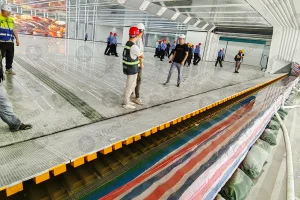
A fundamental indicator of factory expertise (E-E-A-T) is empirical validation. Tier-1 Chinese suppliers do not rely exclusively on computer simulations. Qualified facilities feature full-scale hydrostatic testing basins capable of submerging complete 6-meter panel modules under hydrostatic pressure heads up to 2.0 meters water column. Pre-shipment testing verifies actuation threshold water volume, seal deformation indices, and zero-leakage performance under simulated storm conditions.
Commercial entrance ramps are rarely uniform. Variations in slope gradient (from 5% to 15%), cross-fall drainage, side kerb geometry, and structural floor slab thickness require custom structural tailoring. Chinese suppliers specialize in flexible CAD/BIM integration, providing civil engineering teams with custom embedded frame designs (SUS304 or hot-dip galvanized steel chassis) tailored specifically to retrofits or new infrastructure builds.
Hydrodynamic ramp panels serve distinct structural roles across various civil infrastructure categories. Below is an engineering overview of localized deployment models:
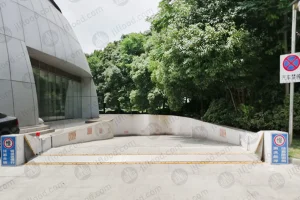
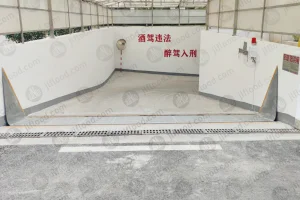
Urban parking structures represent high-density financial asset zones. Flash floods entering garage ramps cause widespread property loss and infrastructure destruction. Surface-type or embedded hydrodynamic barriers installed at the apex or midpoint of parking ramps provide invisible, maintenance-free security. Vehicles drive smoothly over the flush top plate daily; during torrential rain, rising surface water automatically elevates the panel, sealing off the ramp opening.
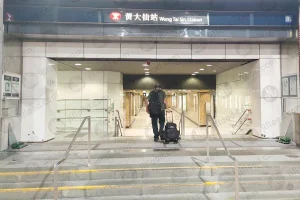
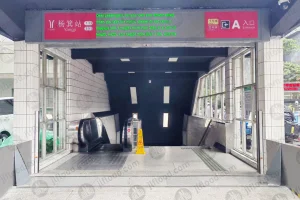
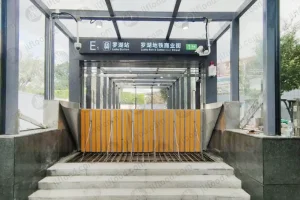
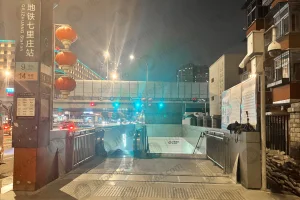
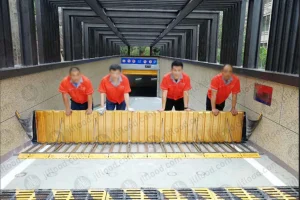
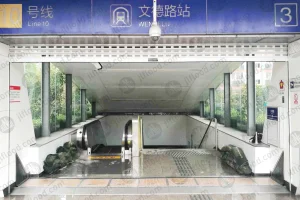
Subway networks in mega-cities like Guangzhou, Beijing, Suzhou, Nanjing, and Dalian require absolute flood containment. A single breached entrance can inundate miles of underground rail tunnels. Chinese metro-certified flood gates feature reinforced multi-leaf linkage systems capable of sealing wide entrance plazas up to 20+ meters, backed by official civil defence structural safety approvals.
Power distribution infrastructure requires continuous operational continuity. Water ingress into low-lying substation perimeter gates leads to catastrophic grid blackouts. Because hydrodynamic ramp panels require zero electrical connection, they maintain 100% operational readiness during regional power grid failures—protecting critical transformers and high-voltage gear switch rooms.
Subterranean loading bays and industrial warehouse ramps experience constant heavy logistics traffic, including 40-ton container trucks. Heavy-duty Chinese ramp panels incorporate internal structural load transfer beams that distribute wheel impact directly into the surrounding concrete foundation slab, preventing panel deformation under extreme rolling loads.
Headquartered in Qinhuai District, Nanjing, Jiangsu Province, Junli Technology is a high-tech Chinese enterprise dedicated to R&D and manufacturing of intelligent hydrodynamic flood control barriers. Our systems are battle-tested in real typhoon-season conditions across 30+ major cities.
Watch our hydrodynamic automatic flood barriers in action during real-world water testing and typhoon season deployments. Zero electricity required, 100% mechanical buoyancy activation.
When drafting tender specifications or requesting quotation packages from a China Ramp Flood Control Panel Supplier, engineering procurement teams should mandate compliance across four primary technical domains:
For seamless installation into new concrete ramps, specifiers must request detailed CAD structural interface drawings. The embedded stainless-steel drainage frame (SUS304/SUS316) must be anchored directly to structural rebar using high-tensile expansion anchors. The bottom trough requires a 2% slope toward side drainage connection points to prevent stagnant water collection.
Ramp panels operate in harsh environments exposed to automotive exhaust, road salts, oil run-off, and UV radiation. Tender specifications must mandate:
International buyers should ensure the factory provides comprehensive quality documentation prior to dispatch. Standard export documentation packages from Junli Technology include: ISO 9001:2015 Quality Management Compliance, Factory Acceptance Test (FAT) certificates, Material Test Reports (MTR) for aluminum alloys, and raw full-scale video documentation of water pressure retention tests matching order dimensions.
Addressing technical, structural, and logistics queries for international ramp flood barrier buyers.
The system operates completely independent of electricity, electronics, motors, or human interaction. Water rising along the ramp naturally flows through intake grilles into a recessed stainless-steel ground chamber beneath the panel. As the water level rises in the chamber, hydrostatic buoyancy forces automatically lift the lightweight structural aluminum panel up. As water pressure increases externally, it pushes the panel firmly against vertical frame EPDM seals, establishing a watertight barrier mechanically.
Yes. Junli ramp flood panels are engineered with internal load-bearing structural ribbing matrixes. When housed in their recessed resting position flush with the ramp surface, heavy-duty variants support vehicle axle loadings from 30 to 60 metric tons (exceeding standard AASHTO HS-20 truck load requirements). They are routinely installed at bus depots, industrial loading docks, and high-traffic commercial garage ramps.
Standard panel protection heights range from 0.5 meters to 2.0 meters. Clear opening spans can be fabricated up to 6 meters per single panel module. For wider ramp driveways or multi-lane subway entrances exceeding 20 meters, modular panel arrays with intermediate removable or automatic locking mullions are deployed to form continuous protective walls.
Ground chambers feature removable stainless steel debris collection plates and integrated bottom drainage connection ports. Routine maintenance involves a simple quarterly visual inspection and flushing out fine sediment using a standard water hose. The smooth internal chamber design prevents silt buildup from impeding panel floatation.
All export products are packed in custom IPPC-certified ISPM-15 wooden cases lined with moisture-proof protective films. Frame sections are pre-assembled in modular units to simplify site installation. Standard shipments include full English installation manuals, CAD civil installation templates, anchor hardware, and spare seal kits.
Direct Factory Quotes, Technical Datasheets & Global Project Dispatch