In an era marked by accelerating climate volatility, intense localized precipitation events—frequently categorized as cloudbursts or pluvial flash floods—have emerged as one of the single most disruptive financial and operational threats to modern urban civil infrastructure. Underground metro lines, subterranean electrical power substations, commercial parking garages, and multi-level basement facilities face catastrophic exposure when urban surface drainage networks exceed maximum hydraulic capacity within minutes.
Traditional flood mitigation strategies relied heavily upon manual intervention: mobilizing staff to deploy demountable aluminum stop-logs, stacking sandbags, or operating motor-driven electrical flood gates. However, real-world forensic analyses of major urban flood disasters reveal that manual systems suffer from an inherently high failure rate. Power outages, grid failures, storm-induced traffic gridlock preventing emergency crew arrival, and rapid water ingress timelines (often under 5 minutes) consistently render manual and electrically powered active systems useless during critical storm phases.
| Evaluation Parameter | Manual Aluminum Stop-Logs | Active Motorized / Electric Gates | China Self-Closing Hydrodynamic Baffles |
|---|---|---|---|
| Power Dependence | Zero Power | High (Requires Grid / Genset) | 100% Power-Free Mechanical |
| Human Operator Requirement | Mandatory Manual Labor (2-4 staff) | Remote or Push-Button Activation | Fully Autonomous (0 Operators) |
| Activation Response Speed | Slow (30 to 120 Minutes) | Moderate (2 to 5 Minutes) | Instantaneous Hydrodynamic Lift (< 30s) |
| Risk of Mechanical/Electrical Failure | Human Error / Misplacement | Motor Burnout, Sensor Failure, Power Cut | Failsafe Hydrostatic Buoyancy |
| Driveway Surface Interface | Obstacle / High Threshold Base Frame | Surface Bump or Track Recess | 100% Flush Ground-Level Integration |
| Lifetime Operational Expense (OPEX) | High (Storage, Drills, Labor Costs) | High (Electrical Testing, Motor Maintenance) | Near-Zero Maintenance (Fit & Forget) |
China has established itself as the world center of excellence for high-tonnage precision extrusions and hydraulic structural engineering. By utilizing advanced T6-6063 marine-grade anodized aluminum extrusions and structural SUS304/316 stainless steel foundation basins, Chinese manufacturers deliver industrial self-closing flood baffles that combine heavy vehicle load ratings (up to 30–45 tons axle weight) with zero-power passive hydrostatic activation. Sourcing directly from certified Chinese OEM factories provides global engineering contractors with up to 40% cost efficiency while maintaining strict compliance with international structural and fluid dynamics standards.
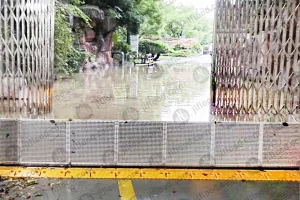
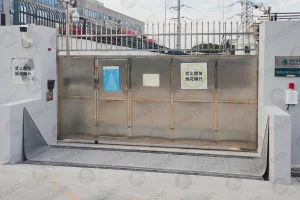
The self-closing flood baffle operates on fundamental Archimedes hydrostatic principles. Under dry conditions, the structural door panel sits recessed completely flush with the surrounding pavement, allowing heavy vehicular and pedestrian traffic to pass unrestricted. When flash floods cause water to enter the bottom collection basin, the engineered hollow aluminum panel generates positive buoyancy. As the water level inside the basin rises, hydrostatic pressure lifts the panel autonomously, deploying the protective vertical wall without reliance on sensors, electricity, or manual labor.
Achieving total fluid containment requires sophisticated sealing geometry. Chinese engineered baffles incorporate a dual-stage sealing framework: a primary bottom seal composed of high-density EPDM (Ethylene Propylene Diene Monomer) vulcanized rubber, paired with continuous side wall compression gaskets. As incoming hydrostatic head pressure increases against the deployed panel wall, it exerts continuous mechanical force against the sealing seats, creating a self-tightening interface that limits water leakage to well under 0.05 liters per minute per linear meter.
For ramp entrances serving heavy commercial vehicles, emergency fire apparatus, or transit buses, the embedded floor trough must withstand intense dynamic impact and static load cycles. Manufactured using heavy-gauge structural stainless steel (SUS304/SUS316) or reinforced high-tensile carbon steel frames with anti-corrosion hot-dip galvanizing, the top cover plate and internal support ribs comply with rigorous AASHTO H-20 / HS-20 and EU EN 124 Class D400 wheel load parameters.
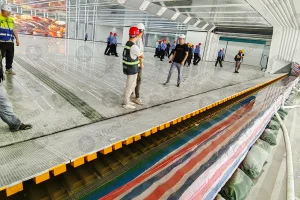
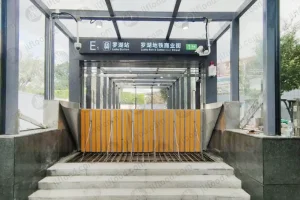
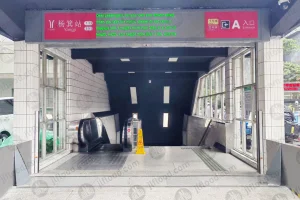
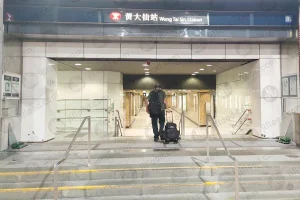
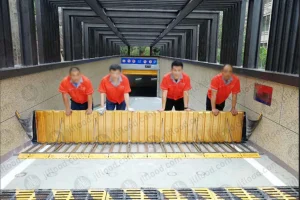
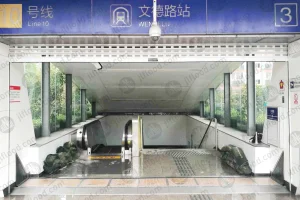
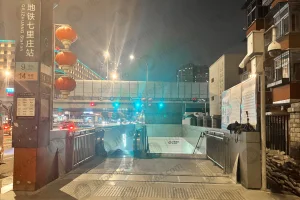
Subway systems represent the highest financial risk area during extreme urban flood events. A breach at a single station entrance can flood miles of underground tunnels, destroying signaling equipment, rolling stock, and traction power networks. Self-closing flood baffles are installed directly into metro station portal thresholds, pedestrian connection passages, and ground-level ventilation shafts. Standardized designs serving Guangzhou Metro, Beijing Metro, Suzhou Metro, and Dalian Metro feature modular multi-leaf configurations spanning wide openings over 20 meters while ensuring zero obstruction to daily commuter foot traffic.
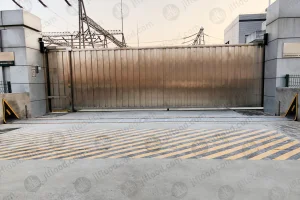
High-voltage power distribution substations, transformer yards, and telecom cable trenches require absolute continuous water tightness. Equipment rooms located in basements or low-lying ground zones can suffer catastrophic short-circuiting if surface runoff penetrates perimeter gates. Substation self-closing flood gates feature specialized non-conductive composite housings, high chemical resistance against transformer oils, and rapid hydrostatic response, ensuring electrical grid protection during heavy regional downpours.
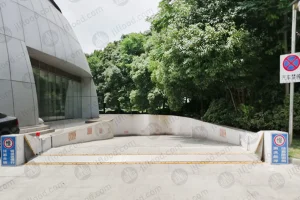
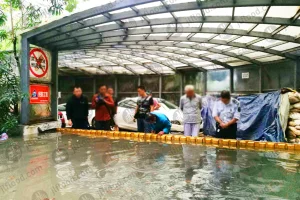
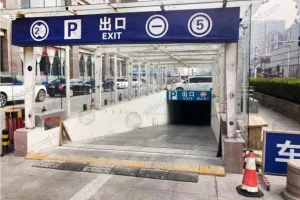
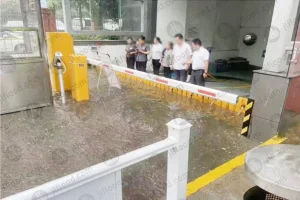
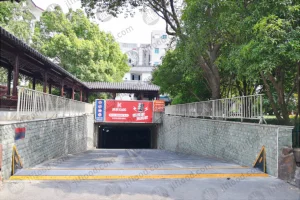
Parking ramp entrances represent the primary pathway for floodwaters to enter commercial shopping malls, residential towers, and corporate office parks. Traditional demountable flood barriers require property managers to manually store, transport, and bolt down heavy panels before a storm. Self-closing garage flood barriers are embedded directly flush with the driveway slope. When storm runoff flows down the ramp into the drainage trough, the barrier automatically rises to form a solid water barrier up to 2.0 meters high, protecting hundreds of parked vehicles and underlying building mechanical systems.
High-capacity public facilities such as international airports, high-speed rail stations, hospital emergency basements, and underground pedestrian street crossings require robust civil-defense-grade flood walls. Chinese self-closing flood gates designed for civil defense undergo rigorous hydrostatic pressure validation, seismic resistance checks, and anti-debris impact testing, ensuring multi-hazard protection for heavy public infrastructure assets.
When requesting factory direct quotes from Chinese flood baffle manufacturers, procurement officers and engineering consultants should understand the specific architectural variables that govern pricing structures. Unlike off-the-shelf standard hardware, industrial self-closing flood gates are engineered to match precise site opening widths ($W$), required retaining water heights ($H$), and dynamic load scenarios ($L$).
Leading Chinese exporters maintain dedicated full-scale hydraulic testing pools. Prior to export shipment, each custom manufactured barrier undergoes a strict FAT protocol: 100% water-retaining hydrostatic head testing, door deployment speed validation, seal compression inspection, and FEA deflection tolerance verification under maximum hydraulic design head. Official factory test video logs and third-party inspection certificates (SGS, TUV, BV) are provided with complete shipping documentation sets.
Factory engineered barriers adhere to rigorous global structural and hydrodynamic codes, including Eurocode 0 (EN 1990) structural safety parameters, BS EN 1433 drainage channel load standards, FM 2510 flood mitigation testing standards, and ISO 9001:2015 quality management systems.
To eliminate installation friction, manufacturers provide comprehensive AutoCAD detailing, 3D BIM models (Revit format), civil trench excavation templates, concrete rebar clearance notes, and drainage pipe placement schematics customized for local contractors.
Barrier systems are packed in heavy export-grade timber crates with rust-inhibitor wrapping. Global service kits include English installation manuals, remote video commissioning guidance, annual maintenance checklists, and pre-cut replacement EPDM seal sets.
While the core mechanical lifting mechanism remains strictly power-free to maintain 100% passive reliability during blackouts, modern flood gates are increasingly fitted with ultra-low-power LoRaWAN or NB-IoT sensor modules. These solar- or battery-powered telemetry sensors monitor basin water accumulation, panel deployment angle, and seal integrity in real-time, transmitting automated alerts to municipal SCADA control rooms and facility management mobile apps the instant a barrier begins to deploy.
R&D efforts focused on next-generation flood defence involve replacing traditional aluminum internal ribs with Carbon Fiber Reinforced Polymers (CFRP). CFRP reduces overall panel mass by up to 35% while increasing flexural modulus, allowing for even faster hydrodynamic activation speeds under flash wave impacts. Furthermore, self-healing polyurethane seals are being integrated to maintain hermetic performance even when abrasive gravel or urban flood debris enters the sealing track.