Facebook LinkedIn YouTube

China Self Closing Flood Barrier For Subway Manufacturers & Factories

Hydrodynamic Engineering White Paper & Procurement Guide for Next-Generation Urban Rail Transit Passive Flood Mitigation

0.1s
Passive Dynamic Trigger Time
100%
Unpowered Operational Reliability
60T
Structural Drive-Over Capacity
30+
Global Metro Networks Protected
Industry White Paper

1. Executive Summary: The Paradigm Shift in Underground Rail Transit Flood Resilience

Rapid global urbanization and escalating hyper-localized precipitation events driven by global climate shifts have placed underground mass transit systems—subways, metros, and light rail networks—at unprecedented operational risk. Traditional urban flood management relied primarily on active human intervention, such as manually positioned sandbags, deployable flood boards, or electrically driven sluice gates. However, catastrophic pluvial flash floods repeatedly highlight the systemic vulnerability of active systems: grid power failures, delayed staffing deployment during off-peak hours, mechanical motor failure, and sensor degradation.

To establish true asset resilience, civil transit authorities and engineering procurement managers are standardizing on passive hydrodynamic self-closing flood barriers. Engineered natively in advanced manufacturing hubs across China, these systems operate on fundamental fluid physics: utilizing the displacement and hydrostatic pressure of incoming floodwaters to automatically deploy structural barrier panels without human intervention, electrical power, or sensor logic. This technical white paper examines the engineering principles, manufacturing capabilities, localized compliance requirements, and procurement frameworks for specifying China Self Closing Flood Barriers for Subway Systems.

2. Hydrodynamic Buoyancy Mechanics: How Unpowered Self-Closing Barrier Systems Function

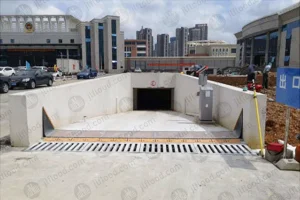
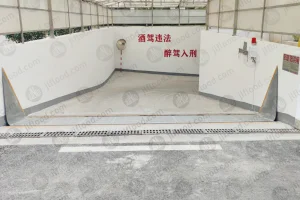
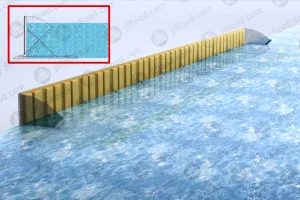
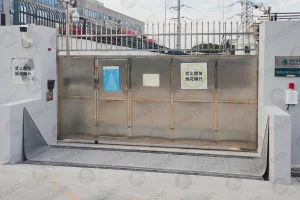
The core technology of a self-closing flood gate rests on hydrostatic pressure balance and buoyancy kinetics. Systematically embedded flush with finished pedestrian concourse levels or vehicle access ramps, the barrier remains completely unobtrusive during normal station operations.

Phase 1: Inflow Water Collection

As surface runoff breaches the subway threshold, floodwater drops through non-slip stainless steel grates into the subterranean embedded housing basin. Gravity forces water accumulation directly beneath the door leaf.

Phase 2: Hydrostatic Buoyancy Lift

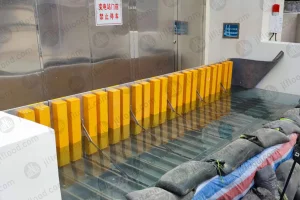
Constructed from ultra-lightweight high-strength extruded aluminum alloy matrices or composite cellular panels, the gate panel density is engineered to be substantially lower than water. Water rising in the basin creates positive net buoyancy, raising the gate smoothly.

Phase 3: Hydrostatic Locking & Sealing

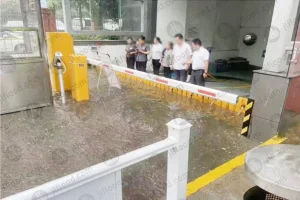
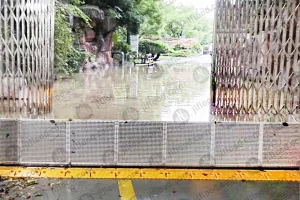
As water reaches peak crest, the vertical wall of floodwater exerts lateral hydrostatic force against the raised panel. This pushes high-grade EPDM gaskets against precision-machined frame jambs, creating a hermetic seal against liquid passage.

Because activation relies entirely on fluid dynamics (Archimedes' Principle), the gate's activation reliability is mathematically absolute—eliminating failure modes associated with electrical blackouts, motorized jam states, or delayed physical response during catastrophic extreme weather.

Comparative Analysis

Subway Entrance Flood Defence Technologies

Objective performance benchmark comparing passive hydrodynamic flood gates against legacy systems.

Evaluation Parameter Passive Hydrodynamic Barrier (China Standard) Motorized Electromechanical Gate Manual Demountable Flood Boards Traditional Sandbags
Power Requirement 0 kW (100% Passive Power-Free) 2.2 – 7.5 kW (Fails during blackouts) 0 kW (Manual Installation) 0 kW (Manual Installation)
Activation Speed < 30 Seconds (Water-triggered) 2 – 5 Minutes (Electrical drive) 30 – 60 Minutes (Human dependency) 2 – 4 Hours (Heavy logistics)
Labor Dependency Zero Personnel Required Operator / Remote Command required 3–4 Skilled Technicians 10+ Maintenance Workers
Structural Load Bearing 40 – 60 Tons (Heavy Vehicle Capable) 10 – 20 Tons (Surface Obstruction) 0 Tons (Pedestrian area only) 0 Tons
Leakage Rate (L/h/m) < 0.05 L/h/m (Near Zero Leakage) 0.2 – 0.5 L/h/m 0.5 – 2.0 L/h/m High Seepage / Structural Loss
Service Life Cycle 25+ Years (Stainless/Alloy Frame) 8 – 12 Years (Motor failure risk) 10 Years (Seal wear off site) Single Use Disposal
Application Engineering

3. Specialized Application Scenarios in Modern Rail Transit Architecture

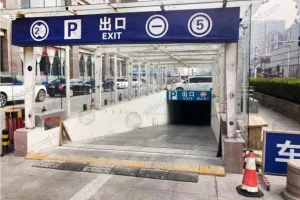
Modern subway systems represent complex three-dimensional subterranean infrastructure networks. China's leading flood barrier manufacturers engineer tailored embedment profiles customized for distinct ingress vectors:

Station Concourse Entrances

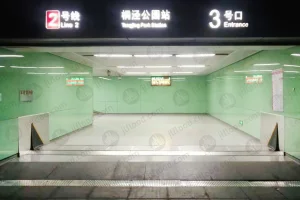
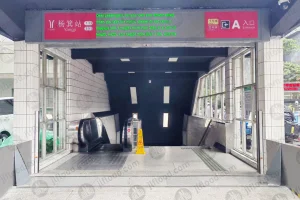
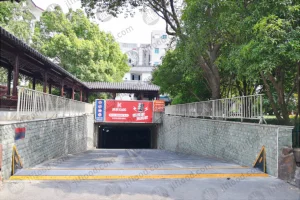
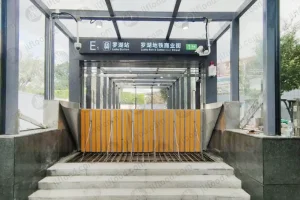
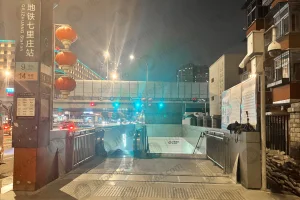
Flush-mounted surface barriers positioned at the street-level staircase portal. Designed with architectural stainless steel top plates that blend seamlessly with granite or tactile paving, supporting heavy foot traffic without tripping hazards.

Underground Connection Channels

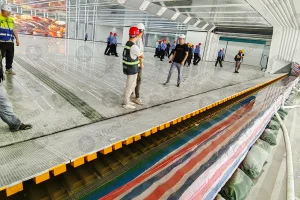
Interconnecting pedestrian tunnels linking subways directly to adjacent shopping malls, commercial complexes, or underground parking garages. Wide-span modular self-closing barriers seal massive multi-meter openings rapidly.

Substation & Equipment Rooms

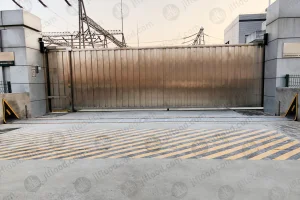
High-voltage traction substations, signal control rooms, and ventilation shafts require zero-tolerance water ingress protection. Specialized flip-up and hydrodynamic gates prevent electrical shorts and regional grid shutdowns.

Supply Chain Supremacy

4. Key Advantages of China Manufacturers & OEM Factories

China has emerged as the global powerhouse for municipal flood control hardware manufacturing. Precision engineering clusters in regions like Jiangsu (Nanjing) leverage deep metallurgical supply chains, advanced CNC robotics, and rigorous hydraulic testing infrastructure to offer unparalleled benefits to international EPC contractors and municipal authorities:

  • Structural Alloy Metallurgy: Production utilizes high-tensile 6063-T6 structural aluminum extrusions and marine-grade 304 or 316 stainless steel frame assemblies. This ensures high strength-to-weight ratios, corrosion resistance in coastal environments, and longevity under heavy municipal vehicle loading.
  • Full-Scale Wet Hydraulic Testing Pools: Leading Chinese manufacturers maintain in-house full-scale water simulation testing pools. Prior to dispatch, gate configurations undergo rigorous hydrostatic seal testing to quantify deflection limits and verify zero-leakage parameters under real water head conditions.
  • Bespoke Modular OEM/ODM Flexibility: No two metro portals have identical civil dimensions. Chinese factories excel in modular engineering customization—delivering variable retaining heights (from 500mm to 2000mm) and unlimited clear width spans using interlocking multi-leaf array architecture.
  • Cost-Performance & Project Delivery Scale: Vertically integrated manufacturing allows Chinese factories to offer highly competitive pricing—typically 30% to 50% lower than European or North American equivalents—while meeting tight delivery schedules required for major subway construction contracts.
Compliance Framework

5. Global Quality Standards, Certifications & Localized Compliance

Procuring infrastructure-grade protection hardware requires compliance with stringent international engineering standards. Qualified Chinese manufacturers supply comprehensive technical dossiers ensuring smooth local authority sign-offs across North America, Europe, the Middle East, and Asia-Pacific regions.

Key Engineering Compliance & Test Protocols:

  • JT/T 1448-2022 & GB/T Specifications: Compliance with Chinese national standards for intelligent urban flood barrier systems, establishing baseline safety factors for load distribution and seal durability.
  • FM 2510 / ANSI Approval Benchmarks: Design criteria matching international standards for flood abatement equipment, focusing on structural impact resistance against floating debris and static hydrostatic pressure resistance.
  • BS EN 1990 & Eurocode Alignment: Structural integrity calculations validating that embedded foundation frames sustain cyclic axle loads (up to 600 kN) from emergency service vehicles and maintenance trucks.
  • EPDM Seal Aging Resistance (ISO 4892-2): Sealing materials undergo accelerated UV, ozone, and thermal degradation testing to guarantee dynamic elastic recovery over a 20+ year operational lifespan.

Localized Field Support and Technical Package Deliverables:

Top-tier Chinese suppliers like Nanjing Junli Technology Co., Ltd. bridge international procurement gaps by providing complete localized engineering documentation with every tender:

  1. BIM & AutoCAD Civil Drawings: Detailed embedment channel profiles, rebar clearance schematics, and concrete pouring interface specifications formatted for international structural consultants.
  2. Factory Acceptance Testing (FAT) Video Logs: Order-specific hydrostatic pool testing footage with calibrated pressure gauge readouts proving compliance before ocean freight dispatch.
  3. Spare Parts & Maintenance Protocols: Pre-packaged replacement seal kits, structural anchor bolts, and step-by-step English operational manuals for local station maintenance crews.
Engineering Knowledge Base

Frequently Asked Questions (FAQ)

Technical and procurement insights for metro design consultants and infrastructure buyers.

How does a hydrodynamic self-closing flood barrier operate during complete grid power loss?
The system functions 100% passively without electric motors, actuators, batteries, or electronic sensors. Incoming floodwaters flow naturally into the embedded foundation basin via gravity. As water levels rise inside the chamber, buoyancy physics force the lightweight door panel upward. As water crests, lateral hydrostatic pressure presses the panel tightly against vertical frame seals, sealing the opening entirely by water power alone.
Can heavy vehicles or maintenance machinery safely drive over the embedded barrier?
Yes. When recessed in its resting position, the heavy-duty top cover plate sits flush with the road or concourse floor. Standard industrial profiles engineered by Chinese manufacturers support axle loads ranging from 20 to 60 metric tons (equivalent to heavy fire trucks or service vehicles), fully conforming to highway and municipal load specifications.
What prevents silt, leaves, and street debris from jamming the subterranean chamber?
The bottom frame incorporates stainless steel surface grates designed to screen out macro debris. Additionally, the interior chamber features angled sediment drop zones and cleanout drainage ports. Routine municipal maintenance involves simply lifting the modular top grate twice a year to clear accumulated fine silt using standard vacuum equipment.
What maximum clear widths and retaining heights can be customized?
Single-leaf barrier panels typically span clear widths up to 6.0 meters and retaining heights up to 2.0 meters. For wide metro station plazas, emergency portals, or wide connection channels exceeding 20 meters, manufacturers utilize modular multi-leaf intermediate mullion arrays that lock together sequentially as water rises.
How are Chinese flood barriers packaged and shipped to prevent international transport damage?
Industrial units are secured within ISPM 15 certified fumigated wooden crates or steel frame skids. Stainless steel frame edges and aluminum panel faces are coated with protective anti-scratch films and vapor-phase corrosion inhibitor (VCI) shrink wrapping to protect against marine humidity during long-distance shipping.
What is the typical operational service life of the structural frame and EPDM seals?
The primary structural components (extruded aluminum alloy and 304/316 stainless steel) carry a design service life exceeding 25 years with negligible corrosion. The perimeter EPDM compression seals are engineered for an operational life of 10 to 15 years under outdoor conditions and can be easily replaced on-site without removing the embedded structural frame.
Request a Catalog