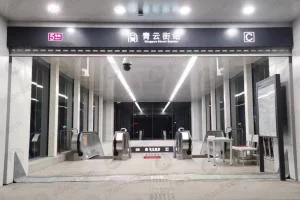
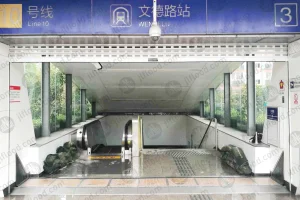
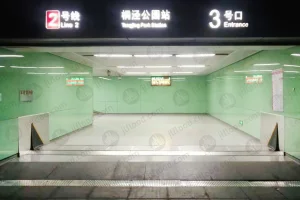
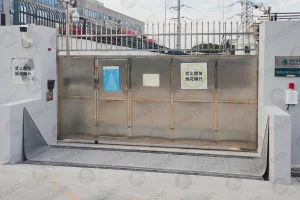
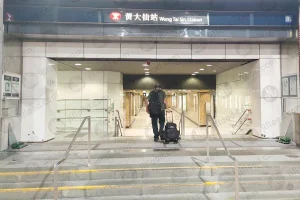
Explore our engineered line of automatic flood gates tailored for transit hubs, metro entry portals, and infrastructure portals.
Rapid urbanization combined with high-frequency microburst cloudbursts has placed subterranean infrastructure—specifically urban rail transit, underground railway networks, and subterranean concourses—at severe hydraulic vulnerability. Traditional flood mitigation relies on human intervention, motor-driven sluice gates, or manual demountable barrier beams. However, catastrophic severe weather events invariably trigger grid blackouts, telecommunication outages, and traffic gridlocks, rendering human-operated or electrically dependent flood protection systems compromised or unusable.
China's manufacturing sector for hydro-mechanical flood control systems has spearheaded a paradigm shift toward zero-power passive hydrodynamic flood barriers. Specifically, surface-mounted automatic flood gates for metro station entrances engineered by top-tier Chinese manufacturers utilize ambient water pressure and buoyancy mechanics to deliver 100% autonomous deployment without electrical power, human monitoring, or hydraulic sensors.
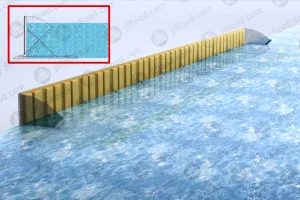
Core Technical Insight: Modern surface-type metro flood gates eliminate deep foundation excavation by integrating ultra-slim profile retaining frames directly onto finished floor slabs. Through hydrodynamic pressure differentials ($P = \rho g h$), surface floodwaters filling the internal retention basin lift the structural door leaf automatically, creating an impenetrable dynamic rubber seal against the side frames.
How Chinese precision fabrication facilities lead the world in modular hydrodynamic flood gate engineering, quality assurance, and global export scalability.
Chinese manufacturers operate in dense metallurgical clusters, gaining immediate access to high-strength 6063-T6 architectural grade aluminum extrusions, marine-grade SUS304/SUS316 stainless steels, and synthetic EPDM elastomeric sealing components. This localization lowers raw component lead times by up to 60% compared to Western manufacturers.
Leading facilities utilize multi-axis CNC laser machining, robotic GMAW/GTAW aluminum welding cells, and automated multi-pass surface anodization lines. Structural frames undergo high-precision machining with tolerances within ±0.5 mm over a 6-meter span, guaranteeing perfect fluid sealing along side wall guides.
Unlike standard sheet-metal shops, specialized Chinese flood gate factories feature custom hydrostatic testing chambers capable of simulating flash flood surge flows, debris dynamic impacts, and head pressures up to 2.0 meters. Every batch leaves the factory with verified water containment documentation.
Through high industrial scale and localized vertical integration, Chinese factories deliver premium hydrodynamic passive flood barriers at a fraction of European or North American production costs, allowing transit authorities to protect 100% of station portals within tight municipal capital budgets.
Historically, metro transit systems relied on manual aluminum flood boards (stop-logs) stacked vertically in side tracks when typhoon warnings were issued. Modern urban hydrology, however, has proven that severe localized cloudbursts occur with minimal warning times—often less than 15 minutes. Manual deployment suffers from human failure risks, missing components, staff safety hazards, and physical inability to deploy across dozens of station portals simultaneously.
The global mass transit sector is rapidly mandating fully automated passive flood defense architecture. Key technological trends driving China's surface-type flood barrier manufacturing include:
| Technology Vector | Legacy System (Stop-Logs / Electric Gates) | Modern Hydrodynamic Surface Gate (China Standard) |
|---|---|---|
| Deployment Trigger | Manual labor or electric sensory motors. | 100% Passive Water Buoyancy ($F_b = \rho_{water} \cdot V \cdot g$). |
| Grid Dependence | Requires AC main power or UPS batteries. | Zero electrical dependence; operates during total blackout. |
| Civils Profile | Deep structural foundation trench (300mm-600mm deep). | Surface installation directly onto finished kerb floor slab (low height). |
| Deploy Response Speed | 30 to 90 minutes of manual labor. | Automatic deployment within 15 to 30 seconds of water intake. |
| Pedestrian / Vehicle Mobility | Permanent trip hazards or deep floor recesses. | Flush surface profile; low slope ramp options compliant with ADA/Accessibility. |
| Telemetry Integration | Isolated mechanical setup. | Optional IoT wireless sensors reporting deployment state to central SCADA. |
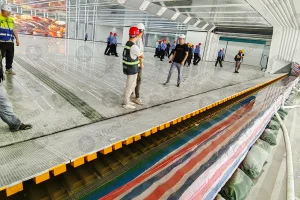
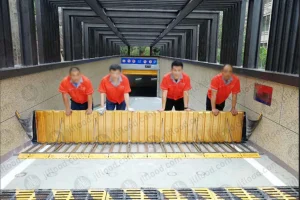
Surface-type automatic flood gates utilize a low-profile ramp casing secured directly to the entrance threshold. When floodwater reaches the trigger depth (typically 30mm–50mm above finished floor level), fluid enters the internal buoyancy chamber through specialized intake grates. As water fills the basin beneath the door panel, buoyancy forces pivot the structural leaf upward around heavy-duty stainless steel hinge assemblies. As floodwaters rise further, hydrostatic force presses the door against elastomeric sealing gaskets, creating a tight water seal.
How Chinese engineers solve complex civil structural interfaces, hydrodynamic wave dynamics, and urban pedestrian traffic requirements.
Retrofitting existing, operational metro stations with deep foundation trenches often risks severing buried fiber optic cables, structural rebar, or waterproofing membranes. Surface-type gates bolt directly onto concrete slabs via expansion anchors, drastically lowering installation downtime and civil works expenditure.
Floodwaters carry heavy sediment, leaves, and trash. Chinese surface flood gates incorporate angled stainless steel filtration grates and internal sediment traps, preventing debris from choking buoyancy chambers and ensuring full panel deployment even in muddy stormwater surges.
Leakage containment relies on vulcanized multi-lip EPDM dynamic gaskets (Shore A hardness 60–70). As water depth increases, head pressure compresses the seal against precision stainless steel side frames, keeping leakage well under international standards (<0.2 L/min per meter of wetted perimeter).
Deploying tailored hydrodynamic surface flood gates across diverse metropolitan access points.
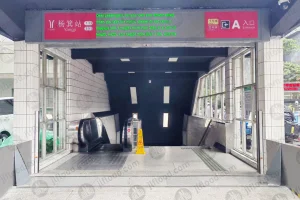
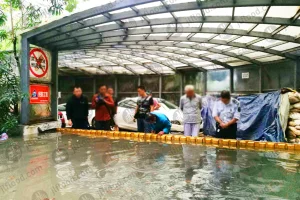
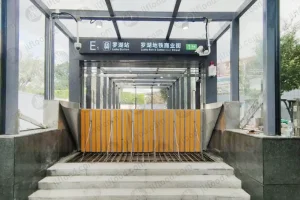
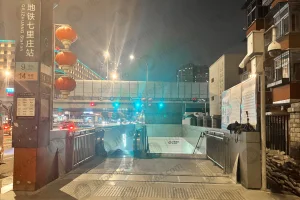
Subway entrances located at low-lying street grade are vulnerable to flash surface runoff during rainstorms. Surface flood gates form an automated barrier across pedestrian entryways. When closed, their ultra-flat profile functions as an accessible threshold plate.
Subterranean pedestrian corridors connecting metro stations directly to retail basements or railway stations represent major water breach pathways. Wide-span modular surface flood gates protect these multi-meter openings against cross-flooding.
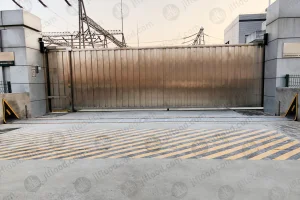
Metropolitan power utility substations serving rail transit networks house high-voltage transformers and control electronics. Surface gates installed at substation access gates prevent catastrophic short circuits caused by urban waterlogging.
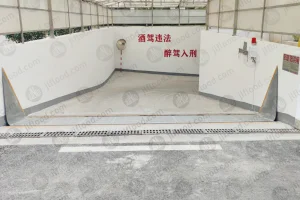
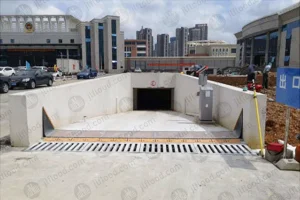
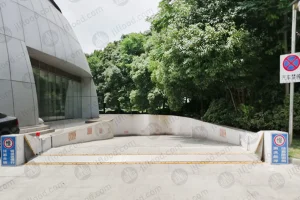
Heavy-duty vehicle-rated surface flood barriers (capable of handling 30-tonne axle loads) are positioned at underground parking ramps to block surface water flows into subterranean parking levels and rolling stock maintenance depots.
When global EPC contractors, engineering consultants, and transit authorities source surface-type flood barriers from Chinese manufacturers, technical evaluations should prioritize the following verification parameters:
Request full structural calculation packages showing von Mises stress distribution under maximum hydraulic head ($H_{max} = 0.60\text{ m to } 2.00\text{ m}$) plus dynamic wave impact allowance. Panel deflection must not exceed $L/500$ of clear span span length to maintain effective elastomeric seal contact.
Ensure door panel structural members utilize 6063-T6 or 6005A-T6 anodized aluminum extrusion with minimum film thickness of 15 µm. High-salinity coastal environments (e.g., coastal subway networks) require marine-grade SUS316 stainless steel housings, hinge pivots, and ground anchor hardware.
Leading Chinese suppliers provide full-scale hydrostatic tank testing of production units prior to export packaging. Key acceptance metrics include: zero mechanical jamming during unpowered buoyancy rising tests, verified deployment response time under low fluid inflows, and hydrostatic pressure testing for 24 continuous hours.
Answers to key engineering questions regarding surface-mounted automatic flood barriers.
Surface-type automatic flood gates rely entirely on passive hydrodynamic physics—buoyancy and hydrostatic head pressure. As surface floodwater enters the barrier intake channel, the buoyant panel rises automatically without needing electricity, battery backups, electronic sensors, or human intervention.
Single clear spans can be engineered up to 6.0 meters wide. For wider entrances, such as multi-lane subway plazas or large station entrances, modular interlocking panel units with removable or automatic drop-in center support mullions can accommodate spans exceeding 20 meters.
No. In its recessed horizontal position, the high-strength extruded aluminum cover panel features heavy internal structural ribbing engineered to support pedestrian crowds as well as heavy vehicle crossings (rated for up to 30-tonne gross vehicle weight, depending on model specification).
The surface casing is designed with removable top grate panels and accessible cleanout channels. Routine maintenance involves lifting the top grates bi-annually or after major storm events to flush out accumulated silt and leaves with a standard pressure washer.
Yes. Surface-type flood barrier units are specifically optimized for retrofit projects. They mount directly on top of existing level floor slabs using high-tensile chemical anchors and structural epoxy bedding, eliminating major excavation down into structural floor slabs.
Browse our full factory catalog for metro stations, substations, and self-closing flood gates.