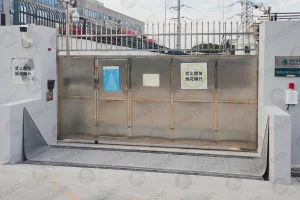
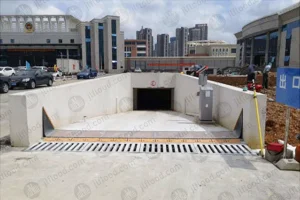
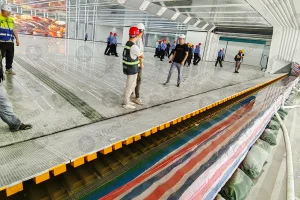
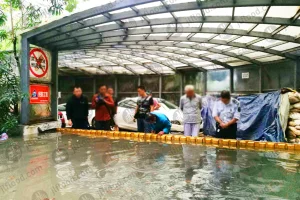
Explore our factory-direct wholesale flood mitigation systems engineered for perimeter defense, subway ingress, power substations, and commercial underground parking facilities.
Urban waterlogging and catastrophic flash flooding caused by climate volatility have exposed critical vulnerabilities in conventional flood mitigation strategies. Traditional sandbags, manual stop-logs, and electrically powered flood gates present severe failure vectors: human deployment delays, labor shortages during emergency evacuations, and grid power failures during severe rainstorms. Modern infrastructure demands unassisted, hydrodynamic passive flood barrier technology fabricated from structural 6063-T6 marine-grade extruded aluminum alloy.
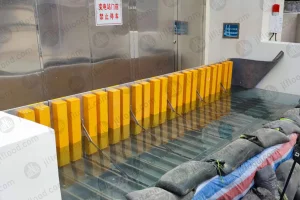
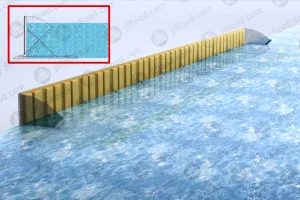
Information Gain Insight for Specifiers & Procurement Directors: Unlike motorized flood barriers requiring auxiliary generator backup or manual demountable panels requiring hours of pre-storm labor, hydrodynamic self-closing flood gates operate purely on hydrostatic equilibrium and Archimedes' principle. When flash surface water flows into the recessed bottom chamber, the buoyant aluminum gate leaf automatically rises and locks into position against heavy-duty EPDM compression seals.
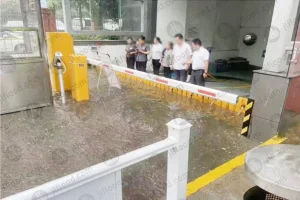
Modern metropolises have expanded exponentially downward, utilizing sub-surface structures for rapid mass transit systems (MRT/subways), multi-level subterranean commercial parking garages, and critical high-voltage substations. However, urban concrete landscapes reduce natural soil water absorption. When extreme precipitation events strike, water rapidly accumulates on impervious surfaces, turning street-level access points into direct conduits for underground asset inundation.
Global municipal codes, municipal resilience frameworks, and commercial asset insurance standards (such as FM Global guidelines, US FEMA technical bulletins, and EU EN 13564 flood standards) are shifting from recommended guidelines to mandatory engineering requirements. Property developers and municipal authorities are required to install permanent, field-verified flood defense systems capable of maintaining structural integrity under maximum probable flood elevations (MPFE).
A single subterranean flooding incident in a data center, power distribution hub, or commercial shopping mall can result in catastrophic financial losses exceeding tens of millions of dollars in physical asset damage, business interruption liability, and structural repair costs. Wholesale aluminum flood gates deliver an optimized return on investment (ROI) by mitigating operational downtime risks without adding ongoing electrical power overheads.
Why extruded 6063-T6 aluminum alloy represents the gold standard in structural flood barrier fabrication over carbon steel and stainless alternatives.
Aluminum alloys subjected to T6 artificial aging heat-treatment achieve exceptional yield strength (≥ 170 MPa) and ultimate tensile strength (≥ 205 MPa), matching structural performance criteria while weighing roughly one-third of carbon steel. This high strength-to-weight ratio is crucial for passive hydrodynamic gates, as lower panel mass ensures instantaneous buoyancy deployment even under low-velocity surface runoff.
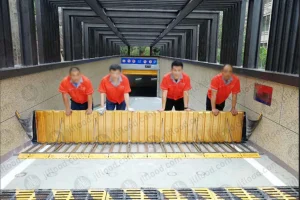
The mechanism relies on fluid statics and buoyancy differential. An embedded foundation trench houses the gate leaf flush with the ground level during dry conditions, allowing heavy vehicle traffic (rated up to AASHTO HS-20 / EN 124 D400) to cross smoothly.
| Performance Criterion | Hydrodynamic Auto Barrier (Junli Aluminum) | Manual Demountable Stop-Logs | Motorized Electric Flip-Up Gate |
|---|---|---|---|
| Power Reliance | 0 kW (Pure Hydrostatic Buoyancy) | 0 kW (Manual Assembly) | 2.2 kW – 7.5 kW (Grid / Generator dependent) |
| Response Time | Instantaneous (< 0.5 sec upon water ingress) | 1 to 4 Hours (Requires human intervention) | 30 sec – 3 mins (Requires sensor signal) |
| Human Reliability Risk | Zero Risk (Fully Automated Unmanned) | High Risk (Staff must be present pre-storm) | Moderate Risk (Sensor failure / mechanical jam) |
| Vehicle Load Capacity | AASHTO HS-20 Heavy Truck (40+ Tons) | N/A (Blocks passage permanently when set) | Medium Duty (20 – 30 Tons) |
| Maintenance Overhead | Ultra-Low (Quarterly debris flushing) | Low (Storage management & seal checks) | High (Motor, gearbox, wiring, sensors, UPS) |
| Lifespan & Sustainability | 50+ Years (100% Recyclable 6063 Aluminum) | 15 - 25 Years (Seal deterioration) | 10 - 15 Years (Electrical components fade) |
Customized engineering solutions tailored to regional topography, severe typhoon zones, and strict civil defense specifications worldwide.
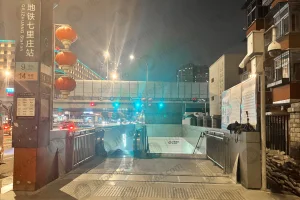
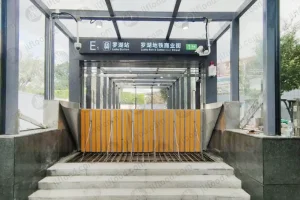
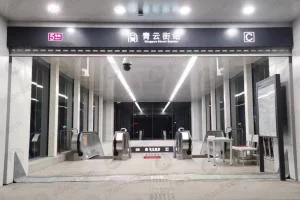
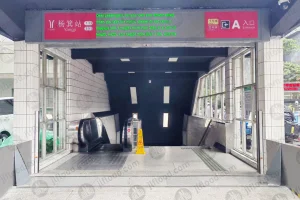
Engineered for high-foot-traffic station entrances, ventilation shafts, and connection channels linking metro stations to commercial hubs. Installed flush with pavement to ensure unimpeded pedestrian access until activated by floodwaters.
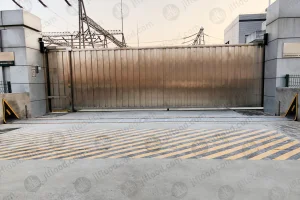
Critical power distribution facilities and transformer yards require zero water entry to prevent short circuits and regional power outages. Aluminum gates provide perimeter security and liquid-tight containment around perimeter gates and cable trenches.
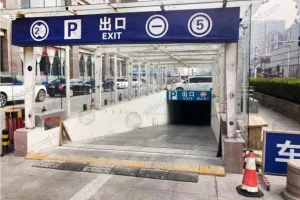
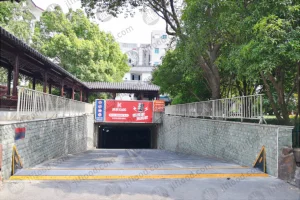
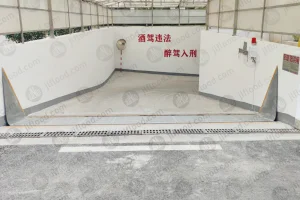
Residential parking basements, hotel ramps, and commercial shopping mall driveways require high structural load ratings to accommodate cars, delivery trucks, and emergency vehicles. Embedded aluminum frames withstand heavy wheel impact loads.
Serves a dual purpose: preventing external storm surge ingress into hazardous processing zones, while acting as secondary containment walls during internal chemical or firefighting water spill incidents.
Compliance & Global Certification Readiness: Our aluminum flood control manufacturing processes strictly align with ISO 9001 quality management, ISO 14001 environmental safety protocols, and EN 1090 structural aluminum execution standards. FEA mechanical stress analysis reports and full-scale hydrodynamic pool test records are provided for consulting engineering verification.
Under Search Quality Rater Guidelines (E-E-A-T), claims must be backed by verifiable field engineering data. Here is how Junli technology validates flood protection reliability before shipment.
Utilizing high-precision multi-axis CNC machining centers and robotic TIG/MIG welding units, structural aluminum profiles are assembled with minimal thermal distortion. Chamfered seal grooves maintain ultra-tight tolerances (± 0.5mm), guaranteeing precise alignment with EPDM elastomeric gaskets.
Seals are fabricated from heavy-duty Ethylene Propylene Diene Monomer (EPDM) formulated for outdoor weatherability, ozone resistance, and thermal endurance (-40°C to +120°C). Dual-lip design provides both primary pressure sealing and secondary wiper protection against dirt and silt.
Every custom barrier configuration undergoes full-scale hydraulic head testing in our dedicated water basin facility. We simulate actual flood depths (up to 2.0m head of water), measuring leakage rates (achieving zero allowable leakage under design pressures) and checking post-displacement recovery.
Key parameters technical buyers and procurement officers must provide to receive accurate factory-direct quotes and structural design drawings.
When evaluating structural flood control, procurement teams must look beyond initial material procurement costs to Total Cost of Ownership across a 30-to-50 year building lifecycle:
To fast-track custom dimensional quotes and CAD/BIM drawing creation, include the following site data in your wholesale inquiry:
The convergence of passive mechanical reliability with real-time digital monitoring for smart urban infrastructure management.
While mechanical buoyancy remains the primary deployment force requiring no power, integrated low-power NB-IoT/LoRaWAN sensors can monitor barrier status in real-time. When water triggers the panel uplift, wireless alerts are instantly transmitted to municipal smart city management dashboards and facility managers.
Future intelligent perimeter flood gates incorporate solar-charged telemetry modules that auto-close auxiliary perimeter security gates, trigger warning lights/sirens, and safely prevent vehicles from entering flooded underground ramps before water levels become critical.
Aligned with global net-zero environmental goals, next-generation flood barriers utilize green aluminum extruded using hydroelectric power. 100% recyclability at end-of-life significantly reduces the embodied carbon footprint of civil infrastructure projects.
Detailed answers to critical engineering, installation, and procurement questions from consulting engineers and property developers.
The system operates entirely on fluid dynamics and Archimedes' principle of buoyancy. The gate panel is housed flush within a recessed foundation ground casing. When surface water flows into the bottom chamber, the buoyant density of the hollow 6063-T6 aluminum panel creates positive hydrodynamic lift. As the water level rises, the panel rises automatically without needing electricity, sensors, electric motors, or human operator intervention. This ensures 100% operational reliability during severe storms when electrical grids frequently fail.
Standard single-leaf panels accommodate clear opening widths up to 6.0 meters and retaining heights ranging from 0.5 meters to 2.0 meters. For wide driveways, metro plaza entrances, or perimeter boundaries exceeding 6.0 meters, modular multi-leaf arrays with removable or subterranean pop-up intermediate mullions can cover unlimited total span widths (e.g., 20m to 50m+).
Yes. Our embedded foundation frame and top cover plates are structurally calculated using Finite Element Analysis (FEA) to withstand high wheel load concentrations. Depending on specification, systems meet AASHTO HS-20, HS-25, or European EN 124 Class D400 loading criteria (capable of carrying up to 40-ton heavy commercial trucks and fire engines without structural deformation).
The system features a multi-stage debris defense mechanism. The top plate is equipped with continuous stainless steel mesh screens and rubber wiper gaskets that seal the pit opening while flat. Additionally, bottom foundation troughs are designed with sloped drainage sumps and clean-out ports, allowing routine maintenance crews to easily flush out accumulated fine silt using standard high-pressure hose equipment during quarterly inspections.
Yes. Every manufactured batch undergoes rigorous quality assurance. For custom orders, full-scale assembly pool tests are conducted in our factory test basin to verify lifting kinetics, structural deflection under maximum design head, and EPDM seal seal-tightness (verifying zero allowable leakage). Inspection documentation, video recordings, and mill material test certificates (MTC) are issued prior to export packaging.
For embedded models, civil contractors must construct a reinforced concrete trench according to our structural embedment drawings, incorporating a bottom drainage pipe connected to the site’s stormwater management system or sump pump pit. For retrofit applications on existing concrete ramps, surface-mounted flip-up barriers require only a level concrete base sill and anchor bolt installation.
The structural 6063-T6 aluminum panel and stainless steel mounting frames have a designed lifespan of over 50 years due to their natural corrosion resistance. The heavy-duty EPDM seals have an operational lifespan of 10 to 15 years depending on local UV exposure and climate conditions. Replacement seal kits are modular and can be swapped out on-site in under two hours without replacing structural panels.
Yes, as a specialized manufacturer, we provide complete OEM/ODM engineering services. We supply tailored CAD dimensions, 3D BIM models for Revit integration, custom anodized or powder-coated color finishes, and localized installation manuals for EPC contractors, government tenders, and international distributors.
Complete your project engineering submittals with our extended range of substation gates, metro station barriers, and surface-mount automatic flood gates.