Explore our field-tested, unpowered self-rising flood gates designed for metro stations, substations, and underground subterranean structures.
Understanding the Mechanics, Reliability Metrics, and Structural Dynamics of Power-Free Automatic Flood Barrier Systems.
A comparative analysis of kinetic water-driven deployment versus conventional electronic and manual barrier systems.
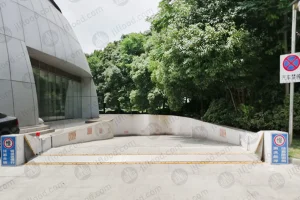
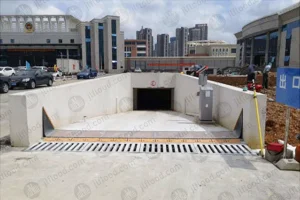
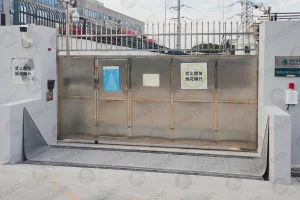
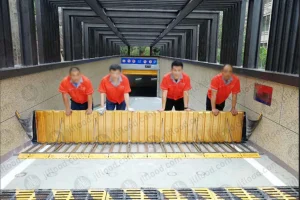
The system is installed inside a recessed concrete foundation embedded flush with the driveway or entrance surface. Under dry conditions, high-tonnage vehicular traffic drives directly over the structural top panel without disturbing normal facility access.
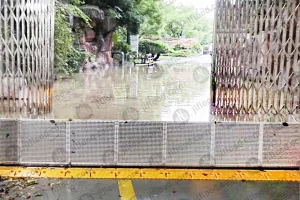
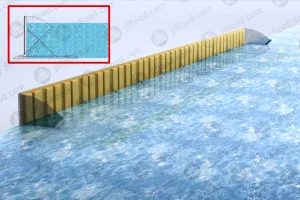
As surface runoff reaches the threshold, water flows into the internal intake channels of the embedment frame. The water collects rapidly within the sealed bottom chamber, immediately initiating structural displacement forces.
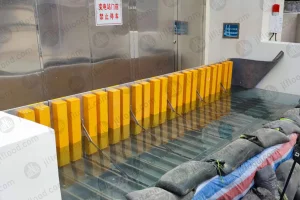
The high-density hollow panel (constructed from marine-grade aluminum alloy 6063-T6 or SUS304 stainless steel) experiences upward hydrostatic pressure. The panel rotates around a heavy-duty stainless steel hinge axis, rising proportionally to the water depth.
| Performance Dimension | Junli Hydrodynamic Automatic Barrier | Motorized Sensor Gate | Manual Modular Stop-Logs |
|---|---|---|---|
| Power Dependence | 0% (100% Unpowered Fluid Kinetics) | 100% Grid Power / Back-up Gen | 0% Unpowered |
| Human Operation | Zero Human Intervention Required | Remote Triggering Required | High (Labor-Intensive Assembly) |
| Blackout Reliability | Absolute Immunity to Power Loss | High Vulnerability Point | Operational Delay Risk |
| Activation Latency | Immediate (< 1 Second upon water entry) | 30 - 120 Seconds System Boot | 30 Mins to 3 Hours Logistics |
| Traffic Load Capacity | Heavy Duty (AASHTO HS-20 / 60-Ton Trucks) | Varies by surface track | Zero (Blocks road when set up) |
| Maintenance Overhead | Minimal (Semi-annual Debris Cleanout) | High (Motor, PLC, Battery, Sensors) | Storage Space & Rubber Inspections |
Leveraging East China's World-Class Industrial Cluster for Unmatched Quality, Dimensional Customization, and Cost Efficiency.
Direct sourcing of architectural-grade high-tensile aluminum extrusions (6063-T6) and 316L anti-corrosive stainless steel ensures superior dynamic modulus and resistance to saline/saltwater coastal surges.
Sub-millimeter CNC laser cutting and automated robotic continuous seam welding guarantee perfect hermetic chamber sealing and stress distribution across wide clear-span openings.
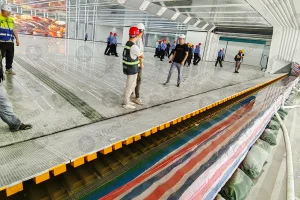
Every customized barrier is tested in our full-scale hydraulic pool, simulating hydrostatic retention head, dynamic wave impacting, and debris deflection prior to global containerized shipping.
By owning the complete tooling, extrusion, sealing formulation (EPDM), and fabrication workflow, Junli delivers OEM/ODM production at 40-60% lower total cost than European legacy brands.
Empowering International Engineering Consultants, Asset Managers, and Procurement Officers with Audited Compliance Documentation.
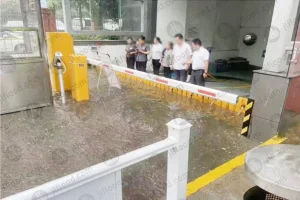
Unplanned flooding inside underground utility basements or data center sub-structures results in millions of dollars in equipment destruction and operational shutdown. Power-free automatic gates guarantee continuity regardless of external grid collapse.
Zero electrical consumption directly supports global corporate decarbonization initiatives and ESG framework ratings. The system's passive nature lowers operational carbon footprints across the building's 30-year lifecycle.
Junli supplies complete English BIM/AutoCAD civil structural interface drawings, structural stress calculation sheets, concrete embedment templates, and customized anchoring hardware for seamless integration.
Proven engineering installations across critical municipal transit, energy networks, and high-density commercial real estate.
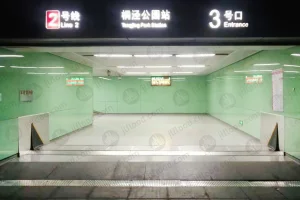
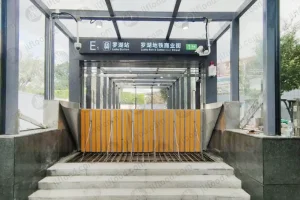
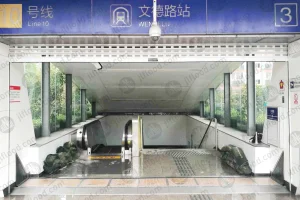
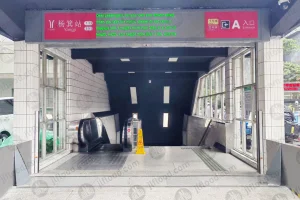
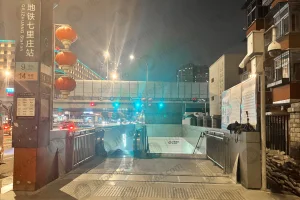
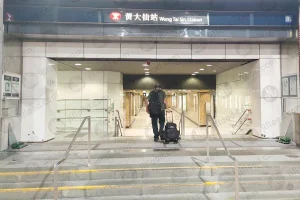
Protecting underground passenger concourses, pedestrian portals, and emergency connection channels against sudden flash floods. Deployed across major rail transit systems including Guangzhou Metro, Beijing Metro, Suzhou Metro, and Hong Kong transit corridors.
Securing power transformer rooms, cable trenches, and perimeter gates for municipal power grids. Eliminates water ingress risks that cause short-circuit explosion hazards and district-wide blackout cascades.
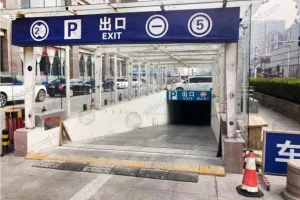
Installed at parking ramp portals for commercial shopping complexes (e.g., Wanda Plazas), luxury residential developments, and acute care hospitals. Prevents vehicle submersion and basement mechanical room destruction.
Shielding underground street crossings, landside airport baggage channels, and underground military/civil defense storage facilities against extreme 100-year storm event water head heights.
Rigorous Quality Management and Regulatory Compliance Tailored for International Project Tenders.
Utilizes multi-stage EPDM (Ethylene Propylene Diene Monomer) composite seal profiles with high elasticity retention, UV resistance, and chemical immunity to oil, diesel, and brackish floodborne contaminants.
Engineered to withstand static water heads up to 2.0 meters (20 kPa hydrostatic pressure) and concentrated vehicular surface axle loads compliant with AASHTO HS-20, EU Eurocode 1 (EN 1991), and Chinese GB 50009 standards.
Delivered with pre-assembled modular embedment frames, modular installation jigs, clear step-by-step English manuals, factory inspection reports, and a 10-year comprehensive warranty on structural elements.
The Evolution of Flood Control: Combining Mechanical Autonomy with Digital Telemetry Integration.
Pure mechanical passive reliability ensures the gate rises during blackouts, while IoT sensors broadcast deployment data back to central command platforms.
Seamlessly integrates into urban "Sponge City" retention infrastructure, assisting municipal drainage systems in isolating vulnerable subterranean portals during severe river overflow.
Designed for easy height retrofitting, allowing existing building owners to increase flood retention thresholds as sea levels and micro-burst storm intensities increase over time.
Expert Answers to Structural, Civil, Operational, and Logistics Questions regarding Unpowered Automatic Flood Doors.
The barrier relies on fluid dynamic mechanics and Archimedes' principle of buoyancy. The barrier panel is housed flush inside a recessed foundation chamber embedded at the entrance threshold. As surface floodwater enters the chamber intake, buoyancy forces cause the lightweight, high-rigidity panel to float upward, pivoting around a stainless steel hinge axis. The hydrostatic pressure of the external water pushes the panel firmly against frame seals, creating a watertight wall without requiring pumps, electricity, or human activation.
Yes. Under dry conditions, the top plate of the flood barrier rests flush with the surrounding road or ramp surface. Junli flood barriers are engineered using high-strength extruded aluminum alloy (6063-T6) or reinforced structural steel, capable of supporting vehicle axle loads up to 60 tons (compliant with AASHTO HS-20 and heavy industrial logistics transport standards).
We supply standard single-module retaining heights ranging from 0.5 meters to 2.0 meters. Clear opening widths can be custom fabricated for single spans up to 6.0 meters, or connected in continuous multi-panel modular arrays exceeding 30+ meters for wide multi-lane underground garage ramps and metro concourses.
The intake channels are protected by heavy-duty stainless steel debris filter grilles that block leaves and large particles. Additionally, the bottom chamber features a sloping sediment catchment basin connected to your building's stormwater drainage pit, allowing normal rain wash to drain automatically without accumulating sediment.
Because there are no electric motors, hydraulic pumps, or electronic sensors, maintenance requirements are exceptionally low. We recommend a semi-annual routine inspection consisting of clearing any accumulated fine silt from the bottom basin using a hose spray, inspecting the perimeter EPDM rubber seals for physical wear, and verifying free movement of the pivot hinges.
Products are packed in export-standard IPPC-certified fumigated wooden crates with reinforced steel framing. We provide overseas clients with full CAD/BIM dimensional drawings, embedded frame concrete installation templates, remote video engineering guidance, and localized maintenance seal replacement kits.
Explore additional specialized self-closing gates, surface-mounted barriers, and heavy-duty metro-grade protection models.