Facebook LinkedIn YouTube
Industrial Flood Defense Whitepaper & Factory Directory

Wholesale Automatic Flood Gate Manufacturers & Factories

Architectural-grade hydrodynamic automatic flood barriers engineered for civil infrastructure, metro lines, substations, and underground garages. Hydro-buoyancy powered with zero electricity dependency.

Industry Insight Whitepaper

The Evolution of Passive Hydrodynamic Flood Protection

Urban cloudbursts and rising sea levels present an existential threat to subterranean architecture. Modern civil engineering has shifted from reactive manual demountables to automated, power-independent hydrodynamic barriers.

The Vulnerability of Power-Dependent Systems

Traditional electric flood gates and motorized barriers frequently fail during extreme climate events. Severe storms cause localized grid collapses, sub-station trippings, or short circuits in control panels right at the critical moment water mitigation is needed. Passive hydrodynamic barriers remove this single point of failure completely by utilizing fluid mechanics for physical deployment.

Zero Response-Time Latency

Manual flood walls demand human labor, transport logistics, and warning lead-time. During sudden urban flash floods, municipal teams often cannot reach subterranean entrances in time. Hydrodynamic self-closing barriers react in sub-second timeframes as soon as surface runoff reaches the threshold chamber, safeguarding assets 24/7/365 without human oversight.

Total Cost of Ownership (TCO) Efficiency

While electromechanical barriers involve continuous power draw, routine motor servicing, battery backups, and sensor recalibrations, hydrodynamic passive gates operate on mechanical hydrostatic equilibrium. Maintenance is confined to basic structural cleaning and seal inspection, slashing lifetime operating expenses by up to 70% over a 20-year window.

0.1s
Passive Buoyancy Trigger
0 kWh
Operational Energy Consumption
2.0m
Max Retaining Height / Leaf
50+ Yrs
Structural Alloy Life Expectancy
Technical Architecture

Hydrodynamic Mechanics & Material Science

Understanding how Archimedes' Principle and hydrostatic head pressure deliver structural integrity without mechanical failure.

Operational Workflow: From Driveway Surface to Water Locking

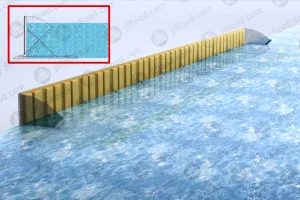
The hydrodynamic automatic flood barrier sits entirely flush with the finished floor level during dry weather, supporting continuous heavy vehicular transit (up to AASHTO HS-20 / Eurocode 40-tonne axle loading). When surface flooding initiates:

1. Inflow Stage Floodwater flows into the embedded stainless steel bottom chamber through non-clogging surface drainage grates.
2. Buoyancy Lift As water fills the basin, high-density closed-cell synthetic foam cores inside the door panel generate natural upward displacement.
3. Hydrostatic Lock The rising water head creates equalizing pressure that pushes the structural barrier leaf upward to its maximum vertical stop (up to 90 degrees).
4. Hermetic Seal EPDM dual-lip compression gaskets seal against the side abatement frames, preventing water ingress under extreme hydraulic heads.
Engineering Parameter Standard Wholesale Specification Infrastructure / Heavy-Duty Specification
Primary Panel Alloy Structural Aluminum Alloy 6063-T6 / T5 Anodized Stainless Steel 304 / 316L Marine Grade Reinforced
Embedded Base Frame Hot-Dip Galvanized Q235B Steel Trench Assembly 316 Stainless Steel Heavy-Duty Concrete Anchorage Box
Sealing Polymer Continuous EPDM Elastomeric Dual Lip Seal Vulcanized Fluorocarbon / Silicone High-Chemical Compound
Load Rating Capacity Driveway Duty: 15–30 Tonne Axle Load Heavy Airport/Metro Duty: 40–60 Tonne Dynamic Load
Leakage Rate Standard < 0.1 L/hr per meter of wet perimeter Zero Leakage (< 0.01 L/hr under 1.5m water head)
System Response Mechanism Hydrodynamic Buoyancy (Zero Electrical Input) Hydro-Mechanical with optional IoT Telemetry Sensors
Factory Expertise & Manufacturing Scale

Why Source Automatic Flood Gates from China Manufacturers

Nanjing Junli Technology Co., Ltd. combines advanced metallurgical manufacturing, finite element analysis (FEA), and industrial scale to deliver world-class flood protection products at competitive wholesale pricing.

Full-Scale Extrusion & Laser Fabrication

Our Nanjing production center features high-tonnage aluminum extrusion presses, precision fiber laser cutters, and automated robotic welding cells. We manufacture custom barrier spans up to 6 meters in single-leaf configurations and multi-span modular arrays exceeding 30 meters for wide commercial driveways.

Factory Water-Testing Pool Verification

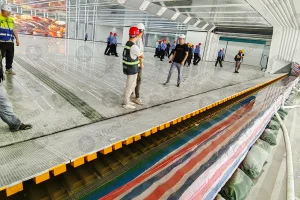
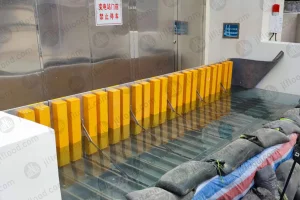
Unlike standard sheet metal fabricators, every Junli design undergoes real hydrostatic testing in our dedicated high-depth hydraulic testing pool. We measure lifting response speeds, structural deflection limits, and seal compression integrity prior to issuing order dispatch sign-offs.

OEM / ODM Custom Engineering

We work directly with international EPC contractors, municipal engineering consultants, and trade distributors. Our R&D department generates tailored 3D CAD models, BIM objects, and civil embedded detail drawings matching specific site kerbs and elevation profiles.

Application Scenarios

Global Infrastructure & Municipal Applications

From underground rail networks in coastal megacities to isolated utility substations, hydrodynamic automatic flood barriers deliver targeted protection across critical infrastructure sectors.

Metro & Rail Transit Entrances

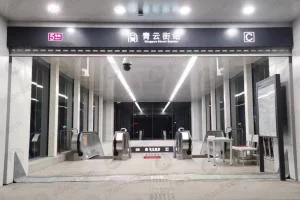
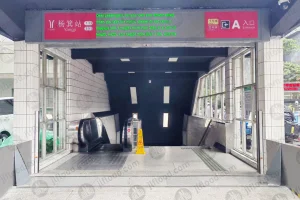
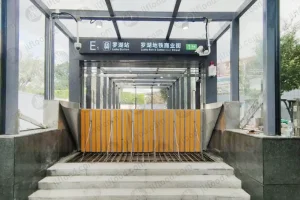
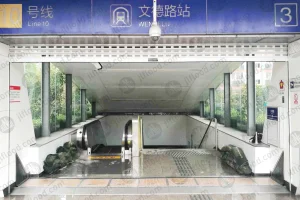
Underground subway stations are prone to catastrophic inundation during typhoons. Embedded hydrodynamic barriers at pedestrian station portals and vent shafts remain hidden beneath floor tiles. Upon floodwater arrival, they raise automatically to block ingress into subway tunnels, protecting passenger safety and high-value rolling stock.

  • Proven deployments: Guangzhou Metro, Suzhou Metro, Beijing Metro, Hong Kong Rail transit lines.
  • Flush surface design prevents trip hazards for heavy pedestrian foot traffic.

Electrical Substations & Power Utilities

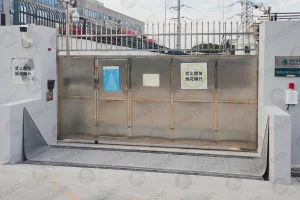
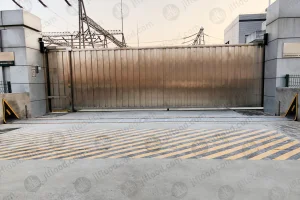
Transformer rooms, cable trenches, and power distribution buildings require absolute dry conditions. A single water breach can cause multi-million dollar equipment loss and regional grid blackouts. Junli automatic flood barriers secure perimeter gates and equipment doorways without requiring substation operators to be present.

  • Protects State Grid utility stations, data centers, and industrial powerhouses.
  • Custom narrow-width units available for cable trench and door jamb retrofits.

Commercial Parking Garages & Malls

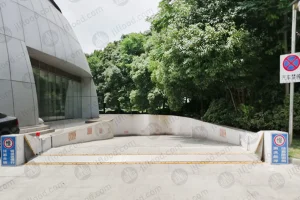
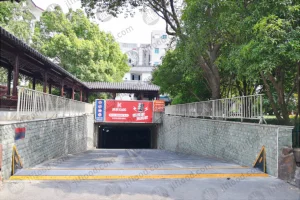
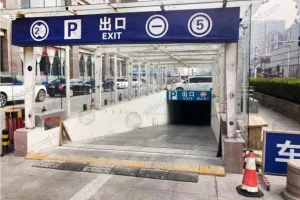
Ramp openings for subterranean parking lots in shopping plazas, residential towers, and hospitals are prime targets for storm runoff. Hydrodynamic garage flood gates withstand constant daily vehicle drive-over while providing instant, power-free elevation when surface channels overflow.

  • Accommodates steep ramp gradients and curved entry geometry.
  • High anti-slip surface treatments ensure safety for braking vehicles.
Regulatory & Compliance Standards

International Engineering Standards & QA Compliance

Overseas procurement teams require transparent testing verification. Our hydrodynamic flood control systems conform to rigid global civil defense and structural safety codes.

Testing & Qualification Protocols

Every manufacturing run undergoes stringent quality control inspections aligned with international guidelines:

  • Hydrostatic Head Resistance: Tested up to 200% design pressure height without permanent structural deformation.
  • Leakage Criteria: Complies with FM Approvals Class 2510 and BS EN 12288 flood mitigation barrier tightness thresholds.
  • Material Traceability: Mill test certificates (MTC) supplied for 6063-T6 aluminum extrusions and SS304 frame assemblies under EN 10204 3.1.
  • ISO Management Systems: Manufactured under ISO9001 (Quality), ISO14001 (Environmental), and ISO45001 (Occupational Health) audited facilities.

Global Export & Engineering Support

We facilitate seamless procurement for international engineering projects across Southeast Asia, Europe, the Middle East, and the Americas:

  • Comprehensive Documentation: English installation manuals, maintenance schedules, CAD embedment details, and structural FEA reports.
  • Export Packing Standards: Heavy-duty fumigated wooden crates with moisture-barrier wrapping to prevent maritime transport oxidation.
  • Remote Technical Support: Video commissioning assistance and engineer dispatch capabilities for international tenders.
Procurement & Technical FAQ

Frequently Asked Questions from Global Buyers

Address your critical engineering, operational, and supply chain queries regarding wholesale automatic flood barrier installations.

Q1: How does a hydrodynamic flood gate activate without any electricity or backup generators?
The hydrodynamic flood barrier utilizes mechanical water buoyancy and hydrostatic pressure. The panel rests inside a flush ground trench box. When surface storm water enters the trench through front inlet grates, the water fills the internal chamber. The structural buoyancy core inside the aluminum gate panel causes it to float and tilt upward. As the water level rises further, hydrostatic pressure forces the barrier into a locked 90-degree vertical position against rubber side seals, requiring zero electrical sensors, human operators, or pump systems.
Q2: What happens if heavy silt, leaves, or urban debris enter the foundation chamber during a flood?
Junli automatic flood barriers are engineered with self-cleaning hydraulic flow paths. The front drainage grates filter out large objects like branches or plastic trash. Internal slopes within the stainless steel bottom chamber prevent silt sedimentation near the main pivot hinges. Additionally, maintenance inspection panels allow easy flushing with high-pressure water hoses during routine semi-annual facility checkups.
Q3: Can heavy trucks or emergency vehicles drive over the flush barrier during daily operations?
Yes. Standard units are rated for vehicle loads of 15 to 30 tonnes. For heavy municipal infrastructure, airport runways, or industrial sites, we manufacture reinforced thick-wall alloy structures rated for dynamic axle loadings up to 40–60 tonnes (conforming to AASHTO HS-20 and European loading standards), ensuring long-term durability under heavy traffic.
Q4: What civil preparation is required before installing embedded hydrodynamic barriers?
For embedded models, the main contractor must prepare a reinforced concrete trench matching our technical clearance drawing set, complete with bottom drainage connections tied into the facility's sump pit or storm drain network. Surface-mounted or flip-up models require only flat, level concrete foundations suitable for expansion anchor bolts, making them ideal for retrofit upgrades on existing operational buildings.
Q5: What is the lead time for OEM wholesale orders and international shipping?
Standard OEM production lead time is typically 15 to 25 days depending on total linear meter quantity and custom clear-span requirements. Custom color powder-coating or anodizing may require an additional 5 days. We export via FOB, CIF, or DDP terms from Shanghai/Ningbo ports with full container load (FCL) or custom crated less-than-container load (LCL) packaging.
Q6: What maintenance is necessary to maintain the 20+ year service lifespan?
Maintenance requirements are minimal compared to motorized gates. We recommend semi-annual inspections: clearing any accumulated leaves or sediment inside the trench bottom, inspecting EPDM side seals for physical damage, and manually lifting the panel to verify smooth hinge rotation. Replacement seal kits are stocked and shipped globally for seamless long-term facility management.
Custom Engineering Consultation

Request Factory Direct Quotes & BIM CAD Packages

Partner with China's leading hydrodynamic flood barrier manufacturer. Share your project opening dimensions, site elevations, and rainfall parameters for a full technical proposal within 24 hours.

Contact Engineering Team Download Technical Catalog
Request a Catalog