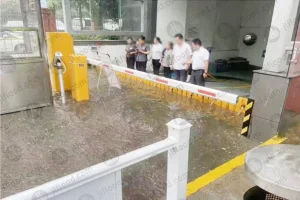
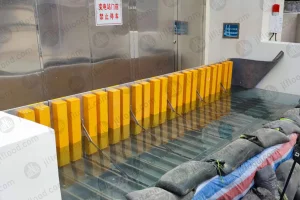
Explore our industrial-grade, certified portable and automatic flood defense arrays built for high-risk assets.

An Executive Analysis of Rising Inundation Risks and the Strategic Transition to Portable Inflatable Water Dams
As extreme meteorological anomalies, sea-level surges, and flash torrential events intensify across major continental hubs, traditional civil engineering defenses are reaching their operational thresholds. Urban infrastructure planners, municipal emergency response directors, and EPC procurement leads are increasingly recognizing that permanent concrete seawalls and legacy manual sandbag barriers no longer provide the flexibility, cost-efficiency, or speed required to safeguard modern metropolitan assets.
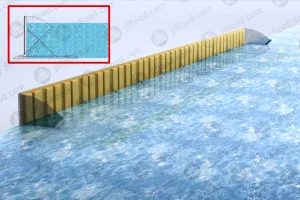
In this context, wholesale convenient portable inflatable water barriers have emerged as a disruptive, highly reliable technological solution. Engineered from high-tensile polymer-coated fabrics (such as heavy-duty PVC, Polyurethane, or Hypalon elastomeric polymers), these temporary dams exploit hydrostatic weight dynamics: utilizing the incoming floodwater itself or dual air-water internal inflation matrices to establish stable, unshakeable retention perimeters. Unlike static infrastructure, portable inflatable barriers offer low footprint storage, rapid deployment readiness, and minimal civil site preparation—redefining flood defense metrics across North America, Europe, the Middle East, and Asia-Pacific.
Understanding the Fluid Mechanics, Material Science, and Sealing Dynamics of Inflatable Dams
To evaluate the structural integrity of portable inflatable water barriers, procurement directors must examine the fundamental fluid dynamics and material engineering parameters that dictate performance under maximum hydraulic heads.
The operational mechanism of a water-filled or air-inflated water barrier relies on the balance between horizontal hydraulic push and frictional base anchorage. As water levels rise along the upstream face of the barrier, the internal water/air column generates downward normal force onto the substrate. High-grade systems utilize specialized elastomeric friction pads on the base layer, achieving a static friction coefficient ($\mu$) exceeding 0.75 against smooth asphalt or micro-troweled concrete. This eliminates lateral sliding forces without requiring intrusive mechanical anchor bolts into public pathways.
The structural skin of premium commercial water barriers consists of multi-layer composite textiles. The inner core features high-tenacity polyester woven scrim (exceeding 1100 dtex tensile rating), sandwiched between UV-stabilized, chemical-resistant PVC or Thermoplastic Polyurethane (TPU) outer jackets. Thermal hot-wedge welding and high-frequency RF seamless bonding processes guarantee seam shear strength equal to or exceeding the native fabric specification ($>4000\text{ N}/5\text{cm}$). This material matrix resists abrasion, oil contamination, ozone degradation, and ambient temperatures from $-30^\circ\text{C}$ to $+70^\circ\text{C}$.
Protection of long perimeters requires modular section joining. Industrial suppliers utilize heavy-duty industrial zippers paired with EPDM compression gaskets or heavy-velocity Velcro flap locks backed by internal hydrostatic seal flaps. When hydrostatic pressure presses against the dynamic dynamic inner lip, the water force naturally tightens the seal, rendering zero-leakage performance across multi-hundred-meter perimeter runs.
Deploy hundreds of meters of heavy-duty flood defense within hours using standard high-volume air blowers or low-pressure pumps, cutting labor overhead by up to 90%.
Composite PVC/TPU vulcanized outer shells resist debris impact, sharp gravel, floating logs, and chemical/hydrocarbon runoff typical of urban storm surges.
Deflates completely after flood recession. Easily washed, rolled, and stored on standard ISO pallets, boasting a storage footprint under 2% of deployed volume.
Why Global EPCs, Municipal Procurement Agencies, and Wholesalers Sourcing from China Gain Decisive Competitive Edge
In the competitive global marketplace for flood control infrastructure, sourcing directly from specialized Chinese manufacturers offers unprecedented advantages in capital efficiency, customization agility, and production throughput.
China's specialized manufacturing zones—particularly around Jiangsu (such as Nanjing and Suzhou), Zhejiang, and Guangdong—house fully integrated industrial ecosystems. From raw polymer resin synthesis and high-denier polyester weaving mills to specialized high-frequency welding machine builders, every link in the value chain operates within tight geographic radii. This structural concentration reduces raw material lead times to days rather than weeks, allowing factory facilities to scale up manufacturing volume rapidly during impending global monsoon seasons.
By leveraging automated automated CNC fabric cutting, robotics-assisted seam welding, and optimized bulk resin purchasing power, leading Chinese factories achieve 30% to 50% cost advantages over European or Western hemisphere counterparts without compromising technical tolerances. For wholesale distributors and government tenders, this pricing dynamic allows higher profit margins or more competitive bidding packages for large-scale municipal tenders.
Top-tier Chinese manufacturers operate specialized full-scale hydraulic testing pools. Prior to dispatch, production samples are subjected to maximum hydrostatic head retention tests, seal deflection analyses, and pressure decay verification. Compliance with international standards such as ISO 9001, ISO 14001, FM Approvals, and European CE standards ensures international project acceptance.
Tailored Engineered Protocols for Critical Public and Private Infrastructure Asset Protection
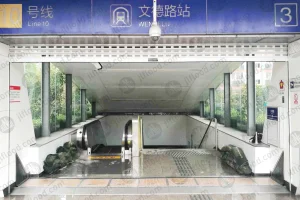
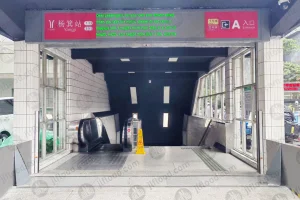
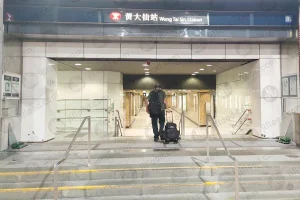
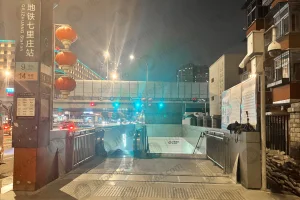
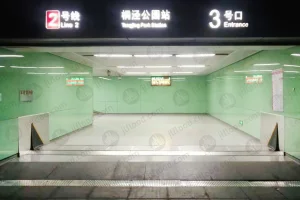
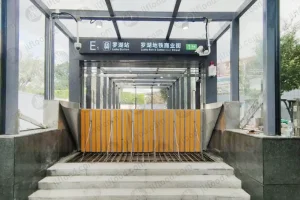
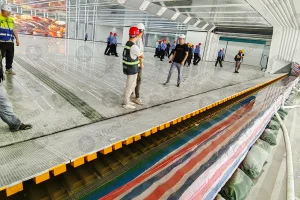
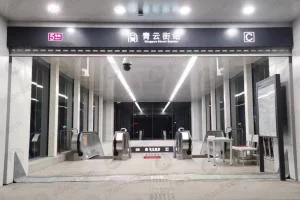
Underground metro stations represent high-vulnerability funnels during flash floods. Portable inflatable barriers can be deployed across stairwell landings, subway concourse openings, and ventilation shafts to isolate underground networks from catastrophic surface runoff inundation.
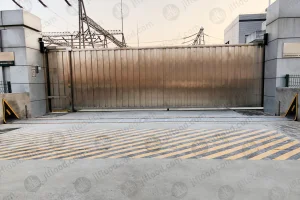
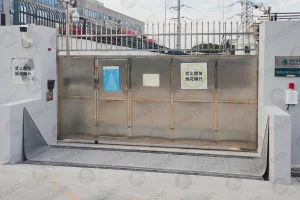
Primary transformers and switchgear vaults require absolute dry conditions. Modular water barriers form tight ring perimeters around substation yards and cable trenches, preventing short-circuiting outages during municipal grid crises.
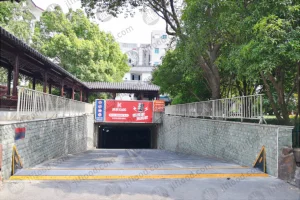
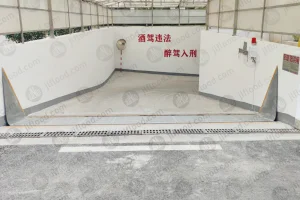
Basement parking in commercial towers, hospitals, and residential complexes are prone to rapid water entry. Ramp-mounted inflatable dams provide an immediate barrier against rising street water, protecting vehicle assets and core building MEP systems.
Large public concourses, underground shopping malls, and civil defense underground corridors benefit from flexible inflatable dams that store compactly inside on-site emergency response lockers.
Expansive airport aprons, cargo hangars, and low-lying highway underpasses utilize interconnected long-span inflatable dam arrays to maintain logistics continuity during regional flood events.
Contain hazardous chemical spills or prevent floodwater ingress into hazardous material storage facilities with chemical-resistant TPU-coated inflatable perimeter walls.
Key Procurement Metrics, Technical Specification Audits, and Cost Analysis for B2B Buyers
When issuing RFQs (Request for Quotes) or evaluating wholesale bids for convenient portable inflatable water barriers, procurement directors should systematically audit suppliers against the following engineering specifications:
Smart Sensor Integration, Sustainable Polymers, and Automated Deployment Systems
The flood management domain is undergoing rapid technological evolution. Over the next decade, key trends will shape the production and deployment of portable water barriers:
Expert Engineering Answers to Common Procurement, Technical, and Operational Questions
Browse our complete catalog of specialized underground rail transit and facility protection barriers.