
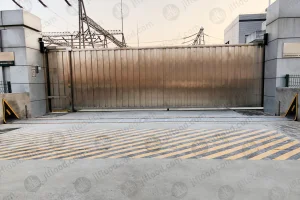
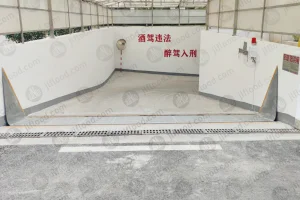
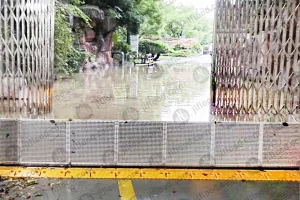

Executive Whitepaper: Modernizing Doorway Plastic & Composite Flood Barriers
In an era marked by rapid urbanization and intensifying hydrological volatility, traditional surface water management systems are reaching their physical limits. Flash floods, cloudburst events, and storm surges present immediate existential threats to modern civil infrastructure, underground transport systems, high-voltage power substations, and commercial real estate assets. Historically, municipalities and property developers relied on manual sandbagging or heavy extruded aluminum flood boards. However, empirical field evaluations consistently demonstrate that manual deployment fails under catastrophic flash flood scenarios due to delayed human reaction time, high labor overheads, seal degradation, and storage inefficiency.
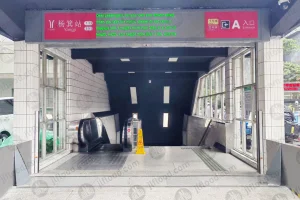
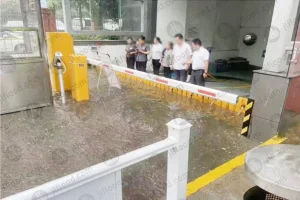
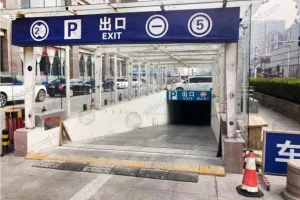
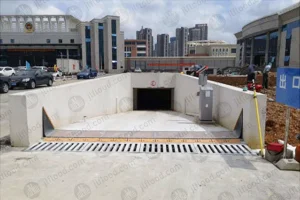
This comprehensive engineering whitepaper examines the technological paradigm shift toward wholesale door plastic flood control barriers and hydrodynamic polymer door systems. Built utilizing high-density polymers (HDPE), Acrylonitrile Butadiene Styrene (ABS), and Fiber-Reinforced Plastics (FRP), modern composite flood barriers offer unprecedented strength-to-weight ratios, chemical inertness, and passive hydraulic automation. Designed for rapid deployment across high-vulnerability door openings, garage ramps, and transit access points, these barriers represent the pinnacle of passive flood protection engineering.
Core Information Gain: Why High-Polymer Plastics Outperform Metal Barriers
Unlike structural aluminum or stainless steel which suffer from permanent plastic deformation under impact loading, galvanic corrosion in saline conditions, and extreme weight requiring specialized rigging, modern modified engineering polymers absorb kinetic shock elastically, resist chemical weathering, and reduce structural dead-load on existing building foundations by over 60%.
1. Polymer Material Science & Mechanical Dynamics
The performance of door-mounted plastic flood barriers relies on advanced material formulations. Industrial flood barrier manufacturers utilize matrix-blended High-Density Polyethylene (HDPE) stabilized with Hindered Amine Light Stabilizers (HALS) and Carbon Black to eliminate UV-induced chain scission during prolonged solar exposure.
In modular door barriers, the panel core is engineered with honeycomb structural ribbing. This geometric configuration maximizes the section modulus ($Z$), allowing a 40mm thick plastic panel to withstand hydrostatic heads up to 2.0 meters ($20 \text{ kN/m}^2$) with deflection ratios under $L/250$. Furthermore, the integration of dual-lip EPDM (Ethylene Propylene Diene Monomer) gasket seals along the perimeter ensures dynamic compression sealing under hydrostatic pressure. As floodwater rises against the exterior face of the plastic barrier, the hydrostatic pressure forces the flexible seal into tighter contact with the door jamb frame—creating a self-tightening hydraulic seal mechanism.
Hydrodynamic Buoyancy Lift
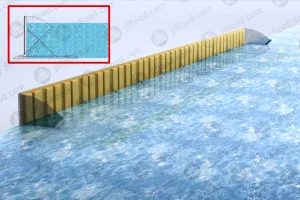
Employs Archimedes' principle. Rising water enters the sub-surface chamber, generating buoyant force that automatically rotates or lifts the plastic panel into a vertical retaining position without electricity.
Zero-Power Hydro-Automation
100% mechanical reliability. Operates seamlessly during municipal power grid failure—the exact moment intense typhoons and severe weather events trigger urban waterlogging.
Low Maintenance & High Durability
Corrosion-proof engineering plastics eliminate rusting, pitting, and oxidation. Requires only semi-annual flushing of the embedded frame channel to ensure clear operational clearance.