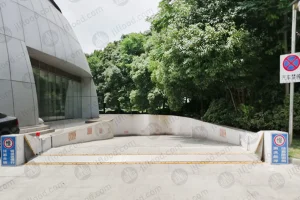
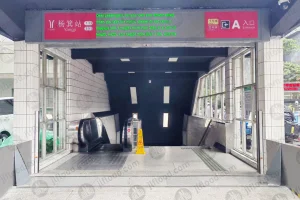
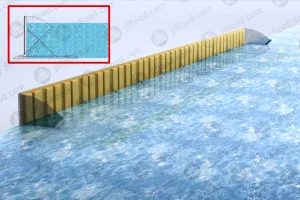
Explore our heavy-duty, field-tested automatic flood barrier doors designed for substations, metro channels, commercial parking garages, and industrial critical sites.
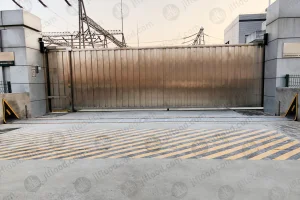
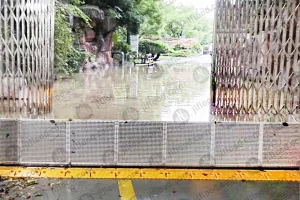
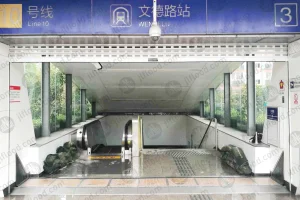
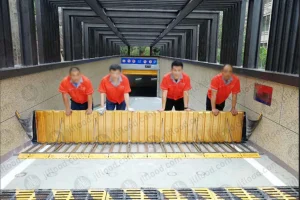
Analyzing climate volatility, urban density challenges, and the technological evolution of hydrodynamic perimeter flood defense systems.
In an era defined by intensifying climate volatility, rapid urbanization, and hyper-dense subterranean infrastructure, the mitigation of catastrophic flood risks has transitioned from a municipal afterthought to a mission-critical imperative for asset owners, civil engineers, and facility managers worldwide. Urban flash flooding, flash pluvial waterlogging, and coastal storm surges present existential threats to underground rail networks, high-voltage electrical substations, commercial parking structures, and critical manufacturing facilities.
As a leading Wholesale Flood Barrier Door Manufacturer & Factory, Nanjing Junli Technology Co., Ltd. (headquartered in Qinhuai District, Nanjing, Jiangsu Province) operates at the bleeding edge of hydrodynamic structural engineering. Modern municipal infrastructure demands continuous resilience without relying on human intervention, electrical grid integrity, or active sensor networks that frequently fail during extreme weather events. The global market is rapidly abandoning traditional manual sandbagging and motor-driven gates in favor of self-activating, hydro-buoyant passive flood barriers.
Unpacking Archimedes' Principle, hydrostatic equilibrium locking, structural FEA modeling, and multi-ridge EPDM elastomeric seal dynamics.
The flood door panel rests flush inside a stainless steel ground recess foundation. When surface runoff water flows into the chamber, fluid buoyancy automatically drives the gate panel to pivot upwards without human or electrical assistance.
As water levels rise against the deployed panel, rising hydrostatic pressure ($P = \rho g h$) exerts outward forces that press the panel tightly against structural frame wall gaskets. Higher water depth enhances seal compression and structural integrity.
Constructed from extruded 6063-T6 structural aluminum alloy and high-grade SUS304/SUS316 steel frames, the top surface panel tolerates heavy vehicle cross-overs (up to AASHTO HS-20 / 40-ton truck axle loads) during normal daily operations.
| Flood Defense Technology | Power Requirement | Deployment Mechanism | Human Risk Factor | Maintenance & Life Expectancy |
|---|---|---|---|---|
| Junli Hydrodynamic Barrier | 0 kW (Zero Power Needed) | Automatic Hydrodynamic Water Buoyancy | Zero (100% Autonomous) | Low Maintenance / 20+ Years Lifespan |
| Motorized Electric Drop-Down Gate | Requires AC Power / Backups | Electric Motor & Sensor Circuit Trigger | High (Fails during Grid Blackout) | High Maintenance / Annual Motor Service |
| Pneumatic Inflatable Barrier | Requires Compressed Air/Pumps | Air Compressor Inflation | Medium (Air Leak & Sensor Vulnerability) | Moderate / Seal degradation over time |
| Manual Aluminum Stop Logs | Manual Labor Only | Human Assembly & Slotting | Extreme (Requires early warning & staff on site) | Low Storage / High Labor Costs per event |
Field-proven implementations across municipal transit networks, electrical distribution substations, and high-value commercial properties.
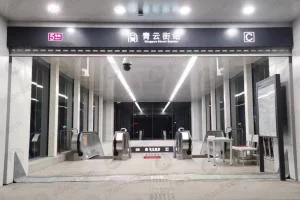
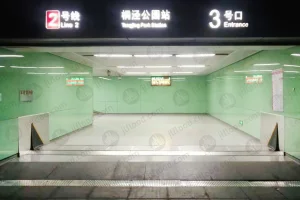
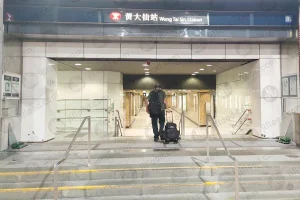
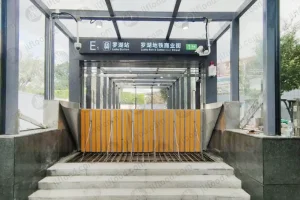
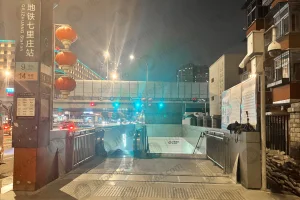
Underground metro systems are vulnerable to storm surge inundation. Junli custom engineers embedded and surface-type automatic flood barriers tailored to subway entrances, pedestrian connection channels, and ventilation shafts. Field-validated across high-density metro systems including Guangzhou Metro (Yangji Station), Dalian Metro, Beijing Metro, Suzhou Metro, and Hong Kong Transit.
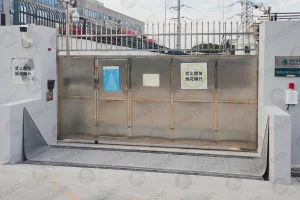
High-voltage utility substations demand 24/7 uncompromised dry conditions. Water ingress leads to regional power blackouts and catastrophic transformer damage. Our specialized substation perimeter flood gates provide continuous, zero-power defense for main access portals, perimeter fencing gates, and cable trench doorways across major state-grid facilities in Jiangsu, Anhui, and Beijing.
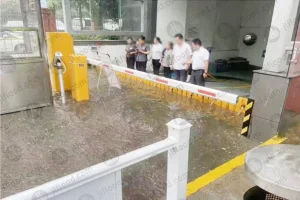
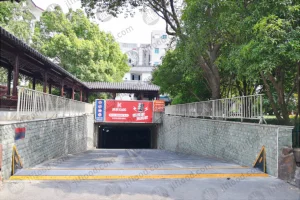
Basement parking ramps in shopping centers, hospitals, and luxury residential complexes represent major financial liabilities during urban waterlogging events. Flush-mounted garage flood barriers lay completely flat to allow smooth vehicular ingress/egress during dry weather, automatically elevating to protect subterranean levels when flash floods strike (e.g., Hefei Wanda Plaza & Suzhou Hospital car parks).
Ensuring structural integrity through in-house finite element analysis, dynamic water pressure testing pools, and strict international standard compliance.
Unlike standard door manufacturers that rely purely on computer simulation, Nanjing Junli Technology Co., Ltd. operates a proprietary full-scale hydraulic testing pool. Every batch of hydrodynamic flood doors undergoes rigorous pre-shipment testing to measure trigger activation speed, mechanical lever response, structural panel deflection under full hydrostatic head, and multi-ridge EPDM rubber seal sealing tightness.
We provide comprehensive structural engineering support for civil contractors, architectural consultants, and procurement managers worldwide. Our technical support package includes:
Address common queries regarding installation physics, structural design life, water-tightness testing, and global export procedures.
Our hydrodynamic automatic flood barriers are engineered to be completely power-independent (0 kW energy consumption). The barrier relies entirely on fluid buoyancy (Archimedes' principle) and hydrostatic pressure. When surface water flows into the recessed ground frame, buoyancy forces lift the panel pivot automatically. As water pressure increases, it presses the door against frame seals, locking it in place without electricity, sensors, motors, or human operator intervention.
Standard single-leaf hydrodynamic automatic barriers support retaining heights ranging from 0.5 meters to 2.0 meters, with clear span widths up to 6.0 meters per leaf. For extra-wide driveways, station entrances, or perimeter boundaries exceeding 20 meters, modular multi-leaf barrier arrays with removable or retractable center posts are custom-manufactured to suit project specs.
Yes. The barrier panel in its resting flush position is constructed from high-tensile extruded 6063-T6 aluminum alloy with internal structural ribbed reinforcing spars. It is designed to withstand axle loads up to 40 tons (AASHTO HS-20 / Eurocode EN 1991-2 standard), allowing heavy commercial vehicles, buses, and fire engines to cross over daily without damaging the barrier mechanism or ground seals.
Because there are no electrical motors, hydraulic pumps, or complex electronic control boards, maintenance is minimal. We recommend quarterly inspection and flushing of the bottom embedded trough to remove accumulated silt, leaves, or debris, alongside an annual visual check and lubrication of the stainless steel pivot hinges and EPDM rubber gaskets.
Yes. Every factory-manufactured unit undergoes rigorous water testing in our full-scale hydraulic pool. We issue detailed quality inspection certificates, material compliance documentation (MTC), and full-scale factory water test video records per order. Third-party inspection (SGS, TUV, Bureau Veritas) can also be arranged prior to export packing.
Embedded-type automatic flood barriers are recessed into a pre-excavated concrete trench, resulting in a completely flush floor surface ideal for new infrastructure construction. Surface-mounted flood barriers are anchored directly onto an existing concrete slab with shallow ramp transitions, making them ideal for retrofit applications on operational properties where civil floor excavation is restricted.
Explore our complete range of specialized flood gates, subway entrance barriers, flip-up garage doors, and surface-installation units.