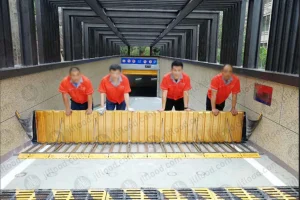
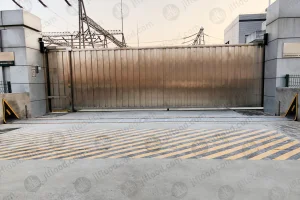
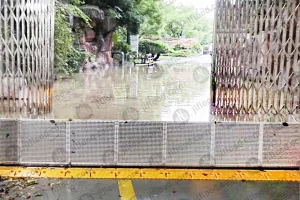
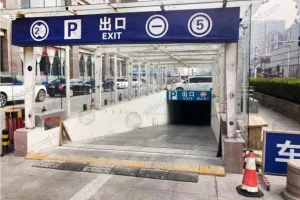
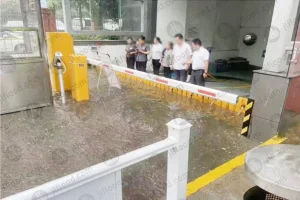
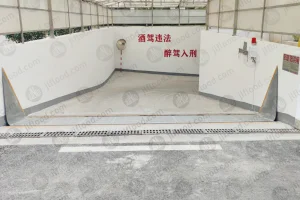
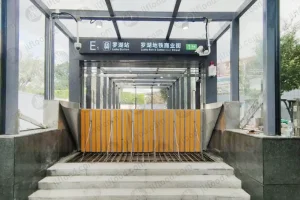
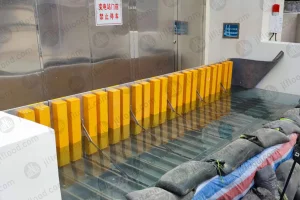
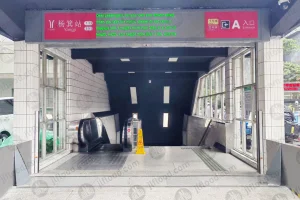
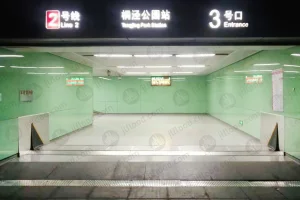
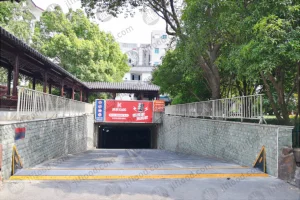
Engineered for commercial underground garages, transit hubs, and critical sub-station protection. Explore factory quotes and technical specifications below.
In an era defined by intensifying global climate volatility, urban waterlogging and sudden pluvial flooding present catastrophic financial and structural risks to commercial real estate, underground parking infrastructure, municipal transit networks, and high-voltage electrical substations. Deep underground parking garages serve as vital subterranean nodes within high-density metropolitan developments. However, due to their topographic design below ground line elevation, they function as natural retention sinks during extreme precipitation events, cloudbursts, and coastal storm surges.
Historically, commercial developers relied heavily on manual sandbags, motorized vertical rolling shutters, or electromechanical flood gates. Operational history across North America, Europe, and Asia-Pacific demonstrates that these legacy systems suffer from high rate of systemic failure. Blackouts routinely accompany severe typhoons and localized flash floods, rendering electrical gates completely non-functional at the exact moment inundation begins. Furthermore, manual flood protection systems require rapid human intervention—a luxury rarely available during unpredicted flash floods occurring outside operating hours.
As a global authority and leading manufacturer headquartered in Nanjing, China, Nanjing Junli Technology Co., Ltd. has engineered next-generation Hydrodynamic Self-Rising Automatic Flood Barriers. Functioning completely without electrical power, human operation, or digital sensor triggers, our automatic garage flood barriers harness basic fluid mechanics—Archimedes' principle of buoyancy and hydrostatic pressure—to deploy impenetrable perimeter defenses in direct proportion to incoming water levels. This technical whitepaper establishes the engineering foundations, structural load tolerances, localized regulatory compliance frameworks, and wholesale procurement economics for commercial specifiers, municipal engineers, and global B2B procurement officers.
Unpowered hydrodynamic flood barriers eliminate 100% of grid-dependency risks, reducing property liability claims by up to 94% under standard FM Global and Lloyd’s subterranean risk underwriting models. Installing structural-grade automatic barriers transforms passive civil assets into resilient, self-defending infrastructure.
The operational mechanics of Junli’s hydrodynamic automatic flood barriers are governed by fundamental fluid dynamics. Embedded seamlessly flush with the vehicle access ramp or garage apron floor, the system consists of a subterranean recess chassis (embedded frame), a high-strength structural door panel, and a dynamic seal system.
The deployment sequence operates in three distinct hydrostatic phases:
| Engineering Metric | Standard Commercial Grade | Heavy-Duty Industrial / Substation | Metro & Deep Infrastructure |
|---|---|---|---|
| Standard Retaining Height | 500 mm – 900 mm | 1000 mm – 1500 mm | 1500 mm – 2000 mm+ |
| Wheel Load Rating | 15–20 Tons (Standard Traffic) | 30–60 Tons (Heavy Freight / H20) | 80+ Tons (Extreme Heavy Duty) |
| Material Construction | 6063-T6 Structural Aluminum | SUS304 Stainless Steel / Aircraft Al | SUS316 Marine Stainless Steel |
| Seal Leakage Rate | < 0.15 L / min per meter | < 0.05 L / min per meter | 0.00 L / min (Hermetic Compress) |
| Operating Temperature | -30°C to +75°C | -45°C to +85°C | -50°C to +100°C |
Commercial building codes and municipal civil defence regulations worldwide have shifted rapidly toward mandatory passive flood protection. Specifiers and civil engineers must ensure that imported or specified flood barriers align with local building standards:
Underground garage entrance ramps are extremely challenging engineering environments. Barriers embedded in ramp thresholds are subject to continuous dynamic impact loads from vehicle tires, exposure to road grit, petroleum runoff, de-icing chemical salts, and stagnant runoff water. Material selection dictates long-term reliability.
Junli Technology employs a multi-tiered metallurgical approach to ensure structural durability and extended operational lifespans exceeding 25 years:
Systemic comparative analysis against traditional electric, hydraulic cylinder, and manual barrier configurations.
Grid blackouts, tripped breakers, flooded control panels, or battery backup failures can compromise electric gates. Junli barriers deploy automatically driven purely by natural hydrodynamic buoyancy.
When housed, the top plate sits completely flush with the roadway ramp surface. Smooth transitions eliminate vehicle bump impacts, preserving tire life and maintaining clean aesthetic design.
Reinforced internal structural ribbing supports wheel axle loads exceeding 30 to 60 tons. Designed to withstand continuous high-frequency traffic in commercial garage ramps and logistics yards.
Engineered EPDM side-wall gaskets and bottom chamber seals resist hydrostatic pressure heads up to 2.0 meters, maintaining near-zero seepage performance tested in full-scale factory water pools.
Single clear spans up to 6.0 meters can be coupled in multi-leaf modular arrays to protect wide commercial ramp entrances exceeding 20 meters, complete with intermediate removable upright support posts.
With no motors, hydraulic lines, oil pumps, control relays, or electrical wiring, annual maintenance is limited to simple sediment cleanouts of the recessed tray and visual gasket inspections.
Successful long-term operation of embedded hydrodynamic flood barriers depends on proper civil works design, recess pit drainage, and structural threshold alignment. Nanjing Junli Technology provides comprehensive CAD/BIM drawing sets, embedded frame templates, and structural load calculations for general contractors and engineering consultants.
During new garage construction or retrofit excavation, a dedicated concrete recess trench is formed at the top or bottom of the access ramp threshold. Key structural considerations include:
While the primary mechanical activation of Junli barriers remains 100% unpowered and hydrodynamic, modern smart buildings require remote telemetry, status reporting, and integration into Building Management Systems (BMS) and SCADA networks.
Junli’s next-generation product roadmap includes hybrid passive-smart telemetry packages:
For commercial building owners, asset managers, and real estate investment trusts (REITs), specifying Junli hydrodynamic flood barriers delivers measurable financial return on investment (ROI) and risk reduction:
Select from our specialized line of subway station barriers, modular hydrodynamic flood gates, surface-mounted units, and flip-up systems.
Detailed technical insights regarding installation, hydrodynamics, customization, and factory wholesale ordering.
The system utilizes Archimedes' principle of buoyancy and hydrostatic pressure. The barrier panel rests flush inside a subterranean frame embedded in the garage entrance threshold. When rising floodwater flows into the bottom chamber of the frame, the natural buoyancy of the hollow structural aluminum panel lifts it upward automatically. As water depth increases, external water pressure pushes the panel against dynamic EPDM rubber gaskets, forming a tight, leak-free seal. No electrical sensors, motors, pumps, or human staff are required.
Standard commercial grade garage barriers are engineered for 15-to-20 ton wheel load capacities, easily handling passenger vehicles and SUVs. Our heavy-duty industrial and substation series models are reinforced with internal structural ribbing to support 30-to-60 ton truck axle loads (H20 / HS20 loading standards), allowing heavy freight vehicles, fire engines, and delivery trucks to drive over the embedded panel daily without structural deformation.
Standard retaining heights range from 500 mm up to 2,000 mm (2.0 meters). For clear span widths, single-panel units accommodate openings up to 6.0 meters. For wider garage ramps or multi-lane entrances exceeding 20 meters, we supply modular multi-panel arrays equipped with removable or automated upright mullion posts to create seamless, continuous flood protection walls.
Yes. Nanjing Junli Technology operates an in-house full-scale water testing pool facility. Every custom design undergoes rigorous hydraulic head testing, response time measurement, dynamic seal leakage testing, and structural deflection verification. Third-party inspection reports (including SGS/TÜV witness testing) and factory test video documentation can be provided per order specifications.
Because there are no electrical motors, hydraulic pumps, or complex gearboxes, maintenance requirements are minimal. We recommend quarterly visual inspections to clear leaves, gravel, or urban sediment from the bottom drainage pit using a standard hose or vacuum, along with annual checks of the EPDM side wall rubber seals. Seal replacement kits and step-by-step English maintenance manuals are provided with all wholesale orders.