
Explore our field-tested, zero-electricity automatic flood barriers designed for subways, municipal substations, and underground logistics hubs.
In an era defined by intensifying climate volatility, urban flood risk management has transitioned from a municipal afterthought to a mission-critical infrastructure mandate. Rapid urbanisation, coupled with extreme weather phenomena—such as micro-burst cloudbursts, atmospheric rivers, and slow-moving typhoons—has overwhelmed conventional subterranean drainage networks across North America, Europe, East Asia, and the Middle East. High-density commercial assets, sub-surface transit systems, and power distribution substations are increasingly vulnerable to catastrophic inundation within minutes of stormwater threshold breaches.
Traditional perimeter defense mechanisms—such as temporary sandbagging, manually deployed aluminum demountable stop logs, or electrically driven vertical gates—exhibit critical single points of failure. Sandbags require intensive human labor and pre-warning lead time, which is rarely available during sudden urban flash floods. Electrically powered flood gates often fail precisely when needed most due to localized grid outages, short-circuited control transformers, or submerged sensor arrays. Consequently, international civil engineering bodies, insurance underwriters (such as FM Global), and municipal planning commissions now advocate for passive, power-free, hydrodynamic flood barrier systems as mandatory architectural flood mitigation specs.
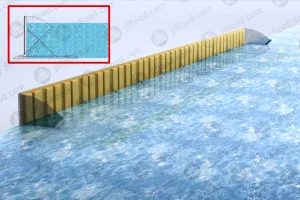
The engineering cornerstone of modern passive flood mitigation is the buoyancy-driven hydro-mechanical linkage system. Manufactured using high-tensile marine-grade 6063-T6 or 6005A-T6 structural aluminum extrusions, our flood barriers remain completely flush with the surrounding road surface during dry ambient conditions, permitting unhindered heavy vehicle and pedestrian passage.
When surface runoff exceeds kerb capacity, water enters the recessed foundation basin through stainless-steel inlet grates. As water accumulates, hydrostatic pressure and Archimedes' principle actuate internal hollow-chamber buoyancy panels, initiating self-rising motion without human intervention or electrical power.
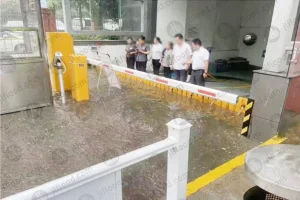
Hydrostatic pressure forces the barrier leaf against specialized EPDM (Ethylene Propylene Diene Monomer) gasket profiles. The higher the floodwater level, the tighter the compression seal against the side jambs and floor frame, achieving near-zero leakage rates under maximum hydraulic heads up to 2,000mm.
While the barrier's mechanical deployment is 100% passive, integrated IoT sensor modules (optional Modbus/RS485 interface) send immediate status alerts, ultrasonic water level measurements, and video feed triggers to building management systems (BMS) and smart city command centers.
Our flood gate structures undergo rigorous FEA simulations to withstand static hydrostatic loads, hydrodynamic wave impacts, and vehicle rollover weight (up to 60-ton axle loads under surface-mounted transit conditions). Extruded aluminum components feature hard-anodized surface coatings (>15μm thickness) providing exceptional corrosion resistance against brackish flood waters, de-icing salts, and industrial chemicals.
Every commercial asset and infrastructure node presents unique geometrical, hydrologic, and architectural constraints. Our custom-engineered flood barrier portfolio provides modular solutions tailored for four primary high-risk environments:
| Application Scenario | Primary Threat Vector | Recommended Barrier System | Key Engineering Feature |
|---|---|---|---|
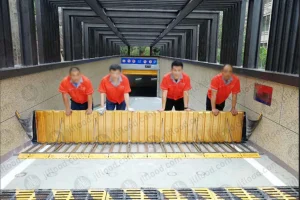
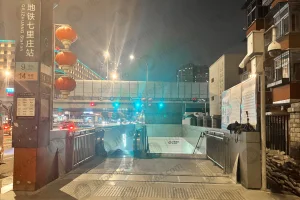
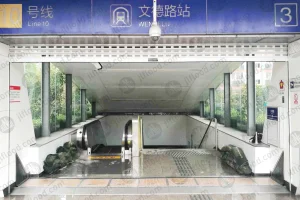
| Subway & Metro Entrances | Rapid street-level inundation down pedestrian stairwells and vent shafts. | Embedded/Surface Hydrodynamic Metro Barriers (Hm4d-0006E) | Flush foot-traffic surface, automatic self-closing, high-speed passive rise within seconds. |
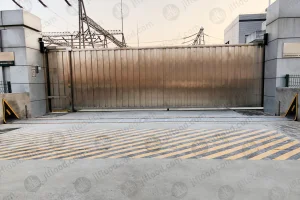
| Power Substations & Utilities | Perimeter breach causing transformer destruction and regional grid collapse. | Substation Gate Heavy-Duty Automatic Barrier (Hm4d-0006C) | Non-conductive electrical isolation options, chemical resistant EPDM seals, 24/7 autonomous protection. |
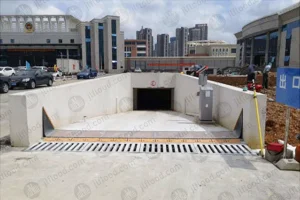
| Underground Garages & Malls | Subsurface flooding down vehicular ramps submerging parking & mechanical rooms. | Driveway Flip-Up & Self-Closing Ramp Gates | Heavy-duty vehicle drive-over loading (HS-20 traffic rating), modular span linking. |
| Commercial & Industrial Warehouses | Wide loading dock ingress threatening inventory & hazardous chemical containment. | Wide-Span Modular Hydrodynamic Flood Wall Systems | Segmented buoyancy panels, seamless integration with existing concrete kerbs. |
As a direct-from-factory enterprise situated in China's industrial manufacturing heartland (Nanjing, Jiangsu Province), we leverage a vertically integrated industrial ecosystem that provides international buyers, distributors, and engineering contractors with decisive competitive advantages.
In-house access to 10,000-ton aluminum extrusion presses allows precise customization of multi-hollow wall profiles, ensuring superior section modulus, structural rigidity, and material consistency while lowering raw material costs by 25-35% relative to European fabricators.
Automated robotic welding cells and large-format CNC machining centers ensure sub-millimeter manufacturing tolerances across extended span lengths, guaranteeing leak-free joint alignments and rapid job-site installation.
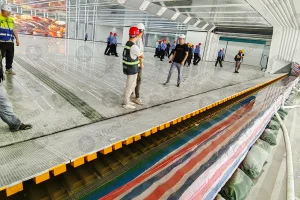
Every production batch undergoes full-scale hydraulic pool testing in our dedicated facility, measuring seal compression, buoyancy response timing, and structural deflection under maximum design hydro-head prior to export containerization.
When evaluating flood defense capital expenditure (CapEx), procurement teams must analyze initial manufacturing cost, international logistics, installation civil works, and long-term operational maintenance (OpEx). Hydrodynamic power-free barriers offer an unparalleled return on investment (ROI) by completely eliminating ongoing energy costs, sensor replacements, and manual emergency drill payrolls.
Wholesale barrier pricing depends primarily on clear opening width ($W$), required retaining height ($H$), vehicle load rating, and mounting configuration (embedded vs. surface mounted). Below are representative engineering factory price baselines for global tenders:
| Barrier Model / Type | Retaining Height (H) | Clear Width Span | Estimated B2B Wholesale Price (USD) | Lead Time |
|---|---|---|---|---|
| Surface-Type Automatic Metro Barrier | 600mm – 1000mm | 2.0m – 6.0m per module | $450 – $850 / linear meter | 15 – 20 Days |
| Embedded Hydrodynamic Heavy Gate | 800mm – 1500mm | 3.0m – 8.0m per module | $650 – $1,200 / linear meter | 20 – 25 Days |
| Substation Enclosure Flood Barrier | 500mm – 1200mm | 1.5m – 5.0m | $500 – $950 / linear meter | 15 – 20 Days |
| Custom Driveway Self-Closing Barrier | 1000mm – 2000mm | Modular up to 20m+ | Project-based Custom Quote | 25 – 30 Days |
To streamline international procurement and municipal approval processes, our engineering department provides comprehensive technical submission packages for consulting engineers, architectural contractors, and municipal authorities worldwide.
We supply complete CAD dimensional drawings, structural anchor layouts, foundation slab rebar reinforcement notes, and 3D Revit BIM models to effortlessly incorporate flood barriers into master building designs.
Our products are engineered in compliance with international floodproofing standards, including FEMA P-936 (Floodproofing Non-Residential Structures), BS EN 13564, and ISO 9001 quality management benchmarks.
Every order includes step-by-step English installation guides, video tutorials, embedded frame alignment templates, and 24/7 direct remote engineering assistance for installation contractors.
Browse our additional specialized flood gates engineered for rail transit stations, high-voltage utility entrances, and self-closing protective doorways.
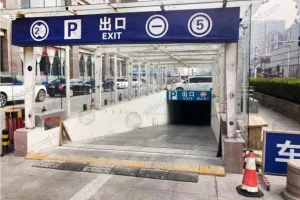
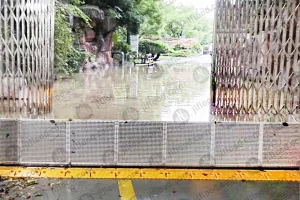
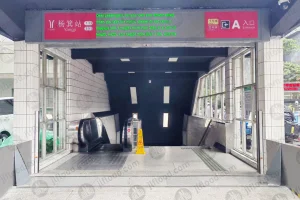
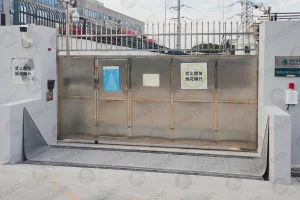
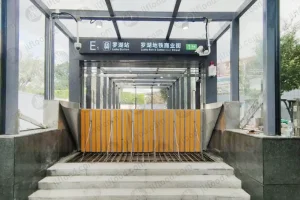
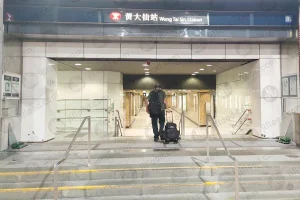

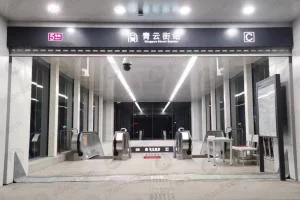
The system utilizes fundamental hydro-mechanical buoyancy principles (Archimedes' Principle). The barrier door panel rests flush inside an embedded ground foundation trench during normal dry conditions. When stormwater runoff accumulates and spills into the basin, incoming water fills the internal buoyancy chamber, generating upward hydrostatic lift. As water continues to rise, the panel floats upward automatically and locks into position against heavy-duty EPDM compression seals. No motors, sensors, grid electricity, or human operators are required.
Our standard heavy-duty garage ramp flood gates are rated for HS-20 / AASHTO traffic loading standard (up to 40-ton vehicle load), with ultra-reinforced structural options capable of supporting heavy fire trucks, delivery trailers, and 60-ton industrial equipment without structural deformation of the ground frame or hinge mechanisms.
Single barrier panel modules are manufactured in standard clear widths from 1.5 meters to 6.0 meters, with flood protection heights ranging from 500mm to 2000mm. For wide entrance ramps, subway portals, or utility driveways exceeding 6 meters, multiple barrier modules are interconnected seamlessly using intermediate removable mullions or synchronized buoyancy panels.
Because the mechanical system contains no electric motors or electronic controls, maintenance requirements are minimal. We recommend quarterly visual inspections to clear leaves or debris from the stainless-steel drainage grates, bi-annual flushing of the foundation basin with a standard water hose, and annual checks of the EPDM rubber seals for flexibility and debris accumulation.
All flood barrier assemblies are securely packed in heavy-duty export-grade ISPM-15 compliant wooden crates with internal polyethylene foam protection and moisture barrier wrapping. Embedded steel frames, side jambs, hardware kits, and English installation manuals are modularized for easy LCL or FCL ocean container shipping.


