Explore our primary industrial-grade flood defence systems engineered for quick embedment, high hydrostatic pressure resistance, and zero-electricity passive deployment.
As global climate volatility accelerates, flash flooding, torrential urban waterlogging, and extreme storm surges present existential threats to critical underground civil infrastructure. Municipal transit systems, underground multi-level parking structures, high-voltage electrical substations, and commercial basements require automated, zero-failure flood barrier defenses that operate independently of grid power and manual human intervention.
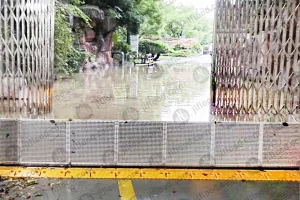
Traditional flood control methodologies—such as temporary sandbag placement, manual aluminum stop logs, and motorized vertical gates—possess inherent single-point failures. Manual deployment relies on timely storm warnings and available manpower, both of which are frequently compromised during rapid flash flood events. Electrical gates suffer total failure when urban grid power collapses or when electrical control panels are submerged. Hydrodynamic automatic flood barriers eliminate human latency and electrical dependency by leveraging fundamental fluid mechanics: incoming water buoyancy and hydrostatic pressure automatically raise and lock the barrier panel in real time.
China has established itself as the global manufacturing hub for advanced hydrodynamic flood protection systems. Driven by massive domestic investments in municipal "Sponge City" initiatives and urban rail transit expansion, Chinese manufacturers lead the world in structural metallurgy, sealing polymer chemistry, and industrial scaling capabilities.
From high-grade 6063-T6 extruded aluminum profiles and SUS304/SUS316 stainless steel frame fabrication to custom EPDM vulcanized sealing strips, Chinese industrial clusters in Jiangsu and Zhejiang offer end-to-end component integration without reliance on imported sub-assemblies.
Leading Chinese OEM/ODM factories feature full-scale hydrostatic testing pools. Every custom barrier width undergo hydro-dynamic load simulations, leakage tests under peak water head, and vehicle drive-over compression fatigue tests before export shipping.
High-volume automated laser cutting, robotic welding, and automated powder coating allow Chinese manufacturers to supply European- and American-certified flood control gates at a 30% to 50% cost reduction compared to Western counterparts.
Understanding the fluid dynamic principles behind hydro-automatic flood gates is essential for municipal engineers, architectural specifiers, and EPC contractors.
| Performance Parameter | Embedded Hydrodynamic Type | Surface-Mounted Flip-Up Type | Substation Modular Type |
|---|---|---|---|
| Standard Retaining Height | 500mm – 2000mm (Customizable) | 300mm – 1000mm | 400mm – 1200mm |
| Activation Mechanism | Hydro-buoyancy (Zero Power) | Self-Buoyancy / Spring-Assist | Passive Hydraulic Lift |
| Structural Material | 6063-T6 Aluminum / Stainless Steel | High-Tensile Aluminum Profile | SUS304 / Heavy Profile Aluminum |
| Drive-Over Load Capacity | Up to 40 Tons (AASHTO HS-20) | Up to 15 Tons | Pedestrian / Light Utility Vehicle |
| Seal Seepage Rate | < 0.15 L/h per meter of joint | < 0.20 L/h per meter of joint | Zero Seepage (Hermetic EPDM) |
| Response Time | < 3 Seconds upon water inflow | < 5 Seconds upon water inflow | Instant Buoyant Activation |
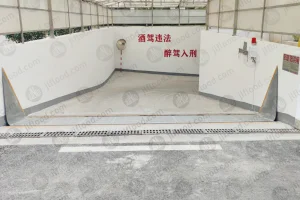
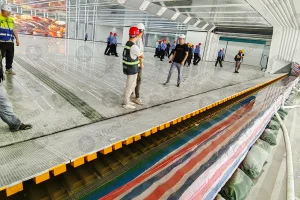
The entire structural panel rests completely flush inside an embedded ground trench during dry weather. Vehicles and pedestrians pass over the heavy-duty top cover plate seamlessly without disturbing traffic flow or lowering vehicle clearance.
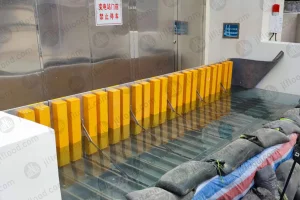
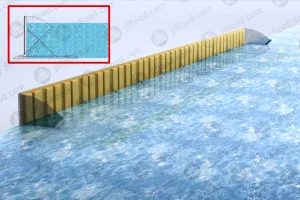
When surface water overflows kerbs and reaches the activation threshold, water flows into the recessed bottom chamber through precision inlet grilles. The hydrostatic pressure creates vertical upward buoyancy, driving the internal panel upward around stainless steel pivot axles.
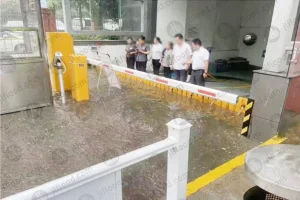
As the water head rises, hydrostatic pressure pushes the retaining panel tightly against vertical side jambs. Continuous dual-lip EPDM vulcanized rubber seals compress under hydraulic force, creating an airtight, watertight barrier system that prevents flood seepage into basements.
Every commercial, industrial, and municipal facility exhibits unique civil engineering constraints. Factory customization ensures precise alignment with specific structural openings.
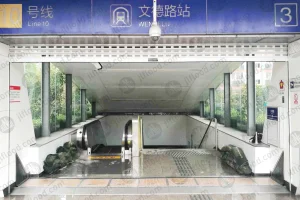
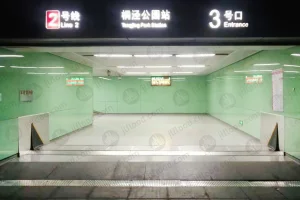
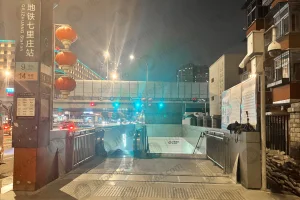
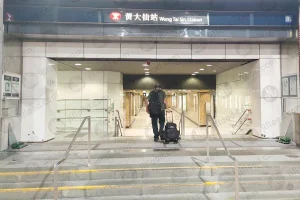
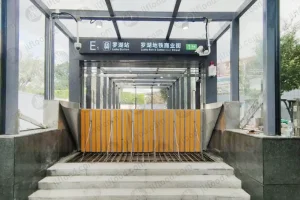
Subway entrances, pedestrian underground connection channels, and vent shafts require high-reliability barrier systems. Embedded automatic barriers seamlessly blend into tile aesthetics while providing instant protection during extreme downpours, guarding subterranean transit networks against flooding disasters.
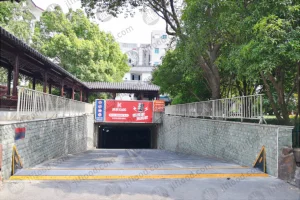
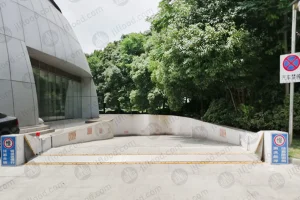
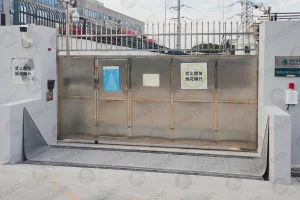
Ramp openings for underground parking structures are primary ingress points for urban floodwaters. Heavy-duty surface-type or embedded auto flood gates withstand vehicle loads up to 40 tons while ensuring multi-level basements, parked vehicles, and critical electrical assets remain completely dry.
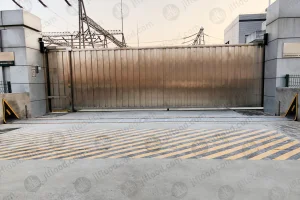
Power substations demand zero-seepage enclosure gates. Electrical short circuits caused by water intrusion can trigger city-wide blackout events. Custom substation flood gates feature non-conductive insulation options and hermetic side seals to guarantee grid resilience during severe weather.
International buyers—ranging from general contractors in Southeast Asia, the Middle East, Europe, and South America—are updating their flood mitigation procurement standards. Key trends defining the flood control hardware industry include:
Modern municipal buyers demand hybrid barrier designs equipped with IoT water level sensors, wireless status telemetry, and automated alarm systems. Facilities managers receive instantaneous smartphone alerts when floodwaters trigger barrier deployment.
To reduce international shipping costs and ease installation complexity, factories are shifting toward modular interconnecting barrier panels. Wide spans exceeding 20 meters can be assembled rapidly on site using standardized structural modules without specialized heavy machinery.
In coastal environments exposed to salt fog and seawater intrusion, standard powder coating is being replaced by marine-grade fluorocarbon (PVDF) spraying and anodized structural aluminum finishes capable of enduring 3,000+ hours of continuous salt spray testing.
Browse the remaining range of our factory-direct flood protection devices, including station connection barriers, flip-up garage barriers, and specialized substation protection gates.
Clear answers to crucial engineering, procurement, and installation questions for B2B buyers and project consultants.
Hydrodynamic automatic flood barriers function purely on the physical mechanics of water buoyancy and hydrostatic pressure. The barrier panel rests inside a flush ground trench. When surface water flows into the bottom chamber, buoyancy forces the hinged panel to float upward. As the water head rises, hydrostatic force pushes the panel firmly against the side jamb seals, creating a tight lock. No electrical motors, sensors, grid connectivity, or manual labor are needed, rendering the barrier 100% operational during storm-induced power outages.
Our heavy-duty embedded hydrodynamic flood barriers are manufactured using structural 6063-T6 aluminum extrusion profiles reinforced with internal load-bearing ribs. They are engineered to support standard vehicle axle loads up to 40 tons (AASHTO HS-20 / Eurocode heavy vehicle standards), making them fully suitable for commercial garage ramps, fire truck access lanes, and industrial logistics facilities.
Embedded flood barriers require a recessed concrete trench so the top cover plate sits completely flush with the surrounding road surface. This design offers a seamless aesthetic and accommodates heavy vehicle traffic. Surface-mounted flip-up barriers are installed directly on top of existing concrete ground without major civil excavation, making them an ideal choice for retrofit projects, doorways, and facilities with shallow substrate restrictions.
We utilize industrial-grade EPDM (Ethylene Propylene Diene Monomer) vulcanized synthetic rubber gaskets, known for their exceptional resistance to UV radiation, ozone exposure, chemical runoff, and extreme temperature fluctuations (-40°C to +120°C). The seals are designed with dynamic double-lip compression geometry, ensuring zero elasticity degradation over decades of service.
For embedded barriers, the general contractor must construct a reinforced concrete trench matching our factory CAD embedding drawings. A dedicated drainage pipe or sump pump connection must be integrated at the base of the trench to drain residual rainwater after floodwaters recede. Our engineering team provides complete civil work templates, rebar specifications, and pouring guidelines with every wholesale order.
Yes. As an OEM/ODM direct manufacturer, we fabricate flood control barriers tailored to your exact clear opening dimensions. Single-leaf spans can reach up to 6.0 meters, while wide entrances (e.g., 20+ meter subway plazas or multi-lane driveways) are covered by connecting modular barrier leaves with removable vertical mullions.
All barrier components are wrapped in protective PE foam, reinforced with corner guards, and packed into ISPM-15 compliant fumigated wooden crates suitable for long-distance ocean freight. Each shipment includes factory pressure test reports, material mill test certificates (MTC), step-by-step English installation manuals, and 3D exploded assembly diagrams.