
Explore our primary engineered solutions deployed across subway stations, power grids, commercial basements, and municipal channels worldwide.
Accelerating climate change, extreme precipitation events (pluvial flooding), and rapid urban densification have shifted flood protection from a reactive emergency measure to a mandatory architectural baseline.
In modern civil engineering, traditional flood defense strategies—such as manual sandbag placement, localized pump reliance, or temporary aluminum stop-logs—present unacceptable structural operational risks. Manual systems depend entirely on human intervention, advanced warning lead-times, and functional power grids. However, major flood events routinely trigger grid collapses, localized access blockages, and rapid water surges within minutes. A delay of merely 15 minutes in deploying manual barriers can result in tens of millions of dollars in subterranean catastrophic asset damage.
Nanjing Junli Technology Co., Ltd. addresses this critical engineering vulnerability through passive, power-free hydrodynamic automatic flood barrier systems. By leveraging basic principles of fluid mechanics (hydrostatic buoyancy and differential water pressure), our automatic flood gates deploy autonomously the moment floodwaters arrive—requiring zero electricity, zero human intervention, and zero digital sensor triggers.
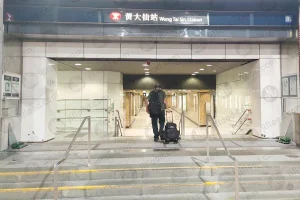
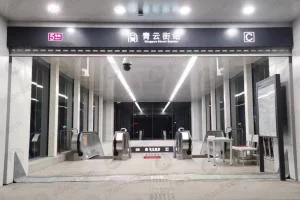
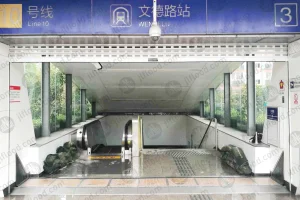
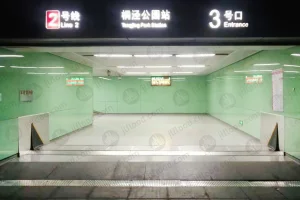
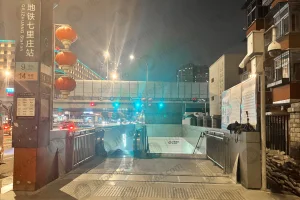
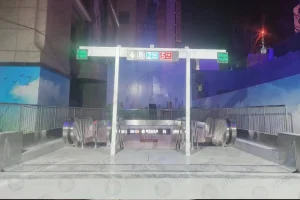
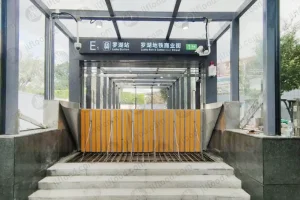
Subway stations and underground interconnecting passages represent major urban water accumulation points. A single breached entrance can inundate miles of underground rail infrastructure, damaging traction power systems and signaling equipment.
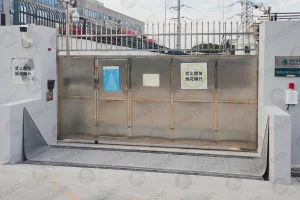
Electrical substations and transformer vaults contain critical high-voltage equipment. Water ingress causes catastrophic short-circuits, resulting in multi-district blackouts and massive industrial business interruption losses.
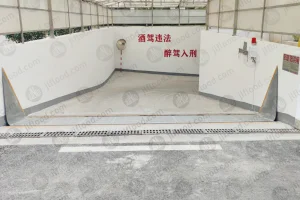
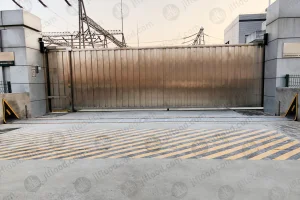
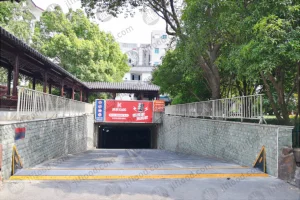
Multi-story underground parking garages, commercial retail centers, and logistics hubs require vehicular clearance during dry conditions and instantaneous dynamic sealing during flash flood events.
Engineered to withstand harsh dynamic hydraulic forces, continuous vehicular drive-over traffic, and aggressive environmental corrosion.
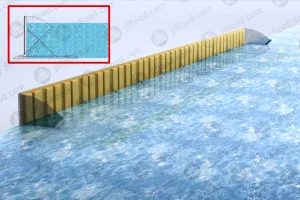
Our hydrodynamic flood gate is housed inside a recessed, flush-mounted foundation chamber embedded into the threshold level. Under dry conditions, heavy-duty vehicular traffic moves freely over the top panel.
When flash flooding occurs, surface water enters the embedded chamber through integrated intake grates. As water fills the sealed basin, Archimedes' principle generates natural hydraulic buoyancy beneath the engineered hollow door panel. As the water level rises, the panel automatically rotates upward around a reinforced stainless steel pivot hinge. Once fully upright, differential hydrostatic head pressure forces the door panel tightly against high-density EPDM/NBR triple-lip side gaskets, establishing a continuous hermetic dynamic seal.
Constructed from high-tensile structural alloys including SUS304 / SUS316 Stainless Steel and Aircraft-Grade 6063-T6 Extruded Aluminum Alloy, Junli flood barriers are calculated to support heavy vehicle loads up to AASHTO HS-20 / Eurocode HGV standards (capable of withstanding 40-ton vehicle drive-over loads without structural deformation).
All structural welds undergo non-destructive ultrasonic testing, and stainless surfaces receive fluorocarbon powder-coating or anodization treatment for a guaranteed 20+ year corrosion resistance window in coastal saline environments.
| Evaluation Parameter | Junli Hydrodynamic Automatic Barrier | Motorized Electric Flood Gates | Manual Aluminum Stop-Logs |
|---|---|---|---|
| Power Requirement | 0 kW (100% Water Buoyancy Driven) | 2.2 kW - 7.5 kW (Requires Grid / Backup Gen) | 0 kW (Manual Labor Required) |
| Blackout Reliability | 100% Immune to Grid Failures | Vulnerable (Fails if Backup Gen Fails) | N/A (Labor Dependent) |
| Deployment Speed | Instantaneous (< 30 seconds auto-rise) | 1 to 3 Minutes (Mechanical Motor) | 30 to 120 Minutes (Labor Assembly) |
| Human Operator Requirement | Zero Staff Needed On-Site | Requires Remote or Manual Push-Button | Requires 2 to 6 Trained Maintenance Workers |
| Drive-Over Load Rating | Heavy Duty T40 / HS-20 (40 Tons) | Variable (Often Light to Medium) | Non-Drive-Over (Must be Installed Post-Traffic) |
| 20-Year Total Cost of Ownership | Ultra-Low (Routine Seal Cleanout Only) | High (Motor, Wiring, Battery Replacement) | High (Labor Training, Emergency Mobilization) |
Validated under extreme typhoon conditions and verified through full-scale hydrodynamic pool testing.
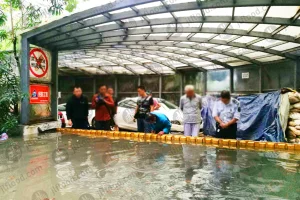
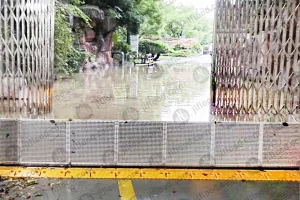
During Typhoon Bebinca and historical extreme rainstorms, municipal drainage systems in Tier-1 Asian metropolises were overwhelmed by unprecedented surface runoff rates. Venues equipped with Junli automatic flood barriers successfully activated and blocked incoming flash floods without a single operator on site.
"Structural deflection remains strictly under 1/500 span distance under full 2.0-meter design hydrostatic head pressure, delivering near-zero leakage (< 0.05 L/hr per meter of seal)."
Our barrier architecture spans multiple municipal sub-sectors: Metro Connection Channels, Municipal Underground Pedestrian Passages, Utility Cable Trenches, High-Speed Rail Terminals, and Critical Data Center Power Entrances.
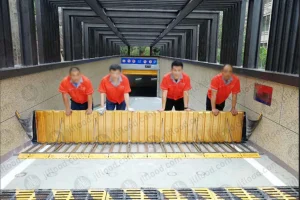
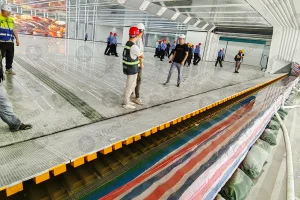
Factory Hydrodynamic Testing Pool & On-Site Typhoon Water Retaining Footage
Installed at subway concourse entrance steps and connection walkways to prevent surface flash flood ingress into underground platforms.
Surface-mounted or embedded gates positioned around perimeter fences and cable room doorways for utility continuity.
Drive-over flush ramp barriers allowing 24/7 seamless vehicle access while providing emergency barrier protection.
Architecturally discreet flood protection integrated into shopping mall basements, hospitals, and luxury residential complexes.
Designing and manufacturing structural flood protection systems demands total compliance with international building codes, hydraulic testing protocols, and environmental standards.
Engineered in accordance with FEMA Technical Bulletin 3-93 and ASCE/SEI 24-14 (Flood Resistant Design and Construction), fulfilling dry floodproofing criteria for commercial structures located within SFHA (Special Flood Hazard Areas).
Manufactured under EN 1090-2 structural steel execution standards, CE marked, and verified for water tightness following DIN 19569-4 (Hydraulic structures seal classes for class 1 extreme low leakage rate).
Fully compliant with GB 50014 (Outdoor Drainage Design Standard) and specialized Rail Transit Flood Defense Technical Regulations for subway network infrastructure integration.
Prior to dispatch, every custom Junli flood gate panel undergoes full-scale hydrostatic testing in our proprietary multi-ton testing reservoir. We verify passive lift pressure thresholds, hinge friction coefficients, seal compression resilience, and maximum structural deflection ratios under 120% nominal head design load.
Merging mechanical hydrodynamic autonomy with smart urban internet-of-things (IoT) monitoring systems.
While the physical door panel relies 100% on passive water power to operate during blackouts, Junli integrates optional IoT Smart Monitoring Modules. These include low-power LoRaWAN or NB-IoT telemetry sensors embedded within the foundation chamber.
When chamber water levels trigger initial panel flotation, wireless alerts are instantly transmitted to municipal SCADA platforms, building management systems (BMS), and facility engineers' mobile applications.
Modern ESG (Environmental, Social, and Governance) targets require green building infrastructure to minimize active energy consumption. Passive hydrodynamic flood barriers contribute zero carbon emissions during standby and operation.
By replacing motorized flood gates that require power supplies and routine energy maintenance with zero-electricity mechanical solutions, engineers significantly reduce operational carbon footprints.
As a direct manufacturer, Nanjing Junli Technology supports OEM, ODM, and turnkey project contracting for international distributors, EPC contractors, and municipal authorities.
To request an accurate wholesale price quote and tailored engineering CAD drawings, please prepare the following civil site parameters when contacting our engineering team:
Clear Span Width (mm) and required Design Water Retaining Height (typically 500mm, 800mm, 1000mm, 1500mm, or 2000mm).
Pedestrian doorways, light commercial vehicle ramps, or heavy HGV / fire-truck 40-ton axle load pathways.
Embedded foundation trench (flush floor surface) vs. Surface-mounted retrofit installation onto existing concrete floor slabs.
Contact our senior technical sales director to receive a complete layout proposal within 24 hours.
Request Direct Factory Quote ([email protected])Expert answers to key technical, civil installation, and long-term maintenance questions.
Junli hydrodynamic automatic flood barriers are 100% mechanically powered by water buoyancy and hydrostatic pressure. They require no electrical power, no sensors, no backup generators, and no human triggers. As surface water enters the embedded chamber, buoyancy lifts the hollow structural panel, and hydrostatic differential pressure locks it into the sealing gasket. The barrier operates seamlessly during extreme storms when local electric power grids collapse.
Single barrier leaf heights range from 0.5 meters to 2.0 meters. For clear width spans, a single modular panel covers up to 6.0 meters. For extra-wide driveway openings or multi-lane subway entrances exceeding 20 meters, multiple modular leaves are linked together using removable or retractable central structural support mullions, delivering infinite continuous retaining width.
Our foundation chambers feature integrated stainless steel debris grates, sediment catch pits, and continuous self-cleaning drainage outlets. Smaller particles fall past the panel into the bottom drainage trench, which connects to the site's storm sewer system. Routine annual maintenance requires simply hosing down the chamber bottom to clear accumulated fine sediment.
Yes. We supply two structural variants: Embedded Type (requires excavating a shallow concrete trench for perfectly flush floor integration) and Surface Installation Type (mounted directly onto existing concrete floor slabs with tapered ramp edges, ideal for operational subway stations and leased commercial buildings where trenching is restricted).
The barrier panel body and stainless frame have an engineered design life of 30+ years. High-grade NBR/EPDM seals are rated for 10 to 15 years of atmospheric UV exposure and dynamic contact. Replacement seals are supplied in standard bolt-on kit segments, allowing facility operators to execute full seal replacements in less than 2 hours using basic hand tools.
Yes. Every batch of custom flood gates undergoes rigid hydrostatic pool testing at our Nanjing manufacturing center. Clients can request official water-retaining verification certificates, recorded video proof of lifting speeds and seal tightness, or arrange third-party inspection agencies (SGS, TUV, Bureau Veritas) to witness factory acceptance testing (FAT).
Explore our specialized modular, hydrodynamic power-free, and garage-specific automatic flood barriers.
Specialized Engineering Center for Intelligent Civil Defense & Urban Flood Protection Infrastructure.
Headquartered in Qinhuai District, Nanjing, Jiangsu Province, Junli Technology operates full-scale R&D, structural welding, precision sealing manufacturing, and hydraulic testing facilities in-house. We do not source from third-party door assembly plants—every hydraulic calculation, FEA structural analysis, and sealing profile design is created by our structural engineering team.
Our solutions cover four core engineering sectors: Intelligent Civil Defense, Intelligent Flood Control, Structural Bridge Support Systems, and Energy Sector Utility Safeguards.


