Facebook LinkedIn YouTube
Hydrodynamic Engineering Whitepaper

Wholesale Foldable Automatic Flood Gate Without Electricity Factories & Quotes

Comprehensive Technical Analysis, Global B2B Supply Chain Dynamics, and Zero-Power Buoyancy Flood Defense Systems for Critical Civil Infrastructure.

Featured Automatic Flood Barrier Assemblies (Catalog Part I)

Factory-direct quotes, engineering specifications, and embedded hydrodynamic designs tested for heavy municipal and commercial deployments.
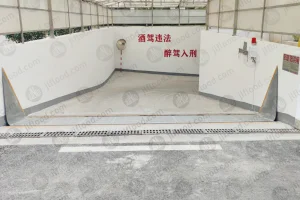
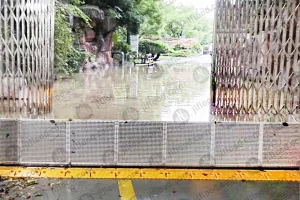
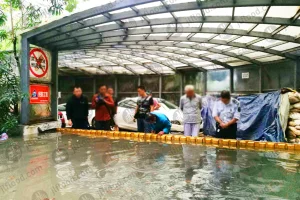
China Embedded flood barrier Hm4e-006C Manufacturer, Quotes
Request Wholesale Quote
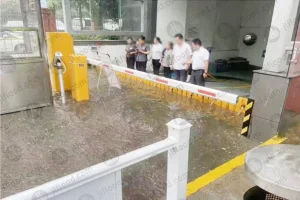
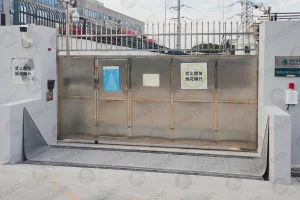
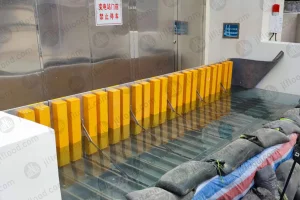
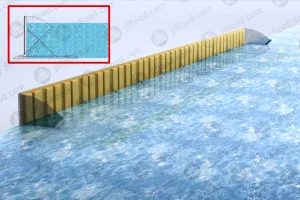
Wholesale Flood barrier, Flood defence automaticlly Manufacturer, Pricelist
Request Wholesale Quote
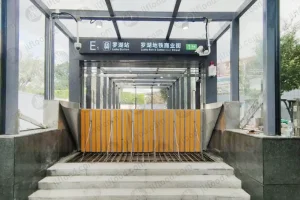
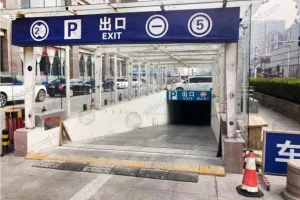
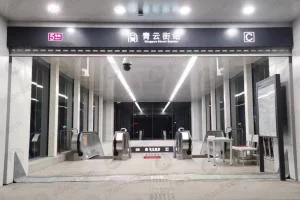
Wholesale Flood Barrier at Metro Stations Manufacturer, Quotes
Request Wholesale Quote
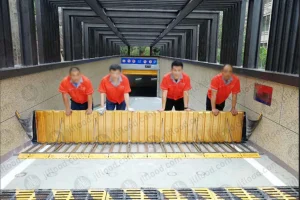
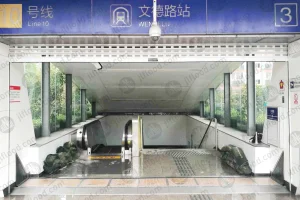
China Flood Barrier at Dalian Metro Stations Manufacturers, Quotes
Request Wholesale Quote
Wholesale Flood Barrier at Guangzhou Metro Yangji Station Suppliers, Factory
Request Wholesale Quote
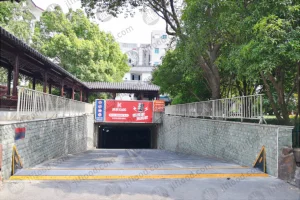
Wholesale Flip-up flood barrier for garages Manufacturer, Factory
Request Wholesale Quote
Wholesale Automatic flood barrier, Surface installation metro type: Hm4d-0006E Supplier, Quotes
Request Wholesale Quote
China Automatic Flood Barrier without electric power Pricelist, Quotes
Request Wholesale Quote

1. Executive Industry Whitepaper: Climate Vulnerability & The Electricity-Free Paradigm Shift

Analyzing global flood risk escalation, municipal infrastructure failure points, and the engineered superiority of passive hydrodynamic flood barriers.

In an era defined by intensifying global climate volatility, urban centers across North America, Europe, East Asia, and the Middle East face an unparalleled threat from hyper-localized, high-intensity rainfall events known as cloudbursts or flash floods. Modern urban landscapes, dominated by impervious concrete surfaces, funnel massive volumes of storm runoff directly into low-lying ingress points such as underground parking garages, subterranean metro transit networks, power distribution substations, and commercial basements. The financial and operational consequences of catastrophic inundation at these locations are measured in millions of dollars per incident in asset destruction, business interruption, and life-safety hazards.

Historically, flood mitigation relied heavily on two main approaches: manual barrier assembly (e.g., modular aluminum stop-logs or sandbags) and electromechanical powered flood gates (e.g., motorized flip-up or vertical drop barriers). However, field data gathered from major extreme weather events—including Typhoons Bebinca, In-fa, and extreme convective storm cells in central Europe—demonstrates a alarming systemic vulnerability in these conventional methodologies:

Key Technical Vulnerability Analysis: During severe urban flood events, municipal electrical grids frequently trip or experience catastrophic blackout conditions. Motorized flood barriers that depend on AC grid power, backup generators, complex PLC control circuits, or optical water sensors suffer high rates of operational failure due to short-circuits, sensor fouling, or generator fuel starvation. Concurrently, manual barrier systems fail when floodwaters surge rapidly during off-peak hours or when site personnel cannot reach the deployment zone due to flooded transport routes.

These systemic vulnerabilities have catalyzed a global architectural and engineering paradigm shift toward Hydrodynamic Automatic Flood Gates Operating Without Electricity. By utilizing the intrinsic physics of water—specifically buoyancy and hydrostatic pressure—these passive engineered gates deliver 100% fail-safe deployment without requiring human presence, external electrical power, or electronic sensor networks. The gate panel remains completely flush with the roadway surface during dry periods, allowing heavy vehicular and pedestrian traffic to pass unobstructed, and automatically raises into a sealed barrier wall the moment floodwaters overflow the intake channel.

0 kWh
Power Consumption
< 0.5s
Buoyancy Response Time
200 kN/m²
Axle Load Capacity
25+ Yrs
Design Service Life

2. Engineering Physics: Hydrodynamic Mechanics & Material Science

Decoupling power dependence through mechanical fluid dynamics, structural structural aluminum alloys, and high-durability elastomeric seals.

Buoyancy-Driven Mechanical Activation

The system operates via an embedded ground basin housing a high-density, closed-cell synthetic foam core integrated within a structural metal leaf panel. As surface water drains into the basin trough, fluid displacement generates immediate upward net buoyancy vector forces ($F_b = \rho_{water} \cdot V_{displaced} \cdot g$), smoothly pivoting the barrier wall upwards around an offset axis of rotation.

Hydrostatic Self-Locking Dynamics

Once elevated to its active angle (ranging from 45° to 90° relative to horizontal), the cumulative hydrostatic head pressure exerted by the retaining water body acts directly against the front face of the barrier panel. This fluid force firmly compresses the bottom and lateral EPDM sealing gaskets against the embedded structural stainless steel frame, creating a tighter seal as water levels rise.

High-Strength Alloy Metallurgy

Constructed utilizing heavy-duty extruded 6063-T6 or 6005A-T6 structural aluminum alloys, treated with T5/T6 thermal hardening and 25-micron anodic oxidation film. The structural assembly resists high dynamic impact loads caused by floating urban debris, while providing comprehensive immunity to roadway salt, oil, and atmospheric corrosion.

Triple Elasticity Gasket Engineering

Featuring specialized vulcanized EPDM (Ethylene Propylene Diene Monomer) rubber profiles featuring multi-cavity sealing technology. The gaskets maintain high elasticity and structural memory across broad ambient temperature windows (-40°C to +120°C), preventing micro-leakage at critical lateral frame corner junctions.

Heavy Vehicular Load Rating

Designed to sustain extreme static and dynamic surface axle loads up to AASHTO HS-20 / HS-25 standards (and European EN 124 Class D400/E600 specifications). Heavy commercial trucks, emergency vehicles, and public buses can repeatedly cross the recessed ground plate without inducing plastic deformation or misalignment of the inner linkage arms.

Self-Cleaning Sediment Removal Basin

Engineered bottom basin geometries incorporate sloping hydraulic silt transport channels. Minor rainwater flow during normal storms flushes leaf litter, sand, and ambient urban grit toward integrated silt collection sumps, minimizing maintenance requirements and preventing mechanical jam risks.

Engineering Parameter Standard Specification Heavy-Duty Municipal Specification
Retaining Height ($H_r$) 500 mm – 1200 mm 1200 mm – 2000 mm (Custom Modular)
Single Span Width ($W$) 1000 mm – 6000 mm per module Continuous multi-span arrays (>50 meters)
Activation Trigger Level 50 mm water depth in collection basin Customizable static threshold (30–80 mm)
Structural Deflection Limit < L / 250 at maximum design head < L / 400 for high-head metro installations
Micro-Leakage Rate ≤ 0.05 L / (min · meter of seal) ≤ 0.01 L / (min · meter of seal) (Zero-Drip Class)
Corrosion Protection Anodized Aluminum + Powder Coating Fluorocarbon (PVDF) coating + 316 Stainless Steel trim

3. Global Procurement Framework: B2B Sourcing, OEM Customization & TCO Analysis

Guidance for commercial buyers, EPC contractors, civil engineers, and municipal procurement managers on selecting qualified factories and evaluating Total Cost of Ownership (TCO).

When procuring wholesale foldable automatic flood gates without electricity, global procurement directors and EPC project directors must look beyond initial FOB unit pricing. Passive flood mitigation structures constitute critical life-safety and asset-protection infrastructure; failure during a design basis flood event can result in catastrophic financial liability and severe regulatory sanctions.

Evaluation Criteria for Factory Verification & Supplier Auditing

To mitigate risk within international B2B supply chains, procurement teams should evaluate potential OEM/ODM manufacturing facilities based on four rigorous engineering benchmarks:

  • Hydrostatic Full-Scale Test Facilities: Qualified manufacturers must maintain an in-house full-scale hydraulic testing reservoir. Every custom-manufactured barrier span should undergo hydrostatic head verification and leak-rate measurement prior to containerization and export shipment.
  • Finite Element Analysis (FEA) Validation: Factory engineering departments must supply structural calculation dossiers, including FEA stress heatmaps proving structural integrity under combined hydrostatic, hydrodynamic shock wave, and heavy axle loads.
  • Weldment Integrity & Material Certification: Aluminum structural welding must comply with international standards (such as AWS D1.2 or ISO 3834). Factory mill test certificates (MTC) for alloy chemistry and temper must accompany each production batch.
  • Modular Transport & Site Assembly Ergonomics: Premium factories pre-assemble embedded frames into modular cassettes. This minimizes field welding and concrete forming errors during installation by local civil sub-contractors on overseas job sites.

Total Cost of Ownership (TCO): Passive vs. Active Motorized Systems

While traditional motorized flood gates may sometimes present lower initial fabrication costs, a comprehensive 20-year Total Cost of Ownership (TCO) financial model demonstrates that electricity-free hydrodynamic barriers deliver significant lifecycle cost savings:

Cost Component Traditional Motorized / Hydraulic Gate Hydrodynamic Power-Free Barrier
Electrical Infrastructure High (Dedicated conduits, backup generators, ATS panels) $0 (Zero electrical infrastructure required)
Standby Power Consumption Continuous annual grid draw for sensors & control boards $0 (Zero energy consumption)
Scheduled Maintenance Quarterly electrical audits, motor testing, fluid flushes Minimal (Bi-annual visual inspection & debris cleaning)
Operational Risk Exposure High (Blackout failure risk, sensor malfunction) Zero Operational Risk (Fail-safe physical buoyancy)
20-Year Cumulative Savings Baseline Cost Standard 35% to 55% Total Cost Reduction

4. Macro Industry Application Scenarios & Civil Engineering Integration

Tailored architectural integration patterns for urban rail transit, electrical power utility hubs, commercial real estate, and municipal infrastructure.

Metro & Urban Rail Transit Systems

Underground subway stations represent high-density pedestrian zones where flood entry can result in catastrophic loss of life and equipment destruction. Surface-mounted or shallow-embedded automatic flood gates at station portal entrances, vent shafts, and pedestrian connecting channels automatically deploy when rainwater breaches street curb levels, protecting subsurface transit networks.

High-Voltage Power Substations & Energy Hubs

Electrical substations housing high-voltage transformers and switchgear face severe arc-flash and long-term outage risks if floodwaters enter cable trenches or transformer vaults. Zero-electricity flood barriers ensure that even during grid failure conditions, power infrastructure remains completely sealed against external stormwater intrusion.

Commercial Underground Garages & Logistics Centers

Multi-story underground parking structures at commercial shopping plazas, corporate headquarters, and residential complexes feature steep ramp access points. Embedded flip-up hydrodynamic gates provide seamless vehicular transit during normal operation, yet instantly transform into continuous water barriers when storm runoff floods access ramps.

5. Global Compliance Standards & Technical Roadmap (2025–2030)

Ensuring international engineering compliance and exploring the future of smart passive-hybrid flood risk architecture.

To successfully integrate into global architectural tenders, automatic flood gate systems must comply with rigorous international regulatory frameworks. Leading manufacturers align design verification with standard structural codes including EN 1990 / EN 1991 (Eurocodes for Structural Design), FM Approvals Class 2510 (Flood Abatement Equipment), and ASTM E2128 / U.S. Army Corps of Engineers (USACE) flood barrier testing standards.

Next-Generation Engineering Innovations: The 2025–2030 Roadmap

While the mechanical operation of buoyancy-driven barriers remains fully power-free, the future of urban resilience lies in the integration of Passive-Active Telemetry Hybrids:

Wireless LoRaWAN / NB-IoT Telemetry

Integrating micro-power IoT sensors powered by energy-harvesting solar film or long-life lithium cells. As the gate rises passively via buoyancy, an ultra-low-power radio transmitter broadcasts real-time activation alerts, water depth readings, and structural status directly to municipal Smart City SCADA command centers.

Advanced Nano-Composite Coatings

Adopting self-cleaning superhydrophobic and anti-fouling graphene nanocomposite surface layers. These advanced coatings prevent marine growth in coastal deployments, resist chemical contaminant adhesion, and further extend gasket lifespan in harsh industrial environments.

Modular Dynamic Dampening Systems

Integrating secondary hydraulic micro-dampers to manage high-velocity flash flood impact waves. These dampening elements absorb the dynamic shock energy of incoming surge water, stabilizing the panel transition and reducing stress on foundation anchor bolts.

6. Frequently Asked Questions (Technical & Procurement FAQ)

Detailed responses to common questions from consulting engineers, architects, and procurement officers regarding electricity-free flood gates.
How does the foldable automatic flood gate achieve deployment without any electrical power or human intervention?
The barrier relies entirely on fluid dynamics and Archimedes' principle of buoyancy. The gate panel is installed flush within a pre-cast embedded ground basin. When storm runoff enters the basin through surface intake grates, the water displaces air inside the buoyant structural leaf. As water accumulates to a depth of 30–50 mm, upward hydrostatic force pivots the panel into an upright position. The rising water level then exerts continuous hydrostatic pressure against the front face, forcing the EPDM gaskets against the side frames to maintain a water-tight seal—all without motors, sensors, or human operators.
What happens when heavy trucks drive over the recessed ground panel during normal dry periods?
Our heavy-duty automatic flood gates are engineered to meet AASHTO HS-20/HS-25 and EN 124 Class D400/E600 axle load ratings (up to 40–60 tons gross vehicle weight). The top surface plate is crafted from high-tensile 6063-T6 aluminum alloy reinforced with internal structural ribbing. Dynamic loads from passing traffic are transferred directly through the embedded frame into the surrounding concrete foundation, fully protecting the internal linkage mechanisms and buoyancy chambers from deformation.
Can these barriers be customized for extremely wide entrances, such as multi-lane parking ramps or metro stations?
Yes. While individual barrier modules typically span between 1.0 meter and 6.0 meters, our engineering team designs modular multi-leaf arrays capable of protecting spans exceeding 50 meters. Mid-span removable intermediate posts or interlocking modular hinge connectors are utilized to maintain structural rigidity and continuous seal integrity across wide spans.
What routine maintenance is required to prevent silt, leaves, and debris from jamming the mechanism?
The foundation trough is designed with sloped self-cleansing hydraulic channels that direct fine silt toward an end collection sump. Maintenance is simple and low-cost: we recommend bi-annual visual inspections to clear accumulated leaves or trash from the surface intake grates, flush out the bottom sump using a standard water hose, and inspect the EPDM seals for physical damage or debris buildup.
How are wholesale orders custom-engineered, packaged, and shipped to overseas construction projects?
Upon receipt of site survey dimensions and architectural CAD drawings, our factory engineering team creates embedded frame templates and structural CAD files for client approval. Finished barrier assemblies undergo full hydrostatic pool testing before being packed into steel-framed plywood crates for ocean shipping. Complete English installation manuals, rebar detail notes, and anchor bolt templates are provided to ensure accurate installation by local civil crews.

Complete Hydrodynamic & Automatic Flood Barrier Line (Catalog Part II)

Explore factory direct quotes, self-closing flood gates, and specialized industrial substation protection barriers.
Wholesale Flood control defence Manufacturer, Supplier
Request Wholesale Quote
China Self closing flood barrier Factory, Factories
Request Wholesale Quote
China Heavy duty automatic flood gate Hm4d-0006C Factory, Pricelist
Request Wholesale Quote
Wholesale Modular hydrodynamic automatic flood gate Supplier, Factories
Request Wholesale Quote
Wholesale Flood Gate at Metro Stations Manufacturer, Suppliers
Request Wholesale Quote
China Surface type Automatic flood barrier for Metro Suppliers, Pricelist
Request Wholesale Quote
China Flood Barrier at Substation Gate Manufacturer, Supplier
Request Wholesale Quote
Wholesale Flood Barrier at Metro Connection Channel Manufacturer, Factories
Request Wholesale Quote
Request a Catalog