
Explore Nanjing Junli Technology’s core engineered flood barrier systems designed for critical utility gates, underground transport hubs, and high-risk commercial assets across municipal environments.
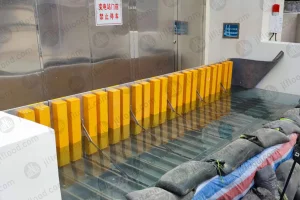
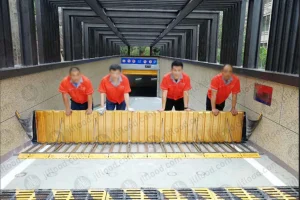
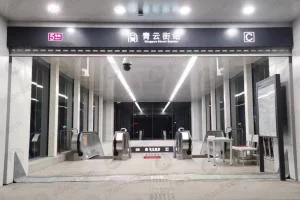

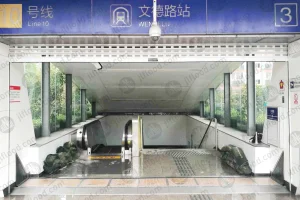
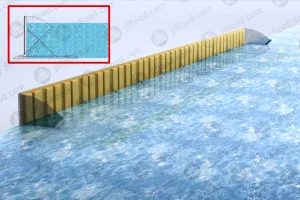
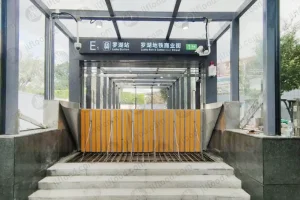
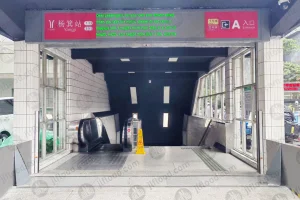
In an era marked by accelerating climate volatility, extreme precipitation events, and rapid urban density expansion, civil defense infrastructure has shifted from static, reactive installations to dynamic, zero-human-intervention flood mitigation technologies. Among these engineering innovations, Wholesale Foldable Flood Baffles and Hydrodynamic Self-Rising Flood Gates manufactured in China have emerged as a dominant global benchmark for structural reliability, economic scalability, and rapid deployment capabilities.
China's industrial supply chain for flood mitigation hardware—centered heavily in engineering hubs such as Nanjing, Jiangsu—combines advanced metallurgical processing, specialized polymer sealing R&D, and full-scale hydraulic testing facilities. Modern commercial, industrial, and municipal buyers across North America, Europe, Southeast Asia, and the Middle East increasingly rely on Chinese original equipment manufacturers (OEMs) and original design manufacturers (ODMs) to secure critical sub-surface assets against catastrophic inundation.
Historically, commercial facilities relied on manual sandbag stacking or heavy modular stoplogs. However, these traditional methodologies fail during unpredicted cloudburst floods due to labor shortages, deployment delays, and structural leakage under high hydrostatic heads. China's state-of-the-art foldable flood baffles and hydrodynamic automatic flood barriers overcome these failure points by integrating buoyancy-driven mechanical linkages flush within structural entry thresholds. This whitepaper analyzes the engineering design, sector-specific application matrices, manufacturing standards, and future technical roadmaps defining Chinese flood defense systems today.
The core innovation behind modern Chinese hydrodynamic automatic flood barriers lies in their purely mechanical, power-independent buoyancy mechanism. Unlike electromechanical flood doors or pneumatic bladders that depend on active grid electricity, battery backups, or water sensors—which frequently experience system outages during severe typhoons and electrical grid collapses—the hydrodynamic gate relies entirely on Archimedes’ principle of buoyancy and hydrostatic pressure equilibrium.
Constructed from high-tensile 6063-T6 marine-grade extruded aluminum alloy profiles or heavy-duty structural steel plates, delivering high structural yield strength capable of enduring up to 200 kN vehicle wheel loads during normal traffic operations.
Utilizes multi-lip continuous Ethylene Propylene Diene Monomer (EPDM) vulcanized rubber profiles engineered for ozone resistance, thermal endurance (-40°C to +120°C), and zero-leakage retention efficiency validated by hydro-head testing.
Designed with an angled bottom chamber and debris displacement channels, preventing silt, leaf litter, and gravel accumulation from obstructing the barrier’s passive pivot rotation during flood emergencies.
| Parameters | Hydrodynamic Automatic Barrier (Junli) | Electromechanical Drop Gates | Manual Aluminum Stoplogs |
|---|---|---|---|
| Power Requirement | Zero (Purely Hydromechanical Buoyancy) | 220V/380V Power Grid or UPS | None (Manual Labor Required) |
| Response Trigger Time | Instantaneous (< 0.1s upon water entry) | 30 to 180 seconds (Sensor dependent) | 15 to 45 minutes (Personnel deployment) |
| Human Operational Risk | 0% (100% Passive Autonomous) | Low (Requires control system integrity) | Extremely High (Personnel must be on site) |
| Traffic Bearing Rating | Up to 200 kN (Heavy Commercial Truck Load) | Varies (Requires overhead tracks or side posts) | Non-traffic bearing during deployment |
| Maintenance Cycle | Bi-annual visual check & debris flushing | Quarterly motor, sensor, electrical audit | Annual gasket inspection & dry storage check |
The global infrastructure sector is undergoing a structural transition toward climate resilience and disaster risk reduction (DRR). Key macroeconomic drivers and regulatory frameworks are reshaping how commercial real estate developers, municipal transit authorities, and electrical utility providers procure flood control equipment:
Municipalities across China, Asia-Pacific, and Europe are codifying Sponge City standards into building codes. Foldable flood baffles act as the final defense line at critical transition nodes—such as underground rail entrances and underground utility trenches—integrating seamlessly into broader sustainable urban drainage systems (SUDS).
Global institutional insurers (e.g., FM Global, Munich Re) are enforcing strict physical asset protection criteria for real estate assets in coastal and urban flood zones. Installing certified hydrodynamic automatic barriers allows facility owners to reduce insurance premiums and comply with Environmental, Social, and Governance (ESG) resilience metrics.
Urban density prevents the structural reconstruction of existing civil access points. Chinese manufacturers have pioneered ultra-slim surface-mounted and shallow-embedment barrier frames, allowing older subterranean garages and historical subways to be retrofitted without altering existing structural foundations.
Engineered flood protection requires precise structural adaptation to different building profiles, operational dynamics, and hydraulic entry conditions. Nanjing Junli Technology delivers specialized solutions designed for five core industrial sectors:
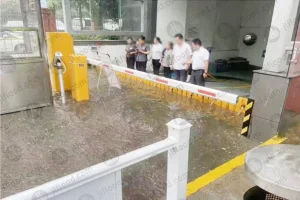
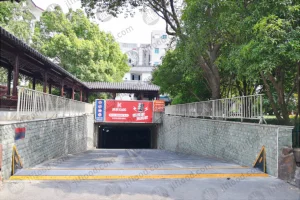
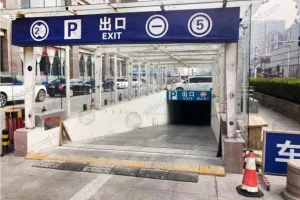
Commercial shopping centers, residential high-rises, and hospital parking basements are vulnerable to sudden surface runoff ingress. Embedded surface-level flood gates allow unhindered 24/7 vehicular passage while guaranteeing instant, passive lifting during intense cloudbursts.
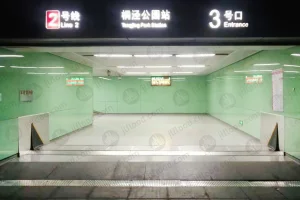
Subway pedestrian portals, emergency exit stairwells, and underground concourse connection channels demand total structural water-tightness. Junli’s specialized metro flood barriers have been successfully integrated across transit networks in Guangzhou, Beijing, Suzhou, and Hong Kong.
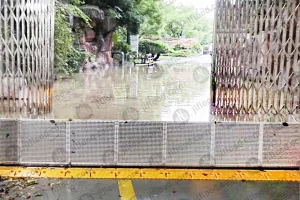
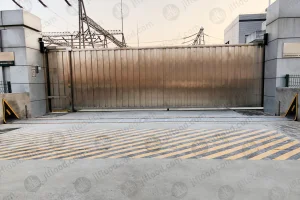
In power distribution gates and telecom facilities, water inundation causes catastrophic grid outages and millions in equipment loss. Substation gates require non-conductive, corrosion-resistant flood doors integrated into perimeter boundary walls and cable trench entries.
Deploying large-scale flood protection across commercial and municipal real estate requires structural synchronization between civil contractors, drainage engineers, and barrier suppliers. Nanjing Junli Technology provides a turnkey project management framework from hydraulic assessment to post-installation testing:
Assessment of 100-year rainfall return period data, threshold gradient analysis, traffic load calculations, and baseline clear width measurement (covering single spans up to 6m or modular continuous arrays exceeding 20m).
Preparation of reinforced concrete foundation trenches, embedded steel anchors, structural rebar tie-ins, and high-capacity gravity drainage outlets connected directly to urban storm drains.
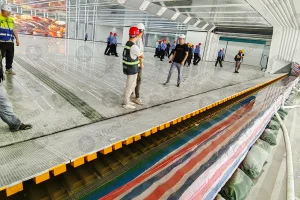
100% full-scale hydraulic pool testing conducted at Junli's specialized testing basin to verify panel flotation dynamics, structural deflection limits, and EPDM seal leakage compliance prior to container loading.
As smart cities evolve, China's flood control manufacturing sector is advancing beyond pure mechanical structures toward integrated cyber-physical resilience systems. Future technology roadmaps focus on three distinct innovation pillars:
Integration of low-power NB-IoT and LoRaWAN position sensors within passive barrier panels. Facility managers receive real-time mobile alerts and SCADA dashboard status updates the instant a flood gate begins deployment.
R&D into hybrid carbon-fiber-reinforced aluminum matrix panels to reduce structural panel weight by 40% while doubling structural load-bearing and impact resistance against debris-laden floodwaters.
Development of smart elastomeric seals featuring embedded micro-encapsulated hydrophobic agents that expand dynamically under water contact, permanently sealing minor micro-cracks or sand particulate gaps.
Select from our extensive catalog of certified flood control equipment, flip-up barriers, power-free automatic gates, and specialized industrial doors available for worldwide export.
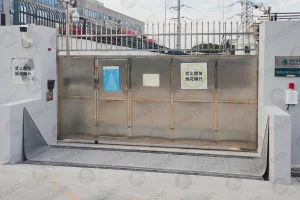
Detailed technical answers for consulting engineers, municipal procurement managers, and commercial building contractors evaluating Chinese hydrodynamic flood control systems.
The hydrodynamic barrier operates on passive hydraulic principles. The system consists of an embedded stainless steel or aluminum ground frame housing a hinged hollow door panel. When floodwater reaches the entrance, water naturally flows through entry grates into the recessed base basin. The resulting hydrodynamic buoyancy forces the engineered panel to float and pivot upward. As water levels rise further, hydrostatic pressure pushes the panel tightly against structural perimeter frames equipped with EPDM gaskets, creating a self-tightening seal without motors, sensors, or power supplies.
Junli manufactures standard single-span modules covering clear openings from 1.5 meters up to 6.0 meters, with standard water retention heights ranging from 0.5 meters to 2.0 meters. For wide entrances such as multi-lane underground garage ramps or wide metro portals, multiple barrier modules are installed in series with intermediate removable posts or dynamic continuous hinge linkages to accommodate widths exceeding 20 meters.
Yes. When in the resting position, the surface plate of the flood barrier sits completely flush with the surrounding concrete roadway. Standard commercial models are structural-load rated for 30 tons to 60 tons (conforming to heavy vehicle loading standard axle ratings up to 200 kN), allowing cars, buses, delivery trucks, and emergency vehicles to drive across daily without damaging the internal mechanics or sealing channels.
Junli barriers incorporate self-cleaning hydraulic design elements. The internal bottom frame features angled debris-slotted channels and a dedicated bottom drainage collection trough. Initial water influx flushes fine silt directly toward municipal drain connections, while removable stainless steel filter screens catch larger urban debris. Bi-annual maintenance simply involves lifting the top maintenance covers and flushing the trough with a standard water hose.
For embedded models, contractors must excavate a shallow trench matching our structural shop drawings, pour a reinforced C30 concrete base, install embedded anchor bolts according to our template, and connect a minimum DN100 gravity drain pipe from the frame bottom to a sump pump or storm sewer. For surface-mounted models (retrofits), only a flat, level concrete slab is required for anchor bolt fastening.
The main metallic structural elements (extruded 6063-T6 aluminum alloy and 304/316 stainless steel hardware) have an engineered service life exceeding 20 to 30 years with anti-corrosion anodized or powder-coated finishes. The vulcanized EPDM seals carry a design life of 10 to 15 years under outdoor ambient UV exposure and can be easily replaced on-site using standard modular replacement seal kits.
Nanjing Junli Technology offers full OEM and ODM services for global distributors, engineering contractors, and government tenders. We provide customized CAD/BIM drawings, structural calculation reports, English installation manuals, customized branding, and international seaworthy wooden crate packaging. All orders undergo mandatory factory water basin testing with video verification provided prior to export dispatch.


