
Factory-direct wholesale engineered flood protection solutions verified across high-capacity transit lines, critical grid substations, and commercial basements.
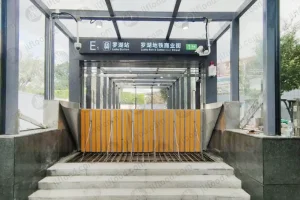
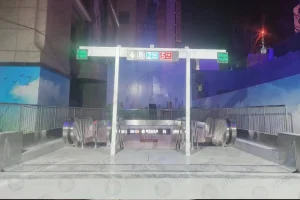
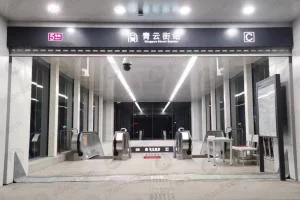
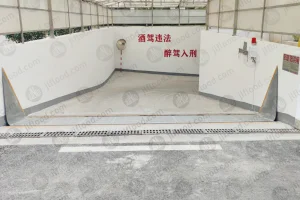
Addressing Pluvial Cloudbursts, Flash Floods, and Infrastructure Vulnerabilities Through Advanced Hydrodynamic Self-Rising Engineering
In an era defined by intensifying global climate volatility, urban centers across North America, Europe, East Asia, and the Middle East face unprecedented pluvial flooding events. Extreme cloudbursts frequently overwhelm municipal stormwater networks within minutes. When flash floods sweep across urban topographies, subterranean spaces—including underground rail transit (MRT/Subway networks), commercial basement garages, utility vaults, and electrical substations—become immediate, life-threatening catchments. As a premier wholesale foldable floodgate manufacturer and global B2B supplier, Nanjing Junli Technology Co., Ltd. delivers the definitive structural defense against catastrophic inundation.
Traditional flood defense strategies relying on manual sandbags or labor-intensive modular aluminum stop logs fail under real-world emergency conditions. Manual deployment suffers from three catastrophic vulnerabilities: delayed human reaction during off-peak hours or rapid surges, critical labor shortages during widespread regional weather alerts, and total system breakdown caused by grid power failure during severe storms. The industry-standard hydrodynamic automatic foldable flood barrier eliminates human dependency entirely. By leveraging fundamental fluid dynamics, hydrostatic pressure, and buoyancy, our systems automatically deploy without human intervention, electrical power, or sensor triggering.
Operates strictly on hydraulic pressure and Archimedes' principle. Never fails due to storm-induced grid blackouts or electronic sensor failure.
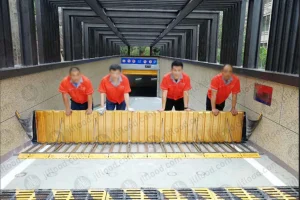
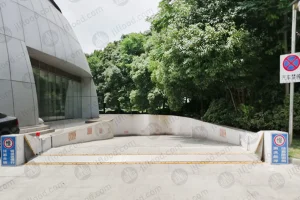
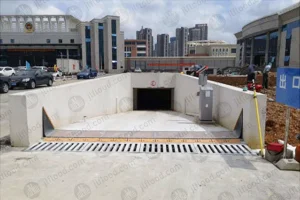
Embeds seamlessly into ground level. Vehicles and pedestrians pass smoothly during non-flood conditions without structural obstruction or clearance limits.
Engineered multi-stage rubber gaskets utilize rising hydrostatic pressure to press tighter against structural side frames, achieving near-zero leakage.
Evaluating Civil Infrastructure Standards (FEMA P-936, EN 1991, GB 50157) Across Municipal & Industrial Engineering Projects
Across North America and the European Union, municipal building codes and insurance underwriters (such as FM Global) increasingly mandate certified physical flood mitigation systems for commercial properties. In Asia-Pacific, rapid mass transit expansion has established stringent requirements for subway entrance protection. As a global OEM/ODM manufacturer, Junli Flood Control engineers solutions to meet and exceed global regulatory frameworks, including FEMA P-936 (Floodproofing Non-Residential Structures) and BS EN 12288 hydraulic sealing criteria.
| Flood Barrier Category | Trigger Mechanism | Power Requirement | Deployment Speed | Human Dependency | Structural Load Rating |
|---|---|---|---|---|---|
| Junli Hydrodynamic Foldable Gate | Automatic Water Buoyancy | 0 Watts (Passive Mechanical) | < 15 Seconds | Zero (Fully Autonomous) | Up to 40-Ton Heavy Truck Loading |
| Manual Aluminum Demountable Boards | Manual Bolt-Down Stacking | 0 Watts (Manual Labor) | 30 – 120 Minutes | High (Requires On-Site Crew) | Pedestrian to Light Vehicle Only |
| Electro-Hydraulic Flip-Up Gates | Water Sensor & Electric Motor | High Voltage (Grid / Genset) | 30 – 60 Seconds | Low (Unless Power Fails) | Medium to Heavy Loading |
| Inflatable / Pneumatic Rubber Dam | Air Compressor & Water Pump | Continuous Electric Power | 10 – 30 Minutes | Medium (System Monitoring) | No Over-Traffic Capability |
When severe weather strikes, power grids are often the first infrastructure asset to fail. Traditional electric or hydraulic flip-up gates rely on water sensors, PLCs, and motor drives. If grid power drops and backup diesel generators fail to fire within seconds, subterranean access ramps remain fully open to incoming floodwaters. Junli’s self-closing foldable flood barrier harnesses the natural hydrostatic pressure of the floodwater itself. As water fills the subsurface basin trench, the integrated buoyancy panel lifts mechanically, creating a locked vertical barrier with ZERO electrical footprint.
Precision Mechanics, Finite Element Structural Analysis (FEA), and High-Grade Metallurgy Behind B2B OEM Flood Control Infrastructure
Extruded T6-6063 structural aluminum alloy gate leaves paired with heavy-duty 304 or 316 stainless steel embedded foundation frames, delivering extreme corrosion resistance against de-icing salts and coastal brackish water.
Specially formulated EPDM elastomeric profiles (70 Shore A hardness) designed with dual-lip dynamic sealing geometry. As external water head increases, the hydrostatic force compresses the seal tighter against side jambs.
Supports unlimited continuous width coverage via modular multi-leaf interlocking units. Engineered expansion joints absorb thermal contraction and ground settlement without compromising waterproof integrity.
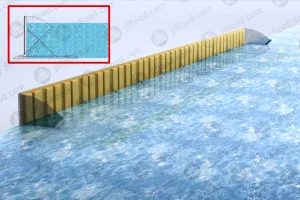
The operational threshold of the Junli hydrodynamic self-closing flood gate is strictly governed by hydrostatic pressure differential. Under standard zero-flow conditions, the gate leaf rests horizontally flush inside the stainless-steel bottom trench frame, covered by a surface tread plate that allows seamless drive-over access by heavy vehicles.
When surface runoff exceeds the drainage capacity of the ramp gutter, floodwater enters the open intake grilles of the embedded foundation chamber. As the internal water level within the chamber rises, the net upward buoyancy force $F_{buoyancy} = \rho \cdot V_{displaced} \cdot g$ overcomes the static weight of the alloy panel panel structure and internal mechanical friction. As the panel pivots upward, rising hydrostatic pressure against the wet face engages the dual-stage mechanical locking struts, sealing the barrier vertically against incoming flood levels up to 2.0 meters high per leaf array.
Seamless Architectural Integration, Turnkey Civil Engineering Blueprints, and International Certification Compliance
We supply complete Auto-CAD drawings, 3D BIM models, rebar clearance notes, and pouring sequence specs for seamless integration by general contractors during initial civil works.
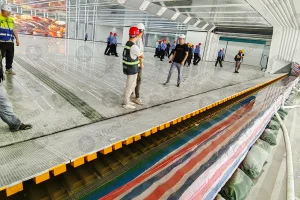
Every order undergoes factory water pool testing for leakage verification, structural deflection under hydro-head, and seal fatigue testing under ISO 9001:2015 standards.
Industrial export packaging in reinforced wooden crates with customized embedded steel frames, spare seal kits, remote installation guidance, and overseas engineering dispatch.
For optimal installation of embedded hydrodynamic foldable floodgates, general contractors must prepare a reinforced concrete foundation trench according to our structural clearance specifications. Key civil construction parameters include:
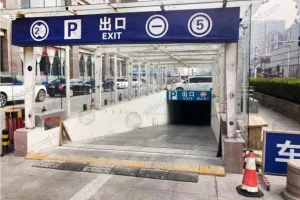
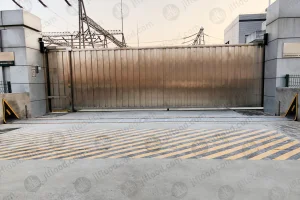
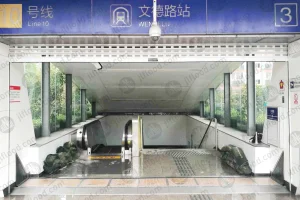
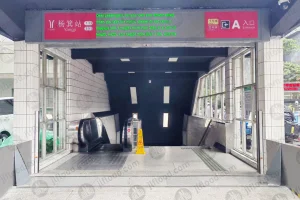
Deployments Across Metro Rail Lines, Power Substations, Commercial Garages, and Underground Infrastructures
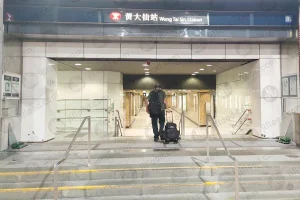
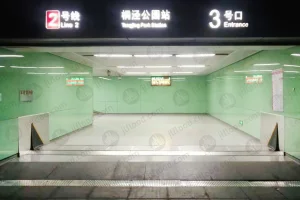
Protecting underground passenger concourses, pedestrian connection tunnels, and emergency ventilation shafts across major transit networks including Guangzhou Metro, Beijing Metro, Suzhou Metro, and Hong Kong MTR.
Safeguarding state-grid transformer bays, high-voltage switchgear rooms, and cable trenches where flash flooding poses catastrophic electrical short-circuit and black-out risks.
Protecting multi-level commercial and residential underground car parks against extreme surface runoff while supporting continuous daily high-volume vehicle traffic over embedded frames.
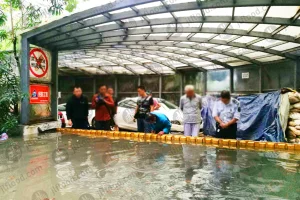
During Typhoon Bebinca in 2024, extreme rainfall inundated coastal urban districts across Eastern China. Facilities equipped with Junli automatic self-closing flood gates experienced continuous automated protection. As surface runoff surged down parking ramps and metro access channels, Junli's buoyancy-driven panels triggered in seconds, completely blocking floodwaters from entering subterranean spaces with zero operator oversight and zero electricity.
Advancing Smart Urban Infrastructure via Passive-IoT Telematics, Carbon-Fiber Nanocomposites, and Predictive Hydraulics
Integrating energy-harvesting NB-IoT and LoRaWAN sensors inside foundation chambers to transmit real-time gate deployment telemetry, water level metrics, and seal condition status to smart city dashboards.
Pioneering ultra-light carbon-fiber reinforced polymer (CFRP) gate structures that reduce static panel mass by 45% while doubling yield strength against extreme hydrodynamic impact and debris strikes.
Developing self-scouring internal trench geometries that utilize initial storm runoff velocity to clear sediment, leaves, and debris from buoyancy chambers automatically.
Explore Heavy-Duty Automatic, Embedded, Surface-Mounted, and Substation-Grade Flood Control Assemblies
Clear Technical Clarifications on Procurement, Installation, Maintenance, and Hydraulic Specifications
The system utilizes fluid dynamics, water buoyancy, and hydrostatic pressure principles. The gate panel is installed flush within a recessed foundation trench embedded at the entrance threshold. When incoming floodwater enters the trench intake grilles, the rising water level fills the internal chamber. Hydrostatic buoyancy forces naturally lift the lightweight structural panel. As water head continues to build outside, hydrostatic pressure forces the vertical panel tightly against side frames and dynamic EPDM rubber gaskets, achieving an impermeable hydraulic seal without power supply, electrical sensors, or manual labor.
Yes. When in the dormant rest position, Junli hydrodynamic flood gates sit completely flush with the surrounding road surface. The top surface cover plate and embedded frame assembly are manufactured from high-tensile structural steel (or T6 heavy-grade aluminum alloy), structurally engineered and FEA-tested to meet AASHTO HS-20 and Chinese Class-A heavy vehicle axle loading limits (supporting vehicular loads exceeding 40 metric tons). Fire engines, delivery trucks, and public transport buses can drive over the gate continuously without causing frame deformation.
Standard single-panel retaining heights range from 0.5 meters to 2.0 meters. For wide driveways, station openings, or perimeter gates exceeding 6 meters, our modular multi-leaf interlocking barrier system allows infinite horizontal width expansion. Intermediate removable or automatic folding mullions ensure structural stability across spans exceeding 20 to 50 meters.
Junli hydrodynamic foundation frames are equipped with removable stainless steel filtration grilles and built-in sediment collection channels. Small leaf litter and urban debris are captured at the surface grille, while fine silt settles into dedicated cleanout troughs. Annual maintenance simply involves removing the surface panel plates and flushing out settled silt using a standard high-pressure water hose.
Every production batch undergoes rigorous full-scale hydrostatic testing in Junli’s internal hydraulic test pool. We supply comprehensive quality control documentation, including ISO 9001:2015 factory inspection certificates, material test reports (MTR) for stainless steel and aluminum alloys, EPDM seal Shore A hardness validation, and order-specific full-scale water retention test videos prior to dispatch.
General contractors need to construct a concrete foundation trench based on Junli’s CAD civil engineering blueprints. This includes preparing appropriate trench dimensions, installing rebar anchors, pouring C30/37 structural concrete, and connecting an integrated gravity drain pipe or sump drainage line at the trench base to clear residual rainwater post-flood event.
Junli flood gates are designed for a structural design life exceeding 20 years. Key structural components (SUS304/316 and anodized alloy profiles) feature extreme corrosion resistance. Routine maintenance involves semi-annual visual inspections of the EPDM rubber seals, cleaning debris from the bottom chamber, and checking mechanical pivot bearings for smooth rotation.
Engineering contractors, municipal authorities, and international B2B distributors can contact our global technical sales department via direct inquiry on our website or email at [email protected]. Please provide entrance opening dimensions (clear width), target retaining height, and site application details to receive a customized technical proposal, CAD drawing set, and wholesale factory quotation within 24 hours.


