Explore our core hydrodynamic passive flood protection modules certified for heavy traffic loads, flash floods, and zero-electricity operation scenarios.
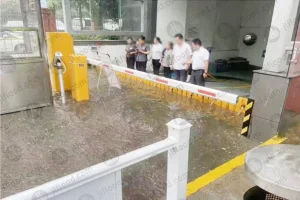
In modern urban hydrology, the threat of rapid-onset pluvial flooding and storm surges presents a catastrophic challenge to civil infrastructure. Traditional flood defense mechanisms—ranging from manual sandbag deployments to motor-driven active flood gates—exhibit alarming vulnerability during urban grid failures. When severe weather hits, electrical power outages, telemetry sensor disruptions, and human delay often prevent critical barriers from deploying in time.
As a leading engineering entity, Nanjing Junli Technology Co., Ltd. specializes in the development of Hydrodynamic Automatic Mechanical Self-Closing Flood Baffles. Operating on pure physical hydraulic principles, these passive devices utilize incoming floodwater itself as the sole energy source to trigger, lift, and lock structural barrier panels without requiring human intervention, electrical wiring, or external hydraulic pumps.
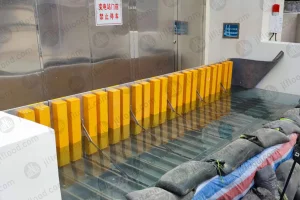
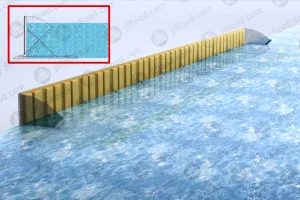
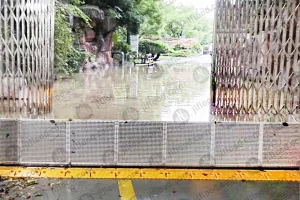
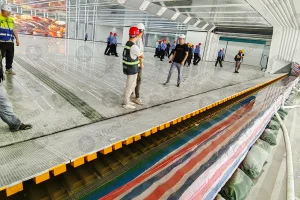
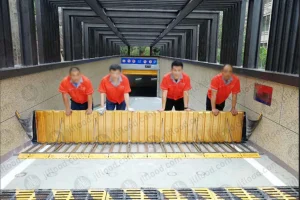
The engineering core of our hydrodynamic self-closing system is recessed completely flush with the driveable or walkable floor surface inside a stainless-steel ground basin. During dry operations, heavy-duty commercial vehicles and pedestrians traverse the barrier top plate unimpeded. When surface runoff exceeds kerb height and flows into the recessed baseline basin, Archimedes' principle triggers automatically: the internal hollow floating panel experiences upward buoyancy differential. As the water level inside the basin rises, the front section of the panel floats upward, pivoting on a self-lubricating stainless steel hinge matrix until it reaches its designated 45° to 90° inclination, effectively sealing the opening against rising hydrostatic pressure heads.
The global climate adaptation market is experiencing a structural shift toward passive asset protection. According to global climate disaster mitigation frameworks (including ASCE 24 in North America and Eurocode standards across Europe), structural resilience guidelines now heavily incentivize or mandate zero-power passive flood mitigation for high-density municipal assets.
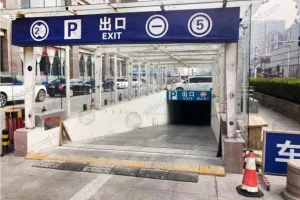
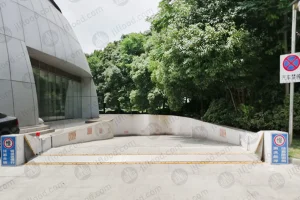
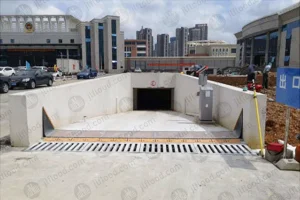
Rapid urban urbanization has shifted vehicle storage into subterranean multi-tier garages. A single flash flood event can inundate thousands of vehicles, resulting in tens of millions of dollars in insurance claims. Hydrodynamic self-closing baffles installed at ramp entrances eliminate reliance on building management staff during nighttime storms.
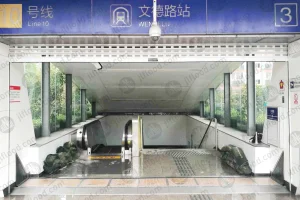
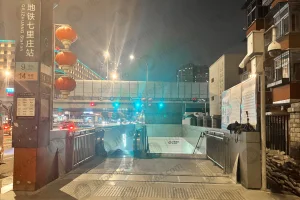
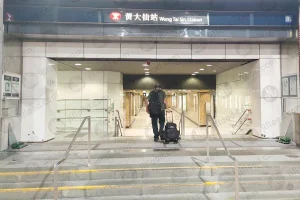
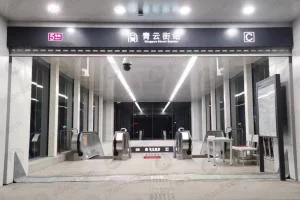
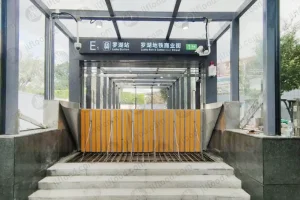
Metro portals, pedestrian street entrances, and ventilation shafts act as direct funnels into underground transit tunnels. Flooding in subway systems leads to long-term public service disruptions. Junli’s heavy-duty stainless steel flood baffles are optimized to meet strict metro transit engineering parameters globally.
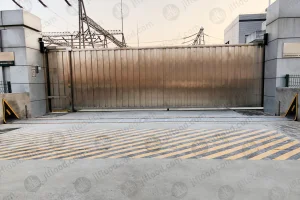
Substation transformers, cable trenches, and control centers are high-risk nodes. Electrical flashovers caused by floodwater entering live switchgear can collapse regional power grids. Self-closing baffles provide round-the-clock perimeter defence without continuous power draw or operator supervision.
To assist civil engineers, procurement directors, and municipal planning authorities in making technically sound decisions, the following matrix contrasts Junli's mechanical self-closing flood gates against alternative flood defense methodologies.
| Evaluation Vector | Hydrodynamic Mechanical Baffle (Junli) | Active Electric/Hydraulic Gate | Manual Modular Aluminum Stoplogs |
|---|---|---|---|
| Power Requirement | 0 Watts (Pure Buoyancy Hydro-kinetics) | High (Requires AC Grid / Backup Generators) | None (Manual Labor Required) |
| Activation Trigger | Automatic passive hydro-buoyancy | Sensors, PLC Controllers & Motors | Manual Transport & Assembly on Site |
| Human Reliability Risk | Zero (Fully Automated Mechanical Deployment) | Medium (System error or override risk) | Catastrophic (Human absence / late arrival) |
| Surface Traffic Capability | Flush ground mount (Up to 60-Ton Truck Rating) | Flush mount with complex structural tracks | Requires surface post sockets (Obstruction) |
| Annual Maintenance Cost | Ultra-low (Visual inspect & channel rinse) | High (Motor overhaul, PLC calibration) | Medium (Storage audit, seal degradation check) |
| Seal Integrity & Lifespan | EDPM dual-lip high-elasticity automotive seals | Pneumatic or mechanical compression seals | Manual drop-in rubber strip compression |
Deployment of mechanical self-closing flood gates requires meticulous engineering alignment with civil substrates, surface drainage slopes, and local hydrological flood head forecasts.
Subway portals demand zero floor elevation changes to maintain ADA accessibility and prevent trip hazards. Junli's Hm4d-0006E Surface Installation and Hm4e-006C Embedded Installation barriers integrate seamlessly into transit concourses. The top cover plate sits 100% flush with surrounding floor tiles. When surface water surges reach the trigger channel (as low as 30-50mm), the internal buoyancy chamber fills, causing the barrier to rise to retaining heights up to 1.2 meters, effectively creating an impenetrable wall against water ingress into metro tunnels.
Substation perimeters require continuous barrier integrity without restricting entry for heavy transformer maintenance vehicles. Junli’s heavy-duty automatic flood gates feature reinforced structural ribbing capable of supporting axle loads up to 40 tons (AASHTO HS-20 / EN 124 D400 rating). Integrated silt-drainage bypass valves ensure that rainwater runoff is redirected while keeping the inner buoyancy mechanism clean and operational.
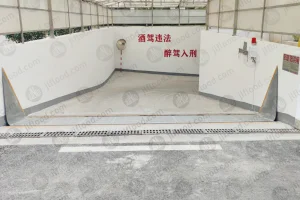
Underground ramps present inclined slopes that accelerate water flow velocity. Our surface-type surface-mounted barriers (such as the Hm4d-0006C series) utilize custom side wall jambs equipped with non-shrinking EPDM lateral compression seals. As the floodgate pivots upward, side-sealing lip gaskets compress against stainless steel side frames, mitigating water bypass even under turbulent flow conditions.
Facilities exposed to saline coastal environments or corrosive industrial runoff demand high-grade structural alloys. Junli fabricates custom flood baffle structures utilizing 316L Stainless Steel or anodized marine-grade 6063-T6 Aluminum Alloy. Fluorocarbon co-polymer surface coatings prevent galvanic corrosion and bio-fouling, guaranteeing smooth mechanical rotation over decades.
While the mechanical core of Junli flood baffles remains strictly passive and power-free for absolute reliability, our R&D roadmap integrates non-intrusive smart telemetry for municipal building management systems (BMS) and Smart City flood monitoring networks.
Self-powered micro-switches and wireless LoRaWAN sensors installed inside the basin send real-time alerts to municipal emergency command centers the instant a barrier begins to deploy, providing instant operational awareness across city transit grids.
Next-generation bottom chambers feature sloping hydro-dynamic debris flushing channels. Natural rainwater flow generates vortex currents that sweep leaf litter and fine silt out toward drainage sumps, drastically extending routine cleaning intervals.
Innovations in carbon-fiber reinforced structural polymer cores reduce panel mass by up to 40% while maintaining ultimate bending strength, allowing faster mechanical deployment responses even during hyper-velocity flash inundations.
Selecting and specifying wholesale mechanical self-closing flood gates requires compliance with structural, hydraulic, and civil engineering protocols. Engineering teams at Junli provide full technical design assistance, structural CAD block profiles, and localized site surveys.
The panel length, hinge thickness, and structural internal ribs are calculated to withstand both continuous hydrostatic pressure (at maximum design water head height) and hydrodynamic impact forces caused by wave action or floating debris. All structural welds undergo non-destructive ultrasonic testing (NDT) to ensure structural integrity under peak load conditions.
For embedded installation, civil contractors prepare a recessed concrete pit according to Junli embedded frame templates. The concrete pit must be connected to a local gravity drainage line or sump pump basin via a dedicated drain outlet at the bottom of the casing, ensuring that normal low-volume rainwater clears quickly without falsely triggering panel deployment.
Explore our specialized surface-mount, embedded-type, and subway-certified mechanical flood gates engineered to global specs.