Proven hydrodynamic automatic flood control systems designed for rapid response and zero-power deployment.

Understanding the critical shift toward passive modular flood defense systems in global urban infrastructure.
In an era defined by intensifying micro-climatic surges, urban precipitation anomalies, and rapidly expanding subterranean municipal infrastructure, traditional flood mitigation mechanisms—such as manual sandbagging, temporary clay dikes, or electrically driven mechanical sluice gates—have proven fundamentally inadequate. Worldwide urban centers are experiencing an unprecedented frequency of flash floods. When violent cloudbursts strike dense metro networks, electrical substations, underground commercial parking structures, and subterranean transport corridors, the primary point of failure is often human latency or total power grid collapse.
The financial impact of subterranean flooding events escalates exponentially per minute of water ingress. Substation flooding damages critical power transformers and high-voltage switchgear, resulting in cascading regional blackouts. Transit network inundation brings economic mobility to a standstill, incurring millions of dollars per hour in operational losses and asset damage. Consequently, specifying robust, wholesale modular flood barriers manufactured from high-strength marine-grade aluminum alloys (such as 6063-T6 or 6005A-T6) and heavy-duty structural stainless steel (SS304/SS316) has transitioned from an elective insurance risk-mitigation policy to a mandatory structural engineering requirement.
Operates purely on hydrodynamic buoyancy principles. Automatically deploys during total blackout conditions when electrical grids fail during major storms.
Water-buoyant core mechanism activates immediately upon sensing fluid accumulation in the embedded foundation basin, locking in place prior to severe head pressure buildup.
Flush-mount foundation chambers allow daily heavy vehicular transit (up to 30 tons axle load) without impeding foot traffic or vehicular logistics during normal operations.
An in-depth technical analysis of hydrostatic buoyancy balance, material stress limits, and seal geometry performance.
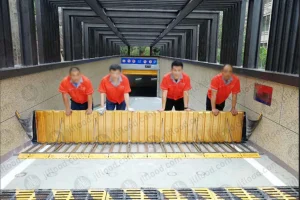
The operational philosophy of hydrodynamic automatic modular flood barriers relies on hydrostatics and mass-density differentials. The baseline assembly consists of three primary structural components: a recessed foundation embedment trough (ground frame), a density-calibrated floating door leaf, and side-wall vertical guide tracks fitted with dual-stage vulcanized EPDM compression seals.
When flash flood water enters the recessed bottom frame through localized drainage inlet grates, the water level within the internal sump chamber rises. The barrier panel, designed with an internal hermetically sealed multi-chamber extruded aluminum architecture, possesses an effective bulk density significantly lower than 1.0 g/cm³. As hydrostatic pressure builds beneath the buoyant center of mass, the upward buoyant force ($F_b = \rho_{water} \cdot V_{displaced} \cdot g$) exceeds the structural dead weight of the leaf panel.
This force differential creates a rotational torque along the bottom stainless steel pivot axis. As the water level rises further, the leaf rotates upwards to an angle of 60° to 90°, engaging a self-locking mechanical linkage or dynamic hydro-latching mechanism. The greater the external hydro-head height ($H_w$), the greater the horizontal hydrostatic force ($F_h = \frac{1}{2} \rho g H_w^2$) exerted against the barrier face, which compresses the bottom and perimeter elastomeric EPDM gaskets, creating a completely watertight seal.
| System Component | Material Specification | Mechanical Yield / Tensile Standard | Engineering Function |
|---|---|---|---|
| Extruded Barrier Leaf Profile | Al-Mg-Si Alloy (6063-T6 / 6005A-T6) | Yield Strength ≥ 210 MPa; Tensile ≥ 260 MPa | Provides lightweight buoyancy combined with high flexural rigidity against surge impact. |
| Embedded Bottom Chamber | Hot-Dip Galvanized Steel / SS304 / SS316 | ASTM A36 / AISI 304 / AISI 316 | Houses the recessed panel flush with the road surface; resists heavy vehicle rollover loads. |
| Primary Sealing Elastomer | EPDM Vulcanized Rubber Profile | Shore A Hardness 65-70; Tensile Strength > 10 MPa | Multi-cavity compression seal providing zero-leakage isolation across wide temperature spans (-40°C to +120°C). |
| Pivot Axis & Hinge Assemblies | Duplex Stainless Steel 2205 / SS316 | Yield Strength ≥ 450 MPa | Transfers dynamic hydrostatic horizontal thrust loads to the concrete foundation anchor bolts. |
During heavy typhoon-driven coastal flooding or rapid surface runoff, floodwaters carry floating debris such as tree branches, detritus, and vehicle impacts. Wholesale modular flood barriers manufactured by specialized facilities undergo Finite Element Analysis (FEA) to ensure structural integrity under maximum hydrodynamic deflection limits ($L/250$ to $L/500$). Internal structural reinforcement ribs span horizontally across the hollow aluminum extrusions to distribute concentrated impact loads evenly across the embedded side posts and floor structure.
Deploying specialized modular flood control arrays across diverse critical infrastructure environments.
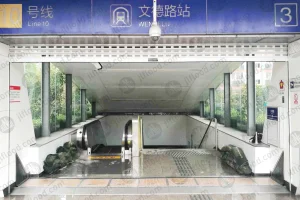
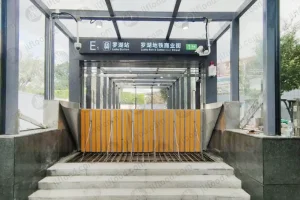
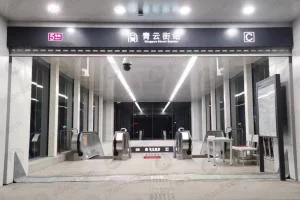
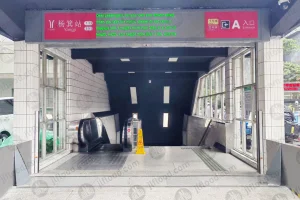
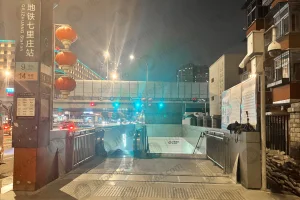
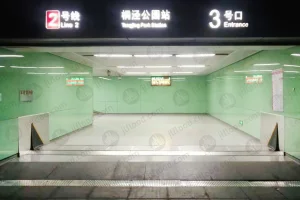
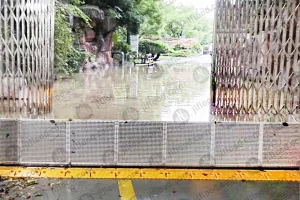
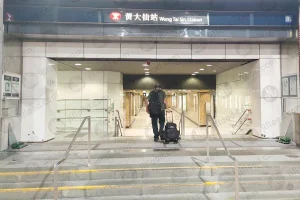
Underground metro stations are vulnerable to surface inundation. Embedded surface-type or flip-up automatic flood barriers installed at station entrances, passenger egress steps, and ventilation shafts prevent water ingress into deep tunnel networks, protecting passengers and high-voltage third-rail power lines.
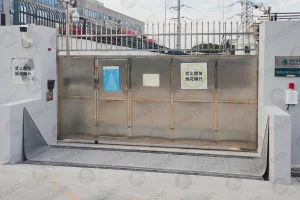
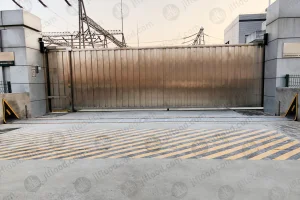
Power transmission equipment requires absolute moisture and water ingress protection. Modular self-closing flood gates installed at substation access gates and cable trench portals ensure uninterrupted electrical distribution even when surrounding industrial zones are submerged under several feet of water.
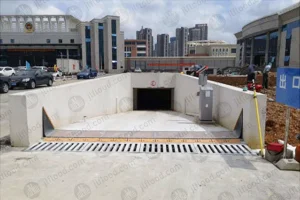
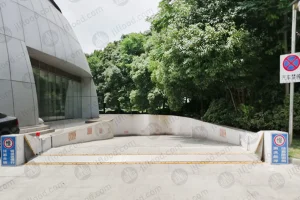
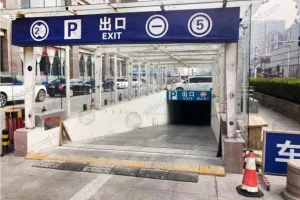
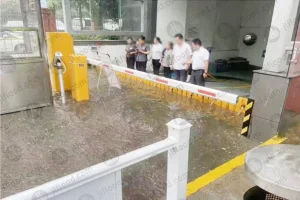
Multi-level parking basements in commercial centers, shopping malls, and luxury residential complexes represent high financial asset concentration. Heavy-duty modular ramp barriers sit flush with driveway slopes, allowing smooth vehicle ingress and egress while automatically rising when storm runoff overflows street drains.
Industrial chemical plants require containment systems that prevent rainwater runoff from contaminating surrounding ecosystems, while simultaneously keeping coastal storm surges out of hazardous material containment basins. Corrosion-resistant marine-grade anodized flood walls are critical for these hazardous chemical containment environments.
Essential criteria for evaluating Tier-1 flood barrier manufacturers and verifying international compliance.
When procuring modular flood protection systems at wholesale scale, engineering consultants, procurement managers, and government contractors must look beyond superficial pricing and evaluate manufacturing capability, structural testing rig rigor, and ISO quality management compliance.
A reputable manufacturer must operate an in-house, full-scale hydraulic testing chamber capable of subjecting actual fabricated barrier panels to simulated hydrostatic heads up to 2.0 meters high. Pre-shipment witness testing verifies lifting response time, maximum dynamic deformation, and seal leakage rate (typically required to be less than 0.10 liters per hour per linear meter of seal joint, adhering to rigorous standards such as FM Approvals 2510 or BSI PAS 1188-1).
Modular flood gate suppliers must provide comprehensive CAD, BIM, and Revit models alongside civil foundation embedment details. Proper installation requires precise rebar clearance specifications, high-strength non-shrink epoxy grout pouring routines, and dedicated sub-surface drainage pit connections equipped with non-return check valves to flush out silt and debris.
Integrating IoT telemetry, AI hydro-modeling, and carbon-neutral composite alloys into next-generation flood barriers.
The global flood control industry is undergoing a digital and material transformation. Future smart city resilient infrastructure demands that passive physical barriers interact seamlessly with municipal SCADA networks and IoT urban water sensing grids.
Next-generation automatic flood gates feature solar-powered, wireless LoRaWAN and NB-IoT pressure sensors inside the foundation trough. Facility managers receive real-time mobile alerts and telemetry updates regarding water accumulation, panel rise angle, and seal pressure, even during total power grid outages.
A historic challenge with recessed flood barriers has been sediment accumulation. Advanced designs feature angled hydrodynamic flushing channels and self-cleaning bottom hinges that utilize incoming water pressure to flush sediment out into external drainage channels, preventing panel jams.
Research into carbon-fiber reinforced polymers (CFRP) and ultra-lightweight basalt fiber extrusions is yielding modular flood wall profiles with half the mass of structural aluminum, offering even faster hydrodynamic deployment speeds and immune corrosion resistance against seawater.
In-depth answers to critical technical queries raised by specifiers, civil engineers, and buyers.
Explore our full line of OEM and ODM flood barrier solutions engineered for critical public infrastructure.